
Mental Health Education • Information • Understanding • Support
Mental Health Literacy
A clear, accessible guide to understanding mental-health information, terminology, services, evidence, support choices and how to make sense of the information you encounter.
🌱 Gentle Information Notice
Mental-health information can sometimes feel complicated, overwhelming or contradictory.
You do not have to understand everything immediately. Take your time, explore one section at a time and return whenever you are ready.
💗 Sensitive Topics Note
Some sections refer to mental-health difficulties, diagnosis, treatment, professional services, crisis support and experiences of distress.
Please read at your own pace and take a break if anything feels emotionally heavy.
📘 Knowledge Can Support Better Choices
Mental health literacy is about building the knowledge and confidence to understand information, recognise when support may help, ask questions and make informed decisions.
🩺 Information Is Not the Same as Diagnosis
Reading reliable information can help you understand possibilities, but a webpage, checklist, social-media post or online quiz cannot diagnose an individual person.
Professional assessment may be appropriate when symptoms are persistent, severe, confusing or significantly affecting daily life.
✨ Inside This Page You Will Learn
This page is designed to help you feel more confident reading, questioning and using mental-health information.
And why understanding information can make support easier to navigate.
Including symptoms, diagnosis, treatment, wellbeing and support terminology.
Including sources, evidence, dates, context and warning signs for misinformation.
From trusted people and peer support to professional and community services.
Including preparing for appointments and asking what happens next.
You can learn, ask, compare, reflect and make choices that fit your circumstances.
👀 At a Glance
Understand the words
Clear language can make mental-health information easier to understand and use.
Check the information
Look at who produced it, what evidence is offered and when it was published or updated.
Ask questions
You are allowed to ask for clarification, options, next steps or information in a format that works better for you.
Find support
Mental-health literacy also includes knowing where and how to seek additional help.
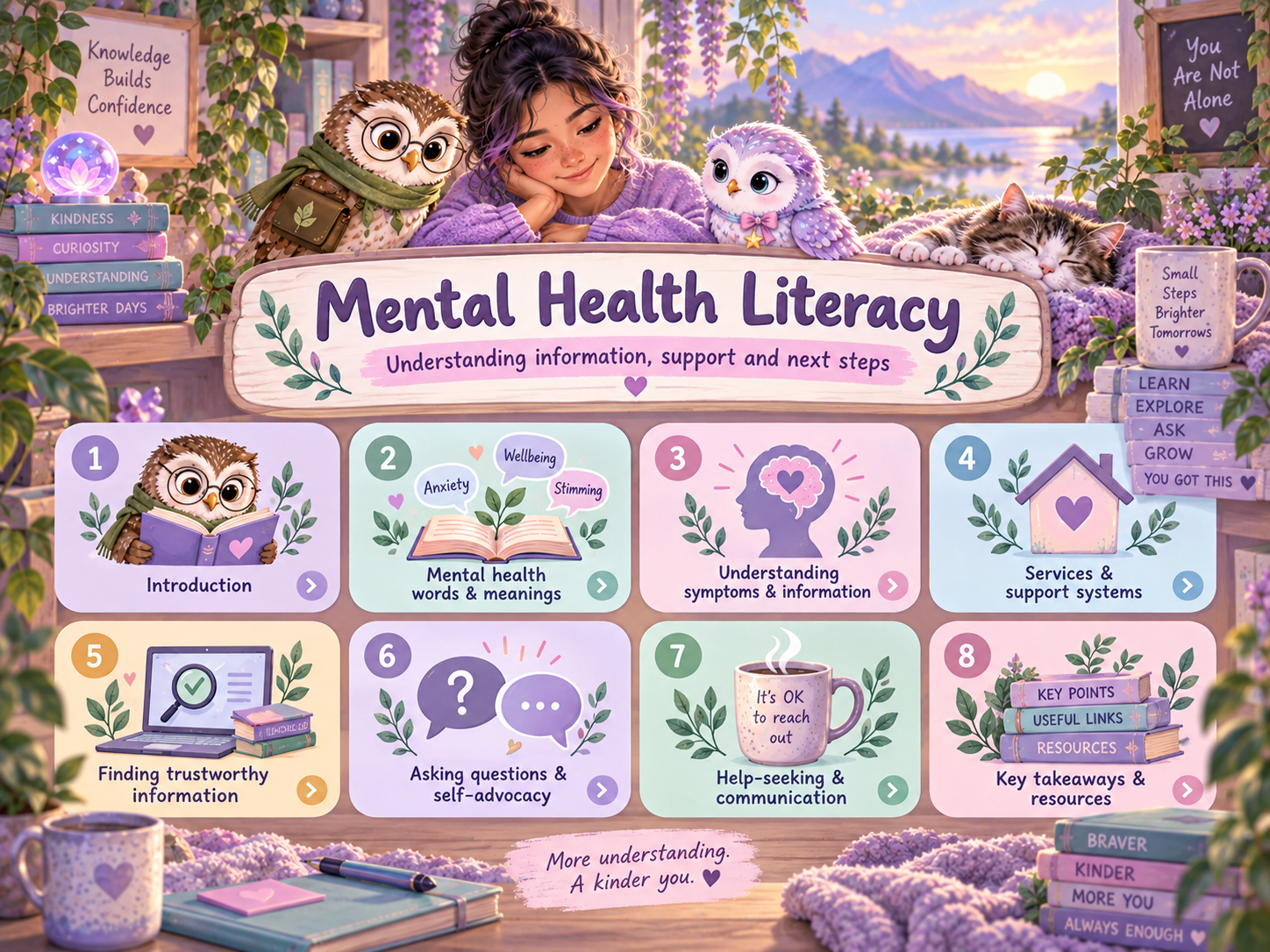

What Is Mental Health Literacy?
Mental health literacy is the ability to find, understand, evaluate and use information about mental health and wellbeing.
It can help people recognise possible difficulties, understand common terminology, explore support options, communicate more confidently and make better-informed choices.
Understand information
Become more familiar with words, concepts, symptoms, services and support pathways.
Think critically
Ask who created the information, what evidence supports it and whether it applies to your situation.
Use information thoughtfully
Reliable information can help you prepare questions, explore options and participate in decisions.
Information Should Help You Feel More Informed — Not More Lost
Mental-health information should ideally help people understand experiences, options and next steps more clearly.
It is okay to slow down, ask questions, look for another source or seek help interpreting information that feels confusing.

📚 Learning With the Aspie Answers Companions
The Companion Universe can help make complex topics feel more approachable by breaking information into smaller, clearer steps.
On this page, the focus is curiosity, learning, questioning, understanding and finding the right support.

Understanding Mental-Health Language
Mental-health information often uses words that may have specific clinical, educational or everyday meanings.
Understanding the context of a word can make information easier to interpret.
Symptoms
Experiences or changes that may be associated with a condition, difficulty or state of wellbeing.
Diagnosis
A professional classification based on defined criteria, assessment and clinical judgement.
Treatment
Professional approaches intended to support particular health or mental-health needs.
Support
Practical, emotional, social, educational or professional help that may improve wellbeing or functioning.
Wellbeing
A broad concept involving emotional, psychological, social and everyday quality of life.
Evidence
Information that helps support or challenge a claim, such as research findings, data or well-supported professional guidance.
Understanding Mental-Health Information
Good mental-health information should help you understand what is known, what is uncertain, who the information is for and what options may exist.
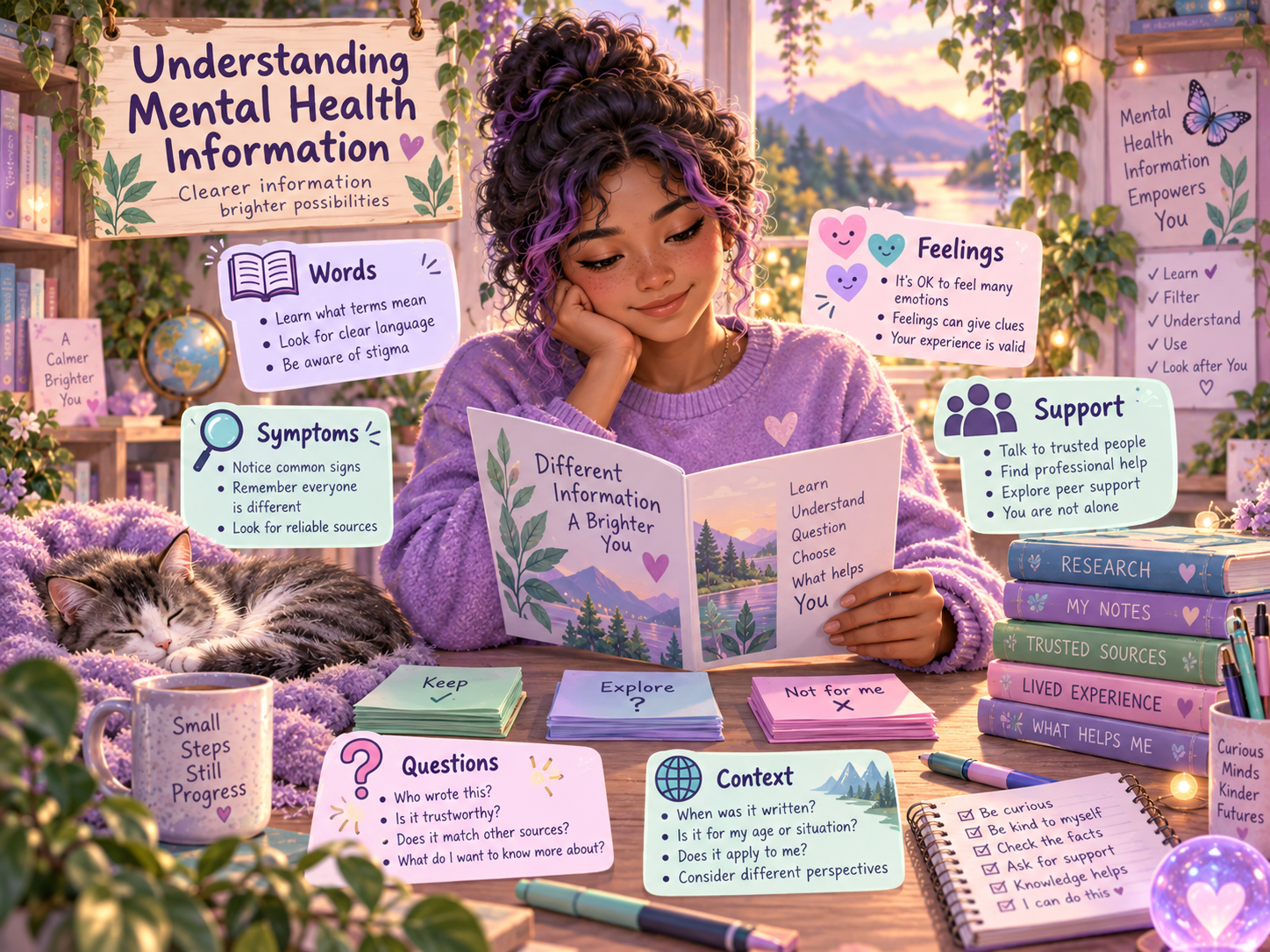
Look for context
Ask who the information is aimed at, what circumstances it covers and whether important limitations are explained.
Look for clarity
Good information should explain important ideas without relying entirely on fear, jargon or exaggerated claims.
Finding Trustworthy Information
Not every website, video, social-media post, advertisement or personal story has the same level of evidence behind it.
Lived experience can be valuable, but one person's experience does not automatically apply to everyone.
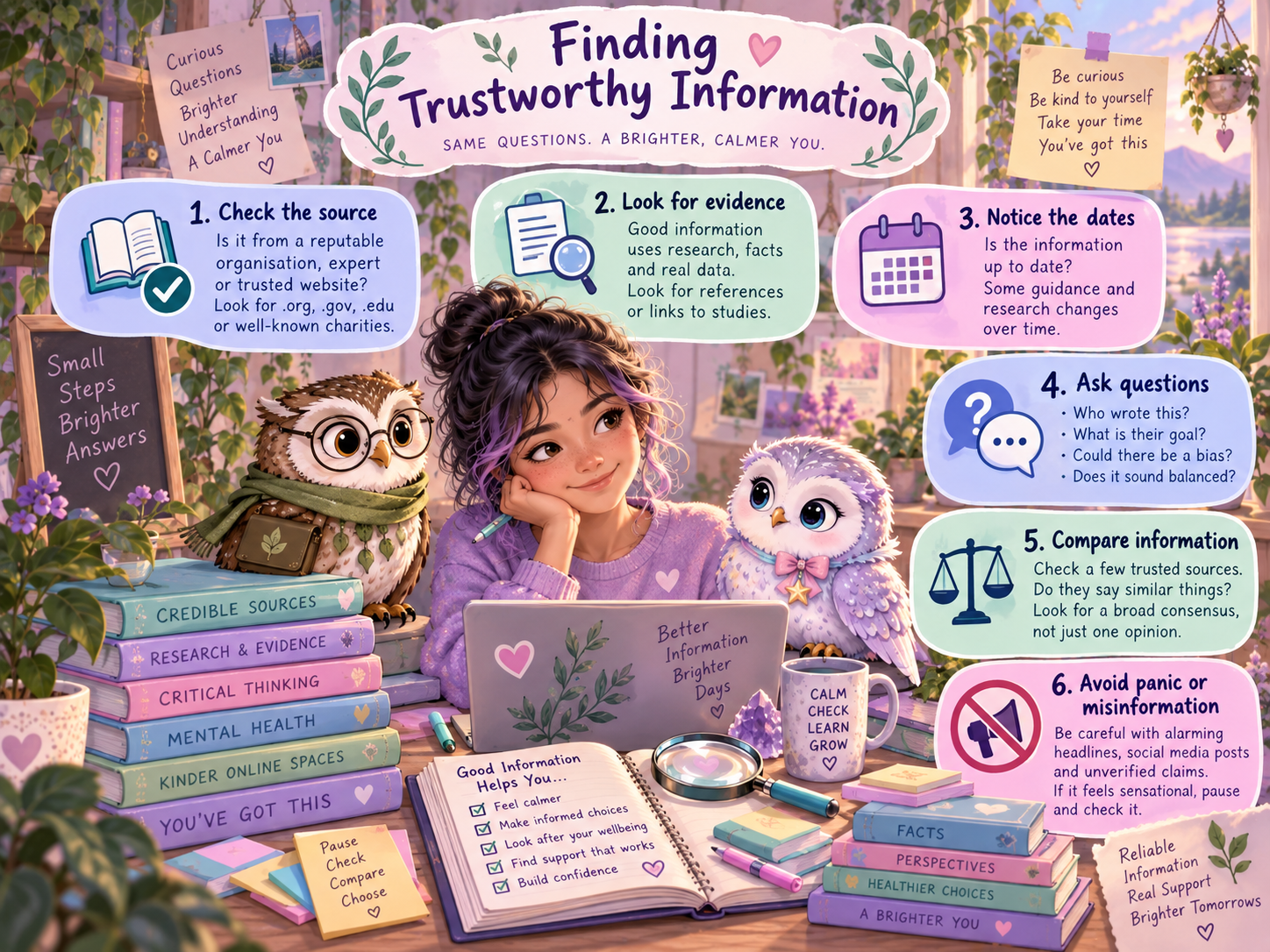
Who created it?
Look for identifiable authors, organisations, services or professional bodies.
What supports the claim?
Reliable information should distinguish evidence from opinion, personal experience or advertising.
Is it current?
Mental-health knowledge, guidance and services can change over time, so publication and review dates matter.
Misinformation, Oversimplification & Online Claims
Online mental-health content can be helpful, but some information may be inaccurate, exaggerated, incomplete or presented without enough context.
Be cautious with absolutes
Claims such as “this always means…” or “everyone with this condition…” may ignore individual differences.
Watch for fear-based claims
Sensational headlines may be designed to attract attention rather than explain information carefully.
Compare sources
If a claim matters to your health or wellbeing, check more than one credible source where possible.
Personal stories still have value
Lived-experience stories can help people feel seen and understood. The key is recognising the difference between “this happened to me” and “this will happen to everyone.”
Services & Support Systems
Mental-health support can come from different places depending on the person's needs, location, age, circumstances and available services.
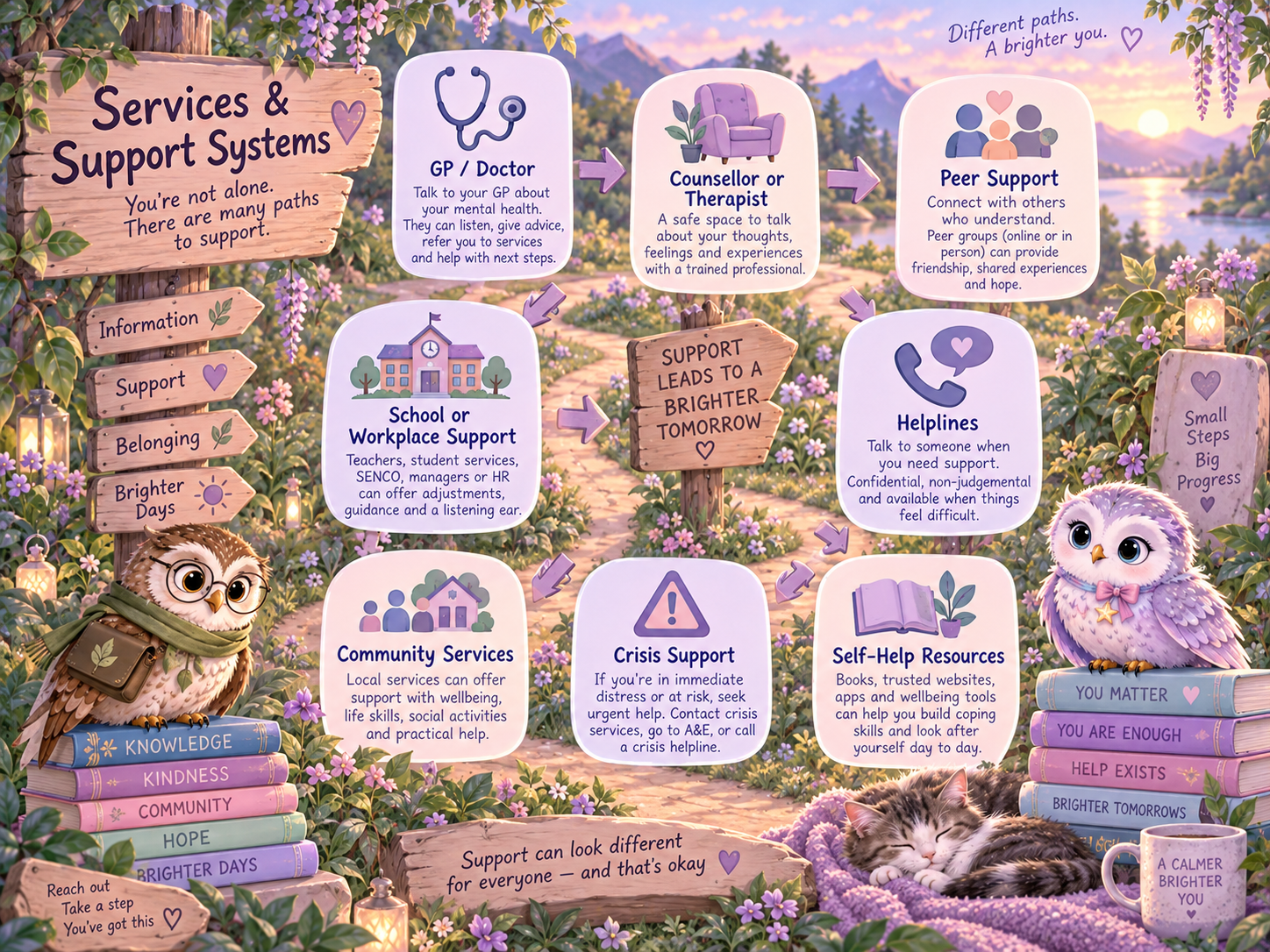
Primary healthcare
A doctor or primary-care professional may be one starting point for assessment, advice or referral.
Counselling & therapy
Different professionals and approaches may support different emotional or mental-health needs.
Community & peer support
Community organisations, peer groups and support networks may offer connection and practical help.
Help-Seeking & Communication
Asking for help can be difficult, especially when you are unsure what to say, what will happen next or whether you will be understood.
Preparing notes beforehand can make conversations easier.
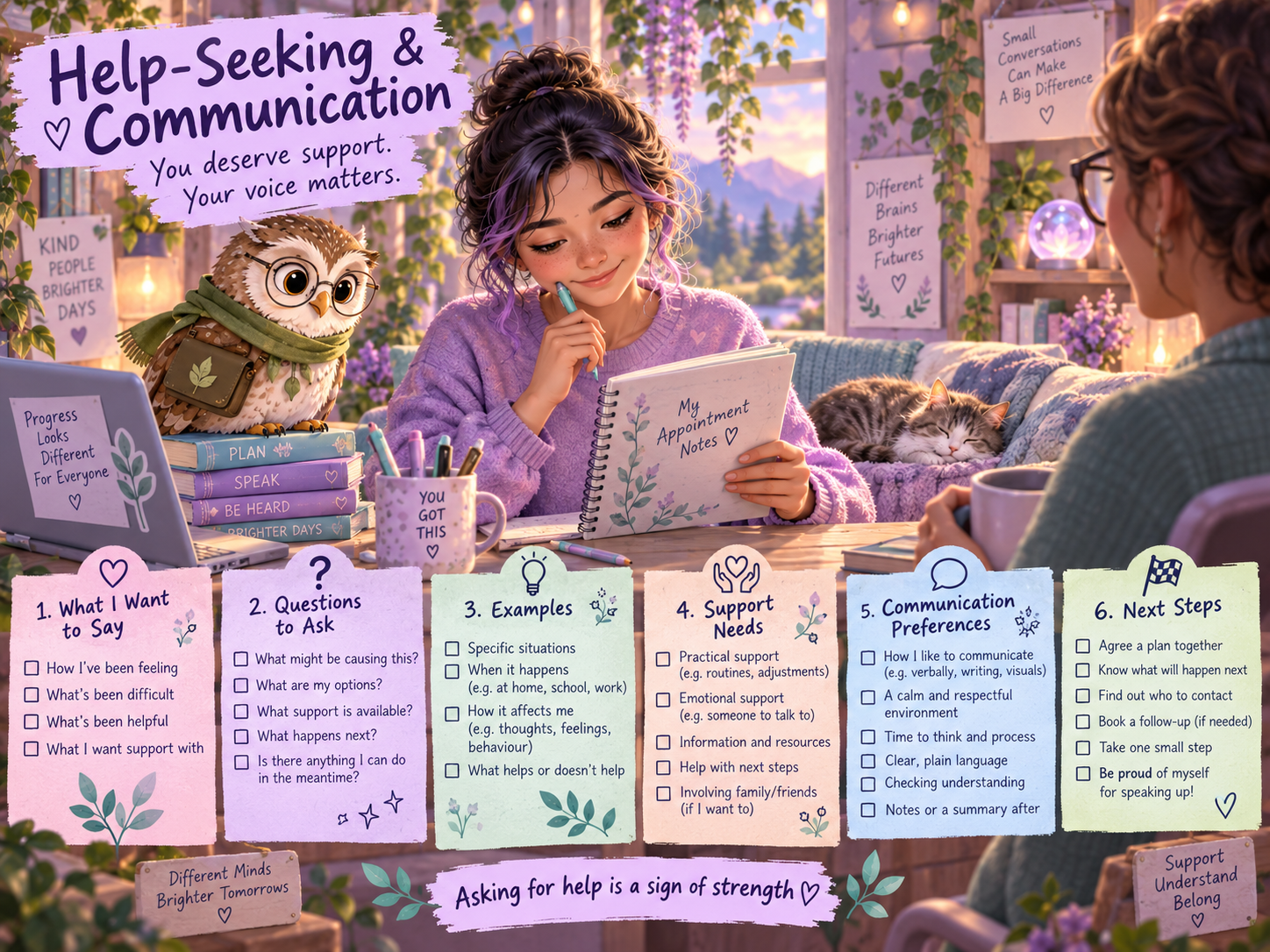
You might write down
- what you have been experiencing
- when it started
- how often it happens
- how it affects everyday life
- what has helped or made things harder
- questions you want answered
You can also communicate preferences
- whether you prefer spoken or written information
- if you need extra processing time
- if plain language would help
- if you want someone supportive with you
- if sensory or communication adjustments are needed
Questions, Choices & Self-Advocacy
Mental health literacy is not about becoming an expert in everything. It is about having enough understanding to participate more confidently in conversations and decisions.
Ask what something means
It is okay to ask professionals or services to explain unfamiliar words or recommendations.
Ask about options
You may want to understand available approaches, likely next steps and what each option involves.
Ask what happens next
Clear expectations can make appointments, referrals and support pathways easier to navigate.
Use Mental Health Literacy Across the Whole Education Hub
Mental Health Topics & Conditions
Use your growing information skills while exploring individual mental-health topics.
Explore Topics & ConditionsMental Health Topics A–Z
Browse the wider alphabetical reference pathway when you are looking for a specific subject.
Browse Topics A–ZWellbeing, Coping & Emotional Skills
Revisit practical emotional-wellbeing strategies and personal support planning.
Revisit Wellbeing Skills
Resources We Can Build Around This Topic
Mental Health Literacy is especially well suited to practical downloadable tools. As we recover the existing Mental Health resource estate, this page can connect to relevant resources without duplicating what is already available.
Trustworthy Information Checklist
A simple printable for checking source, evidence, date, context and warning signs.
Appointment Preparation Sheet
Space to record experiences, questions, communication needs and next steps.
Mental Health Words Guide
A plain-language reference resource for common mental-health terms and concepts.
These can be connected later to the recovered Mental Health Education Library, Mini Libraries, worksheets and resource collections.
🌿 You Have Reached the End of This Core Learning Path
Mental Health Literacy completes this main Mental Health Education sequence — but it is not the end of the wider Aspie Answers Mental Health ecosystem.
From here, you can explore specific topics, revisit earlier learning, use practical resources or move through audience and specialist pathways as they are connected into the wider site.
Learning is not about knowing everything. It is about knowing how to keep asking, exploring and finding support.
💜 Understanding Can Grow One Step at a Time
You do not need to know every mental-health term, read every study or understand every service to make progress.
Being curious, checking information, asking questions and knowing when to seek support are valuable skills in themselves.
Different minds. Better connection.