
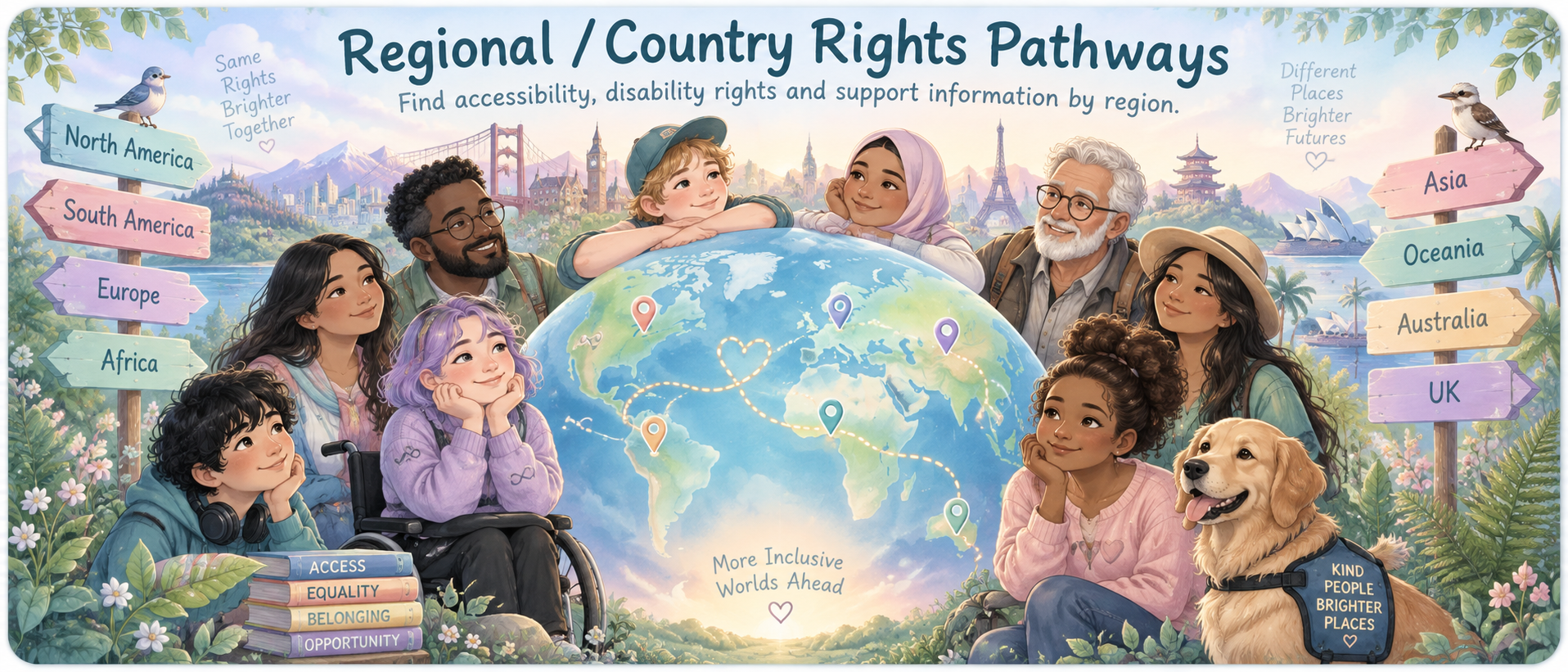
Regional / Country Rights Pathways
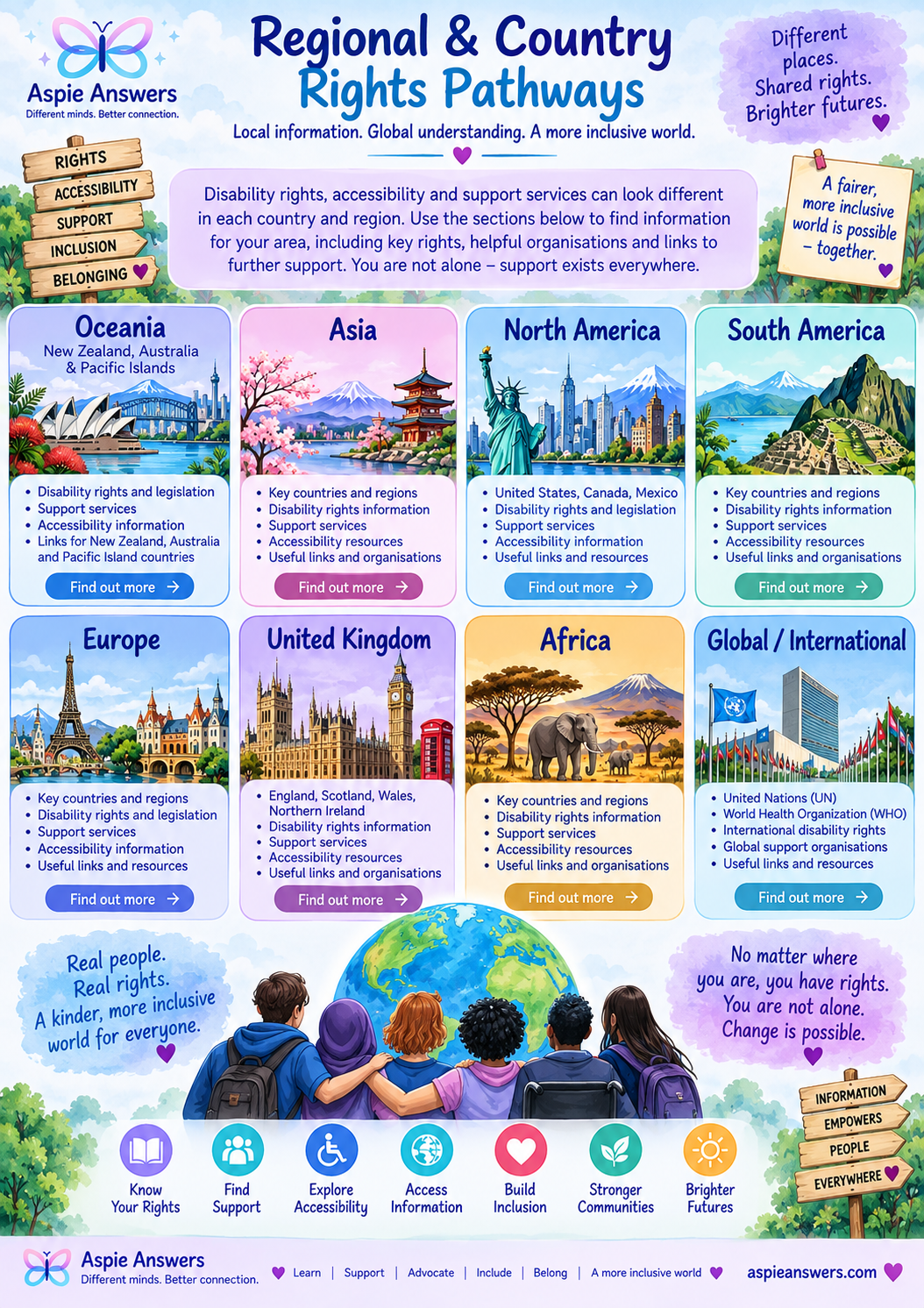
Rights, accessibility rules, complaint systems, disability services and support pathways can look very different depending on where you live. This worldwide doorway helps you understand those differences, find reliable starting points and move toward information that is relevant to your own country or region.
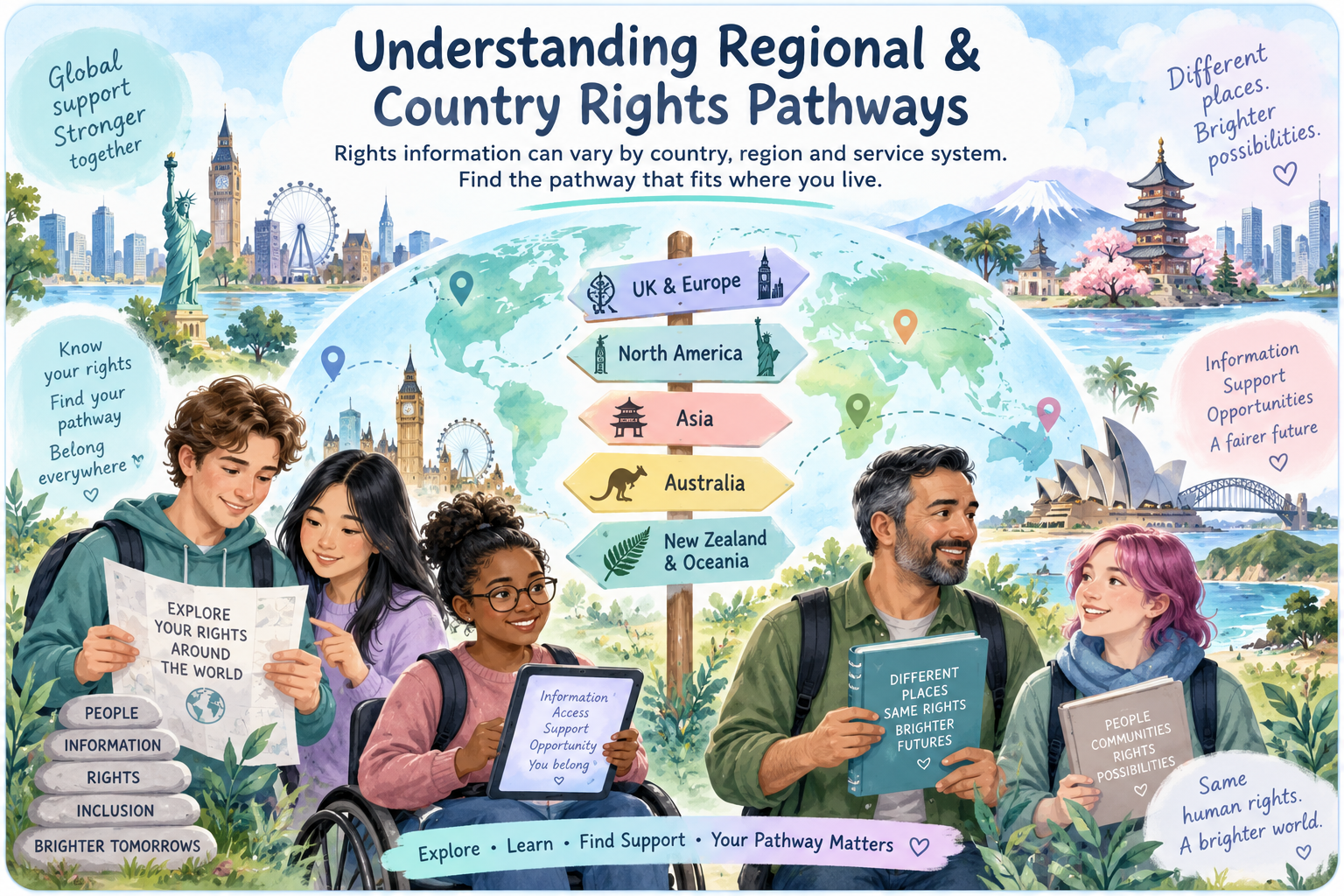
Understanding Regional & Country Rights Pathways
Disability and accessibility rights exist within a mixture of international human-rights frameworks, regional agreements, national laws, local policies, service rules and complaints systems.
Two people experiencing a similar barrier in different countries may have different legal terminology, different organisations to contact, different adjustment duties and different complaint routes.
🌍 International frameworks
International human-rights agreements can establish shared principles and commitments across many countries.
🗺️ Regional systems
Some regions also have regional human-rights agreements, institutions, strategies or disability frameworks.
🏛️ National law
Each country may have its own disability, equality, anti-discrimination, education, employment, healthcare, accessibility and service laws.
📍 Local pathways
States, provinces, territories, councils and local agencies may also have responsibilities, services or complaints processes.
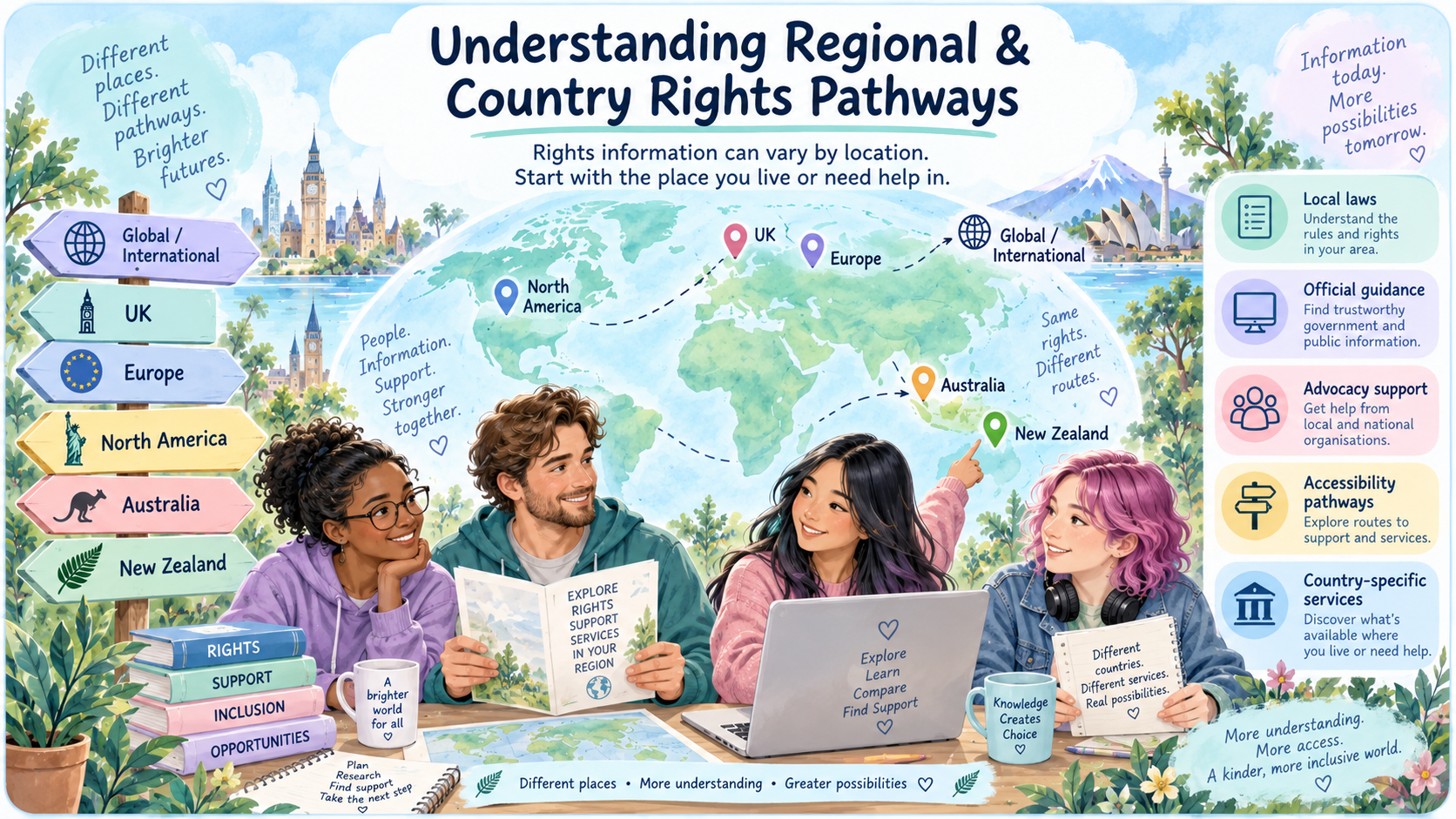
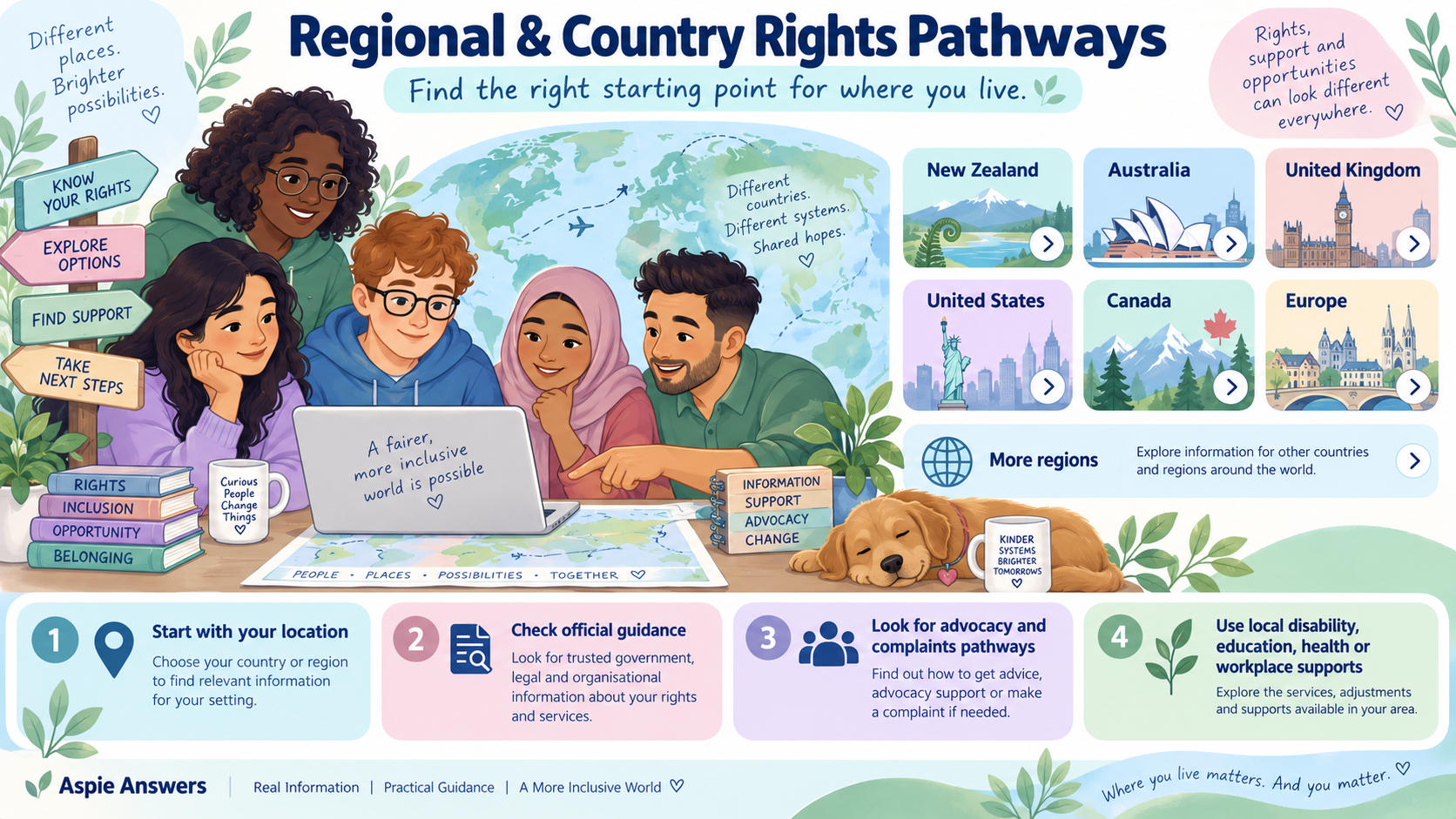
Finding Your Regional or Country Rights Pathway
You do not need to understand every law before you begin. A practical starting point is simply identifying where you are and what kind of barrier, support need or rights question you are trying to understand.
-
Confirm the country or region that applies.
This is especially important when information online comes from a different country. -
Describe the situation.
Is it about work, education, healthcare, housing, digital access, services, transport, discrimination or another area? -
Look for current official guidance.
Government agencies, human-rights bodies and recognised regulatory organisations are useful starting points. -
Find advocacy or disability organisations.
Disabled-led organisations and advocacy services may help explain how a system works in practice. -
Check complaint or review options.
If something has gone wrong, identify the correct organisation and any relevant time limits before assuming one country's process applies somewhere else.
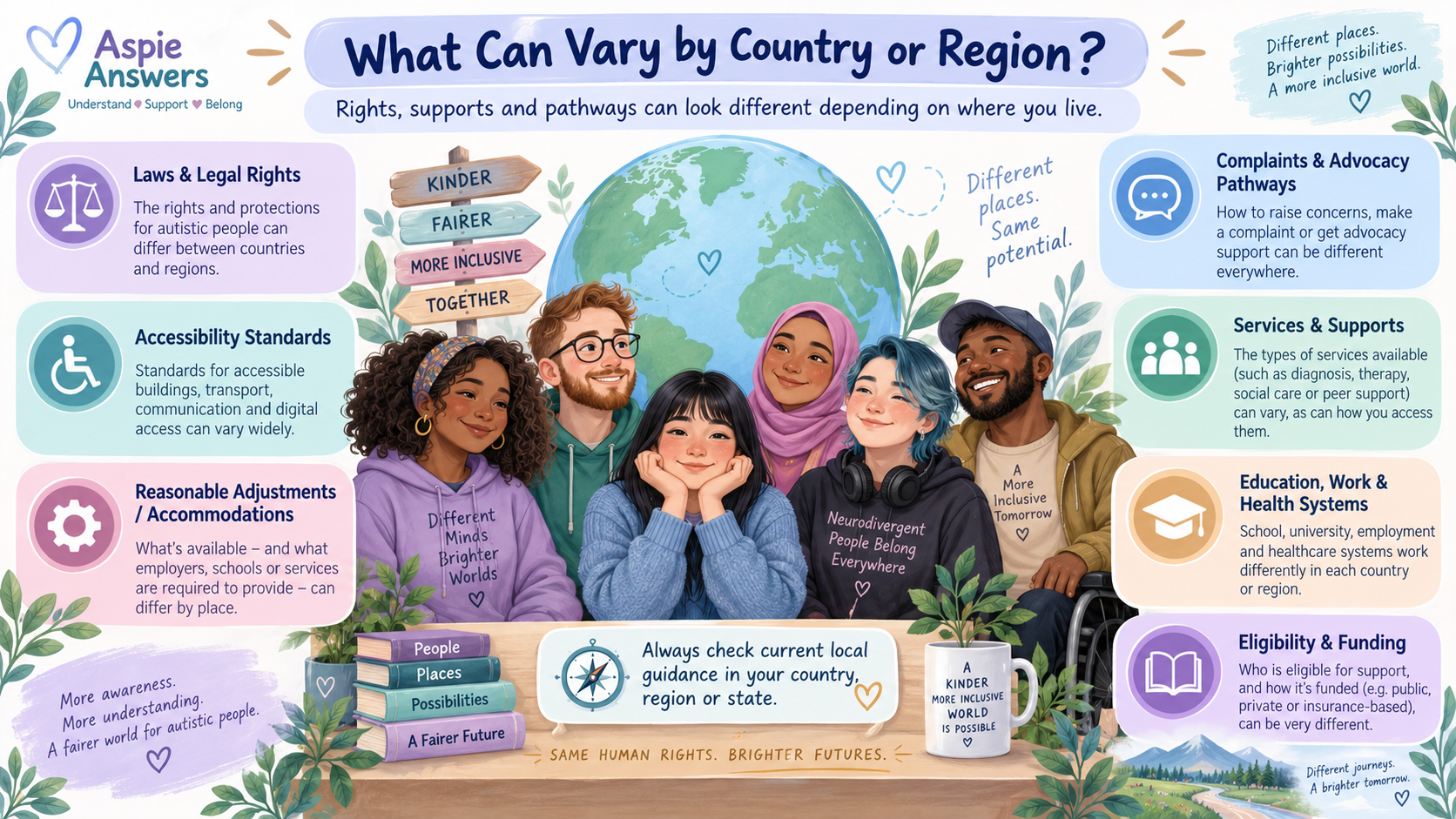
What Can Vary by Country or Region?
⚖️ Legal rights
Disability and discrimination laws may protect different areas of life and use different legal definitions.
🛠 Adjustments
Terms such as reasonable adjustment and reasonable accommodation may have different meanings and duties in different systems.
♿ Accessibility standards
Standards for buildings, information, transport, technology and services can differ.
📣 Complaint routes
Different agencies, tribunals, courts, ombuds services or commissions may handle different problems.
💼 Work & education
Employment protections, educational supports and formal adjustment processes may vary substantially.
❤️ Health & disability services
Service systems, eligibility, funding, assessments and complaint processes are often location-specific.
💬 Terminology
Words that sound similar may have different formal meanings across jurisdictions.
🗓 Deadlines
Complaint, review and legal processes may have strict and very different time limits.
🤝 Advocacy & support
The organisations available to explain options or help someone advocate can differ by location.
Explore Rights & Accessibility by Region
These regional pathways are designed as starting points. Aspie Answers now connects several completed regional and country pathways here, while deeper country pages remain selective so the information can stay useful and maintainable.
Oceania Rights & Accessibility
Regional access, disability-rights and inclusion pathways across Aotearoa New Zealand, Australia and the wider Pacific.
Explore Oceania →Asia Rights & Accessibility
Regional disability-inclusion frameworks and routes toward country-specific rights, accessibility and support information.
Explore Asia →North America Rights & Accessibility
Regional pathways that distinguish national, federal, provincial, state and local disability-rights systems.
Explore North America →South America Rights & Accessibility
A regional starting point for disability rights, inclusion and country-specific pathways across South America.
Explore South America →Europe Rights & Accessibility
European disability-rights and accessibility frameworks alongside national systems and country-specific routes.
Explore Europe →Canada Rights & Accessibility
A dedicated pathway for Canadian accessibility, disability and human-rights information.
Explore Canada →United Kingdom Rights & Accessibility
A dedicated pathway that keeps UK-wide information clear while recognising that legal frameworks differ across jurisdictions.
Explore the UK →Global / International Rights
Use international disability-rights frameworks as context, then follow the regional or country pathway that applies to you.
Global foundation on this page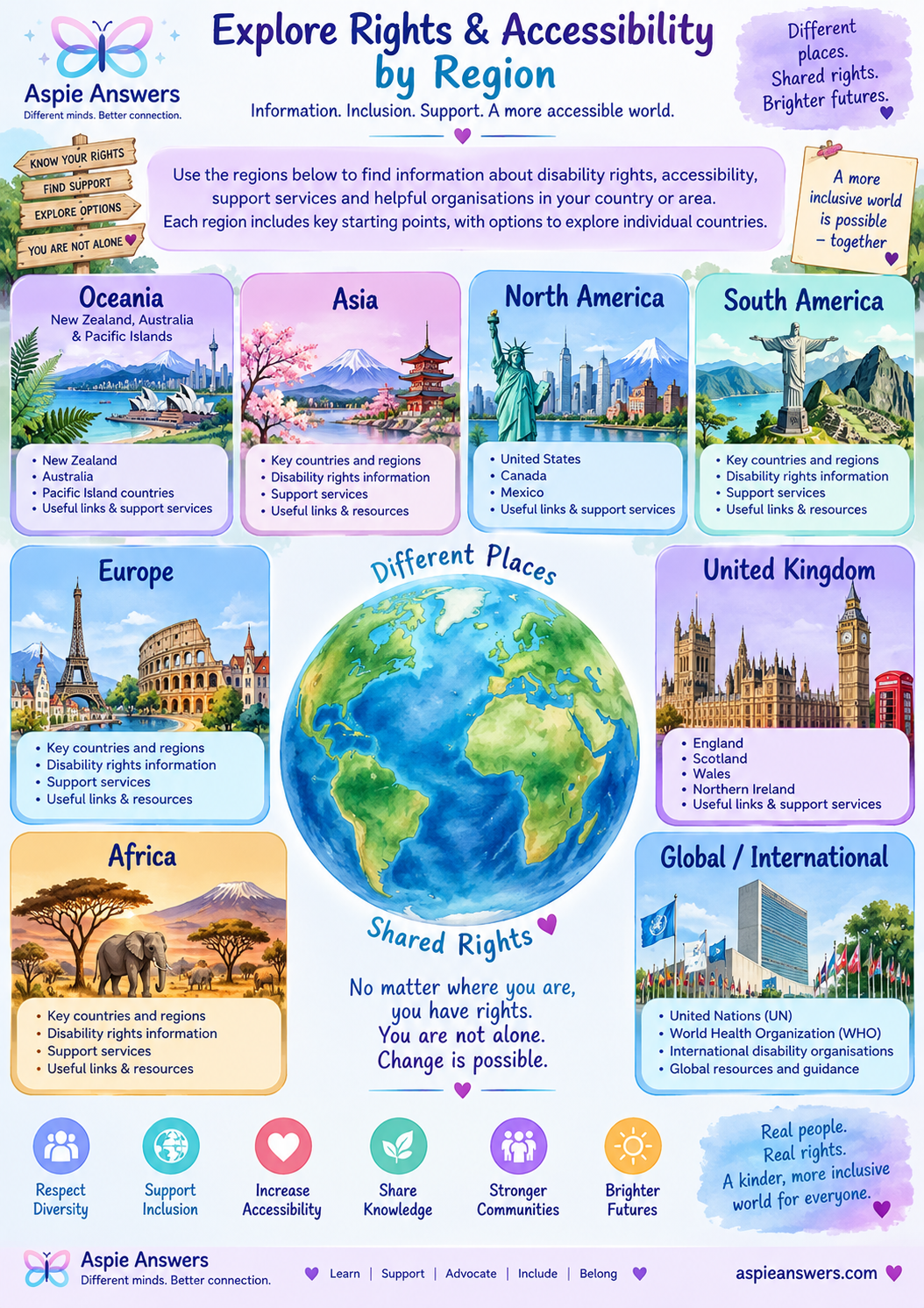
Official & Regional Rights Information
These links are broad starting points rather than a complete directory. Use them alongside the regional and country pathways above when you need more detailed official, advocacy or support information.
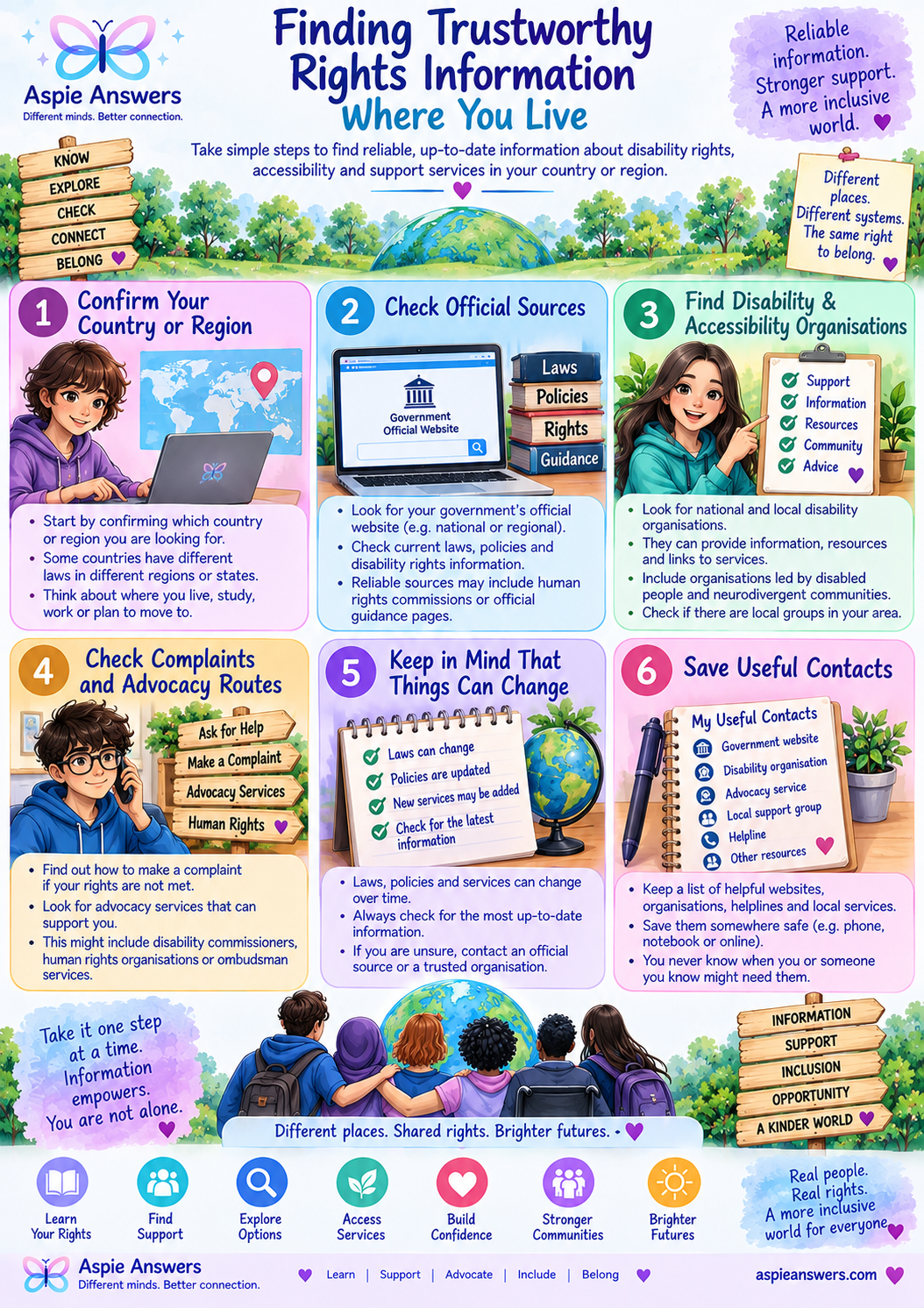
Finding Trustworthy Rights Information Where You Live
Rights information can spread quickly online, but it can also be outdated, simplified or written for a different country. A few checks can make it easier to decide whether information is appropriate for your situation.
-
Check the location.
Look for the country, state, province, territory or legal jurisdiction the information applies to. -
Prefer primary or official sources for formal rules.
Government agencies, legislation sites, courts, human-rights bodies and regulators are useful when exact rules matter. -
Check the date.
Laws, services, agencies, funding rules and contact details can change. -
Use disability-led and advocacy organisations for practical context.
They can often explain barriers and systems in ways that formal government information does not. -
Check more than one source when the stakes are high.
Employment, education, healthcare, housing, benefits and legal complaints may require specialist advice. -
Save useful contacts and evidence.
Keep relevant links, emails, dates, names, decisions and documents where appropriate.
The Global Disability-Rights Picture
The United Nations Convention on the Rights of Persons with Disabilities — often shortened to the CRPD — provides an important international disability-rights framework.
Rights holders, not problems to be fixed
The CRPD reflects a human-rights approach to disability. It connects disability rights with dignity, equality, accessibility, participation, autonomy, inclusion and freedom from discrimination.
Countries still implement these commitments through their own legal and policy systems. That is why Aspie Answers separates the global framework from the regional and country pathways on this page.
Hope — Wherever You Live, Your Rights Matter
🕊️ Hope — Encouragement, Peace & Belonging
Hope reminds us that people should not have to earn dignity, belonging or respect because of where they live, how they communicate or what support they need.
Systems may differ around the world, and progress can be uneven, but learning about rights, connecting with others and finding the right local pathway can help people take another step forward.
Going Deeper by Region & Country
This page is the worldwide doorway. Deeper Aspie Answers pages can provide more focused information without trying to cram every country's legal system into one page.
Accessibility & Rights Library
The Accessibility & Rights Library brings together deeper information about accessibility, reasonable adjustments, self-advocacy, discrimination, communication, rights pathways, practical tools and country or regional information.
Explore the Accessibility & Rights Library Return to Accessibility & Rights