
Sensory Wellbeing
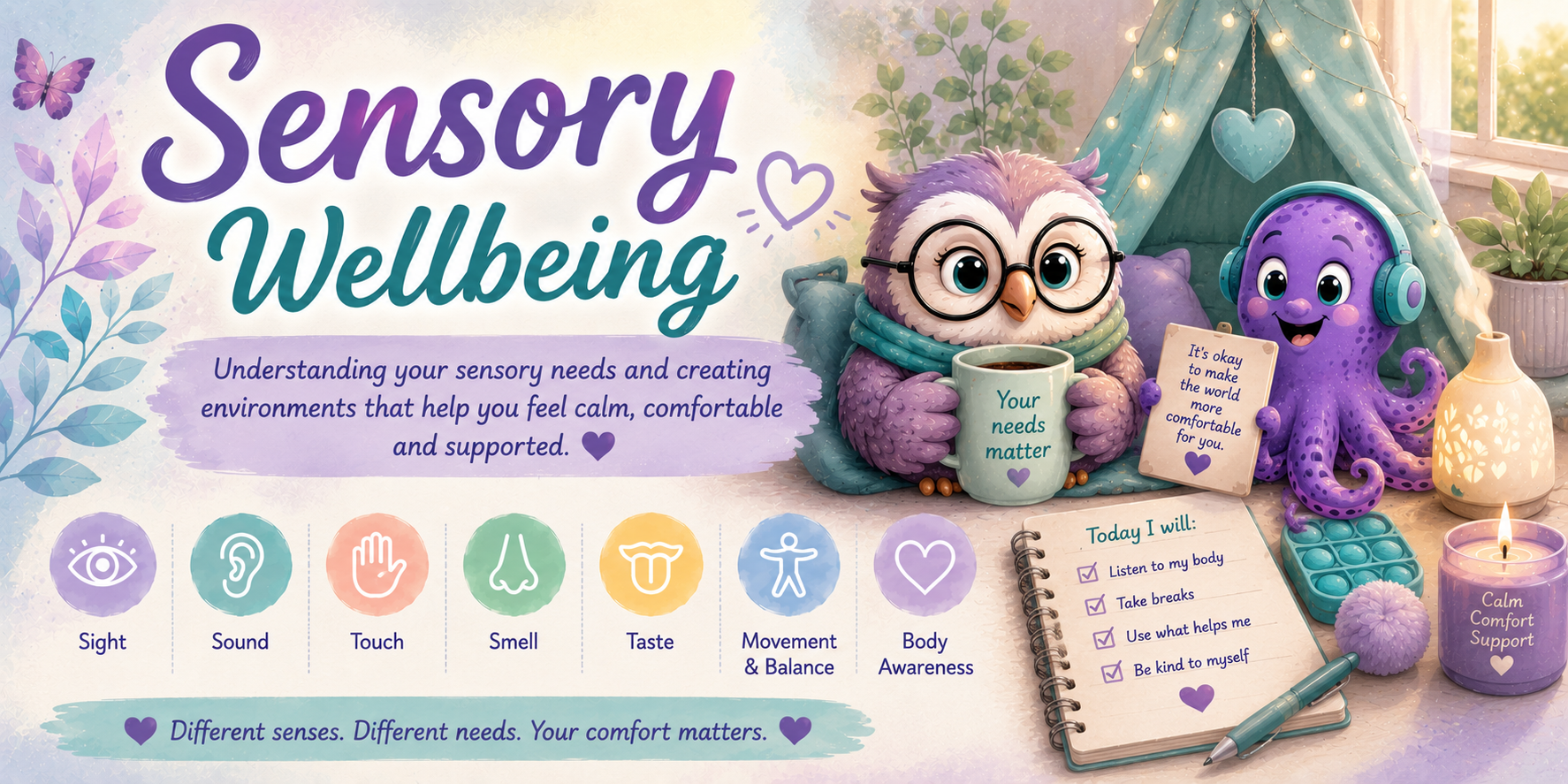
Everyone experiences the world differently through their senses. Understanding your own sensory needs can help you create environments, routines and supports that make everyday life feel more comfortable.
Sensory wellbeing is about recognising what helps you feel calm, focused and regulated, while respecting that everyone's sensory experiences are unique.
A Gentle Reminder
Your sensory needs are valid. Wanting quieter spaces, extra comfort or different ways of experiencing the world is a natural part of how many people experience life.
What Is Sensory Wellbeing?
👀 Sight
Lighting, colours, movement and visual information can affect how comfortable an environment feels.
👂 Sound
Noise levels, background sounds and unexpected noises can influence energy and focus.
✋ Touch
Textures, clothing and physical sensations can impact comfort throughout the day.
👃 Smell & Taste
Scents, flavours and food textures can play an important role in sensory experiences.
⚖️ Movement & Balance
Movement, body awareness and balance can affect regulation and comfort.
💜 Body Awareness
Noticing your body's signals can help you understand what support you need.
Supporting Your Sensory Needs
🎧 Manage Sound
Headphones, quiet spaces or reducing background noise may help when sounds feel overwhelming.
💡 Adjust Your Environment
Lighting, seating and room setup can make a big difference to comfort.
🧸 Use Comfort Tools
Sensory items, favourite textures or calming objects can provide support.
🌿 Create Calm Spaces
A comfortable area to recharge can support relaxation and recovery.
⏸ Take Sensory Breaks
Regular breaks can help prevent overwhelm and support regulation.
❤️ Respect Your Needs
Your comfort matters. Supporting yourself is an important part of wellbeing.
Recognising Sensory Overload
😟 Feeling Overwhelmed
Too much sensory information may become difficult to process.
🧠 Difficulty Thinking
Concentration and communication may become harder during overload.
😴 Needing Recovery Time
After intense sensory experiences, rest and quiet time may be needed.
🦉 Olive Owl's Sensory Tips
Notice What Helps
Learning your own preferences can make everyday situations easier.
Plan Ahead
Preparing for busy environments can reduce stress.
Listen To Yourself
Your body often gives clues about what support you need.
🐙 Ollie Octopus Says...
Everyone Is Different
There is no single right way to experience the world.
Comfort Is Important
Using supports that help you feel comfortable is okay.
Adapt When Needed
Your sensory needs may change depending on the situation.
Helpful Resources
👂 Sensory Profile
Explore your sensory preferences and support needs.
🎧 Sensory Toolkit Planner
Create your own collection of helpful sensory supports.
🌈 Calm Space Planner
Design a space that helps you feel comfortable and regulated.
Related Health & Wellbeing Pages
Remember
Understanding your sensory needs is an important part of understanding yourself. The right supports can help you feel more comfortable, confident and connected in everyday life.