
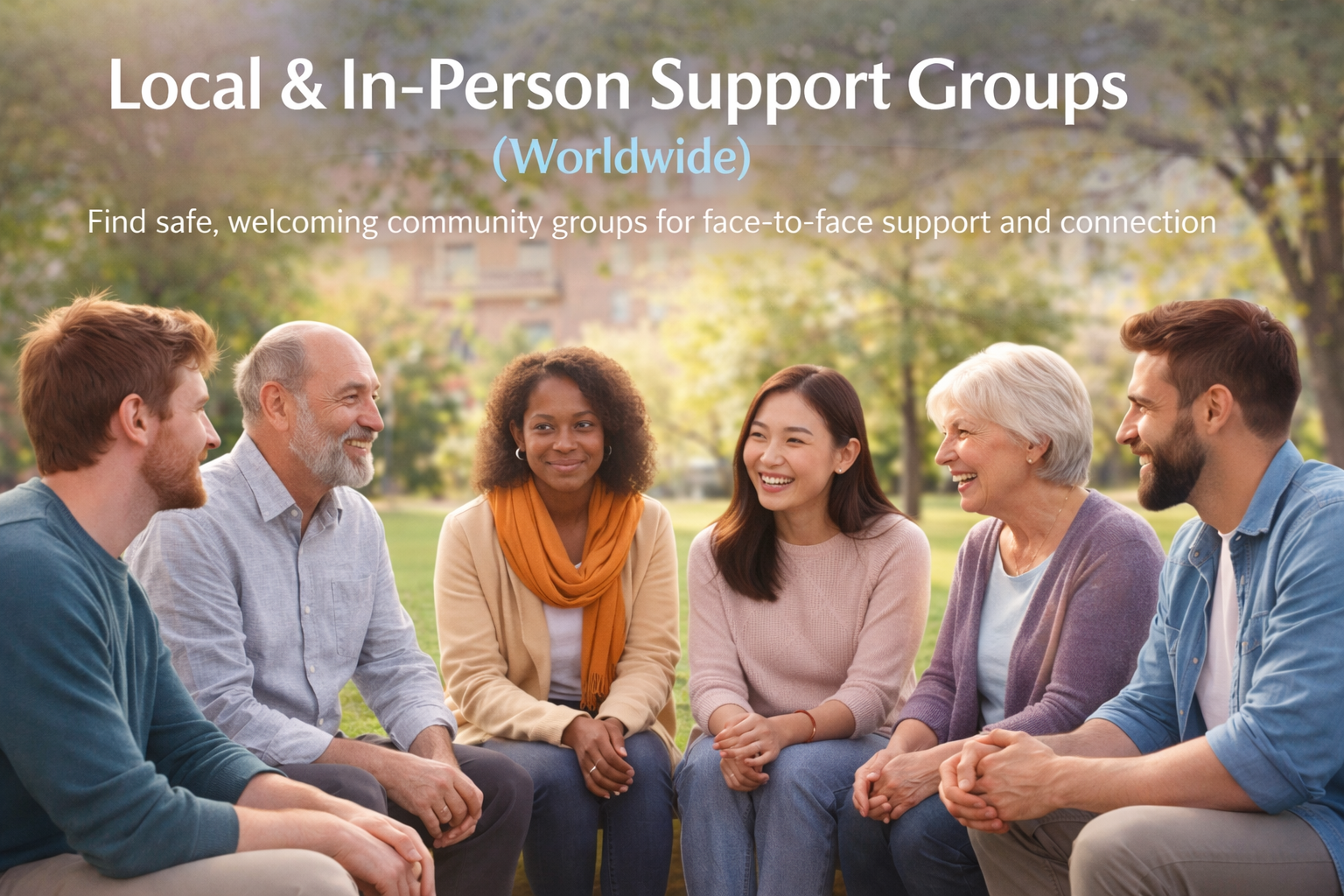
Local & In-Person Support Groups — Worldwide
In-person support can offer something different from online connection — shared space, face-to-face encouragement, practical local help, and a stronger sense of belonging. This page is here to help you explore local support pathways, community groups, and real-world places where support may feel more grounded and personal.
Gentle notice
Some people feel more connected in face-to-face spaces, while others may feel nervous or unsure about attending a group in person. It is okay to start slowly, ask questions first, or bring support with you.
Comfort matters
The right support space should feel respectful, welcoming, and as safe as possible. You do not have to stay in a group that feels uncomfortable or not right for you.
Not for urgent crisis help
Community groups can help with belonging and shared support, but they are not a substitute for emergency or crisis care. If you need urgent help, please use your crisis support or emergency directory first.
Jump to a section
Where to start with local support
In-person support can look very different depending on your area, needs, comfort level, and life stage. Some people want a formal support group, while others may prefer a gentle community space or low-pressure meetup.
I want gentle face-to-face support
Start with low-pressure options like smaller community groups, local wellbeing spaces, or casual support-based meetups.
I want practical help in my area
Local organisations, community centres, and support services can often connect you to in-person help and next steps.
I want support from people nearby
Peer groups and condition-specific meetups can help you feel more understood through shared local connection.
I feel nervous about going
That is completely okay. You can ask questions first, bring someone with you, or start with a smaller group if that feels easier.
Types of local and in-person support
Depending on where you live, support may be offered through community spaces, schools, local organisations, lived-experience groups, or health and wellbeing services.
Community centres
Community centres often host practical support programmes, local groups, social connection events, and access points to wider community help.
Community support →Peer support groups
In-person peer groups offer shared understanding, lived experience, and connection with others who may relate to your journey.
Peer & community groups →Local meetups
Some support spaces are more informal and connection-based, offering social support, encouragement, and a welcoming way to build confidence.
Family & caregiver groups
Parent, carer, and family support groups can provide practical advice, emotional support, and connection with others in similar situations.
Parent support →Faith & cultural community spaces
Some people find support through faith groups, cultural organisations, identity-based spaces, or local community networks that feel more personally relevant.
Identity & inclusion →Wellbeing groups & sessions
These may include workshops, psychoeducation groups, wellness spaces, and gentle group support that blend practical guidance with community connection.
Health & allied support →How to find support near you
Local support looks different in every area. These starting points can help you find what may already exist near you without having to search blindly.
Try a local search first
Searching with your town, city, or region name can often help narrow things down.
- “mental health support group near me”
- “autism support group [your city]”
- “community support centre [your area]”
- “ADHD parent support [your town]”
Look in trusted local places
Schools, libraries, community centres, GP clinics, churches, local charities, and support organisations often know what is available nearby.
- Ask for local support directories
- Check noticeboards and websites
- Look for family or youth-focused programmes
- Ask if there are referral pathways
Comfort and safety when attending in person
It is okay to be cautious, especially if in-person support is new for you. You are allowed to protect your energy, ask questions first, and leave if something does not feel right.
Things that may help
- Ask questions before attending for the first time
- Bring a support person if that feels safer
- Check location, access, and timing beforehand
- Start with shorter or lower-pressure groups
- Give yourself permission to leave early if needed
Things to watch for
- Pressure to share more than you want to
- Dismissive, shaming, or judgmental behaviour
- Poor boundaries or lack of respect for privacy
- Unsafe spaces that do not feel inclusive
- Promises of “fixes” that feel exploitative or unrealistic
Need a different kind of support?
If local support does not feel accessible right now, that does not mean support is out of reach. You may find online communities, peer support groups, or practical service pathways more helpful as a starting point.