New Zealand Rights & Accessibility
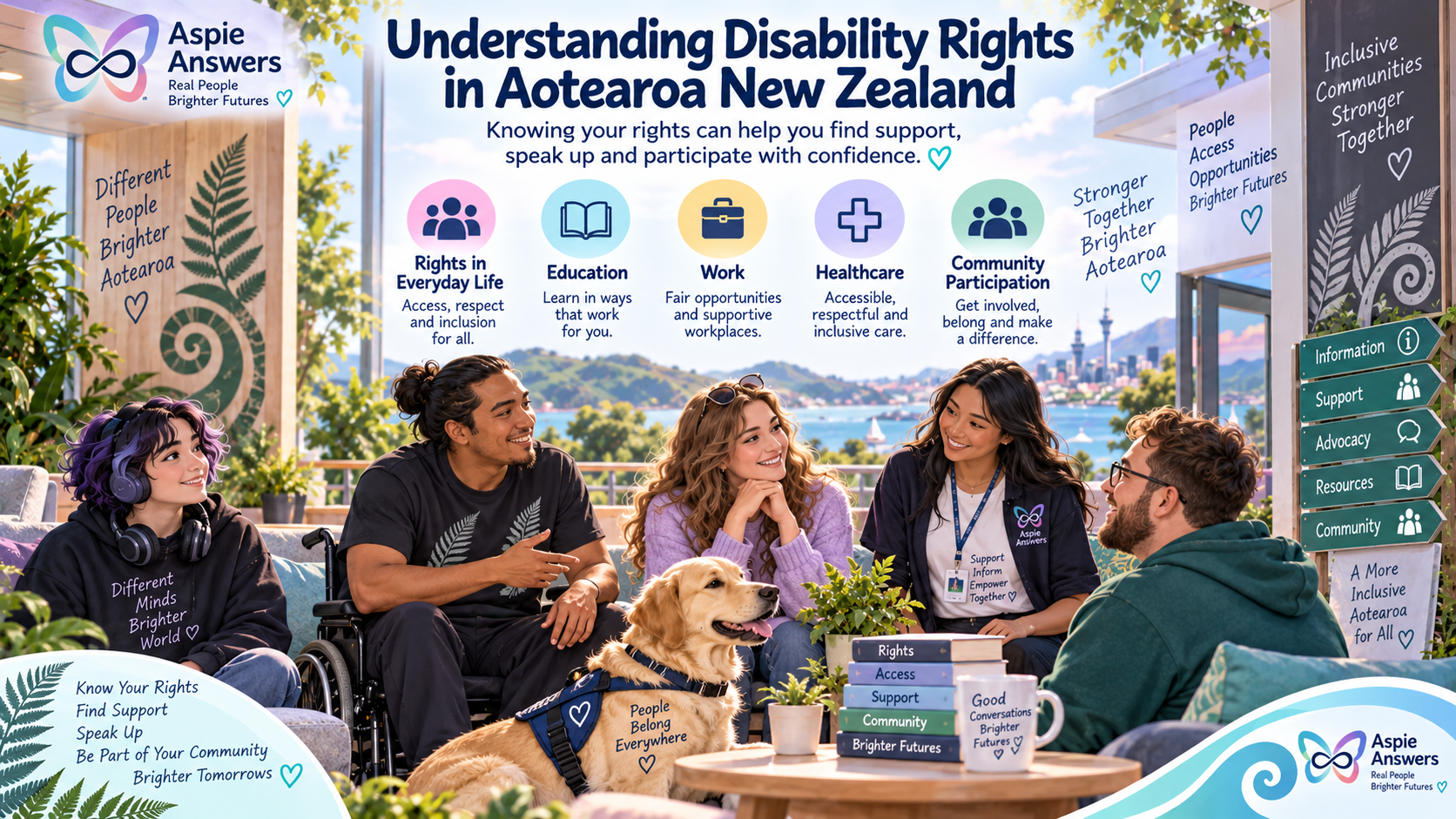
Understanding your rights can make it easier to recognise barriers, ask for access, request support, speak up when something is not working, and find the organisation best placed to help. This page brings together disability rights, accessibility, reasonable accommodation, advocacy and complaint pathways for people in Aotearoa New Zealand.
🌿 Understanding Rights in Aotearoa
Disability rights are about more than avoiding discrimination. They also connect with dignity, participation, communication, accessibility, independence, choice and being able to take part in everyday community life.
Human rights
The Human Rights Act 1993 protects people from unlawful discrimination on prohibited grounds including disability in many areas of public life.
Disability rights
New Zealand is a party to the UN Convention on the Rights of Persons with Disabilities, which provides an important international disability-rights framework.
Participation and belonging
Good accessibility helps remove environmental, communication, digital, organisational and attitudinal barriers so disabled people can participate more fully.
🧭 New Zealand’s Rights & Disability Framework
Several laws, rights frameworks and public systems can matter at the same time. Which one is most relevant depends on what happened, where it happened and what help you need.
Human Rights Act 1993
Disability is one of the prohibited grounds of discrimination under New Zealand human-rights law. Te Kāhui Tika Tangata Human Rights Commission can provide information and a free, confidential dispute-resolution process for matters covered by the Act.
UN Disability Convention
The UN Convention on the Rights of Persons with Disabilities supports the full and equal enjoyment of human rights and fundamental freedoms by disabled people.
New Zealand Disability Strategy 2026–2030
The current Strategy gives direction to government agencies and includes five priority outcome areas: education, employment, health, housing and justice.
Te Tiriti and Enabling Good Lives
The current Disability Strategy identifies Te Tiriti o Waitangi and the Enabling Good Lives approach among the important foundations informing the strategy.
♿ Access Across Everyday Life
Accessibility can involve physical access, communication, sensory needs, information, technology, time, flexibility, support people, learning environments and workplace arrangements.
Reasonable accommodation
Sometimes equal participation requires changes to a usual process, environment or way of doing something. What is reasonable depends on the particular setting and circumstances.
Health & disability services
People using health and disability services have rights under the Code of Health and Disability Services Consumers’ Rights, including respect, communication, informed choice, support and the right to complain.
Education
Disabled students and students with learning-support needs have important rights around enrolment, participation and attendance. Schools and kura also have learning-support pathways.
Employment
Disability is a prohibited ground of discrimination in employment. Access needs, reasonable accommodation and workplace problem-resolution pathways may also be relevant.
Public services
Accessibility may matter when dealing with government agencies, councils, public organisations, education providers and other public-sector bodies.
Digital & communication access
Accessible websites, documents, captions, language support, NZSL, alternative formats and clear communication can all be part of meaningful access.
🌱 Culture, Whānau & Inclusive Participation
Accessibility is stronger when people can bring their identity, culture, language, communication style, whānau relationships and lived experience into decisions that affect them.
Tāngata whaikaha Māori & whānau
The New Zealand Disability Strategy 2026–2030 specifically refers to disabled people, tāngata whaikaha Māori and whānau. Services and pathways should be approached with respect for culture, relationships, identity and participation.
Pacific peoples & communities
People may prefer support that reflects family, community, language, faith and cultural relationships. Accessible services should avoid assuming one approach works for everyone.
Communication choice
Some people may need or prefer NZSL, interpreters, Easy Read, larger text, written information, visual information, AAC, support people or extra processing time.
🤝 Support, Advocacy & Community
You do not always have to navigate a difficult process alone. Depending on the situation, help might come from a whānau member, support person, advocate, disability organisation, government service or independent complaints body.
Disability Support Services
Disability Support Services is a business group in the Ministry of Social Development. It coordinates and funds a range of disability supports, including equipment and modification services. Eligibility and access pathways vary by service.
Independent advocacy
Advocacy can help someone understand a process, prepare what they want to say, communicate concerns and identify appropriate next steps.
Support people
Depending on the setting, you may be able to involve a trusted family member, whānau member, friend, advocate, interpreter or other support person.
Self-advocacy
Self-advocacy can include describing the barrier, explaining what you need, asking questions, requesting information in writing and keeping records.
📣 Complaints, Problems & Finding the Right Help
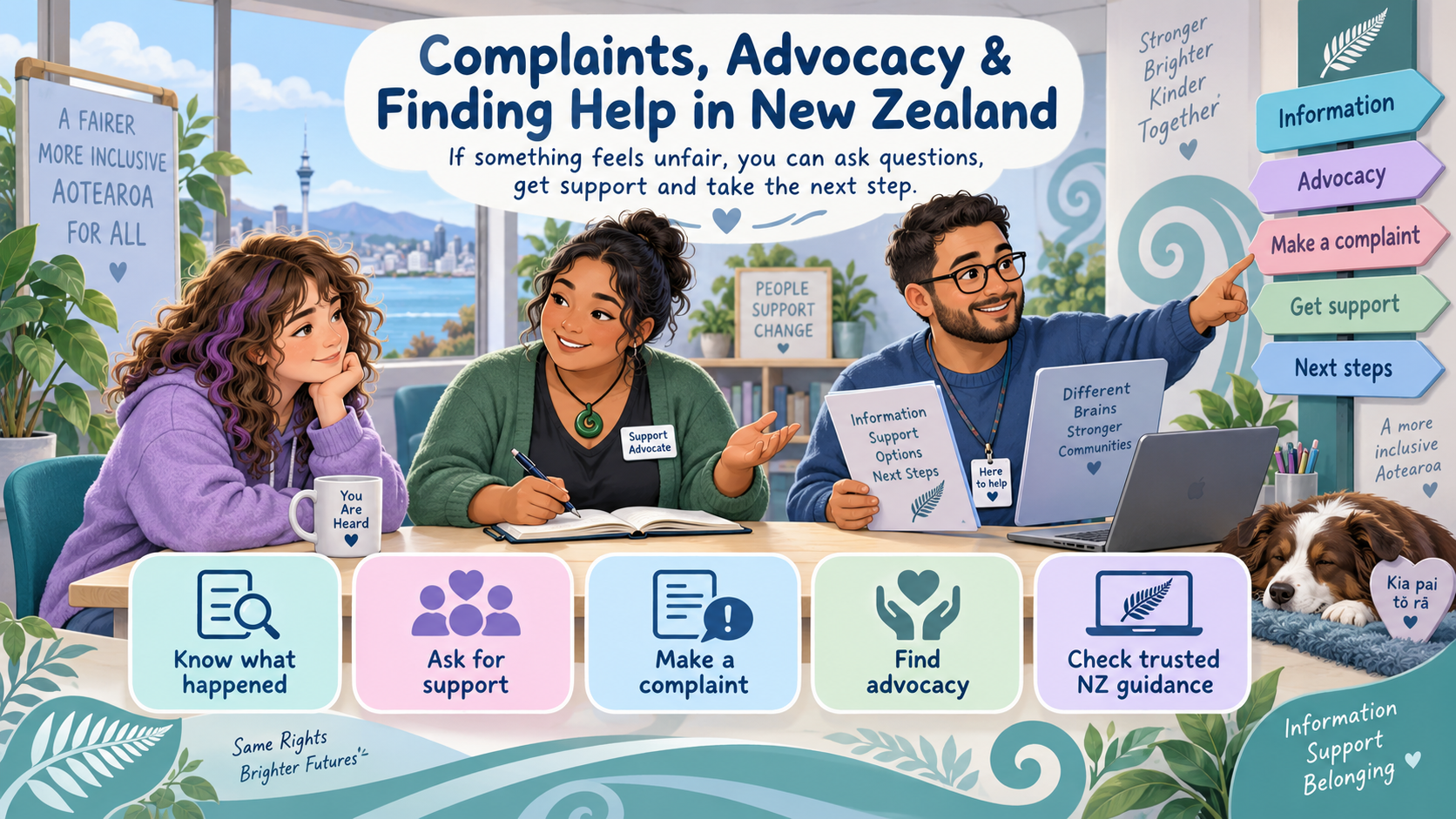
Different organisations handle different kinds of problems. Starting with the right pathway can save time and make the process easier to understand.
Human Rights Commission
For information and free, confidential dispute resolution relating to unlawful discrimination and other matters covered by the Human Rights Act.
Human Rights Commission complaints ↗Health & Disability Commissioner
For concerns about the quality of health or disability services and rights under the Code of Health and Disability Services Consumers’ Rights.
Health & Disability Commissioner ↗Office of the Ombudsman
The Ombudsman can investigate many complaints about New Zealand government agencies, councils and other public organisations, and can provide accessibility support for Deaf and disabled people using its complaint process.
Make a complaint to the Ombudsman ↗Employment New Zealand
For information about workplace rights, discrimination and employment problem-resolution pathways.
Employment discrimination guidance ↗Education pathways
If a disabled student or learner is experiencing access, participation, enrolment or learning-support problems, begin with the provider and use Ministry of Education guidance where relevant.
School enrolment & participation rights ↗Disability Support Services concerns
DSS has complaint pathways for concerns about disability services and for concerns about DSS policies or staff.
DSS complaints information ↗Explore Aspie Answers: Discrimination, Complaints & Problems →
✨ Where Do I Start?
If the whole system feels complicated, you do not need to solve everything at once. Start with the immediate barrier or problem in front of you.
Name the issue
What happened, or what barrier is stopping you taking part?
Identify what you need
Information, an adjustment, communication access, support or a decision reviewed?
Keep useful records
Save relevant dates, messages, letters, screenshots and decisions.
Ask for support
Bring in a trusted person, advocate, whānau member or service if helpful.
Choose the pathway
Use the organisation that deals with the type of problem you are experiencing.