
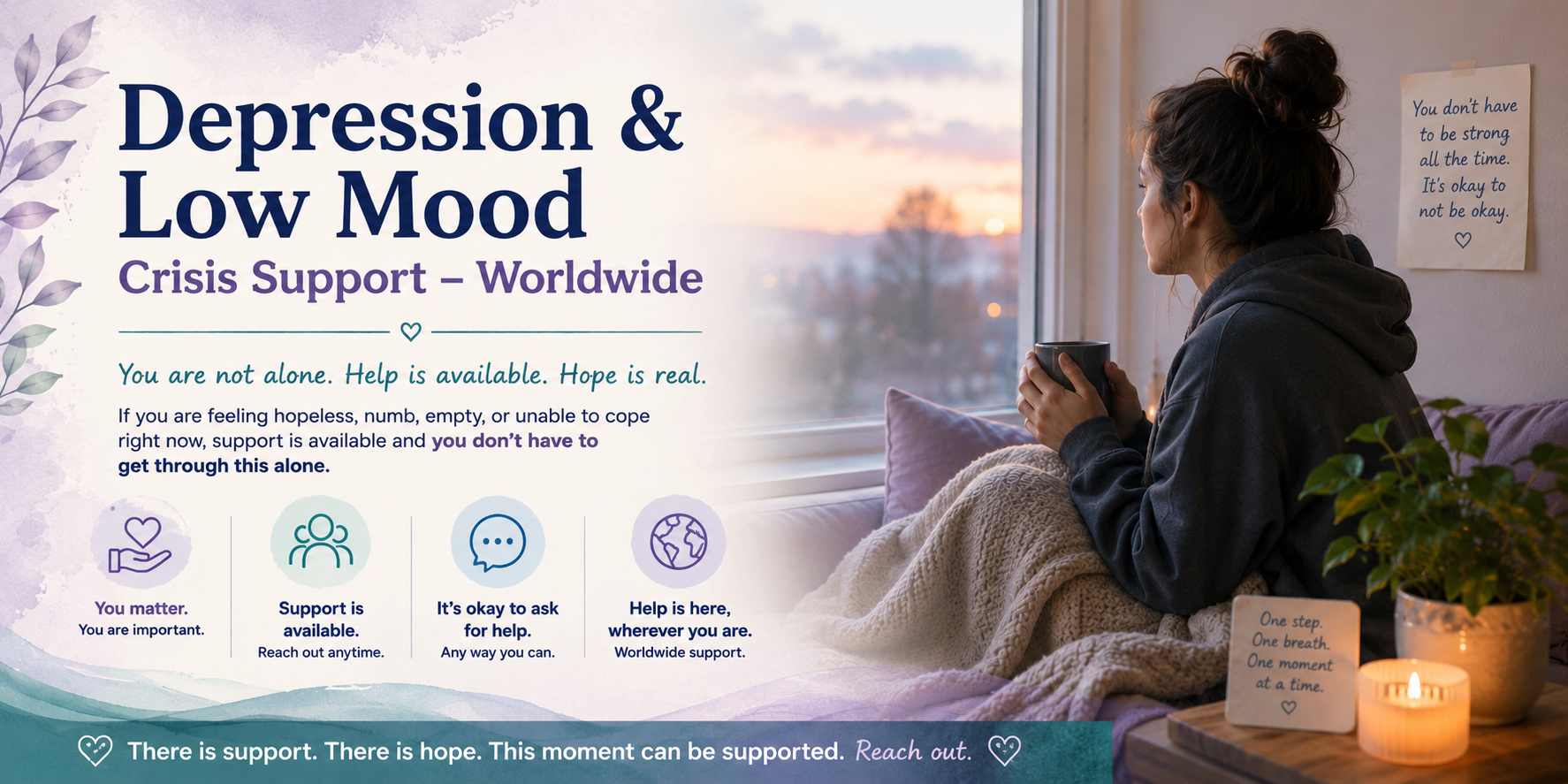
Depression & Low Mood Crisis Support – Worldwide
This page is for people who feel deeply low, numb, hopeless, exhausted, disconnected, overwhelmed, or unable to cope. It is also for people supporting someone who may be struggling with depression or emotional shutdown.
Depression and low mood can make even small steps feel impossible. You do not need to explain everything perfectly. A simple message like “I am not coping and I need support” is enough to begin.
If you are in immediate danger
If you may harm yourself, feel unable to stay safe, have taken something, are at risk, or feel you might not make it through safely, contact emergency services now or go to the nearest emergency department.
- New Zealand: 111
- Australia: 000
- United States / Canada: 911 or 988 where available
- UK / Europe: 999, 112, or your local emergency number
Gentle content notice
This page talks about depression, low mood, hopelessness, emotional crisis, suicidal thoughts, self-harm risk, and urgent support. If this feels too much, pause here and contact a safe person or crisis service.
Low mood can make help feel hard
Depression can make it difficult to speak, reply, move, eat, shower, think clearly, or believe things can change. That does not mean support is pointless. It means the next step needs to be smaller and safer.
You can use fewer words
If you cannot explain what is happening, you can send: “I’m not safe alone,” “I’m not coping,” or “Please help me contact support.”
Quick support steps for right now
Choose one tiny step. You do not need to solve everything today.
Tell one person
Send one short message to someone safe: “I’m not doing okay. Can you check in with me?”
Reduce danger
Move away from anything you could use to hurt yourself, or ask someone to stay with you while you get help.
Use crisis support
Call, text, chat, or ask someone else to contact a crisis service with you if you feel unsafe or unable to cope.
Smallest possible next step
- Put both feet on the floor or sit somewhere safer.
- Drink water if you can.
- Send one message: “I need support.”
- Stay near another person or public/safe place if possible.
- Use emergency or crisis support if you may not stay safe.
What depression or low mood crisis may look like
Depression does not always look like crying. Sometimes it looks like silence, irritability, shutdown, exhaustion, numbness, withdrawal, or being unable to do basic tasks.
| Area | What it might look like | Helpful next step |
|---|---|---|
| Mood | Sadness, numbness, irritability, tearfulness, hopeless thoughts, or feeling emotionally flat. | Tell someone safe, write one sentence, or use a mood check-in. |
| Energy | Feeling exhausted, slowed down, restless, or unable to keep up with daily tasks. | Lower the demands and choose one essential task only. |
| Connection | Withdrawing, not replying, avoiding people, or feeling like a burden. | Send a short message: “I’m struggling and could use a check-in.” |
| Safety | Thoughts of not wanting to be here, self-harm, or feeling unable to stay safe. | Reach out for urgent support now: emergency services, crisis line, or trusted person. |
If this is happening to you
If you feel very low, numb, hopeless, or unable to cope, your job right now is not to make a perfect plan. Your job is to get through the next few minutes safely and connect with support.
Try this first
- Move away from immediate danger if possible.
- Stay near another person, even quietly.
- Send one message instead of explaining everything.
- Use text/chat if calling feels too hard.
- Seek urgent help if you may not stay safe.
Copy-and-send message
“I’m feeling really low and I’m not coping. I don’t want to be alone right now. Can you stay with me or help me contact support?”
If you are supporting someone with depression or low mood
Try to be calm, practical, and non-judgemental. Depression can make people feel ashamed, burdensome, or unable to explain what they need.
What can help
- Ask directly and gently if they feel safe.
- Stay with them or help them contact support.
- Offer simple choices instead of lots of questions.
- Validate that things feel hard without arguing.
What to avoid
- Do not shame, lecture, minimise, or compare.
- Do not say “just think positive.”
- Do not leave them alone if they may not stay safe.
- Do not promise secrecy if there is safety risk.
Helpful phrase
“I’m really glad you told me. You do not have to handle this alone. Let’s get support together.”
Worldwide depression & low mood crisis contacts
Contact options can change, so check the official service page where possible. If there is immediate danger, use your local emergency number first.
New Zealand / Aotearoa
- Emergency: 111
- 1737: free call or text 1737 any time for support from a trained counsellor
- Depression Helpline: 0800 111 757
- Lifeline NZ: 0800 543 354 or free text 4357
Australia
- Emergency: 000
- Lifeline Australia: 13 11 14
- Lifeline text: 0477 13 11 14
- Beyond Blue: 1300 22 4636
United States
- Emergency: 911
- 988 Lifeline: call, text, chat, and Deaf/HoH access options
- Crisis Text Line: text HOME to 741741
Canada
- Emergency: 911
- 9-8-8 Canada: call or text 9-8-8 for suicide crisis support
- Crisis Text Line Canada: text HOME to 686868 where available
United Kingdom
- Emergency: 999 or 112
- Samaritans: 116 123, free any time
- Shout: text SHOUT to 85258
- NHS urgent mental health: NHS 111 or local urgent mental health services where available
Ireland
- Emergency: 112 or 999
- Samaritans: 116 123
- Crisis Text Line Ireland: text HOME to 50808 where available
Europe
- Emergency: 112 in many European countries
- Local support: use country-specific suicide prevention, mental health, or urgent care pathways
- Language access: ask for interpreter or translated support where available
International / worldwide
- Find a Helpline: search by country and topic, including depression, anxiety, suicide prevention, self-harm, grief, trauma, and more
- Befrienders Worldwide: international emotional support and suicide prevention directory
If you are unsure what to use
Choose the safest urgent option: emergency services for immediate danger, a crisis line/text/chat service if you may not stay safe, or a trusted person who can stay with you while support is contacted.
Accessible support options
Depression and low mood can make speaking, explaining, or searching for help feel too hard. These pages may help lower the pressure.
Text or chat support
Text and webchat can be easier when phone calls feel impossible.
Open text/chat supportNeurodivergent crisis support
For shutdown, burnout, masking overload, sensory overwhelm, or communication barriers.
Open ND crisis supportCommunication access
For AAC, typing, writing, yes/no answers, non-speaking support, and extra processing time.
Open communication accessWhere to go next
These pages can help connect this topic into the wider crisis support structure.
Crisis Support by Topic
Return to the main topic doorway for different types of crisis support.
Open topic supportSuicide & Self-Harm Crisis Support
For suicidal thoughts, self-harm urges, or feeling unable to stay safe.
Open suicide/self-harm supportAnxiety, Panic & Overwhelm
For panic, spiralling thoughts, overwhelm, shutdown, or intense fear.
Open anxiety supportTrauma, PTSD & Flashbacks
For trauma responses, flashbacks, dissociation, panic, or feeling unsafe after triggers.
Open trauma supportCrisis Support by Location
Find emergency and crisis support by country or region.
Open location supportDepression & Low Mood Resources
For non-crisis tools, worksheets, check-ins, and supportive resources.
Open support resources