
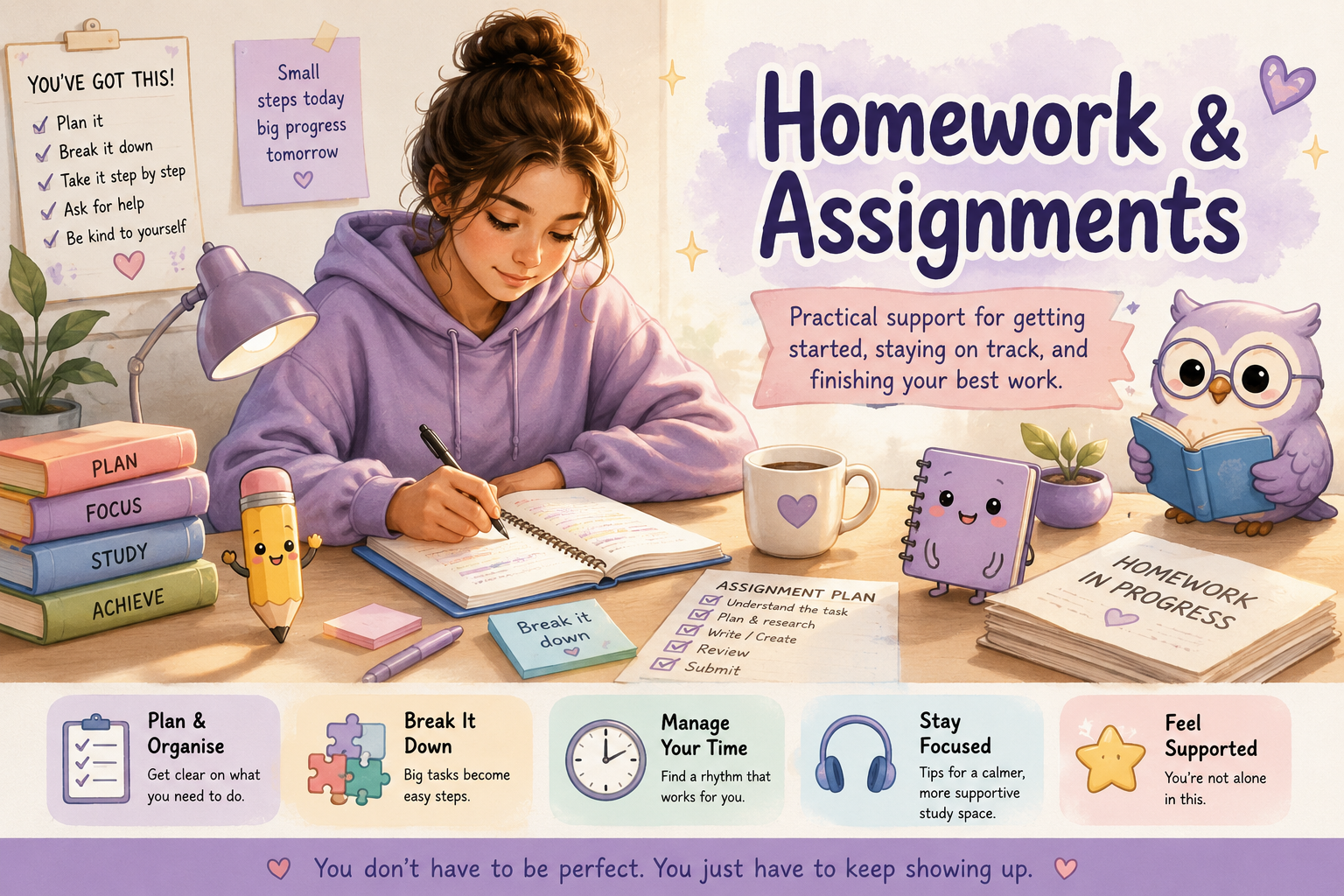
Homework & Assignments
Homework and assignments can involve much more than knowing the subject. You may need to understand the task, work out where to begin, organise materials, manage time, stay focused and remember to submit the finished work.
This page offers practical, neurodivergent-friendly ideas for making study tasks feel clearer and more manageable.
🔎 Search Aspie Answers
Looking for another study, planning, wellbeing or everyday support topic? Search the Aspie Answers website.
🧠 Why Homework & Assignments Can Feel Hard
A task that looks simple from the outside can involve many hidden steps.
🚦 Getting Started
You may know the task needs doing but still feel stuck at the starting line. Task initiation can be a real barrier.
🧩 Unclear Instructions
Broad or vague instructions can make it difficult to work out what the teacher, tutor or course is actually asking for.
⏰ Time Blindness
Estimating how long research, writing, editing or preparation will take may be difficult.
📚 Too Many Steps
Research, planning, drafting, checking and submitting can merge into one enormous task.
🎧 Focus & Sensory Needs
Noise, movement, lighting, interruptions or internal distractions may make concentration harder.
💭 Perfectionism & Worry
Fear of getting something wrong can sometimes make beginning or finishing the work feel harder.
🌱 Getting Started When Your Brain Feels Stuck
The first goal does not have to be “finish the assignment.” Make the first action much smaller.
📖 Open the Task
Your only first step might be opening the assignment instructions or learning platform.
✏️ Write the Title
Create the document, add the title and save the file. That still counts as starting.
⏱ Try Five Minutes
Give yourself permission to work for only five minutes. Continuing is optional.
👥 Use Body Doubling
Work near another person, join a study session or use a supportive virtual study environment.
📝 Make a Messy Start
Your first notes or draft do not need to be polished. Getting ideas out can come before organising them.
⭐ Choose the Easiest Step
Starting with an easy or familiar part can create momentum before you approach the harder sections.
🧩 Break the Assignment Into Smaller Steps
Turn one large task into a visible sequence of smaller actions.
Read the Task
Read the instructions once. Highlight the important words, requirements and due date.
Work Out What “Done” Looks Like
Identify the format, word count, questions, sections or pieces of work that need to be completed.
List the Mini Tasks
Write down research, reading, planning, drafting, editing and submission as separate tasks.
Choose the Next Action
Focus on the next visible step instead of holding the entire assignment in your head.
Check and Submit
Build checking, saving, uploading and confirming submission into the plan. Submission is a task too.
📅 Planning Without Making the Plan Another Huge Task
A useful plan should reduce mental load, not create more of it.
📌 Put the Due Date Somewhere Visible
Use a calendar, planner, wall chart or digital reminder that you are likely to notice.
⬅️ Work Backwards
Start with the due date and work backwards to identify when drafting, research and checking need to happen.
🧱 Use Small Work Blocks
Plan short, realistic work periods rather than expecting one enormous study session.
🌦 Plan for Low-Energy Days
Leave some flexibility. Energy, health, sensory load and unexpected events can affect study capacity.
🔔 Use More Than One Reminder
A due-date reminder may not be enough. Try reminders for starting, continuing, checking and submitting.
✅ Track What Is Finished
Tick completed steps off. Visible progress can make the remaining work feel clearer.
🎧 Focus & Your Study Environment
There is no single “correct” study environment. Notice what helps your brain settle into the task.
🔇 Reduce Unhelpful Noise
Try headphones, ear defenders, quiet spaces or a consistent background sound if these help you.
🎵 Add Helpful Sound
Some people focus better with instrumental music, familiar audio or gentle background noise.
🧸 Keep Regulation Tools Nearby
Fidgets, a comfortable seat, a drink, sensory items or movement breaks may support concentration.
📱 Reduce Digital Distractions
Silence notifications, use focus mode or place distracting devices somewhere less visible.
🚶 Move When Needed
Standing, pacing, stretching or changing position may help some people think and regulate.
☕ Prepare Before Starting
Gather your materials, water and study tools first to reduce repeated interruptions.
🤝 Getting Support With Homework & Assignments
Asking for clarification or support can be part of completing the task.
❓ Ask for Clearer Instructions
If the task is vague, ask for an example, written instructions or a clearer explanation of the expected outcome.
📋 Ask for a Checklist
A visible list of requirements can reduce the pressure of remembering every part of the task.
🗓 Discuss Deadlines Early
If you are struggling, speaking to the appropriate teacher, tutor or support person before the deadline may create more options.
👥 Study Alongside Someone
A friend, classmate, family member, tutor or support person may help with momentum and accountability.
🧠 Explain What Part Is Hard
Instead of saying “I can't do it,” try identifying whether the barrier is starting, understanding, organising, focusing or finishing.
🌱 Use the Support That Fits You
Support needs are individual. The goal is to find practical adjustments that help you access learning.
🧠 A Buzzy Brain reminder
If your brain is struggling to begin, the task may still be too large or unclear. Try shrinking the next action until it becomes something visible and specific.
🐝 A Busy Bee small-win idea
Choose one mini task, complete it and mark it as done. Small visible wins can help build momentum without expecting you to finish everything at once.
📄 Helpful Homework & Assignment Resources
We are building practical supports to make study tasks easier to see, organise and work through.
Assignment Breakdown Planner
Turn one large assignment into smaller, visible and manageable steps.
Homework Checklist
Keep track of what needs to be started, continued, checked and submitted.
Assignment Timeline
Work backwards from a due date and create a realistic study timeline.
Getting Started Sheet
Identify the smallest possible first action when task initiation feels hard.
Study Task Tracker
Make progress visible and keep multiple study tasks in one clear place.
What Do I Need to Do?
A simple worksheet for turning unclear instructions into specific actions.
🌈 Homework & Assignment Collections
This resource family is planned to grow as part of the Aspie Answers Work & Study Life collection. Future resources may be available in different visual and support styles.
More planners, worksheets and practical supports can be added as the Aspie Answers resource catalogue grows.