
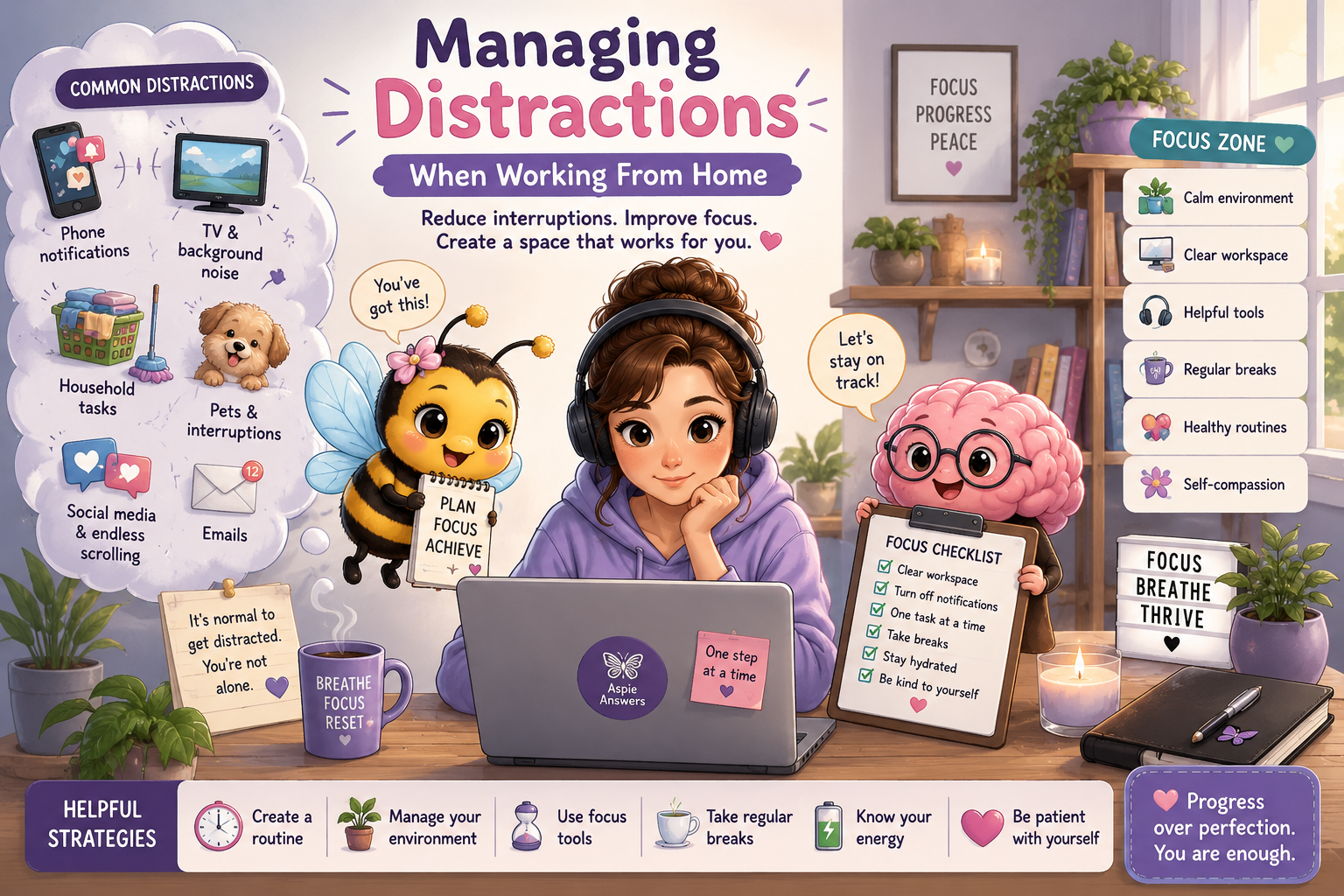
Managing Distractions When Working From Home

Managing Distractions When Working From Home

Working from home can offer flexibility, comfort and greater control over your environment. It can also bring competing demands such as household tasks, digital notifications, background noise, family interruptions and thoughts about everything else that needs to be done.

Managing distractions is not about staying focused every minute. It is about understanding what draws your attention away and creating realistic systems that help you return to the task in front of you.

Why Distractions Happen

Attention naturally changes throughout the day. Energy, interest, sensory comfort, emotions, physical needs and the environment can all affect how easy it is to concentrate.

🧠 Attention Differences

ADHD and executive-function challenges can affect beginning, continuing and returning to tasks.

🏠 Competing Home Demands

Chores, deliveries, family members, pets and household responsibilities can interrupt work.

🔔 Digital Interruptions

Emails, messages, social media, notifications and open tabs can repeatedly pull attention away.

🌿 Sensory Needs

Noise, lighting, temperature, clothing, seating and visual clutter may make focus harder.

😴 Energy and Physical Needs

Hunger, tiredness, pain, thirst and sitting too long can affect concentration.

💭 Internal Distractions

Worries, new ideas, remembered tasks, perfectionism and emotional overwhelm can compete for attention.

Recognising Different Types of Distraction

📱 Digital Distractions

  • Phone notifications
  • Social media and endless scrolling
  • Email alerts
  • News websites
  • Too many browser tabs

🏡 Household Distractions

  • Cleaning and laundry
  • Deliveries and doorbells
  • Family interruptions
  • Pets needing attention
  • Television and background noise

💭 Internal Distractions

  • Racing thoughts
  • Remembering unrelated tasks
  • Anxiety or worry
  • Boredom
  • Decision fatigue

🌈 Sensory Distractions

  • Uncomfortable lighting
  • Unexpected sounds
  • Room temperature
  • Visual clutter
  • Poor seating or posture
Helpful idea: Keep a distraction note beside you. When an unrelated thought appears, write it down and return to it later instead of holding it in working memory.

Create a Focus-Friendly Environment

Your workspace does not need to be perfect or completely silent. Small adjustments can reduce the number of things competing for your attention.

  • Clear only the desk area needed for the current task.
  • Keep water, snacks and useful tools within reach.
  • Use headphones or calming background sound where helpful.
  • Adjust lighting, seating and screen brightness.
  • Keep a timer or clock visible.
  • Place your phone out of immediate reach.
  • Use a visual sign when interruptions should be limited.
  • Keep only the documents needed for the task open.

Managing Digital Distractions

1

Turn Off Unnecessary Notifications

Keep alerts only for messages that genuinely need an immediate response.

2

Use Focus or Do Not Disturb Modes

Create a period where non-essential calls, messages and app alerts are hidden.

3

Close Unused Tabs and Programs

Keep only the tools needed for the current task visible.

4

Check Email at Planned Times

Where your work allows, group email checking into planned periods.

5

Use Website or App Blockers

Temporary blockers can reduce access to distracting websites during focus periods.

Managing Household Interruptions

🕒

Set Work Hours

Let household members know when you are working and when you are available.

🚪

Use a Visual Signal

A closed door, desk sign or shared calendar can show when interruptions should be limited.

🧺

Schedule Household Tasks

Give chores a planned time so they do not compete with every work period.

🥤

Prepare Before Starting

Have drinks, snacks and work materials ready before a focus session.

🐾

Plan for Pets

Schedule feeding, walks or play before meetings where possible.

🔄

Expect Real Life

Leave small spaces in the schedule rather than expecting a completely interruption-free day.

Managing Internal Distractions

  • Write unrelated thoughts on a brain-dump page.
  • Break large tasks into very small starting steps.
  • Use grounding when anxiety pulls attention away.
  • Check whether you need food, water, movement or rest.
  • Choose one clearly defined task rather than several vague priorities.
  • Set a short focus period instead of expecting hours of concentration.
  • Aim for complete rather than flawless.
  • Ask for clarification when uncertainty is blocking progress.
Gentle reminder: Losing focus can be useful information. It may signal that the task is unclear, the environment is uncomfortable, your energy is low or you need a break.

ADHD & Executive Function Strategies

👥 Try Body Doubling

Work beside another person or use a quiet virtual session for gentle accountability.

⏳ Use Short Focus Sessions

Work for a manageable period, pause briefly and then decide whether to continue.

✅ Make the First Step Visible

Replace “finish report” with a smaller action such as “open the document.”

🎵 Add Helpful Stimulation

Music, movement, fidget tools or background sound may support attention.

🏆 Use Immediate Rewards

Pair completed focus periods with something pleasant or motivating.

📋 Keep One Main Task List

A single trusted list reduces the need to search several different systems.

Autism-Friendly Focus Supports

  • Follow a consistent start-of-work routine.
  • Use written schedules and clear instructions.
  • Reduce unexpected calls where possible.
  • Use noise-reducing headphones or ear protection.
  • Adjust lighting, temperature and clothing comfort.
  • Allow recovery time after meetings or intense focus.
  • Use direct communication about priorities and deadlines.
  • Create a transition routine between tasks.
Supportive environments matter: Concentration should not depend on constantly tolerating sensory discomfort, unclear expectations or unpredictable interruptions.

Build Focus Without Expecting Perfection

🌱 Aim for Progress

A small completed step is still meaningful progress.

☕ Take Planned Breaks

Resting before complete exhaustion can make returning easier.

🔄 Practise Returning

The skill is not never becoming distracted—it is learning how to gently return.

❤️ Be Kind to Yourself

Self-criticism adds stress without improving concentration.

Distraction is not a personal failure. Your needs, environment and energy all influence focus—and supportive systems can make returning to work easier.

Resources & Downloads

This page can later connect visitors with:

🎯 Daily Focus Planner
📋 Home Office Focus Checklist
📝 Distraction Tracker
⏳ Focus Session Timer Sheet
🧠 Executive Function Focus Worksheet
🐝 Busy Bee Productivity Pack
📱 Digital Distraction Checklist
🌿 Calm Workspace Planning Sheet

Create Focus in a Way That Works for You

Small changes to your environment, routines and digital habits can reduce interruptions and make it easier to return to your priorities. You do not need perfect concentration to have a productive and meaningful workday.

Explore More Working From Home Support