
Understanding Accessibility
Accessibility is about making it possible for people to take part, understand, communicate, learn, work, use services and belong — without unnecessary barriers getting in the way.
It is much broader than ramps or physical access. Accessibility can involve sensory environments, communication, information, technology, learning, neurodivergent needs, emotional safety, physical spaces and the way systems are designed.
Accessibility is about reducing barriers so people have meaningful opportunities to participate in ways that work for them.
Access is more than getting through the door
A place, service, website, classroom or workplace may technically be available while still being difficult or impossible for some people to use. True accessibility considers the whole experience.
Different people may need different things
Needs can be visible or non-visible, permanent or temporary, consistent or fluctuating. An accessible approach allows flexibility rather than expecting everybody to participate in exactly the same way.
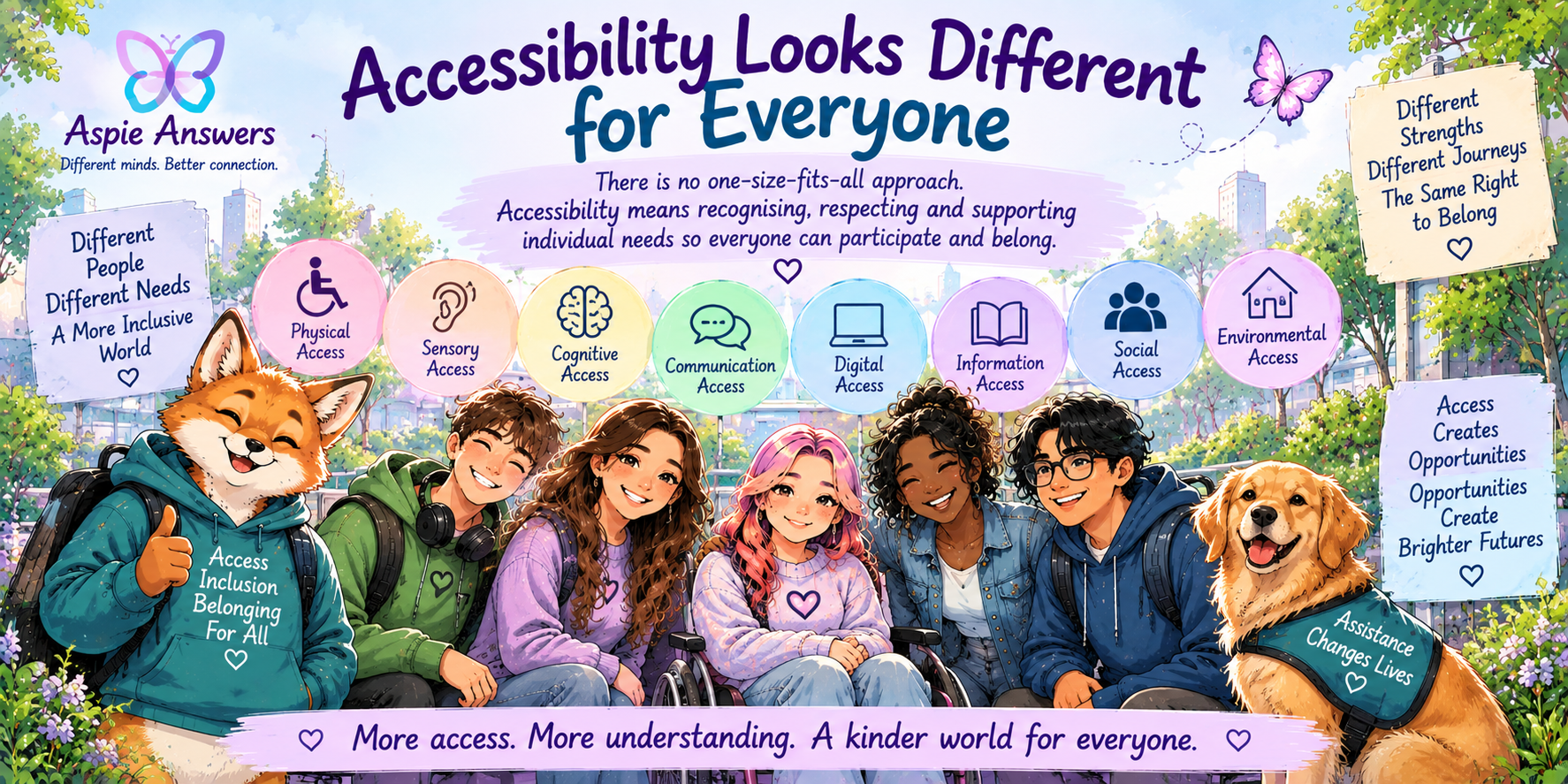
Someone may experience barriers in one area, several areas, or in different ways depending on the environment and situation.
♿ Physical Accessibility
Step-free access, suitable seating, accessible toilets, reach and movement space, transport, mobility access and safe physical environments.
🎧 Sensory Accessibility
Lighting, noise, crowds, smells, textures, temperature, quiet spaces and ways to reduce sensory overload.
💬 Communication Accessibility
Clear language, extra processing time, AAC, written options, visual supports, captions, interpreters and different ways to communicate.
🧠 Cognitive & Neurodivergent Accessibility
Predictability, clear steps, reduced cognitive load, processing time, flexible expectations, executive-function support and sensory consideration.
💻 Digital Accessibility
Readable websites, keyboard navigation, captions, alt text, logical structure, accessible forms, scalable text and assistive-technology compatibility.
📖 Information & Learning Accessibility
Plain language, Easy Read, visual explanations, alternative formats, accessible documents and more than one way to learn or demonstrate understanding.
🤝 Social & Participation Accessibility
Inclusive activities, clear expectations, different participation options and environments that do not rely on one narrow idea of social behaviour.
🌿 Environmental Accessibility
Thoughtful spaces, signage, navigation, seating, sensory conditions and design choices that reduce avoidable barriers.
❤️ Emotional & Psychological Safety
Respectful treatment, dignity, choice, clear information and environments where people can ask for support without shame or unnecessary pressure.
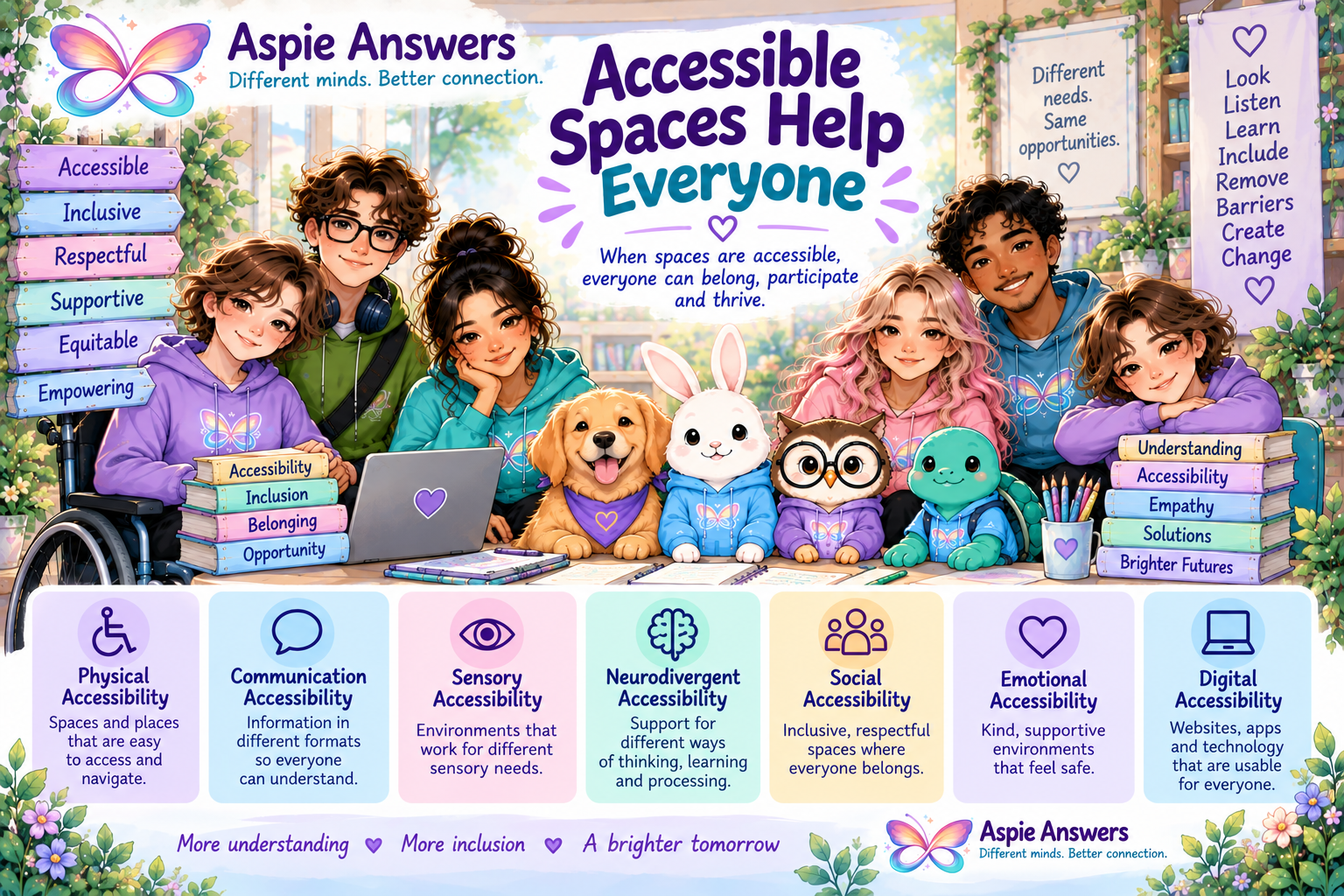
Accessibility matters wherever people live, learn, work, communicate, travel, receive care or participate in their community.
🏡 Home & Community
Buildings, events, shops, recreation, public spaces, appointments and community activities can contain physical, sensory or communication barriers.
📚 Education
Teaching methods, assessment, classroom environments, instructions, timetables and participation expectations can affect whether learning is genuinely accessible.
💼 Work
Recruitment, communication, workplace routines, sensory environments, scheduling and inflexible processes can create barriers that reasonable changes may reduce.
🩺 Healthcare
Appointments, waiting rooms, forms, communication, uncertainty, sensory environments and assumptions about behaviour can affect access to healthcare.
🚌 Transport & Travel
Physical access, information, route changes, crowds, ticketing, wayfinding and unpredictable environments can influence whether travel is usable.
🌐 Online & Digital Life
Websites, apps, forms, videos and online services can exclude people when accessibility is treated as an afterthought.
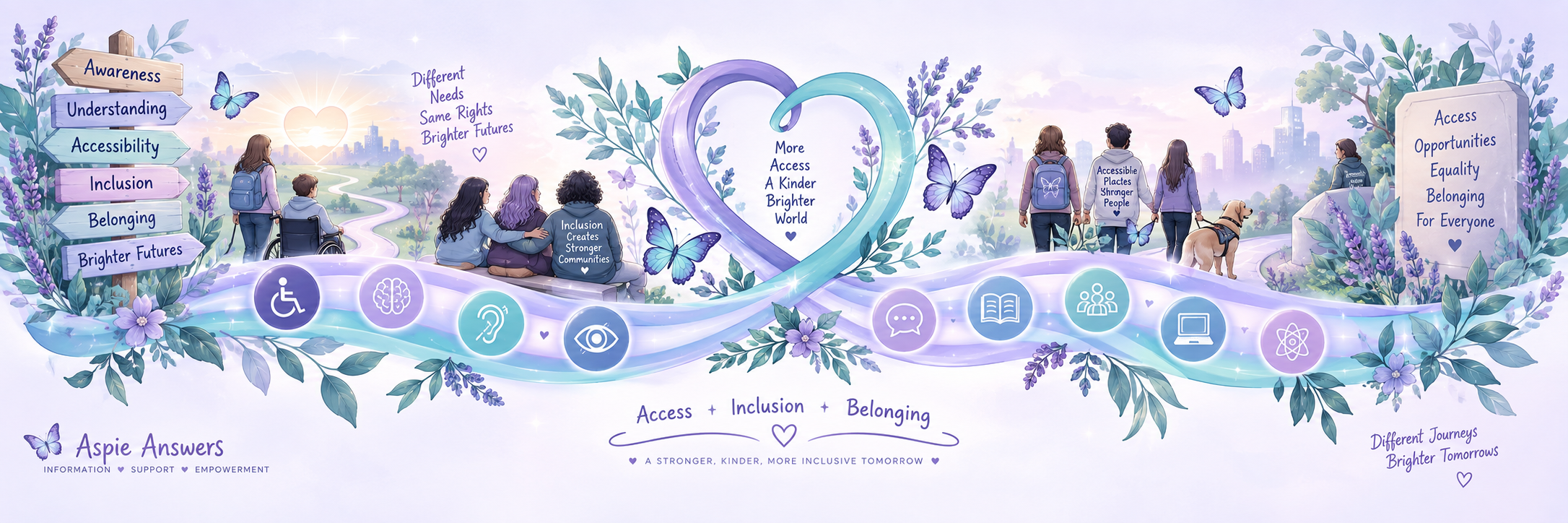
Being able to enter a space is not the same as being able to participate comfortably, safely and meaningfully once you are there.
Access
Can the person get to, understand and use the place, information, service or activity?
Inclusion
Can they participate without being unnecessarily separated, singled out or forced into one narrow way of doing things?
Belonging
Are they respected as part of the community, with their differences recognised without being treated as a problem to fix?
Choice
Can they make meaningful decisions about how they participate and what support works for them?
Accessibility is often strongest when it is considered during design, rather than added only after somebody encounters a barrier.
Design for difference
People vary in how they move, communicate, process information, sense their environment, learn and interact. Designing with that diversity in mind can reduce the need for people to repeatedly ask for exceptions.
Offer more than one pathway
Spoken and written information, quiet and social participation, digital and paper formats, or different ways to complete a task can make environments more usable for many people.
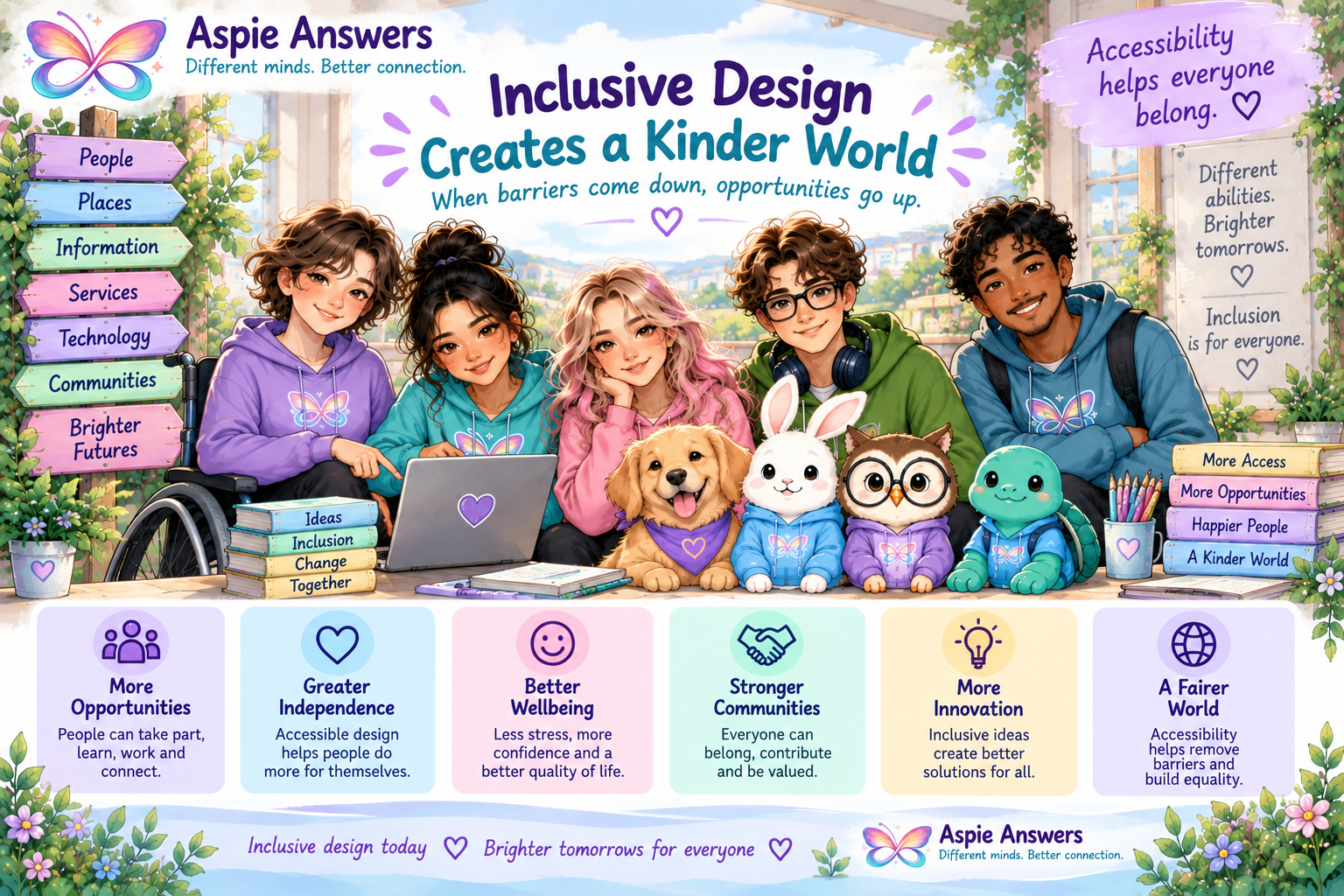
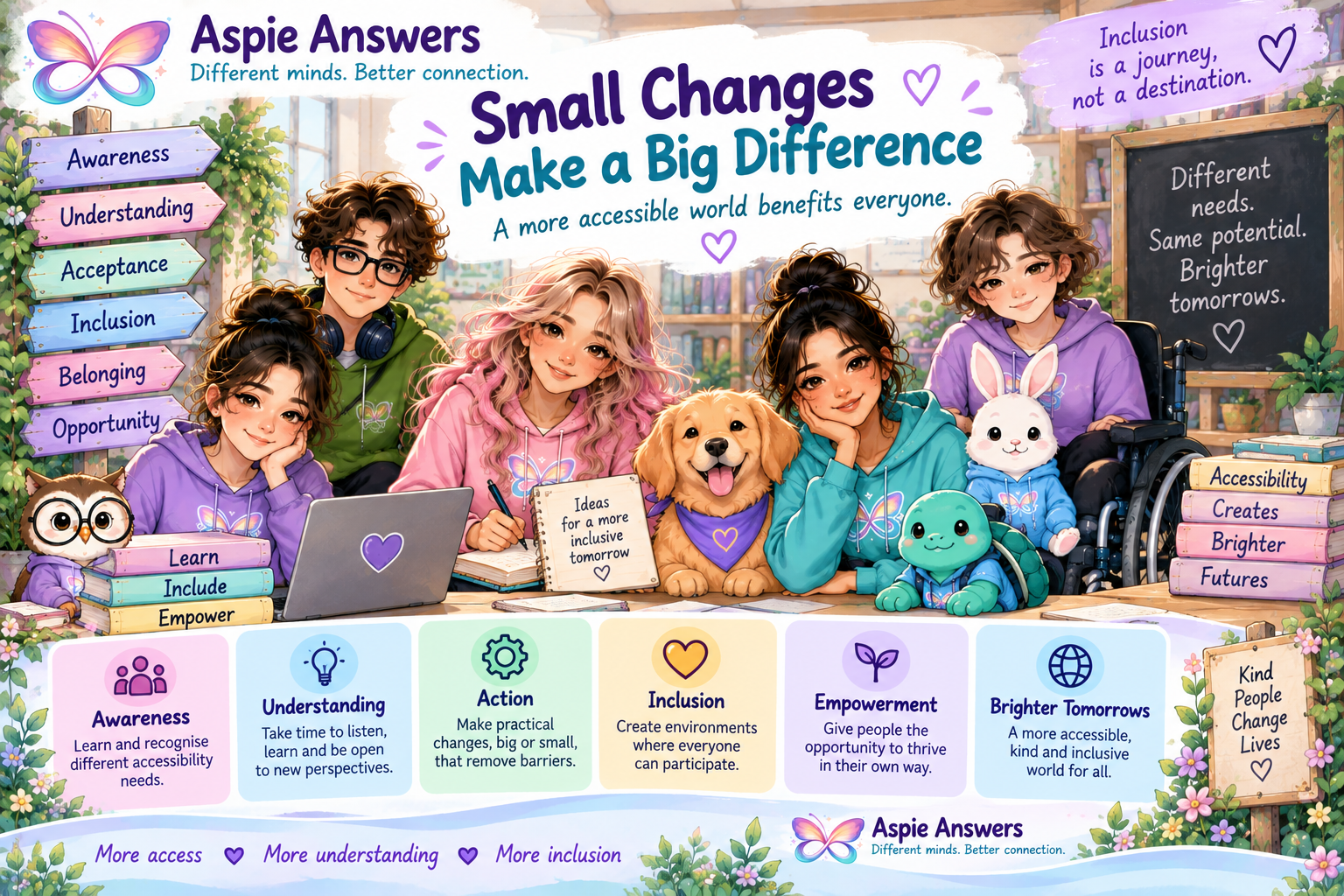
Small, thoughtful choices can remove barriers before they become problems.
📝 Use clear information
Explain what will happen, what is expected, where to go and who to ask for help.
💬 Offer communication options
Allow written, spoken, visual or supported communication where practical.
🎧 Reduce sensory load
Consider lighting, noise, crowds and access to quieter alternatives.
🧭 Build in flexibility
Different timing, seating, participation methods or task approaches can make a major difference.
💻 Make digital content usable
Use meaningful headings, alt text, captions, readable contrast, accessible forms and logical navigation.
🤝 Ask rather than assume
People are often the best source of information about what helps them access an environment or activity.
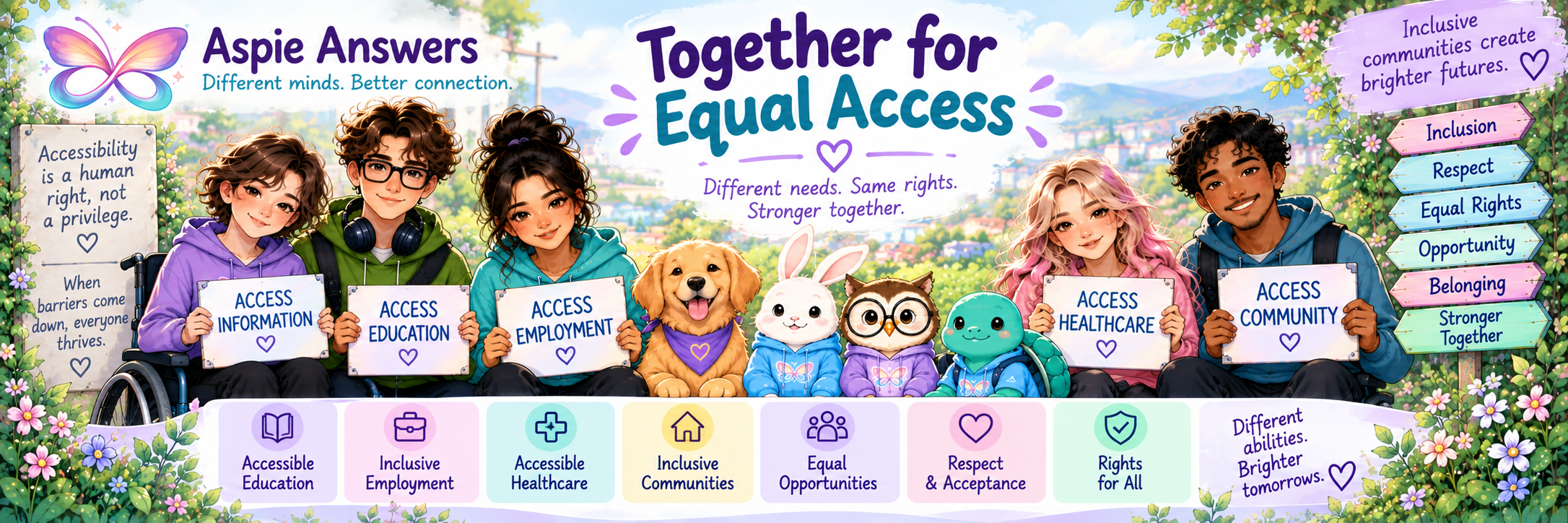
Accessibility can support people across different ages, disabilities, neurotypes, health needs, communication styles and life situations.
Accessibility is connected with dignity, equal opportunity, participation and rights, although legal rules and processes differ between countries and situations.
Reasonable changes can remove barriers
In many settings, adjustments or accommodations can help a person participate more equitably. What is appropriate depends on the person, environment and applicable rules.
Self-advocacy can be supported
Understanding your needs, documenting barriers, asking questions and knowing where to find reliable information can make it easier to explain what would help.
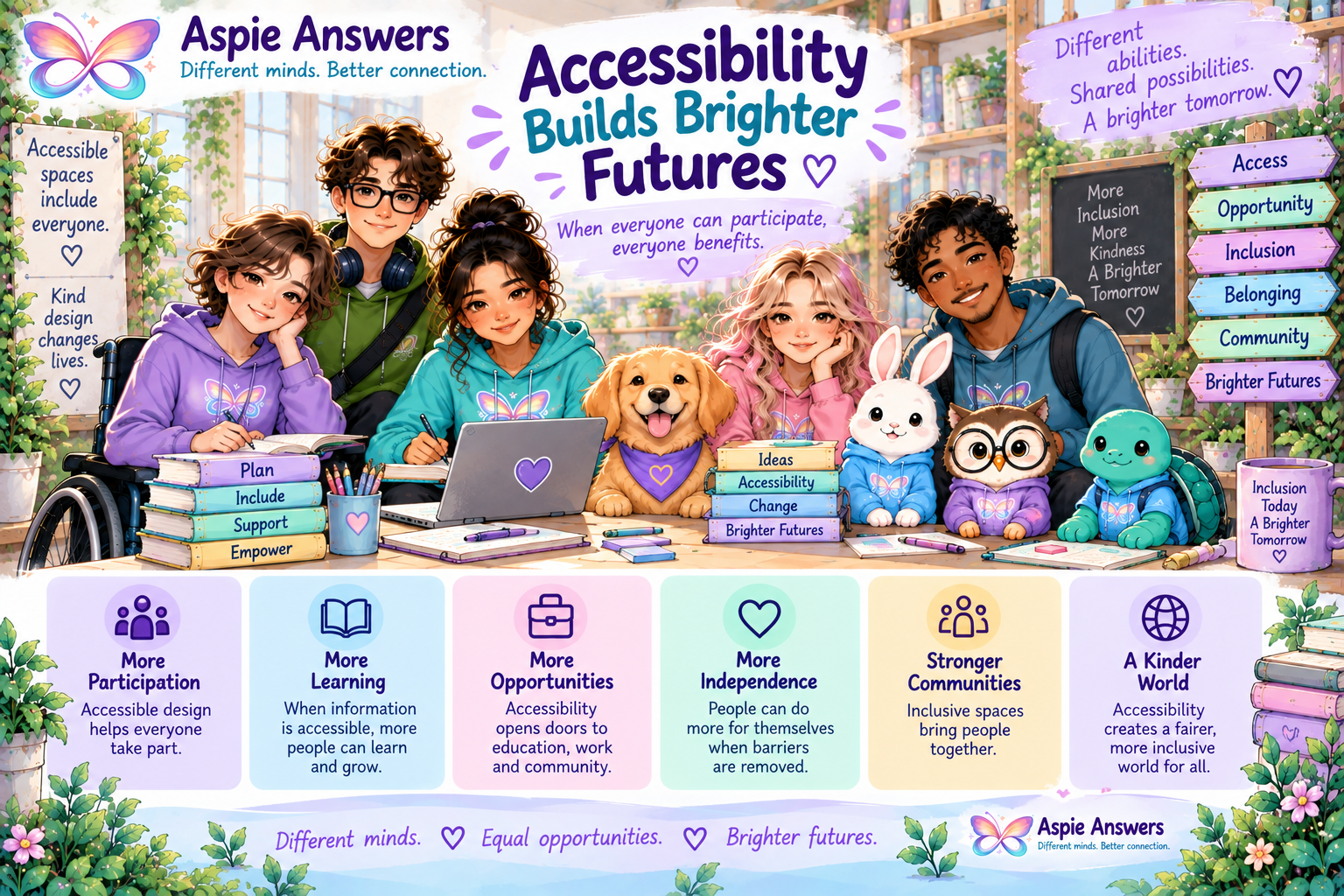
Understanding Accessibility is the foundation. These completed pathways take individual areas further when you are ready to explore a particular need, barrier or rights question.
Accessibility & Rights Library
The Library is the deeper learning and reference space for this hub. It connects guides, tools, resources and specialist material without crowding the main navigation.
Open Accessibility & Rights Library →Two different discovery tools
Topics A–Z: “Where can I find information about this subject?”
Glossary & Definitions: “What does this word or term mean?”
Both can also be discovered through the central Knowledge & Learning master indexes.
Accessibility Helps Create More Ways to Belong
When barriers are reduced and people have meaningful choices, more people can participate, contribute, learn, connect and thrive. Accessibility is not about making everybody the same — it is about making room for human difference.