
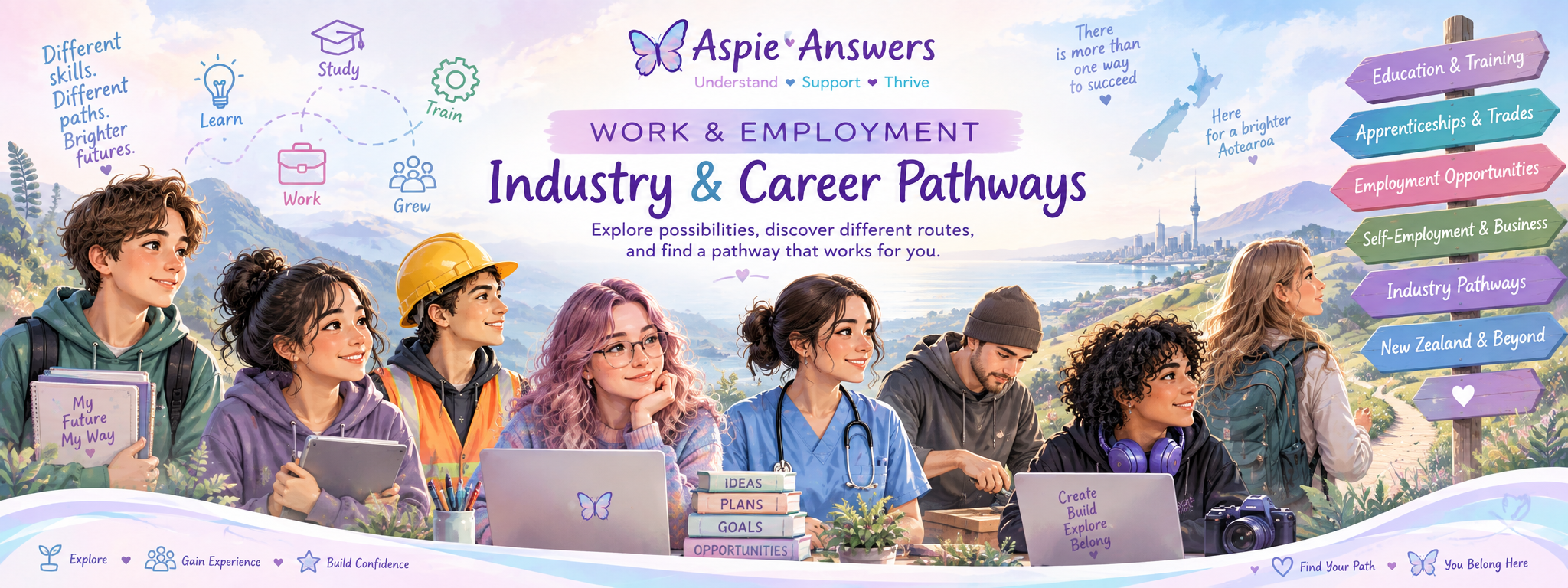
There Is More Than One Way to Build a Working Life
Career pathways can include study, training, apprenticeships, volunteering, work experience, paid employment, self-employment, changing direction or combining several routes over time. This page is here to help you explore possibilities without assuming there is one correct path.
You can begin with your interests and strengths, look at different industries, compare ways of gaining skills and experience, or simply choose one small next step that feels manageable.
One question or one pathway is enough for today.
A career decision does not have to be permanent.
Accessibility, energy and communication needs belong in career planning.
Aspie Answers provides general educational information and practical planning support. Career systems, qualifications, training arrangements and employment services differ by country and can change over time. For current requirements, use the official education, careers, training or employment authority for your location.


Start With Curiosity, Not Pressure
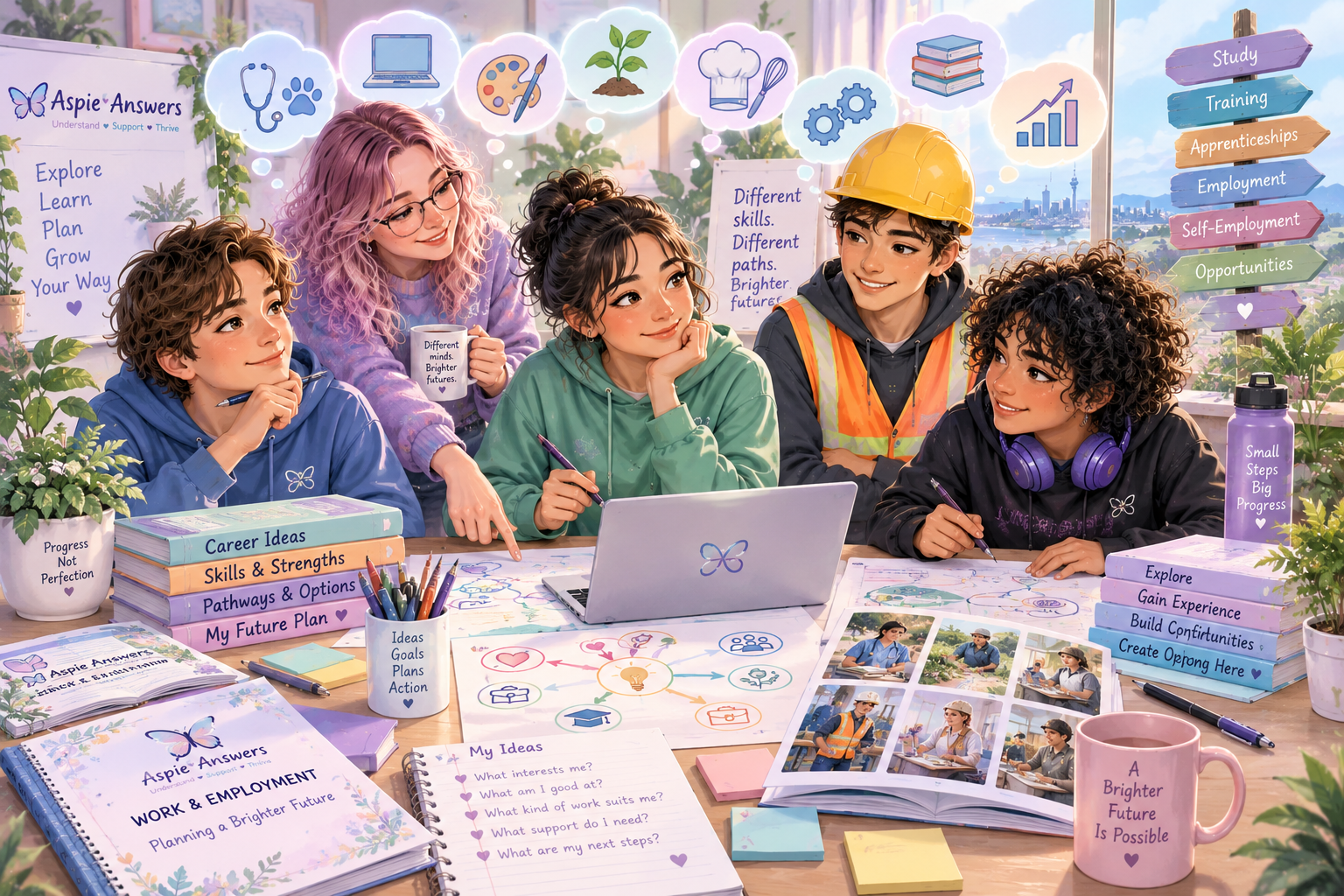
Career exploration is not about forcing yourself to choose one perfect job. It is about gathering information: what interests you, what environments suit you, what skills you enjoy using, what support helps and which possibilities you would like to understand better.
- Notice activities, subjects or problems you naturally enjoy.
- Think about environments that help you concentrate, communicate and feel comfortable.
- Explore what different roles actually involve rather than relying only on job titles.
- Consider practical factors such as travel, hours, sensory demands, income and training.
- Use work experience, volunteering, short courses or conversations to test an idea.
Office & Administration
Administration, coordination, records, reception, scheduling and behind-the-scenes support roles.
Industry pathwayRetail & Customer Service
Customer-facing roles, online support, stores, service desks, sales and product knowledge.
Industry pathwayHospitality & Tourism
Food service, accommodation, events, travel, visitor experiences and tourism support.
Industry pathwayTrades & Construction
Practical, technical and hands-on pathways including apprenticeships and work-based learning.
Industry pathwayHealthcare
Clinical, caring, technical, administrative, laboratory, community and allied-health roles.
Industry pathwayEducation
Teaching, learning support, early childhood, training, libraries and education administration.
Industry pathwayTechnology
Software, data, support, cybersecurity, digital systems, design and technology-enabled work.
Industry pathwayCreative Careers
Design, writing, media, photography, illustration, craft, content and creative production.
Industry pathwayTransport & Logistics
Warehousing, supply chains, driving, dispatch, inventory, transport systems and operations.
Industry pathwayPublic & Community Services
Government, local services, community work, disability support, social services and public-facing roles.
Industry pathwayScience & Research
Laboratory, environmental, research, technical, analytical and evidence-focused career pathways.
Industry pathwayFinance & Business
Accounting, banking, finance, business services, analysis, operations and commercial support roles.
Industry pathwayAgriculture, Horticulture & Outdoor Work
Farming, horticulture, conservation, grounds work, environmental roles and other practical outdoor pathways.
Industry pathway
A Career Can Fit More Than Your Skills
A role may sound interesting on paper but still be difficult if the environment, pace, sensory demands, communication expectations or working pattern do not suit you. Career planning can include the whole person.
Interests & Meaning
What topics, tasks or causes keep your attention or feel worthwhile?
Environment
Do you work best with quiet, movement, structure, flexibility, outdoors, alone or with others?
Communication
Consider meetings, phones, teamwork, customer contact, written communication and processing time.
Energy & Sustainability
Think about hours, travel, recovery time, sensory load, routines and what is realistically sustainable.


What You Bring Matters
Strengths can come from paid work, study, hobbies, caring, volunteering, community life, lived experience and things you have taught yourself.
Thinking Skills
Problem-solving, analysis, pattern recognition, planning, memory, research and attention to detail.
People & Communication
Listening, explaining, empathy, advocacy, teamwork, written communication and helping others.
Practical & Technical
Making, fixing, operating equipment, digital tools, processes, systems and hands-on tasks.
Creative & Lived Strengths
Ideas, visual thinking, persistence, specialist interests, adaptability and knowledge gained through experience.
A useful career fit is often a combination of strengths, interests, support, learning and a workable environment.

Your Route Can Be Direct, Gradual or Change Over Time
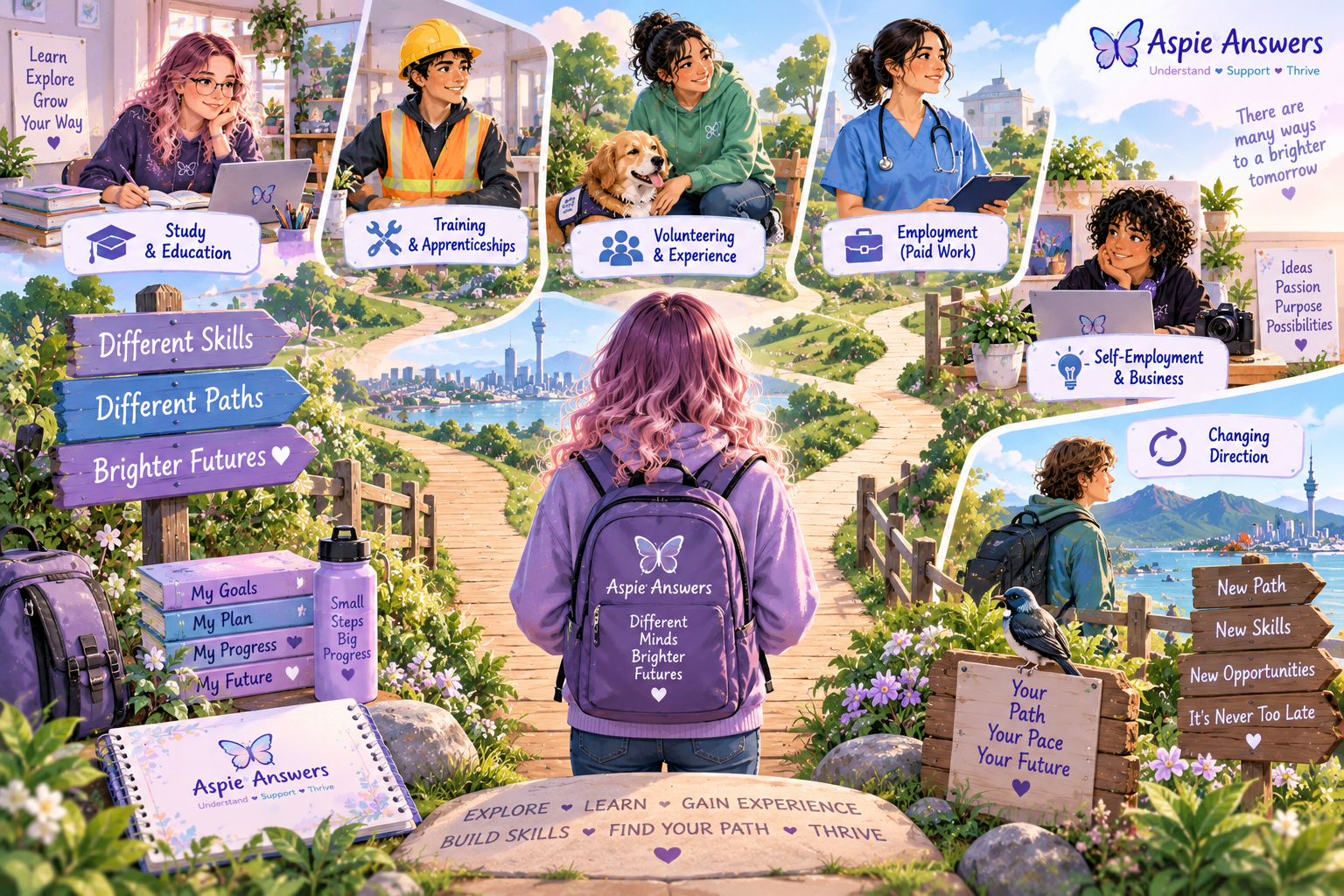
Some people move directly from school or training into work. Others build experience gradually, change careers later, learn on the job, volunteer first, combine part-time work with study, or create their own work through self-employment.
None of these routes is automatically more successful than another. The useful question is: what route helps you move toward a working life that is realistic, meaningful and sustainable for you?
Study & Education
Certificates, diplomas, degrees, short courses and other learning pathways can build knowledge and open options.
Training & Apprenticeships
Work-based learning can combine practical experience with structured training and recognised qualifications.
Volunteering & Experience
Volunteering, projects, placements and work experience can help you test interests and build confidence.
Paid Employment
Full-time, part-time, casual, fixed-term, supported or flexible employment may all be part of a career pathway.
Self-Employment
Freelancing, small business and independent work can suit some people who value flexibility or control.
Changing Direction
Retraining, returning after a break, moving industries or adjusting your goals are valid parts of working life.
Include Support Needs From the Beginning
Career planning works better when it includes what helps you learn, communicate, travel, manage energy and participate safely.
Executive Function
Planning, reminders, task breakdowns, clear steps and external organisation tools can make training and work more manageable.
Sensory Environment
Noise, lighting, movement, uniforms, travel and workspace conditions can influence whether a pathway is sustainable.
Communication
Written instructions, processing time, predictable meetings and direct communication may reduce unnecessary barriers.
Pacing & Energy
Part-time study, gradual transitions, breaks and realistic workloads can be part of a successful pathway.
Access & Learning Support
Training providers, education settings and employment services may have disability, learning or accessibility support available.
People Around You
Family, whānau, mentors, careers advisers, employment specialists and trusted supporters can help you explore options.
Official Career, Training & Qualification Pathways
Aspie Answers is based in New Zealand. The services below are useful starting points for current official information about career ideas, qualifications, study, training and employment support.
Tahatū Career Navigator
Explore career ideas, interests, skills, study, training and different ways into a career.
Visit Tahatū Career Navigator ↗NZQA — Courses & Qualifications
Check recognised courses, qualifications and provider accreditation information.
Search NZQA courses & qualifications ↗New Zealand Apprenticeships
Use the Tertiary Education Commission for current information about formal apprenticeship programmes and work-based learning.
Explore NZ Apprenticeships ↗Workbridge
Employment support for eligible disabled people and people with health conditions in New Zealand.
Explore Workbridge support ↗Official Starting Points Beyond New Zealand
Career systems, qualifications and training pathways differ by country. These official services can help visitors explore occupations, skills, learning and career options in their own region.
Australia — Your Career
Explore occupations, career pathways, training options, job-readiness support and skills information.
Explore Your Career ↗United Kingdom — National Careers Service
Explore job profiles, sectors, qualifications, progression routes and careers advice.
Explore UK Careers ↗United States — CareerOneStop
Explore careers, assessments, training, industry information and job-search support.
Explore CareerOneStop ↗Canada — Job Bank Career Planning
Explore occupations, strengths, labour-market information, education, training and career transitions.
Explore Canada Job Bank ↗Europe — Europass
Reflect on skills, record experience, plan learning and explore career opportunities across Europe.
Explore Europass ↗Other Countries & Regions
Use your national or regional careers, education, vocational-training and qualifications authority for current local information.
Use current official local guidanceQualification recognition, licensing, apprenticeships, education systems and employment programmes can vary widely. The general reflection tools on this page can travel with you, but formal requirements should always be checked locally.
Meet Two Guides for the Journey
Companions appear where their established roles genuinely support the topic.
Finn Fox
Finn supports problem-solving, flexibility, practical decisions and finding another route when the first option does not fit.
Olive Owl
Olive supports learning, study, understanding and educational support - especially useful when exploring training and qualifications.

Turn Ideas Into Practical Next Steps
Explore practical career-planning, work-preparation and accessible resource pathways across Aspie Answers.
Career Planning Tools
Strengths exercises, pathway comparisons, decision prompts, goal planning and next-step worksheets.
Practical resource pathwayWork Preparation
Application, interview, first-day, workplace-routine and communication resources can connect into this pathway.
Practical resource pathwayDifferent Editions
Resources can be offered in Classic, Companion, Easy Read, Large Print and other accessible editions when those formats genuinely improve usability.
Accessible editionsYou Do Not Have to Have Your Whole Future Worked Out
Careers can grow through experiments, learning, support, unexpected opportunities and changes of direction. Choose one possibility to explore, one question to ask or one manageable next step.