
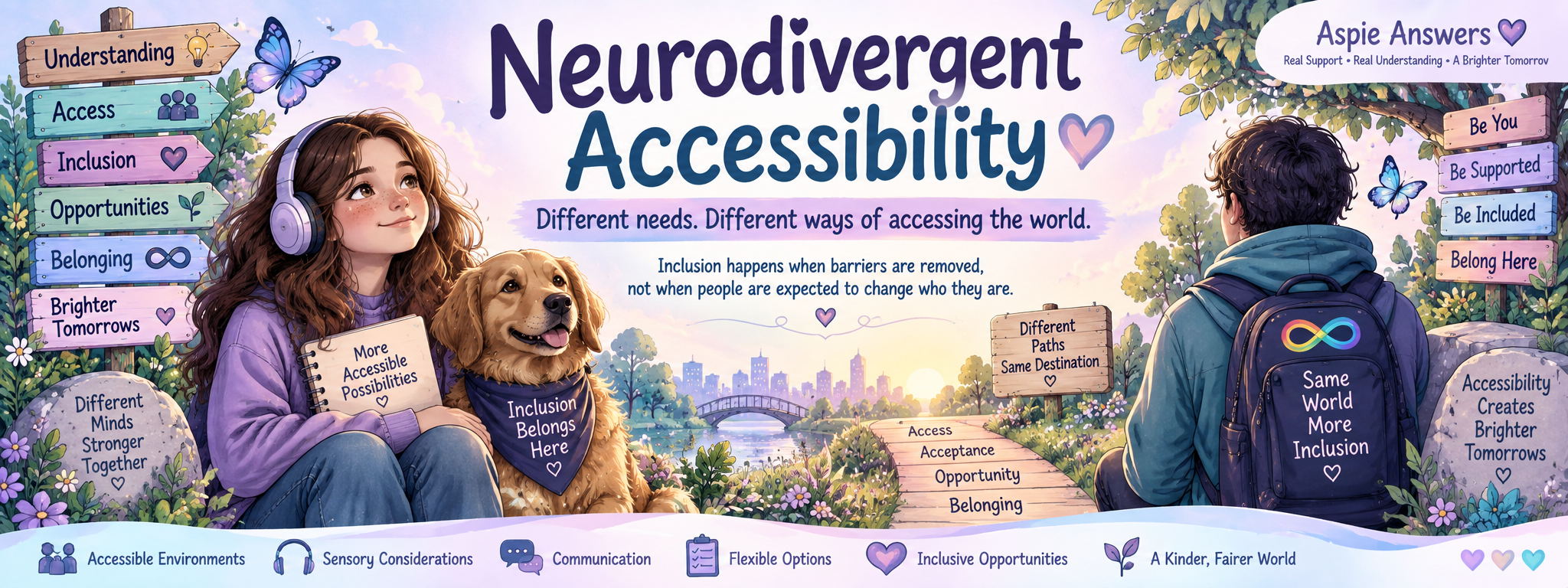
Neurodivergent Accessibility
Neurodivergent accessibility is about reducing barriers that can affect autistic people, people with ADHD or AuDHD, people with learning differences and other neurodivergent people across everyday life.
Access can involve sensory environments, communication, processing time, executive functioning, predictability, flexibility, emotional safety and having more than one meaningful way to participate. The aim is not to make people appear more neurotypical; it is to make participation more workable and sustainable.
Understanding Neurodivergent Access
A person may technically be able to enter a place, attend an appointment or complete a task while still facing significant sensory, cognitive, communication or executive-function barriers. Accessibility asks whether the whole experience is genuinely usable.
Accessibility is not the same as coping
Someone may appear to manage while using enormous energy to mask distress, decode expectations or tolerate overload. Enduring a barrier does not make the environment accessible.
Access can fluctuate
Sleep, stress, unfamiliarity, burnout, illness, social demand and sensory load can change what is manageable. Flexible systems are often more accessible than rigid ones.
Sensory Accessibility
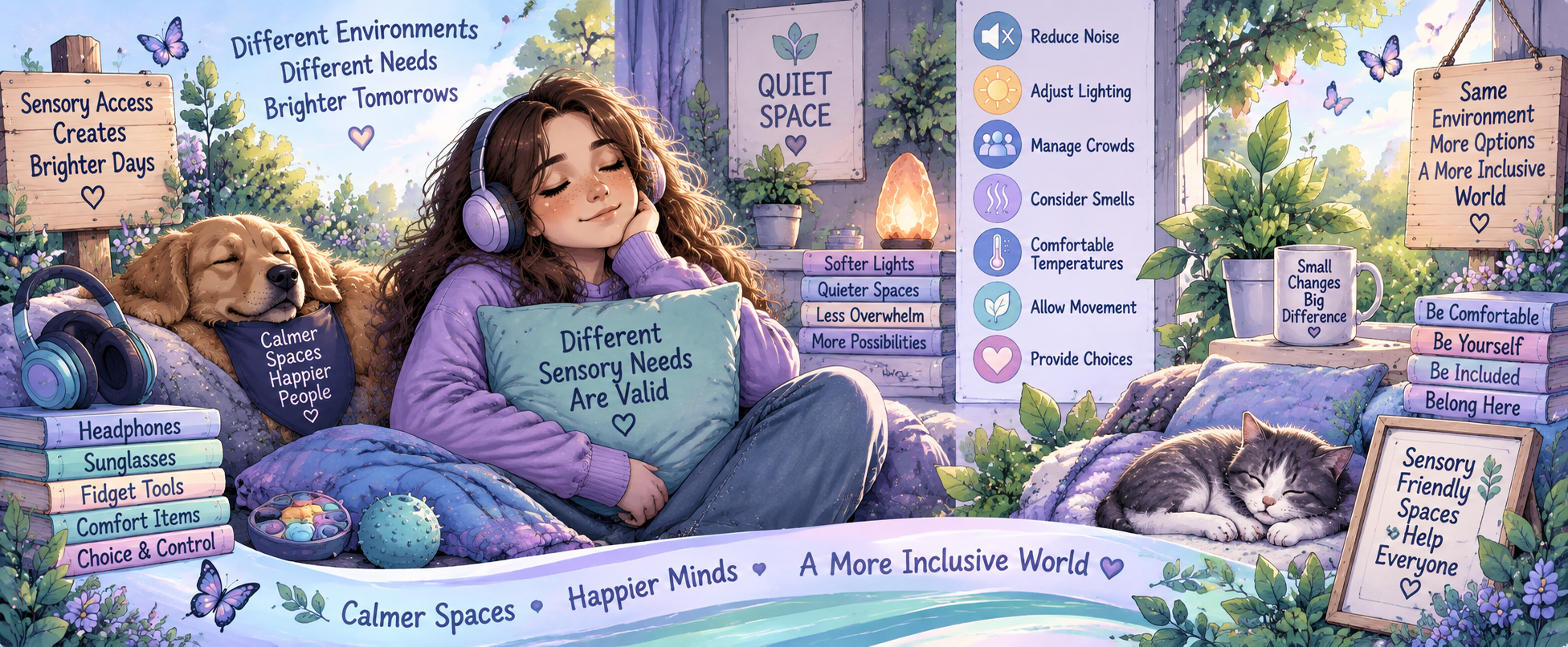
Noise, lighting, movement, crowds, smells, textures, temperature and unexpected sensory input can affect concentration, regulation and participation.
🔊 Sound
Reduce avoidable noise, offer quieter alternatives and allow appropriate hearing protection.
💡 Lighting
Consider glare, flicker and bright overhead lighting; alternative seating or softer light can help.
👥 Crowds & Movement
Quieter times, smaller groups, more space and predictable movement can reduce load.
🌿 Recovery Space
Access to a calmer place or time away from stimulation can support regulation before overload escalates.
🌡 Comfort
Temperature, seating, clothing expectations and freedom to move can affect access.
🌸 Smell & Texture
Strong fragrance, food smells and tactile expectations can create real barriers for some people.
More Than One Way to Communicate
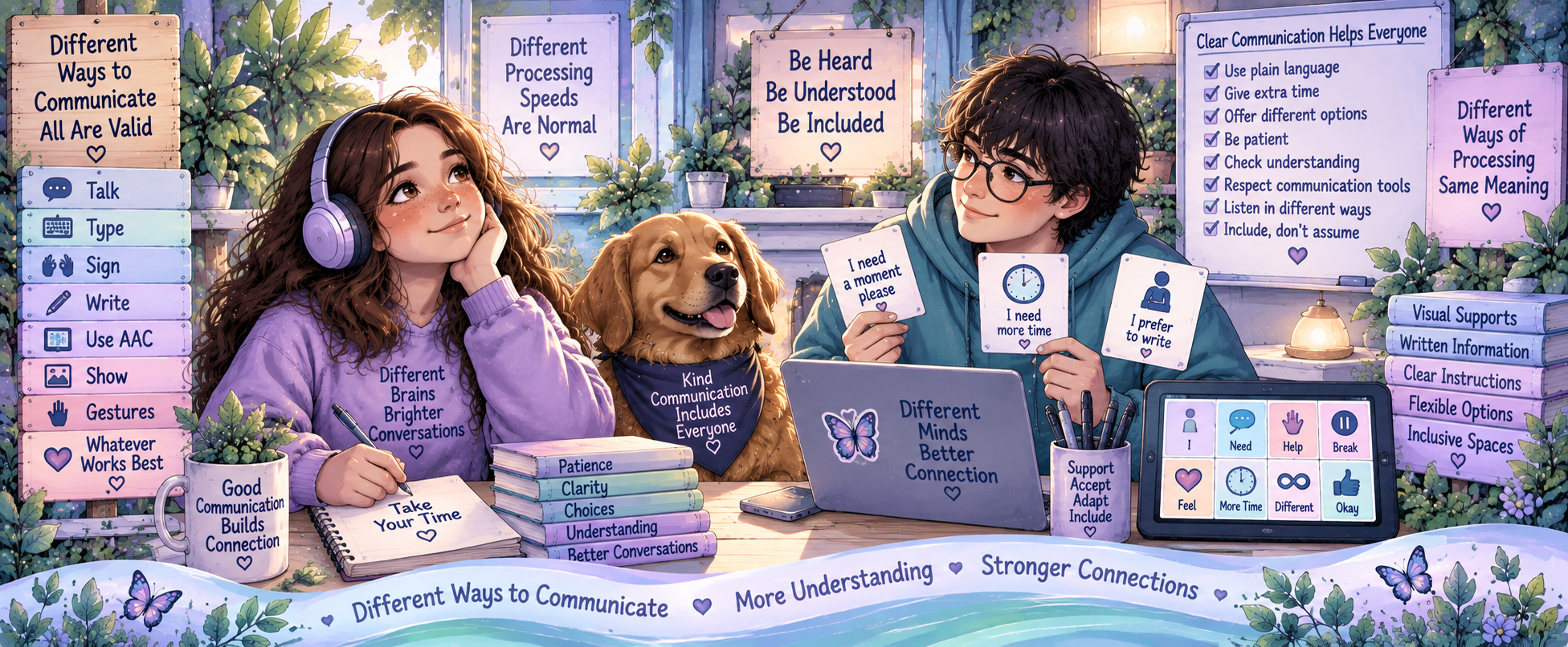
Clear information, processing time and communication choice can make participation much easier.
📝 Written information
Important instructions and changes may be easier to process when they are available in writing.
⏳ Processing time
Allow pauses and time to think. A delayed response is not the same as lack of understanding.
📱 AAC & alternatives
Typing, AAC, visual supports, sign, gestures and communication cards are valid communication methods.
👁 Eye contact
Do not use eye contact as a test of attention. Some people listen better when they are not managing it.
🗣 Clear language
Be specific about expectations and reduce unnecessary ambiguity.
🔁 Clarification
Make it safe to revisit, summarise or ask questions without embarrassment.
Predictability, Planning & Flexibility
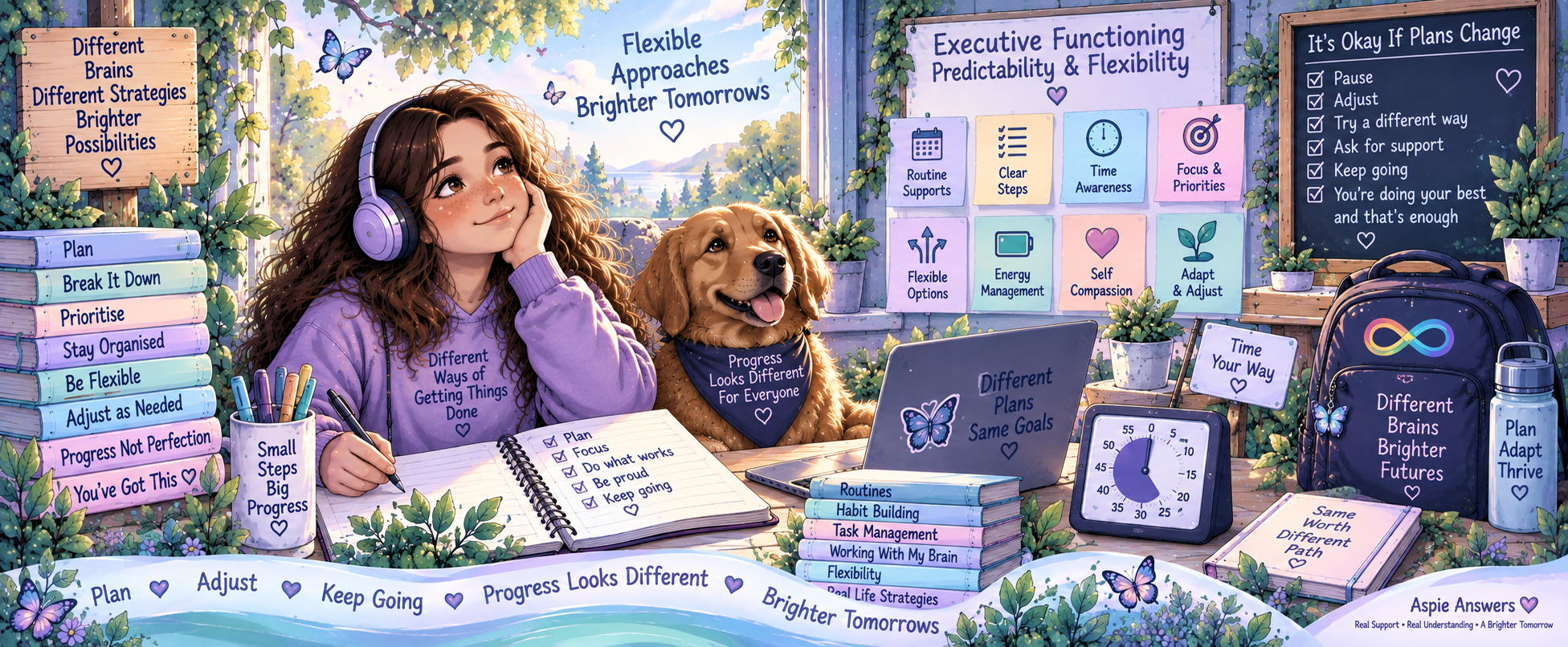
Executive-function accessibility can reduce barriers around planning, working memory, starting, prioritising, transitions, organisation and time.
✅ Break tasks into steps
Visible, manageable steps can reduce working-memory load.
🕒 Make time visible
Calendars, reminders, timers and written schedules can support transitions and time awareness.
📋 Clarify priorities
Explain what matters most, what can wait and what “finished” looks like.
🧭 Prepare for change
Give advance notice where possible and explain what will be different.
🔀 Offer flexible routes
Different processes can still reach the same meaningful outcome.
💜 Reduce shame
Support should address barriers rather than framing executive-function difficulty as laziness.
Accessibility Across Everyday Environments
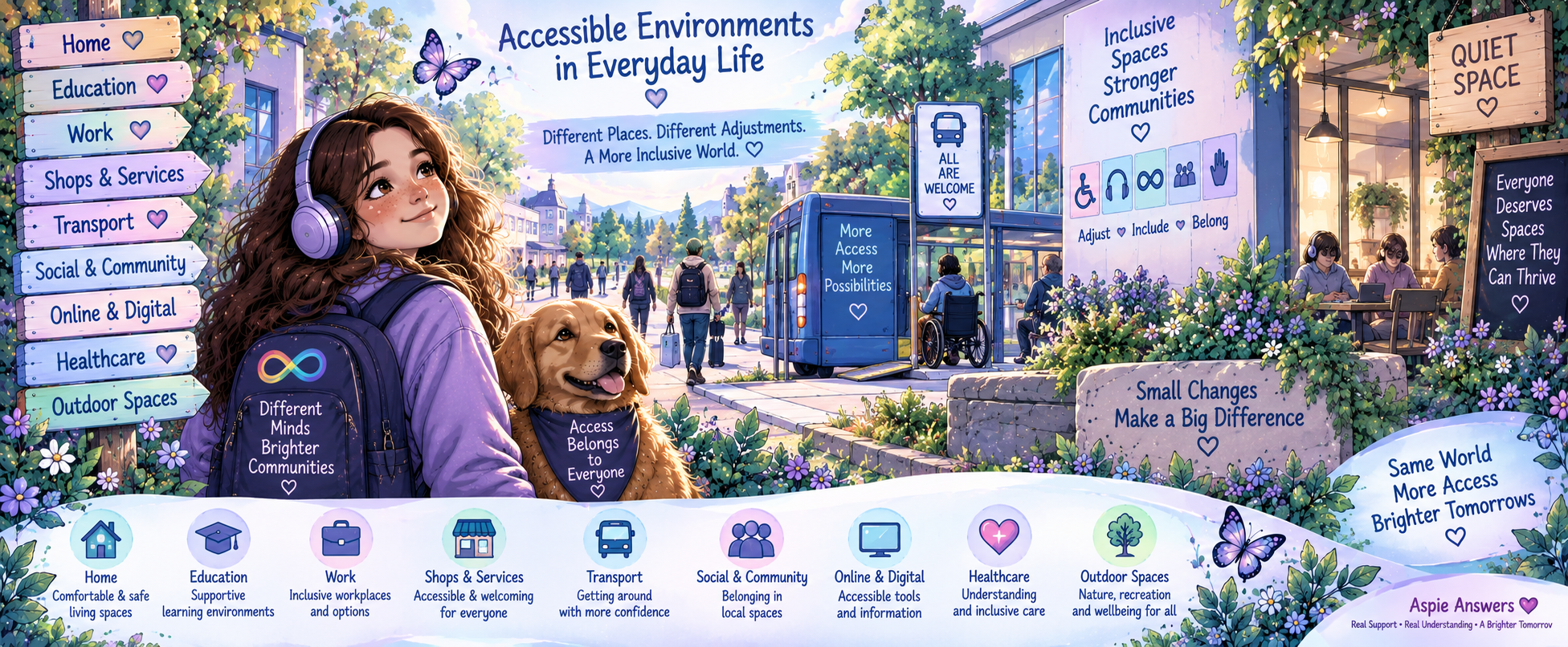
Neurodivergent access matters at home, in learning, work, healthcare, shops, transport, community spaces and online.
🎓 Education
Clear instructions, sensory adjustments, accessible assessment and different participation methods.
💼 Work
Written expectations, predictable communication, flexible methods and quieter environments.
🩺 Healthcare
Preparation information, clear questions, sensory consideration and support people where appropriate.
🌐 Digital
Logical navigation, readable content, accessible forms and fewer unnecessary distractions.
🚌 Travel
Accurate information, predictable routes, clear announcements and support during disruption.
🎟 Community
Quiet zones, clear schedules, re-entry flexibility and more than one way to join in.

Different Ways to Participate & Belong
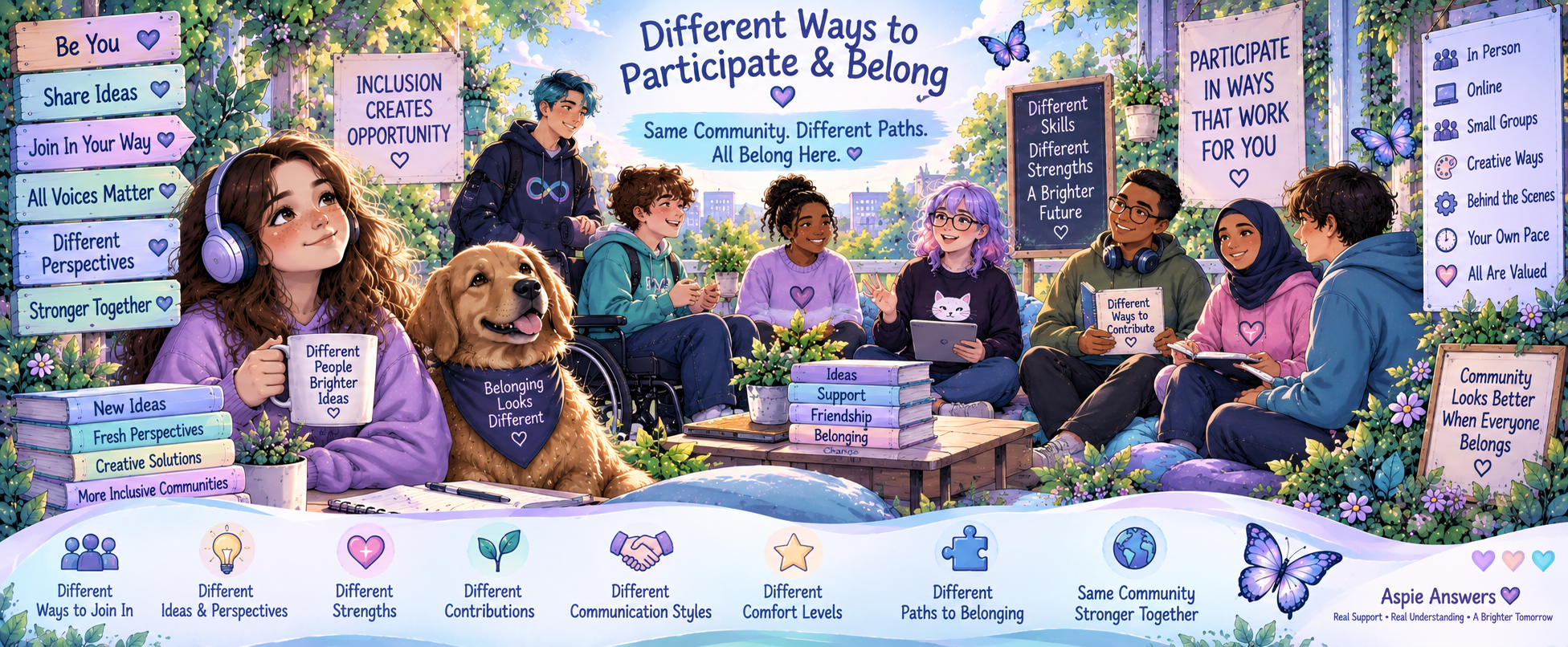
Accessibility is not only about being physically present. People need meaningful ways to contribute without having to erase their natural communication, movement or regulation needs.
Participation can look different
Speaking, writing, creating, observing, joining online, working in smaller groups or participating for shorter periods can all be meaningful.
Belonging should not require masking
People should not have to suppress stimming, force eye contact or hide distress simply to be accepted.
Before Asking the Person to Adapt, Ask…
Is the information clear?
Can expectations and next steps be made more explicit?
Can sensory load be reduced?
Can noise, light, crowds or smells be changed or avoided?
Is more processing time possible?
Does an answer really need to be immediate?
Can the task be broken down?
Can priorities and responsibilities be made visible?
Can participation happen differently?
Is there more than one valid way to contribute?
Have we asked what helps?
The person may already know which changes make the biggest difference.
Continue Through Accessibility & Rights
This page is the neurodivergent-access foundation. Continue into practical adjustments and accommodations, or use the hub's discovery routes to find definitions, topic pathways and downloadable support.
🛠 Reasonable Adjustments & Accommodations
Move from understanding barriers into practical changes that can support access, participation and sustainability.
⚖️ Accessibility & Rights Hub
Return to the main pathways for accessibility, rights, advocacy, complaints, digital access and regional information.
📚 Accessibility & Rights Library
Browse deeper information and practical pathways across the hub.
📖 Glossaries & Definitions
Find clearer explanations of accessibility and rights language.
🔤 Topics A–Z
Browse accessibility and rights subjects alphabetically.
🗂 Collections
Explore grouped pathways for common accessibility situations and needs.
⬇️ Downloads & Resources
Find practical guides, worksheets and downloadable accessibility resources.
🧭 Accessibility & Rights Start Here
Return to the guided doorway if you want help choosing your next pathway.