
Reasonable Adjustments & Accommodations
Reasonable adjustments and accommodations are practical changes that can reduce barriers and make it more possible for a person to participate, communicate, learn, work, use services or manage everyday situations.
They are not about giving somebody an unfair advantage. They are about recognising that a standard process, environment or expectation can affect people differently — and considering whether a workable change can create fairer access.
What Are Reasonable Adjustments?
An adjustment changes something about the environment, information, timing, communication, process or way a task is completed so a barrier is reduced. The useful question is often not “Can the person force themselves through this?” but “What is creating the barrier, and what practical change could reduce it?”
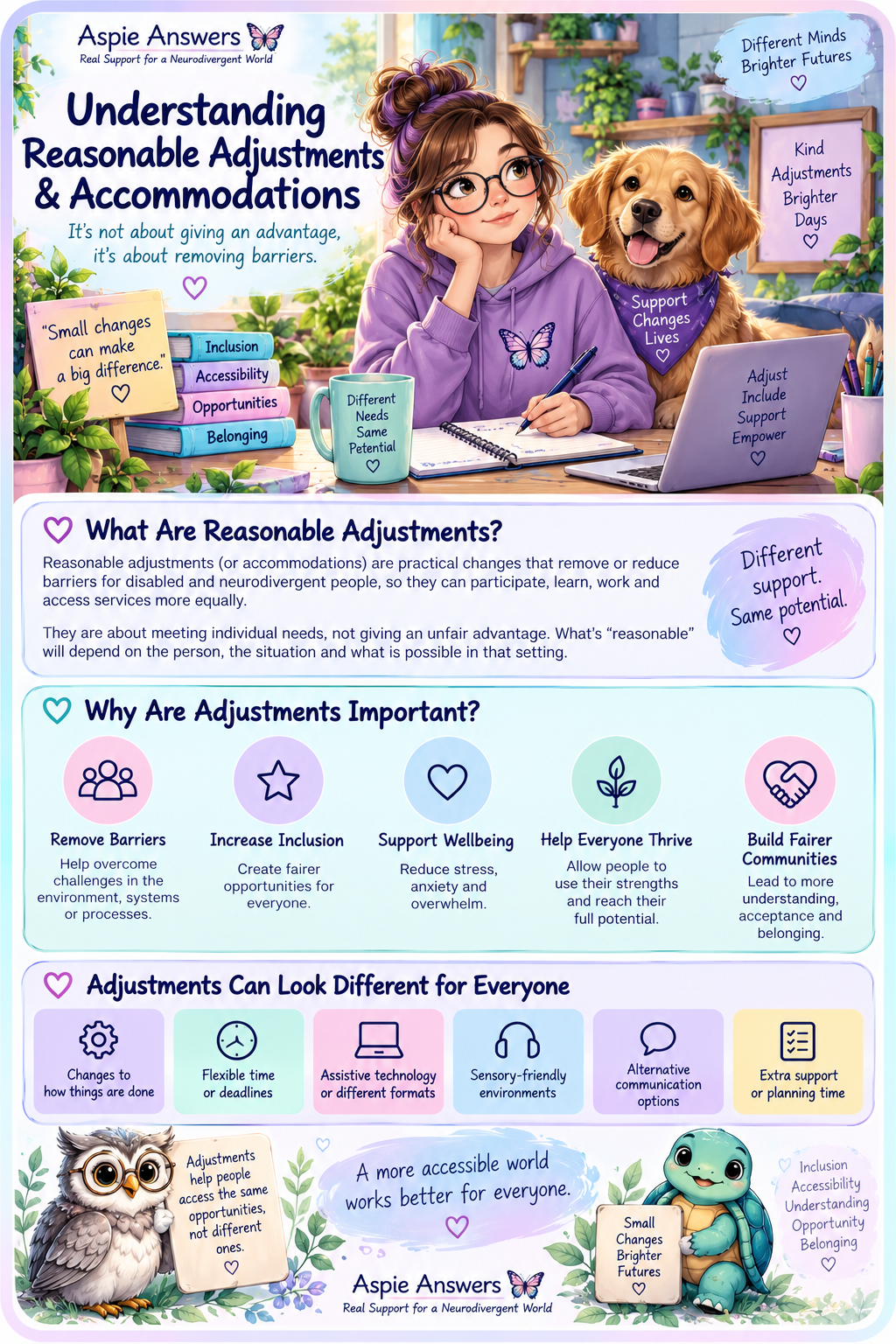
Barrier first
Identify what is making participation difficult before jumping to a solution.
Person-centred
The same diagnosis does not mean the same adjustment. Ask what actually helps the individual.
Practical and workable
Good adjustments aim to remove or reduce barriers while still meeting the genuine purpose of the activity.
Not a special favour
Fair access sometimes means people need different routes, tools or conditions to participate.
Can be simple
Some helpful changes are small: written instructions, quieter seating, extra processing time or advance notice.
Can need review
Needs and environments change. An adjustment that once worked may need to be updated.
Adjustments Can Take Many Forms
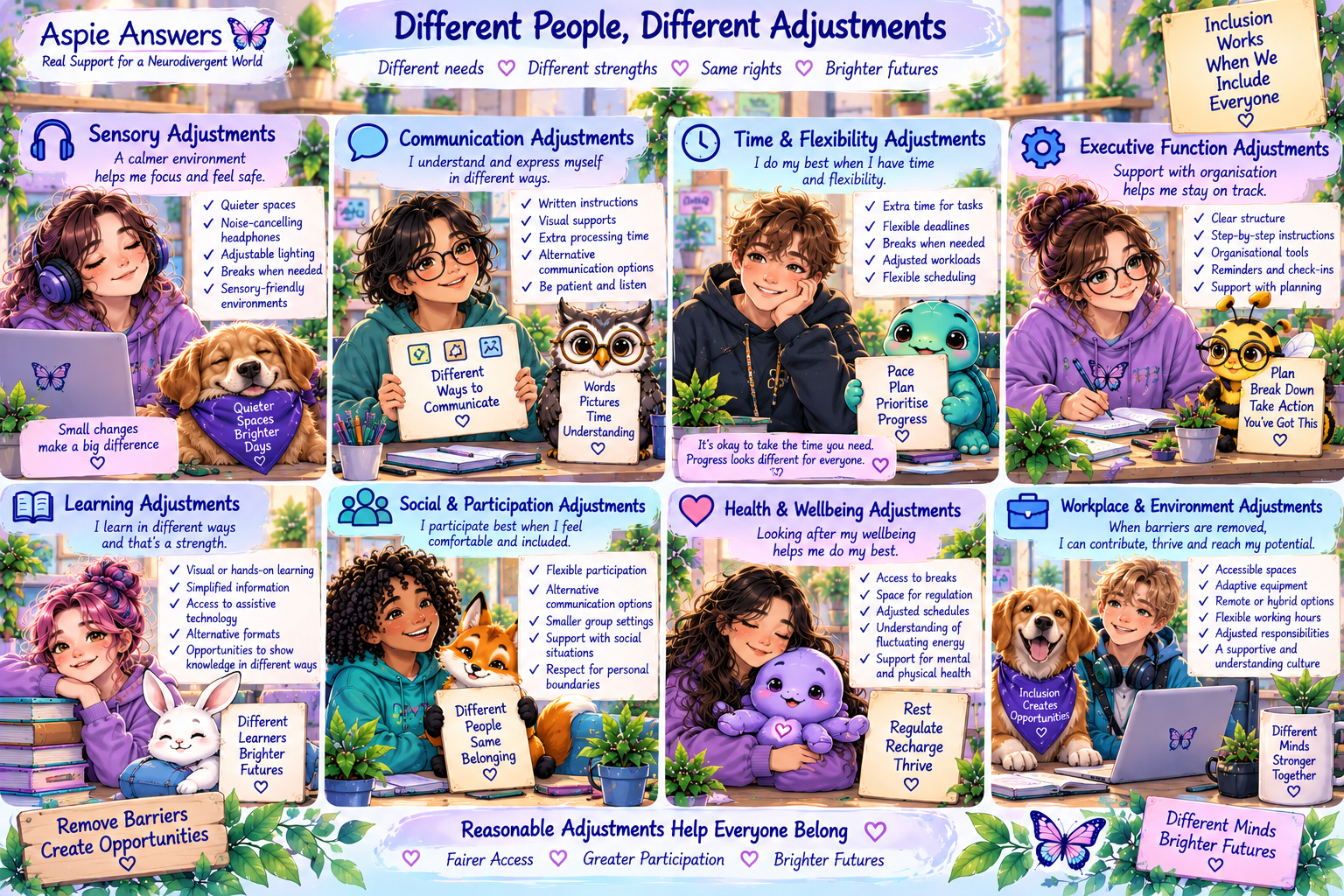
There is no single adjustment list that fits everybody. Support can involve communication, sensory environments, time, executive function, physical access, information, technology, learning methods or participation choices.
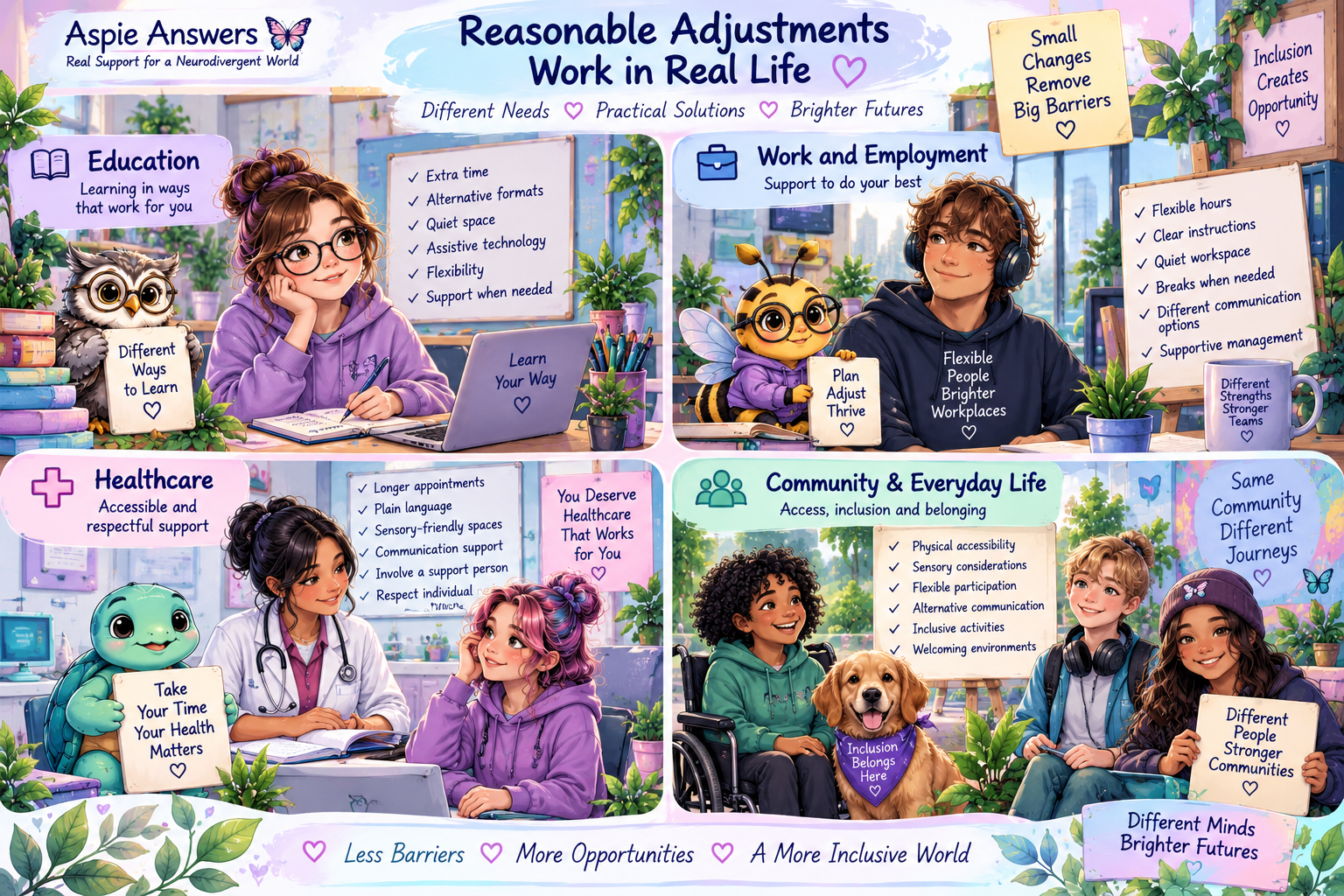
🎧 Sensory
Quieter spaces, different lighting, reduced fragrance, headphones, seating choice or sensory breaks.
💬 Communication
Written information, AAC, visual supports, captions, clear language or a preferred communication method.
⏳ Time & processing
Extra processing time, flexible timing, advance notice, planned breaks or fewer rushed decisions.
🗂 Executive function
Checklists, written steps, reminders, clearer priorities, task breakdowns and predictable routines.
💻 Technology & information
Accessible documents, assistive technology, alternative formats, captions or usable digital systems.
🤝 Participation
Different ways to contribute, smaller groups, remote options, support people or alternative task methods.
Adjustments Across Real Life
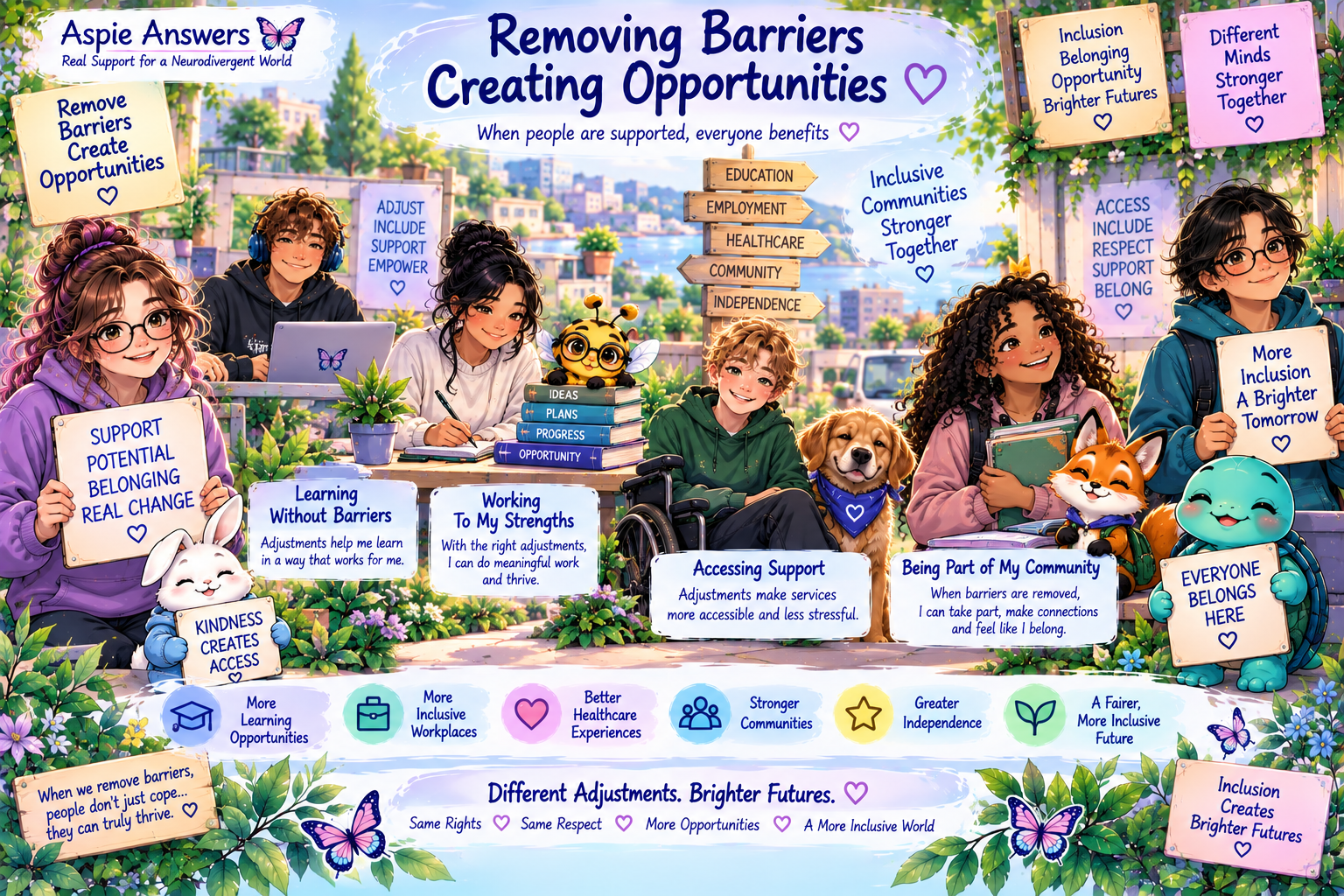
The barrier and the solution can look different depending on where a person is learning, working, receiving healthcare or taking part in community life.
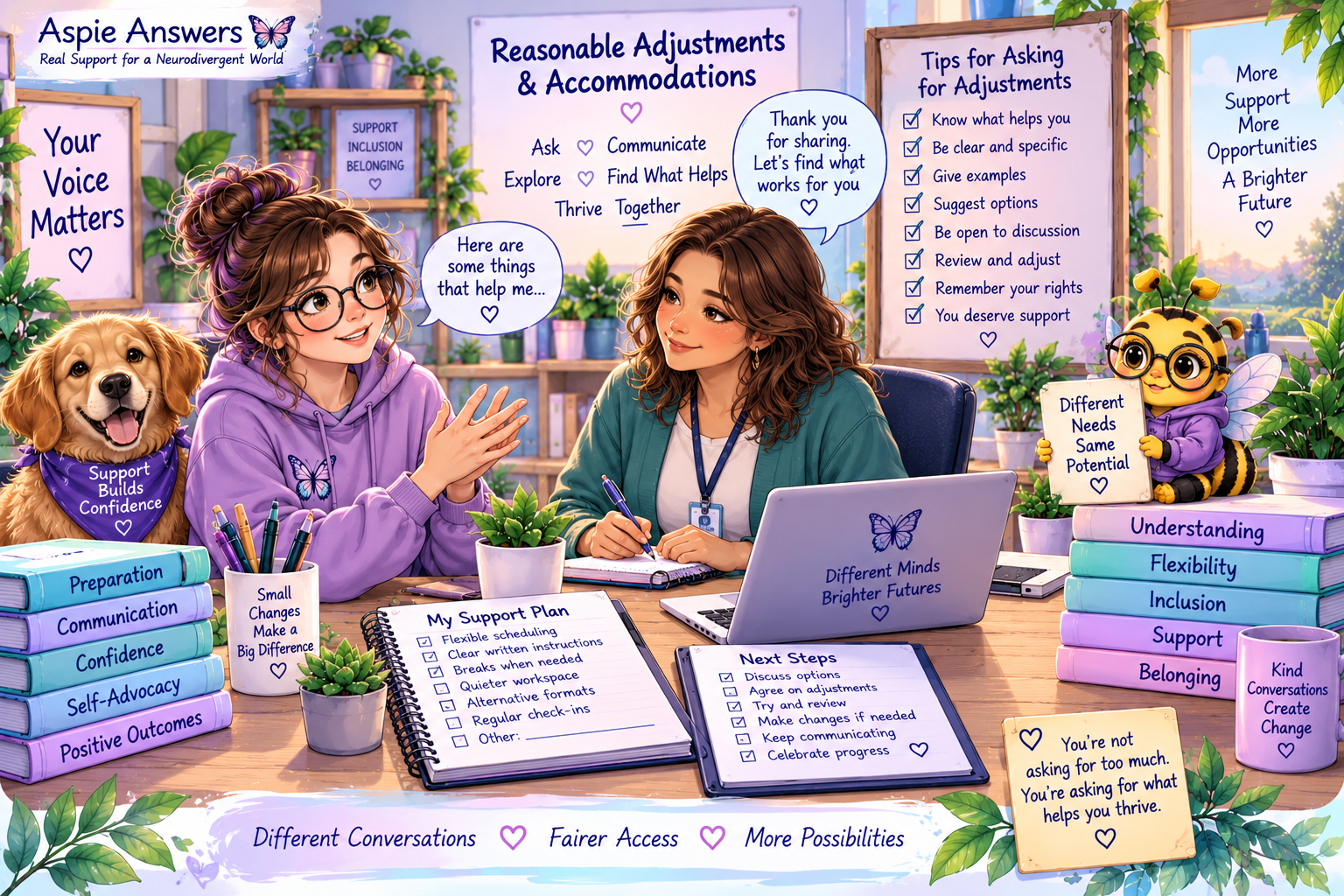
🎓 Education
Accessible instructions, processing time, sensory consideration, assistive technology, flexible assessment or different ways to demonstrate learning.
💼 Work
Clear priorities, written expectations, predictable communication, flexible scheduling or location, quieter workspaces and task adjustments.
🩺 Healthcare
Preparation information, communication preferences, quieter waiting, support people, longer appointments where appropriate and sensory consideration.
🏙 Community & services
Accessible queues, clear signs, appointment alternatives, simpler processes, quieter options and staff who understand different access needs.
🌐 Digital spaces
Keyboard access, captions, alt text, readable layouts, accessible forms and fewer unnecessary barriers.
🏠 Everyday living
Flexible routines, visible organisation, reminders, communication supports and environments that make daily tasks more manageable.
Different People, Different Adjustments
Two people can experience the same environment very differently. A useful adjustment is based on the actual barrier, strengths, preferences and circumstances of the person — not assumptions about a label.
Needs can overlap
A person may need a combination of sensory, communication, executive-function, learning, physical or wellbeing adjustments rather than one isolated change.
Needs can fluctuate
Energy, stress, health, burnout, environment and task demands can change how much support is needed on a particular day or in a particular setting.
Asking for What Helps
You do not need perfect legal language to begin explaining an access barrier. It can help to describe the situation, what happens because of the barrier, what has helped before and what practical change you would like considered.
1. Describe the barrier
Explain what part of the environment, process, communication or task is difficult to access.
2. Explain the impact
Describe how the barrier affects participation, understanding, wellbeing, safety, learning or work.
3. Suggest what may help
Offer one or more practical options where you can. You do not have to know the only possible solution.
4. Choose your communication method
You may prefer a conversation, email, written request, communication profile or support person.
5. Keep useful records
For important or ongoing matters, keep copies of requests, responses, agreed changes and review dates.
6. Ask for review
If something is not working, it is reasonable to revisit the barrier and consider another approach.
When an Adjustment Is Not Working
An agreed adjustment is only useful if it actually reduces the barrier. Sometimes the first idea needs refining, the environment changes, or a person learns more about what works for them.
Check the outcome
Is the person able to participate more effectively, safely or sustainably? If not, identify what remains difficult.
Try another route
A different adjustment may meet the same underlying need more effectively. Flexibility is often part of good access planning.

Adjustments and Rights Information
Formal duties, legal tests, terminology and complaint routes vary by location and setting. For a specific employment, education, healthcare, service or legal issue, use current official information relevant to where you live.
Keep the practical question in view
What is the barrier? What change is being requested? What outcome is needed? What has already been tried?
Know when to seek specialist help
If a dispute may affect legal rights, deadlines, employment, education, finances, healthcare or access to essential services, consider appropriate advocacy or professional guidance.
Where to Go Next
Reasonable adjustments connect closely with self-advocacy, problem-solving, rights information and practical resources. Choose the pathway that best matches what you need next.
🗣 Rights & Self-Advocacy
Prepare to explain access needs, ask questions and take part in decisions that affect you.
⚠️ Discrimination, Complaints & Problems
Find practical pathways for recording concerns, preparing information and deciding what to do next.
📥 Downloads & Resources
Find practical accessibility and rights tools, worksheets and preparation resources.
📚 Accessibility & Rights Library
Browse deeper information and pathways across accessibility, adjustments, advocacy and rights.
📖 Glossaries & Definitions
Check key accessibility and rights terms in clearer everyday language.
🔤 Topics A-Z & Collections
Browse by topic or explore grouped collections when you are not sure which page you need.