
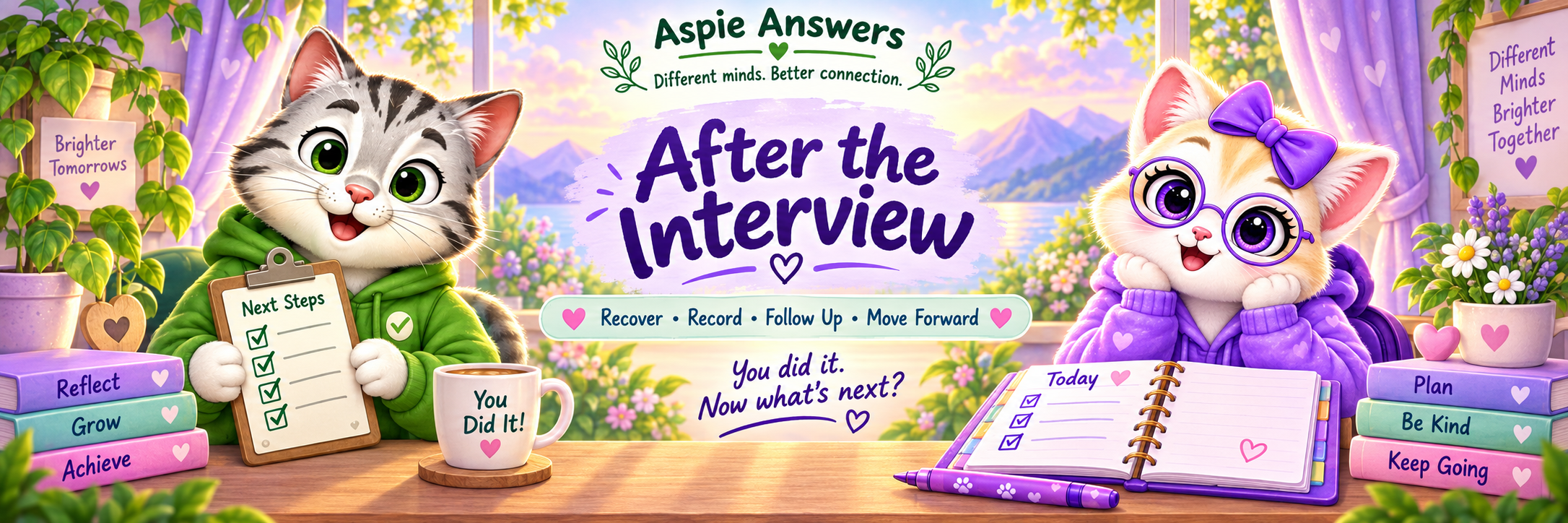
After an interview, it can be tempting to replay every answer immediately. A better first step may be to give yourself enough time to settle before deciding what the interview meant.
Try words such as thank you, waiting, rejection, feedback, offer, recovery, notes or follow up.
Showing all guide sections.
Leave the Performance Behind
Once the interview ends, you no longer need to stay in interview mode. Give yourself permission to soften the effort.
Meet Basic Needs
Water, food, the bathroom, comfortable clothing or a quieter space may matter more than immediate analysis.
Regulate First
Use movement, silence, music, deep pressure, a familiar sensory support or whatever usually helps your system settle.
Delay the Replay
If your mind starts reviewing every sentence, remind yourself that reflection can happen later when your energy is steadier.

A brief record can help with follow-up, future interviews and memory. It does not need to become a full self-evaluation.
Send Anything You Promised
If the employer asked for a document, portfolio item, reference detail or other information, send it within the agreed timeframe.
Consider a Brief Thank-You Message
A short thank-you email can be appropriate in many settings, but it does not need to be long or highly polished.
Record the Expected Timeframe
If they said when you should hear back, put that date or period into your calendar so you do not have to keep remembering it.
Follow Up Politely if Needed
If the stated timeframe passes without contact, a short, respectful follow-up can ask whether there is an update on the recruitment process.
Simple Thank-You Message
Subject: Thank you — [Job Title] interview
Hello [Name],
Thank you for taking the time to speak with me about the [job title] role today. I appreciated learning more about the position and the team.
Please let me know if you need any further information from me.
Kind regards,
[Your name]


Checklist Cat
Complete the follow-up steps you can control, then let the unfinished items stay unfinished until new information arrives.

Calendar Cat
Put expected response dates and follow-up reminders in the calendar so your brain does not have to keep asking, “Was I supposed to hear today?”
What Helped?
Which preparation, notes, clothing, travel plan, regulation strategy or adjustment made the interview easier?
What Felt Clear?
Which answers or examples communicated what you wanted to say?
What Was Hard?
Was the difficulty the question, memory pressure, sensory environment, time pressure, anxiety or something else?
What Is One Useful Change?
Choose one practical change for next time instead of trying to redesign your entire interview style.

You Are Invited to Another Stage
Confirm the date, format and requirements. Treat the next stage as a new preparation task rather than assuming you need to remember everything from the first interview.
You Receive an Offer
You may need time to review the role, hours, pay, location, expectations, support and whether the job fits your needs before responding.
You Are Unsuccessful
Give yourself space to feel disappointed. If appropriate, you can ask whether the employer is able to provide brief feedback, while remembering that not every employer will provide it.
These resources would support the page well and can sit in the central Work & Employment resource system.
Should I send a thank-you email?
A short thank-you message can be appropriate in many workplaces, but it is not something you need to turn into a long letter. If you send one, keep it brief and genuine.
When should I follow up?
If the employer gave a decision timeframe, wait until that timeframe has passed. If no timeframe was given, a brief polite follow-up after a reasonable interval may be appropriate.
What if I keep replaying the interview?
Try separating useful reflection from repeated prediction. Write down any practical learning point, then redirect your attention to recovery or another activity when possible.
Can I ask for feedback if I was unsuccessful?
You can ask politely whether feedback is available. Some employers may provide it and others may not.
What if I think I answered one question badly?
One answer is only one part of an interview. Avoid assuming it decided the outcome unless the employer tells you that directly.
What if I receive an offer but I am unsure?
You can review the practical details before deciding. The right next step may be to compare the role with your needs, priorities and support requirements rather than answering immediately.