
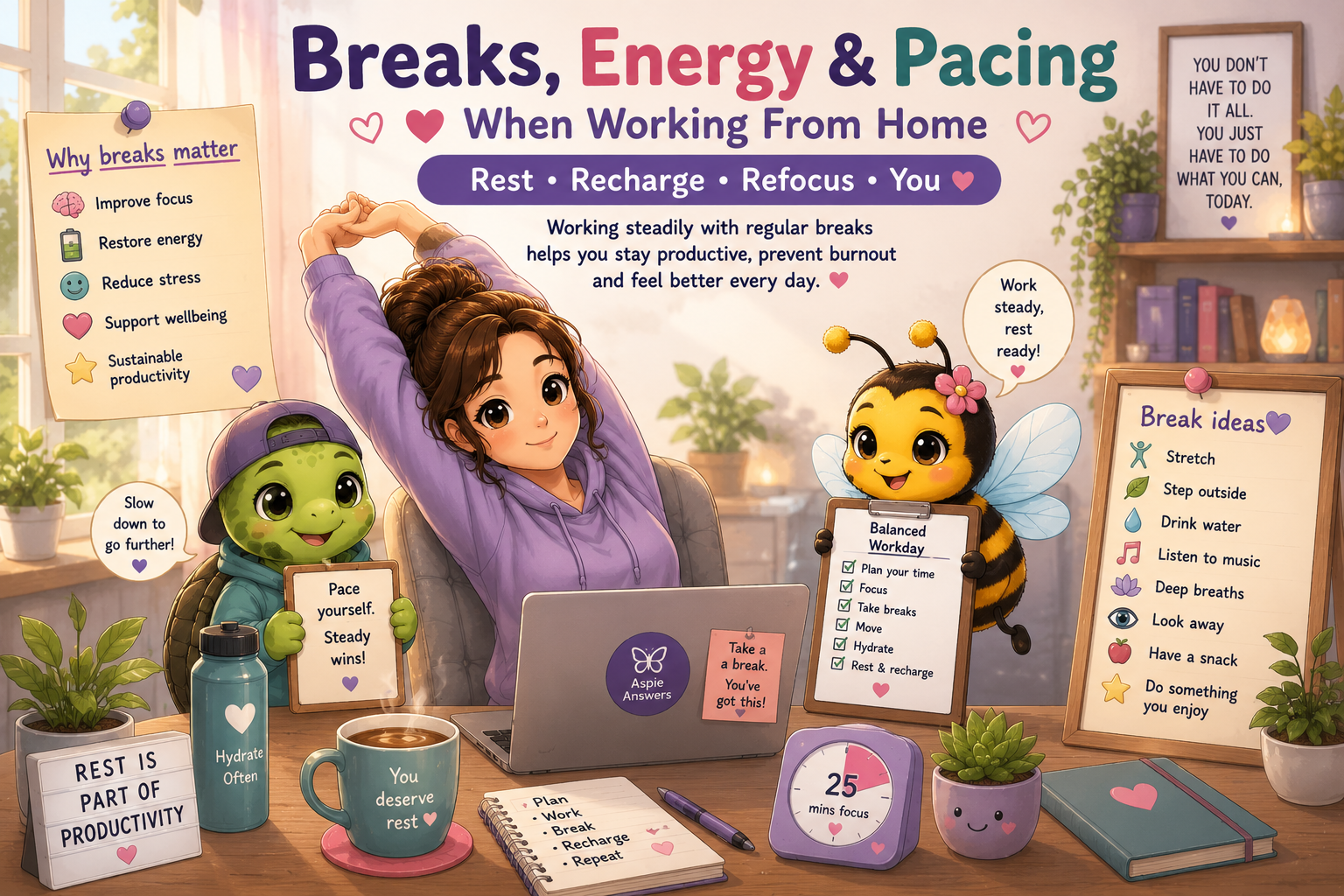
Breaks, Energy & Pacing When Working From Home
Working from home can make it easy to continue for too long without noticing how much energy you are using. Without natural travel time, shared lunch breaks or clear transitions between activities, rest can disappear from the workday.
Breaks are not wasted time. They support concentration, sensory regulation, physical comfort and sustainable productivity. Pacing helps you work with your available energy rather than using everything at once.
Why Breaks Matter
🧠 Restore Attention
Short pauses can make it easier to return with clearer thinking and renewed focus.
🔋 Protect Energy
Regular recovery can prevent one demanding task from consuming the rest of the day.
🌿 Reduce Overload
Stepping away from screens, sound and social demands supports nervous-system regulation.
🪑 Support Your Body
Movement, hydration and changes in posture can reduce discomfort and fatigue.
Understand Different Kinds of Energy
Energy is not only physical. Different tasks may use different types of energy, and one area can feel depleted while another remains available.
💪 Physical Energy
Used for sitting upright, moving, typing, managing pain and completing physical tasks.
🧠 Mental Energy
Used for concentration, decision-making, problem-solving and remembering information.
❤️ Emotional Energy
Used for managing stress, uncertainty, feedback and difficult conversations.
🌈 Sensory Energy
Used for processing lighting, sound, movement, temperature and other sensory input.
💬 Social Energy
Used during meetings, calls, messaging and interpreting communication from others.
🔄 Executive-Function Energy
Used for starting, switching, planning, organising and completing tasks.
Recognise Early Signs That You Need a Break
- Rereading the same information several times.
- Making more mistakes than usual.
- Feeling restless, irritable or emotionally overwhelmed.
- Experiencing headaches, eye strain or physical discomfort.
- Finding ordinary sounds or sensations harder to tolerate.
- Procrastinating more or switching tasks repeatedly.
- Feeling unable to decide what to do next.
- Holding your breath or tensing your body.
Different Types of Breaks
Movement Break
Stretch, stand, walk around the room or step outside briefly.
Physical Needs Break
Drink water, eat a snack, use the bathroom or adjust your temperature.
Screen Break
Look into the distance, close your eyes or move away from the screen.
Sensory Break
Reduce noise, dim the lights or use a preferred sensory support.
Calming Break
Use breathing, grounding, quiet time or a brief mindfulness exercise.
Enjoyable Break
Listen to music, sit with a pet or do something small that restores you.
Plan Breaks Into the Day
Waiting until you feel completely exhausted can make it harder to recover. Planned pauses can create a steadier rhythm.
Choose a Manageable Focus Period
Use a length that fits your attention and energy rather than forcing a standard schedule.
Use Natural Transition Points
Pause after a meeting, completed task, sent email or finished section of work.
Set Visible Reminders
Use timers, calendar alerts, sticky notes or companion cards to prompt a break.
Choose the Right Kind of Break
Match the break to what you need: movement, food, quiet, sensory relief or mental rest.
Return Gently
Keep the next task visible so you know where to restart after the break.
Pacing Instead of Pushing Through
Pacing means balancing activity and recovery so that important tasks do not use more energy than you can sustainably replace.
🧩 Break Tasks Into Sections
Complete one manageable part rather than trying to finish everything in one sitting.
⚖️ Alternate Task Demands
Follow a demanding task with something simpler, quieter or more familiar.
📅 Spread Work Across Time
Where possible, distribute large projects across several days instead of relying on one intense push.
🛑 Stop Before the Crash
Finishing with some energy remaining can help protect the rest of your day and week.
ADHD-Friendly Energy Strategies
- Use movement before focus drops completely.
- Keep timers and break prompts visible.
- Use body doubling for difficult work periods.
- Pair completed sessions with immediate rewards.
- Prepare an enjoyable but time-limited break activity.
- Write down the next step before leaving the task.
- Use music or sensory tools to reset attention.
- Notice when hyperfocus is preventing food, water or rest.
Autism-Friendly Pacing Strategies
- Keep break routines predictable where possible.
- Use a quiet or low-stimulation recovery space.
- Schedule decompression after meetings and calls.
- Reduce sensory input during breaks.
- Allow time for transitions between different tasks.
- Avoid stacking several socially demanding activities together.
- Use clear written plans for work and recovery periods.
- Respect signs of overload instead of forcing continued participation.
Preventing Burnout
Burnout often develops when demands repeatedly exceed available energy and recovery. One break cannot solve an unsustainable workload, but regular pacing can help reveal when broader changes are needed.
📉 Notice Patterns
Track which days, tasks or meetings leave you depleted and how long recovery takes.
🤝 Ask for Support
Discuss workload, meeting frequency, deadlines or adjustments before exhaustion becomes severe.
🗓️ Build Weekly Recovery
Protect quieter periods and avoid filling every available space with work or obligations.
❤️ Value Sustainable Progress
Consistency and wellbeing matter more than producing at maximum intensity every day.
Create a Sustainable Work Rhythm
- Identify your strongest and lowest-energy times.
- Place demanding tasks where they fit your energy where possible.
- Use lighter tasks during lower-energy periods.
- Review your workload regularly.
- Leave space for delays, interruptions and recovery.
- Adjust your routine when health, stress or responsibilities change.
- Accept that productivity naturally varies.
- Celebrate steady progress instead of perfection.
Rest is part of productivity. A sustainable workday includes focus, movement, nourishment, sensory regulation and time to recover.
Resources & Downloads
This page can later connect visitors with:
Work Steadily, Rest Regularly
Breaks, pacing and energy awareness can help you create a workday that is productive without sacrificing your wellbeing. Small, regular recovery periods can make a meaningful difference.
Explore More Working From Home Support