
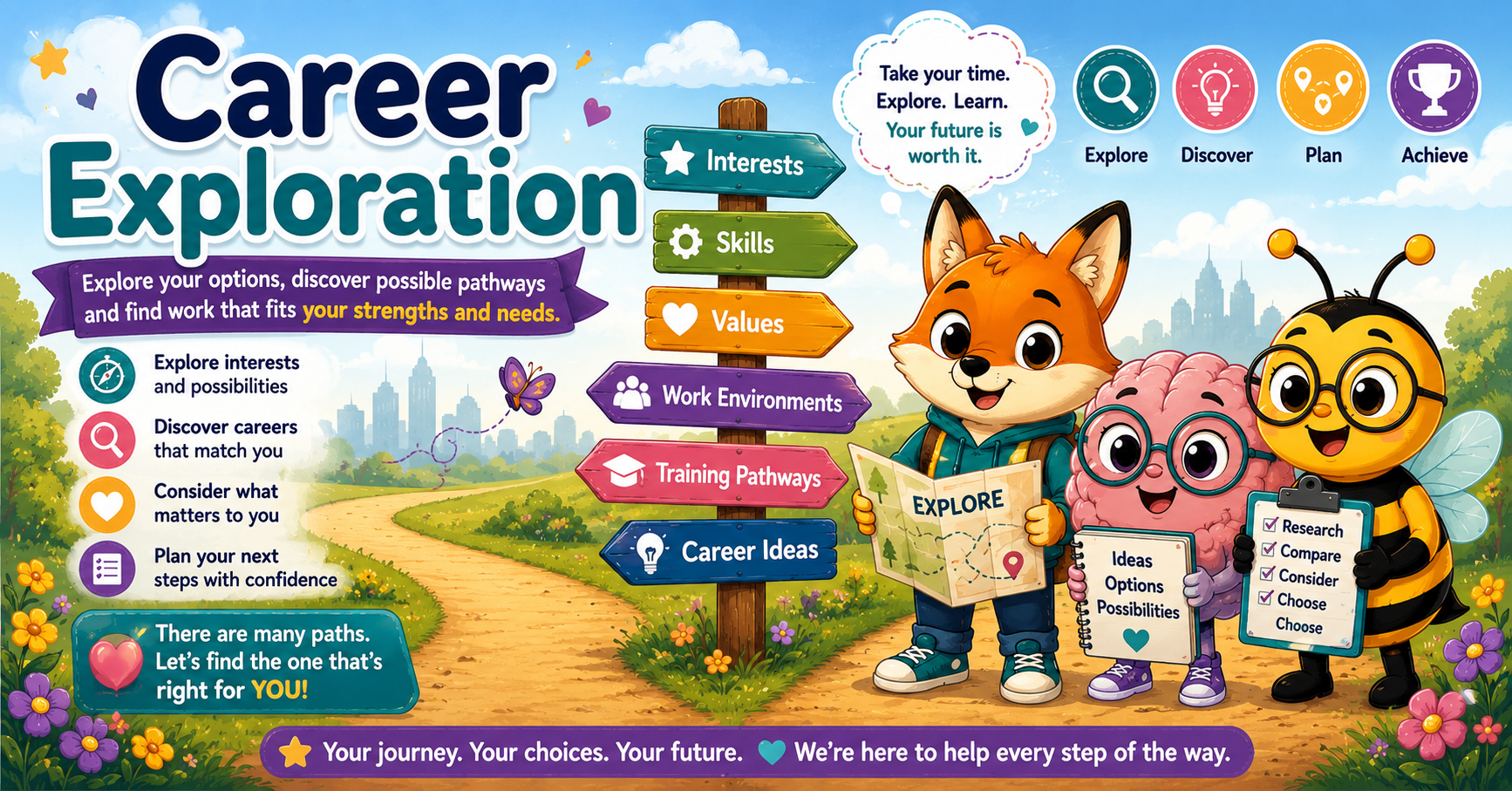
Career Exploration
Career exploration is the process of learning about different jobs, industries, training pathways and working environments so you can discover possibilities that may suit you.
You do not need to choose one perfect career immediately. Exploring your options can be gradual, flexible and shaped around your interests, strengths, needs, values and life circumstances.

Career exploration is more than looking at a list of job titles. It is about understanding yourself, gathering useful information and testing possibilities before making decisions.
Learning About Yourself
Consider your interests, strengths, values, support needs, preferred environments and the activities that give you energy.
Researching Possibilities
Explore job descriptions, industries, workplaces, qualifications, entry pathways and expected working conditions.
Comparing Pathways
Compare different options according to your priorities rather than choosing only because a role sounds impressive or familiar.
Trying Things Safely
Work experience, volunteering, short courses, job shadowing and informational conversations can help you test an idea.
Planning Possible Steps
Break a large career goal into realistic steps such as learning a skill, updating your CV or researching a training provider.
Reviewing as You Learn
Your preferences may change as you gain experience. Revising your plan is a normal part of career development.
You do not need to begin with a job title. Starting with your everyday preferences can reveal useful clues about the kinds of work that may fit.
Questions About Your Interests
- What topics do you enjoy learning or talking about?
- Which tasks hold your attention naturally?
- What problems do you enjoy solving?
- What hobbies or activities matter to you?
- What would you like to learn more about?
Questions About How You Work Best
- Do you prefer predictable routines or regular variety?
- Do you work best independently or with other people?
- Do you prefer practical, creative, technical or people-focused work?
- What sensory or environmental conditions help you concentrate?
- How much structure, flexibility or support do you need?

You can work through these steps gradually. There is no requirement to complete them all at once.
Collect Your Clues
Write down your strengths, interests, values, preferred tasks, support needs and working conditions.
Create a Broad List
List roles, industries and pathways that sound interesting. At this stage, avoid dismissing ideas too quickly.
Research the Reality
Find out what people in those roles actually do, what training is needed and what the everyday environment is likely to be like.
Compare Each Possibility
Consider the advantages, challenges, accessibility, costs, flexibility, location and support available for each pathway.
Choose a Small Experiment
Try a short course, volunteer role, workplace visit, project, conversation or practical activity connected to the option.
Review What You Learned
Decide whether you want to explore the option further, change direction or place it aside for now.
Read Real Job Advertisements
Job listings can show common responsibilities, required skills, hours, locations and qualifications.
Watch Career Videos
Day-in-the-life videos and workplace tours can help make an unfamiliar role easier to picture.
Talk With Someone in the Field
Ask what their workday involves, what they enjoy and what they wish they had known before starting.
Try Volunteering
A suitable volunteer role may help you gain experience, practise workplace skills and explore an interest.
Explore Training Options
Look at short courses, certificates, apprenticeships, vocational programmes, university study and workplace training.
Create a Small Project
A personal project can help you test your interest and begin building skills or examples of your work.
Two people with the same job title may have very different experiences depending on the workplace, hours, manager, team and environment.
Role & Pathway
- Typical tasks and responsibilities
- Qualifications or experience required
- Training time and possible costs
- Employment demand and opportunities
- Possibilities for progression or specialisation
Working Conditions
- Work hours and schedule predictability
- Noise, lighting, crowds and sensory demands
- Social and communication expectations
- Remote, hybrid or workplace-based options
- Flexibility, adjustments and support

A suitable career is not determined by a diagnosis. Neurodivergent people have varied strengths, challenges, interests and support needs. The goal is to find a workable match between the person, role and environment.
Look Beyond Stereotypes
You are not restricted to jobs commonly described as suitable for autistic, ADHD, dyslexic or otherwise neurodivergent people.
Consider the Whole Environment
A role may suit your skills but become difficult in an inaccessible, unpredictable or unsupported workplace.
Plan Around Energy
Consider commuting, masking, sensory load, social demands and the recovery time required outside work.
Identify Helpful Adjustments
Written instructions, predictable schedules, quiet workspaces and flexible communication may improve access and performance.
Recognise Transferable Strengths
Deep knowledge, creativity, pattern recognition, persistence, honesty and attention to detail can transfer across many roles.
Allow for Flexible Pathways
Part-time work, supported employment, self-employment, portfolio careers and gradual transitions are valid possibilities.
Choose one option you are curious about
- Choose one career, role or industry you are curious about.
- Write down what attracts you to it.
- List the skills or strengths you already have that may be useful.
- Identify any training, support or adjustments you might need.
- Choose one small action that would help you learn more.

Explore With Finn Fox
Finn Fox supports problem-solving, flexibility and independence. Finn is a useful Companion for career exploration because comparing options does not mean you have to commit to one forever.
Gather information, notice what fits and choose one manageable next step. You can revise your direction as you learn more.

Career exploration often works best when ideas can be written down, compared and revisited. Matching tools can sit within the central Work & Employment resource system rather than being duplicated across topic pages.
Career Exploration Worksheet
A guided way to record interests, possible careers, questions and next steps.
Career Options Comparison Sheet
Compare roles by tasks, working conditions, training, accessibility, benefits and possible challenges.
Workplace Preferences Checklist
Identify preferred hours, environments, communication styles, routines, flexibility and support.
My Career Exploration Plan
Turn a broad career idea into manageable research, learning and experience-building steps.