
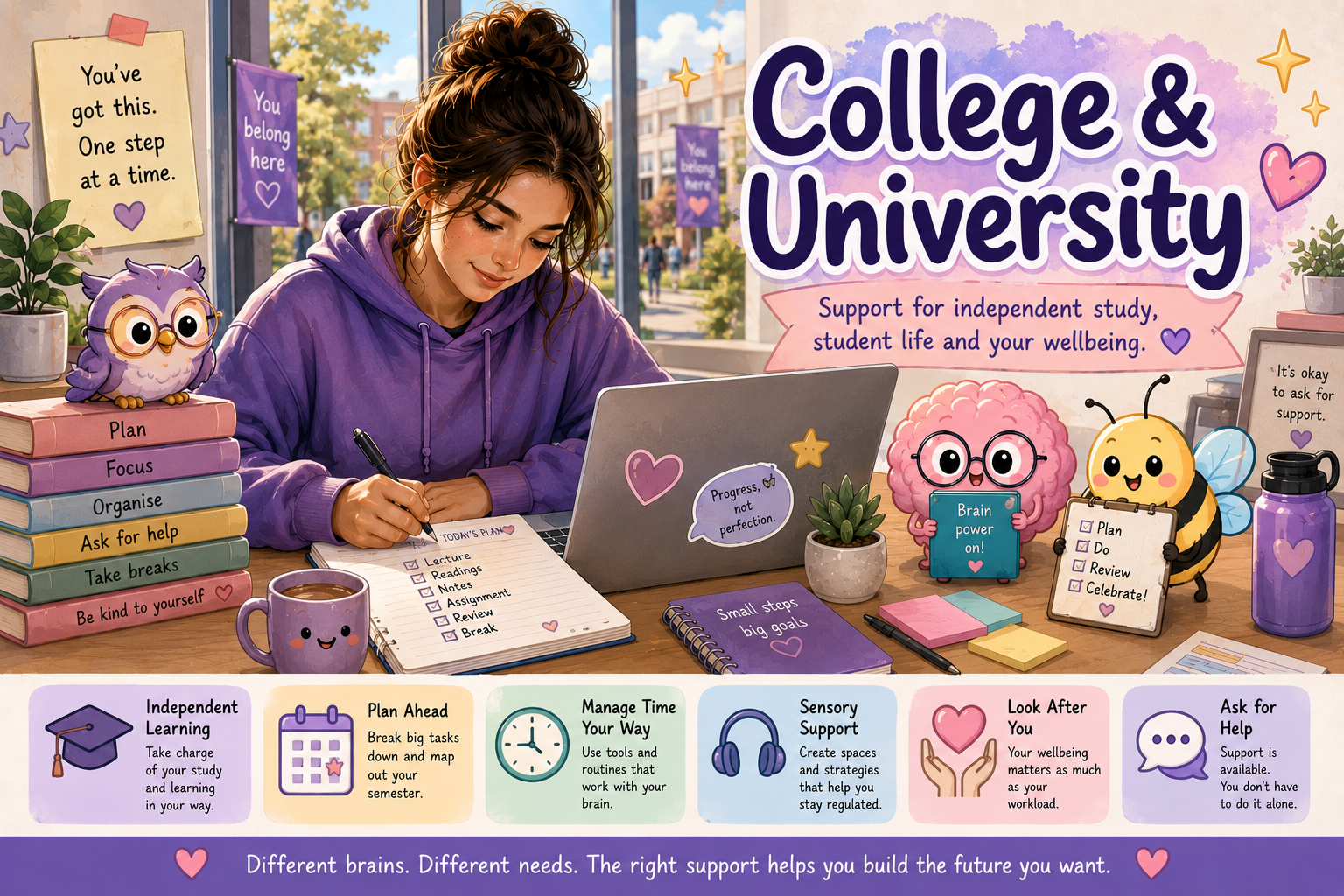
College & University
College and university can bring exciting opportunities, new interests and greater independence. They can also involve many hidden demands, including planning your own time, managing coursework, navigating campus and knowing when to ask for support.
This page shares practical, neurodivergent-friendly ideas for making tertiary study and student life feel clearer, more manageable and more sustainable.
Who This Page Is For
Use this page as a practical guide to tertiary study, student life and support.
Students & Prospective Students
For people preparing for, beginning or already navigating college, university or other tertiary study.
Family, Whānau & Supporters
For people helping a learner understand routines, deadlines, wellbeing, communication or support options.
Educators & Support Professionals
For people looking for a clearer overview of practical barriers, access needs and student support pathways.
What You Will Find Here
Transition support, independent learning, executive function, coursework and deadlines, communication, sensory needs, student life, wellbeing, accessibility support, Companion guidance and future resource ideas.
🔎 Search Aspie Answers
Looking for study, organisation, wellbeing or everyday support? Search the Aspie Answers website.
🎓 Why College & University Can Feel Different
Tertiary study often involves greater independence and fewer visible daily reminders.
📚 Independent Learning
You may be expected to organise reading, study and coursework outside scheduled classes.
📅 Fewer Daily Reminders
Deadlines may be listed weeks or months in advance without frequent reminders.
🏫 New Environments
Campuses, lecture rooms, libraries and changing locations may involve extra planning.
💬 Hidden Expectations
Knowing how much to read, when to ask questions or how to contact staff may not always feel obvious.
👥 Social Changes
New classmates, group work and student life can bring additional social demands.
💜 More Self-Management
Study, meals, sleep, transport, wellbeing and daily life may all need to be managed together.
🌱 Transitioning Into Tertiary Study
A new learning environment can take time to understand.
🗺 Learn the Environment
Visit campus, identify important rooms and learn routes before busy days where possible.
📋 Find Important Information
Locate course outlines, calendars, student portals and support contacts.
📆 Record Key Dates
Move semester dates, assessments and important events into your own planning system.
🤝 Identify Support Early
Find out where accessibility, learning and student wellbeing support are located.
🎧 Find Calm Spaces
Identify quieter libraries, rooms or outdoor areas that may help you regulate.
💜 Give Yourself Adjustment Time
Learning a new system can use a lot of energy. You do not need to feel settled immediately.
📖 Independent Learning & Hidden Study Tasks
“Study independently” can contain many smaller tasks that are not always clearly explained.
Check What Is Expected
Review course outlines, weekly topics, readings and assessment requirements.
Make the Invisible Tasks Visible
Write down reading, note-taking, reviewing, research and preparation as separate tasks.
Choose Your Next Action
Focus on one specific step instead of holding the whole course in your head.
Review Regularly
A weekly course check can help you notice changing priorities and upcoming deadlines.
🧠 Executive Function & Student Organisation
Tertiary study often relies heavily on planning, memory, task initiation and switching between responsibilities.
📆 Keep One Master Calendar
Bring important course dates, appointments and commitments into one visible system.
📂 Organise by Course
Use clear folders, colours or digital labels for each subject or paper.
🔔 Externalise Reminders
Alarms, calendar notifications and checklists can reduce memory pressure.
🚦Make Starting Smaller
Open the document, read the question or gather materials as a first step.
🔄 Plan Transitions
Allow time to move between campus, study, work and home responsibilities.
🌱 Reset Weekly
Review coursework, files, notes and plans before small problems build up.
📝 Managing Coursework & Deadlines
Large assignments become easier to work with when deadlines and steps are visible.
📌 Record Every Assessment
Add assignments, tests, presentations and other important tasks to your planning system.
⬅️ Work Backwards
Start with the deadline and plan research, drafting, editing and submission.
🧩 Break Work Into Stages
Replace “do essay” with smaller actions that are easier to begin.
⏰ Use Progress Checkpoints
Give yourself smaller dates for different stages of the task.
🌦 Build in Flexibility
Leave some room for lower-energy days, illness or unexpected demands.
✅ Plan the Submission
Checking files, uploading work and confirming submission are tasks too.
💬 Communicating With Tutors & Lecturers
Knowing what to ask and how to communicate can make support easier to access.
❓ Ask Specific Questions
Identify the exact instruction, concept or part of the task that is unclear.
📧 Use Email When Helpful
Written communication can give you time to organise your thoughts.
📝 Prepare Before Meetings
Write down questions and important points before office hours or support meetings.
📋 Ask for Clarification
Request examples, clearer instructions or confirmation of expectations.
⏳ Reach Out Early
Contacting staff before a problem becomes urgent may create more options.
🤝 Use Support People
Accessibility or learning support staff may help with communication and planning.
🎧 Sensory Needs on Campus
Large campuses and shared learning spaces can involve significant sensory demands.
🔇 Sound Support
Headphones, quieter study areas or lower-noise routes may help.
💡 Lighting & Visual Load
Notice which rooms or areas feel more comfortable for longer study.
👥 Crowded Spaces
Planning alternative routes or quieter times may reduce overload.
🧸 Bring Regulation Tools
Sensory items, water, familiar objects or comfort tools may support you.
🌿 Find Recovery Spaces
Identify places where you can pause between classes or commitments.
🕊 Plan Recovery Time
A busy campus day may require additional rest afterwards.
👥 Student Life & Social Expectations
There is no single correct way to participate in student life.
🌱 Choose What Fits You
You do not need to attend every event or join every activity.
👥 Try Interest-Based Groups
Clubs and groups connected to your interests may provide clearer shared topics.
🗓 Plan Social Energy
Consider how social commitments fit around study and recovery needs.
💬 Set Communication Boundaries
You can decide how and when you respond to messages or group discussions.
🤝 Find Your People
Meaningful connections may develop slowly and do not need to look like everyone else's student experience.
💜 Your Way Is Valid
A quieter or different student life is still a real student life.
💜 Student Wellbeing & Burnout Prevention
Your wellbeing matters as much as your workload.
🚦 Notice Early Signs
Increasing exhaustion, difficulty thinking or losing motivation may be signs that demands are building.
🛌 Protect Rest
Sleep and recovery are part of sustainable learning.
🥗 Support Daily Needs
Food, hydration, medication and everyday routines can affect study capacity.
📅 Reduce Overloading
Where possible, avoid planning every hour of every day.
🤝 Ask for Support Early
You do not need to wait until everything falls apart before reaching out.
🌱 Progress, Not Perfection
Learning is a process. Your path does not need to match anyone else's.
♿ Disability & Accessibility Support
Colleges and universities may have dedicated accessibility or disability support services.
📋 Ask What Support Exists
Contact student support or accessibility services to learn about available options.
📝 Discuss Learning Needs
Share the barriers you experience and the strategies that help.
⏳ Assessment Support
Some students may be eligible for assessment or exam adjustments.
🎧 Sensory Considerations
Discuss environmental or sensory barriers where relevant.
💬 Communication Support
Support services may help communicate adjustments or needs.
🔄 Review What Works
Support may need to change as courses, environments and needs change.
🦉🧠🐝 Companion Support for Tertiary Study
Different companions can support different parts of college and university life.
🦉 Olive Owl — Learning & Study Support
Olive encourages curiosity, asking questions and discovering the learning approaches that work best for you.
🧠 Buzzy Brain — Executive Function & Focus
Buzzy Brain helps explain why planning, memory, starting tasks and managing multiple deadlines can feel difficult.
🐝 Busy Bee — Planning, Goals & Small Wins
Busy Bee reminds you to break big goals into manageable steps and notice the progress you are making.
📄 Helpful College & University Resources
These resources can form the foundation of a future Tertiary Study Collection.
My College & University Support Profile
Record your learning preferences, strengths, needs and helpful supports.
Semester Overview Planner
Bring courses, important dates and major deadlines into one clear overview.
Coursework & Deadline Tracker
Track assessments, progress stages and submission dates.
Campus Sensory Support Plan
Identify sensory challenges, calm spaces and regulation tools.
Questions for Tutors & Lecturers
Prepare questions and important points before meetings or emails.
Student Wellbeing & Burnout Check-In
Notice energy, stress, recovery needs and early signs of overload.
🎓 Future Tertiary Study Collection
The College & University resource family is banked for a future Tertiary Study Collection within the Aspie Answers Work & Study Life catalogue.
Future volumes can expand into semester planning, accessibility, executive function, student wellbeing and campus support. These collections can later be organised within the Aspie Answers store and selected external sales platforms.
Information & Support Boundary
Aspie Answers provides general educational and practical support information. College and university accessibility processes, documentation requirements, adjustments and available services can differ between institutions and countries. For formal decisions about accommodations or course requirements, check directly with the relevant institution or qualified support service.