Text-Based Crisis Lines
SMS or text crisis support can be easier when voice calls are inaccessible, exhausting, or unsafe.

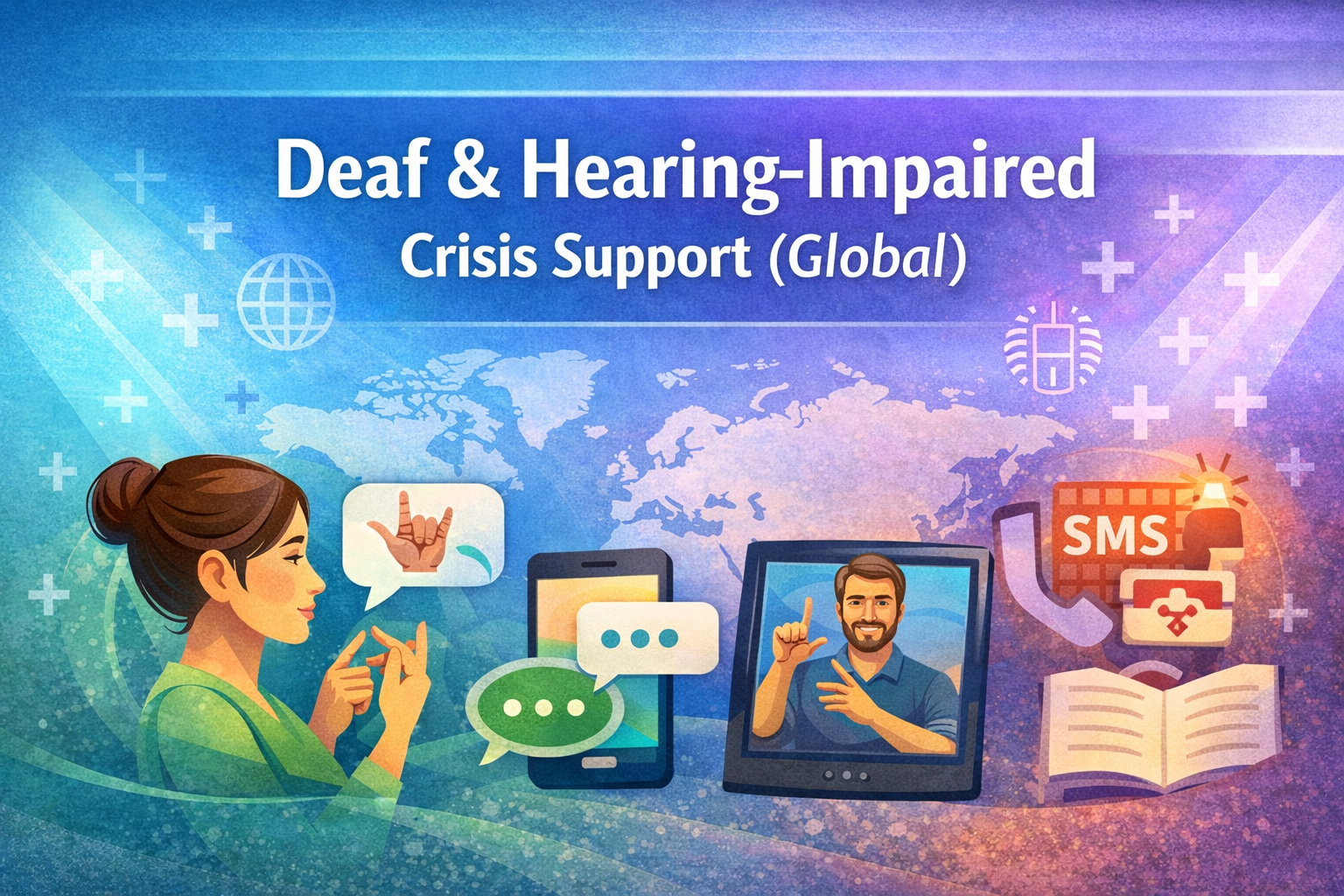
Crisis support should not rely on voice calls to be accessible. This page is for Deaf, hard of hearing, hearing-impaired, late-deafened, and hearing-disabled people who may need safer crisis support options that do not depend on spoken phone communication.
Many crisis systems still assume people can hear clearly, respond quickly by phone, or access spoken emergency services. Accessible support may need text, relay, live chat, written communication, interpreters, visual support, or slower communication options.
If phone calls are not safe, accessible, or realistic, start with lower-pressure options.
SMS or text crisis support can be easier when voice calls are inaccessible, exhausting, or unsafe.
Live chat offers written support without needing to hear, speak, or use a phone call.
Video relay, sign-language access, and interpreter-supported communication may help where available.
Written crisis support can reduce pressure and make communication clearer during distress.
Some services offer accessible crisis communication through visual or interpreter-supported options.
Video relay can support communication through sign language with an interpreter where available.
Some services offer direct sign-language access or interpreters for crisis and emergency communication.
Interpreter-assisted support may be needed in hospitals, emergency services, or urgent mental health settings.
Support should begin by reducing communication barriers, not adding more pressure.
Accessible support may look like slower written replies, visual options, text-based check-ins, interpreter-supported communication, or being given time to process before responding. Support should feel clearer, calmer, and easier to access — not harder because communication works differently.
For crisis support that does not rely on voice calls.
Open text/chat supportReturn to the wider accessibility support hub.
Open accessibility hubExplore more low-demand, non-phone crisis support options.
Open alternativesIf a crisis service is harder to use because it depends on hearing or spoken phone access, that is an access barrier — not a personal failure. Safer support should adapt to how communication works for you.