
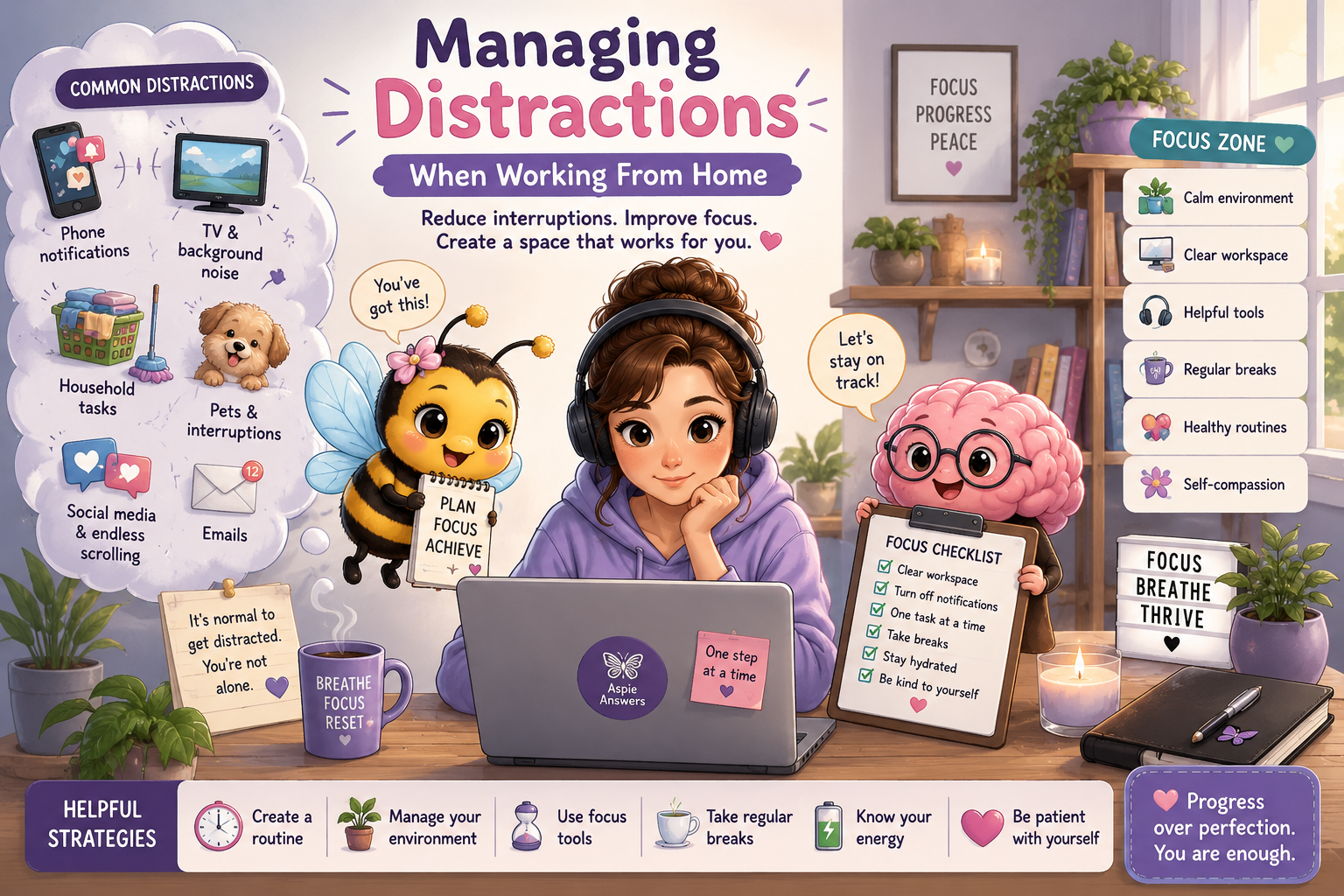
Working from home can offer flexibility, comfort and greater control over your environment. It can also bring competing demands such as household tasks, digital notifications, background noise, family interruptions and thoughts about everything else that needs to be done.
Managing distractions is not about staying focused every minute. It is about understanding what draws your attention away and creating realistic systems that help you return to the task in front of you.
Attention naturally changes throughout the day. Energy, interest, sensory comfort, emotions, physical needs and the environment can all affect how easy it is to concentrate.
ADHD and executive-function challenges can affect beginning, continuing and returning to tasks.
Chores, deliveries, family members, pets and household responsibilities can interrupt work.
Emails, messages, social media, notifications and open tabs can repeatedly pull attention away.
Noise, lighting, temperature, clothing, seating and visual clutter may make focus harder.
Hunger, tiredness, pain, thirst and sitting too long can affect concentration.
Worries, new ideas, remembered tasks, perfectionism and emotional overwhelm can compete for attention.
Your workspace does not need to be perfect or completely silent. Small adjustments can reduce the number of things competing for your attention.
Keep alerts only for messages that genuinely need an immediate response.
Create a period where non-essential calls, messages and app alerts are hidden.
Keep only the tools needed for the current task visible.
Where your work allows, group email checking into planned periods.
Temporary blockers can reduce access to distracting websites during focus periods.
Let household members know when you are working and when you are available.
A closed door, desk sign or shared calendar can show when interruptions should be limited.
Give chores a planned time so they do not compete with every work period.
Have drinks, snacks and work materials ready before a focus session.
Schedule feeding, walks or play before meetings where possible.
Leave small spaces in the schedule rather than expecting a completely interruption-free day.
Work beside another person or use a quiet virtual session for gentle accountability.
Work for a manageable period, pause briefly and then decide whether to continue.
Replace “finish report” with a smaller action such as “open the document.”
Music, movement, fidget tools or background sound may support attention.
Pair completed focus periods with something pleasant or motivating.
A single trusted list reduces the need to search several different systems.
A small completed step is still meaningful progress.
Resting before complete exhaustion can make returning easier.
The skill is not never becoming distracted—it is learning how to gently return.
Self-criticism adds stress without improving concentration.
Distraction is not a personal failure. Your needs, environment and energy all influence focus—and supportive systems can make returning to work easier.
This page can later connect visitors with:
Small changes to your environment, routines and digital habits can reduce interruptions and make it easier to return to your priorities. You do not need perfect concentration to have a productive and meaningful workday.
Explore More Working From Home Support