
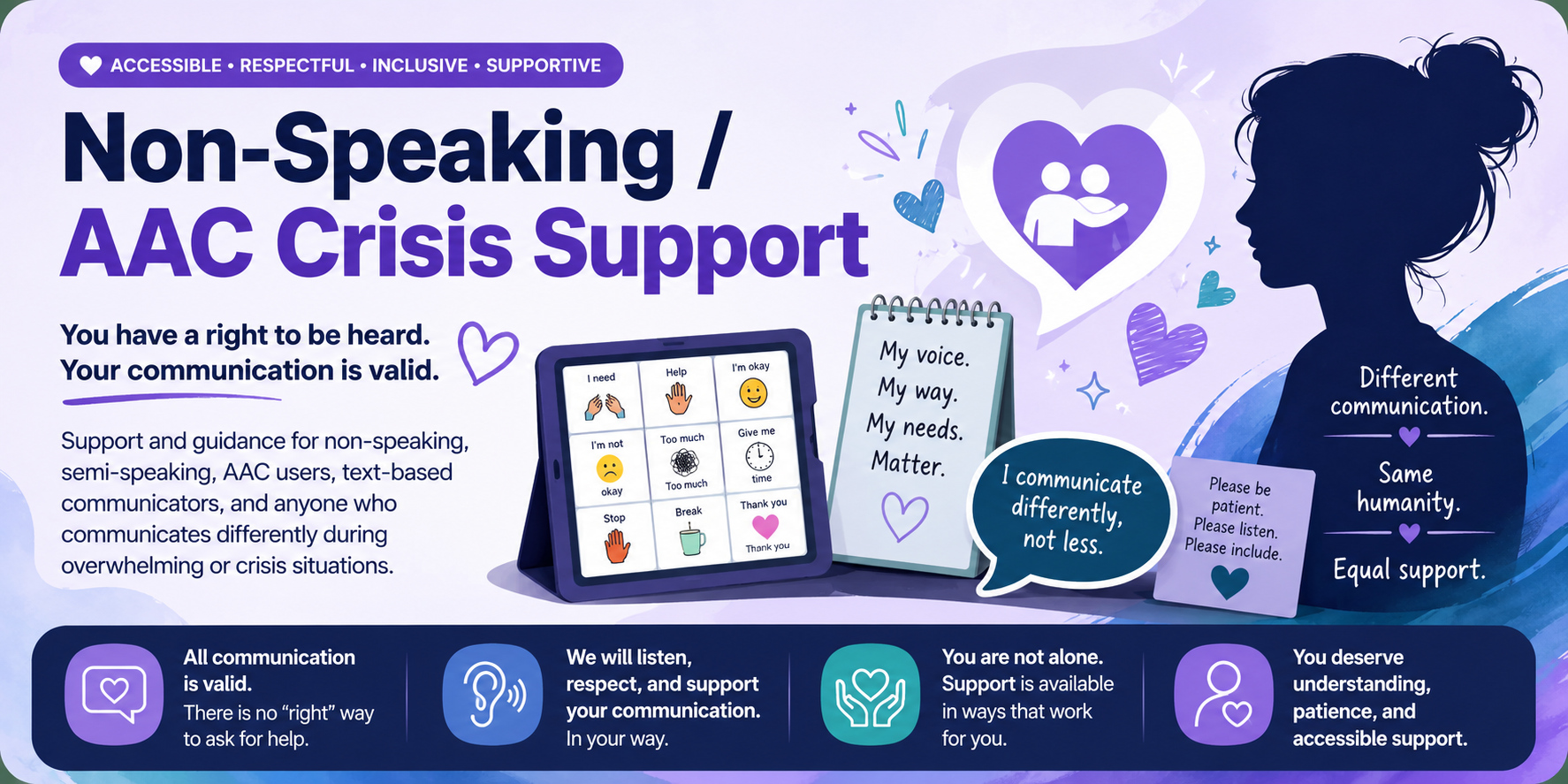
Non-Speaking / AAC Crisis Support
A supportive accessibility-focused crisis page for non-speaking people, AAC users, semi-speaking individuals, text-based communicators, and people who may struggle to communicate verbally during stressful or overwhelming situations.
Communication During Crisis Situations
Stress, sensory overload, panic, shutdowns, trauma responses, burnout, and overwhelming situations can affect how someone communicates.
Text-Based Communication
Some people communicate more clearly through text messages, typing, writing, or apps instead of speaking verbally.
AAC Devices
AAC tools, speech apps, communication boards, symbol systems, or tablets may help people communicate safely.
Processing Time
People may need extra time to understand questions, process information, or respond during distress.
Support Person Assistance
Trusted support people may help explain communication needs or assist with understanding during difficult moments.
Helpful AAC & Communication Supports
Communication Cards
Simple cards can explain needs, communication preferences, medical information, or support requests.
Visual Supports
Visual prompts, symbols, colour coding, and simple instructions may reduce stress and confusion.
Sensory Supports
Reducing sensory overload may help communication become easier during stressful situations.
Typing & Writing
Allowing someone to type, write, or use alternative methods can reduce pressure and improve understanding.
Gentle Communication Support Ideas
Important Disclaimer
Aspie Answers provides educational information, supportive guidance, and signposting only. This page is not a replacement for emergency services, medical care, therapy, safeguarding, or professional crisis support.