
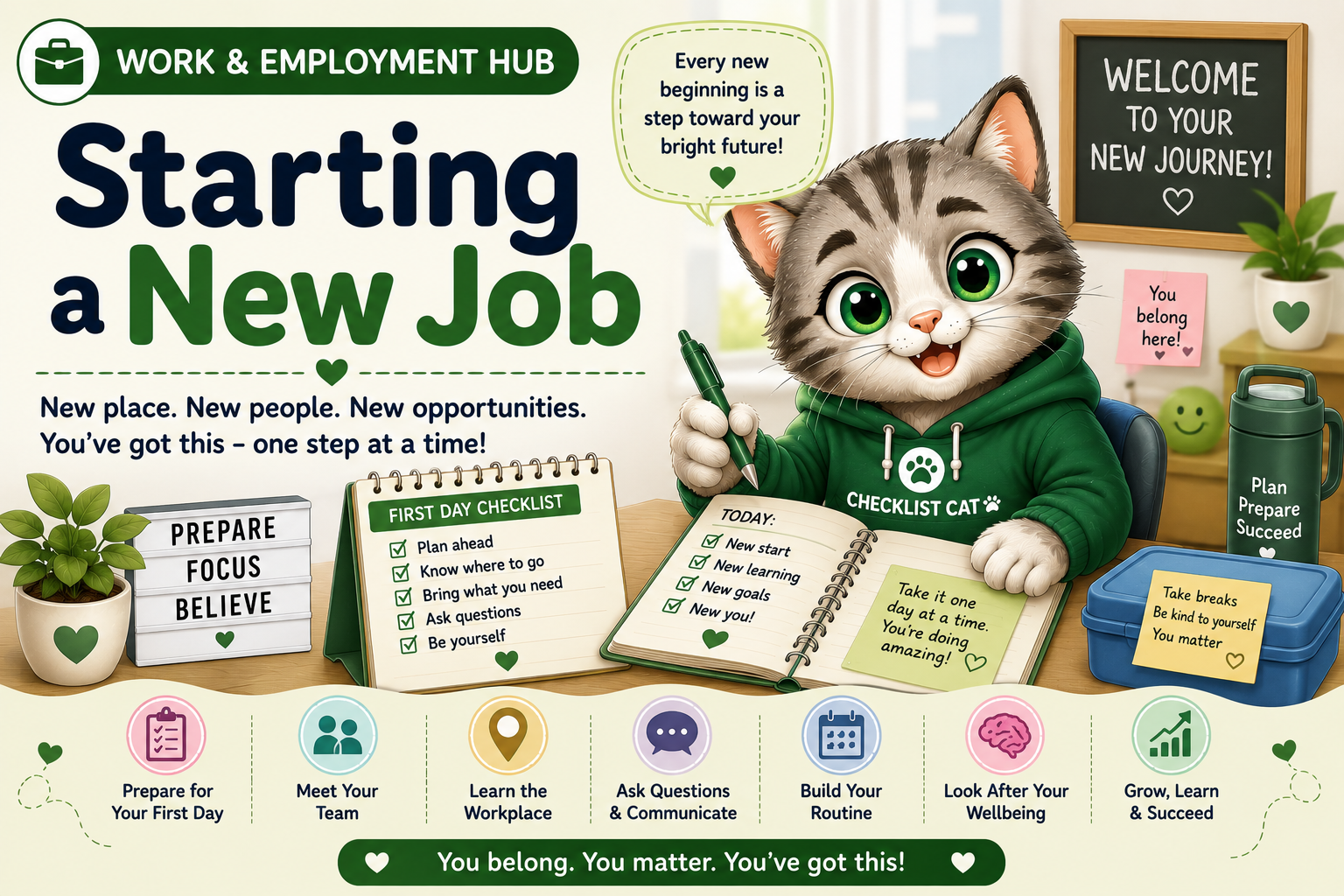
Starting a New Job
Starting a new job can feel exciting, tiring, uncertain or all three at once. This guide offers practical, neurodivergent-friendly support for preparing, getting through the first day, understanding expectations, building routines and settling in gradually.
Try words such as first day, manager, routine, sensory, questions, tiredness, expectations or adjustments.
Showing all guide sections.

Checklist Cat
Make the first morning easier by preparing a short checklist the night before: what to wear, what to bring, where to go and who to ask for.

Toby Turtle
Starting well is not about using every bit of energy on day one. Leave some room for recovery before and after work.

Important Documents
Bring identification, bank details, tax information, forms or certificates only where your employer has asked for them.
Practical Items
A notebook, pen, water bottle, lunch, snacks and anything needed for your journey can make the day easier.
Personal Support Items
Bring medication, sensory tools, communication supports or other personal items that help you stay regulated and comfortable.
Arrive & Check In
Give yourself enough time to arrive, find the right entrance and ask for your manager or workplace contact.
Meet Your Team
You may be introduced to several people. It is completely okay if you do not remember every name straight away.
Learn the Basics
Focus first on breaks, bathrooms, safety, your workspace and who to ask when you need help.
Take Notes
Write down names, routines, passwords, task steps and questions so you do not have to rely on memory alone.
Main Responsibilities
Ask which tasks are most important and which responsibilities belong to you.
Priorities & Deadlines
Find out how priorities are communicated and what to do when several tasks feel urgent.
Quality & Completion
Ask what finished work should look like, who checks it and when you should ask for feedback.
Support & Supervision
Learn who you report to, who can answer questions and how often check-ins are likely to happen.

Ask One Question at a Time
Breaking questions into smaller parts can make conversations clearer and easier to follow.
Request Written Instructions
Written steps, examples, checklists or diagrams can reduce uncertainty and support memory.
Repeat Information Back
Try saying, “Just to confirm, you would like me to…” before beginning an unfamiliar task.
Keep a Question List
Record non-urgent questions and take them to your next check-in with your manager.
Clear Instructions
Written steps, clear priorities, examples and advance notice can make tasks more manageable.
Sensory Support
Helpful options may include quieter spaces, headphones, adjusted lighting or planned recovery breaks.
Regular Check-Ins
Short, predictable meetings can help clarify expectations and address problems before they grow.
Task Breakdowns
Large or unfamiliar tasks may be easier when divided into smaller steps with clear completion points.
Processing Time
Extra time to read, respond or prepare for meetings can support clearer communication.
Flexible Communication
Email, chat, written summaries or visual information may be easier than relying only on spoken instructions.
New-job tiredness can come from unfamiliar tasks, a new environment, new people, processing a large amount of information, commuting, social demands and masking. Needing more recovery during this period is not unusual.
Keep Evenings Simple
Reduce optional commitments, prepare easy meals and allow more rest than usual.
Plan Sensory Recovery
Use quiet time, comfortable clothing, low lighting or other calming activities after work.
Notice Early Warning Signs
Headaches, irritability, shutdown, confusion or increased sensitivity may signal that you need more rest or support.
Adjust Gradually
It can take several weeks or longer to feel settled. Progress does not have to be immediate.
Workplace Culture
Notice how people communicate, share updates, ask for help and organise their day.
Unwritten Rules
It is okay to ask about expectations that were not explained, such as break-room routines or meeting etiquette.
Trusted Colleagues
A supportive colleague can help explain routines, names, systems and workplace customs.
Learn Gradually
You do not need to understand every person, process or social rule immediately.

First-week review
First-month review
Review Progress
Notice what you have learned, which tasks feel easier and where you are using your strengths.
Discuss Training
Ask whether you need more examples, practice, written guidance or additional training.
Check Support
Review whether workplace adjustments and communication arrangements are working well.
Set Early Goals
Choose one or two realistic goals for the next stage of settling into your role.
What should I bring on my first day?
Bring any requested documents, practical items for the day, medication or sensory supports, and anything else your employer has specifically asked you to provide.
Is it okay to ask for written instructions?
Yes. Written instructions, examples and checklists can help many employees understand tasks and remember important details.
What should I do if I feel overwhelmed?
Pause where possible, use a calming strategy, take an agreed break and speak with your manager or support person if you need clarification or additional support.
How long does it take to settle into a new job?
There is no single timetable. Learning a role, building routines and adjusting to a workplace may take several weeks or longer.
What should I do if I make a mistake?
Tell the appropriate person, ask how to correct it and write down what you learned. Mistakes are a normal part of learning a role.
When should I discuss workplace adjustments?
You can discuss adjustments before starting or later when you recognise a barrier affecting your ability to work safely and effectively.