Understand what helps
Explore the routines, communication styles, environments and practical supports that help you feel more settled and able to do your best work.

Whether you are looking for work, already employed, supporting somebody else or helping to create a more inclusive workplace, this section is designed to offer practical ideas that can be adapted to different people, roles, needs and ways of working.
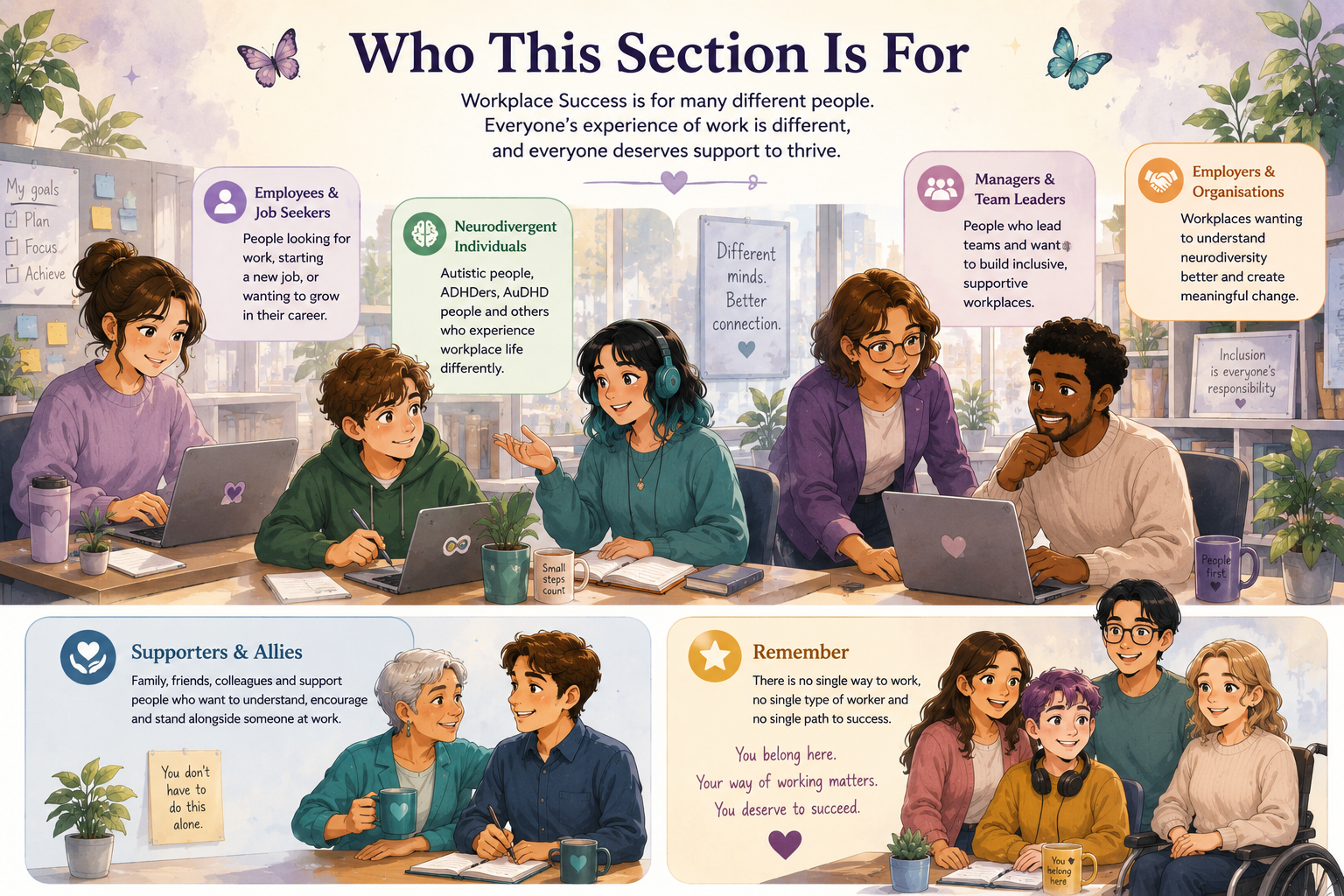
Explore ideas for starting work, settling into a role, understanding your working style, building confidence, managing everyday demands and finding strategies that make work more sustainable.
Find support that recognises different communication, sensory, executive-function, processing, energy and organisational needs without assuming there is one correct way to work.
Managers, employers, colleagues, family members and support people can also use this section to better understand workplace needs and help create clearer, kinder and more accessible environments.
Your way of working matters. Workplace success is not about becoming somebody else — it is about finding approaches, environments and support that help you participate and work in ways that are manageable and meaningful for you.
People do their best work in different ways. Understanding what helps you communicate, focus, organise, process information and protect your energy can make everyday working life more manageable.
Your working style can include your strengths, preferences, sensory needs, energy patterns, communication style and the supports that help you work comfortably and sustainably.
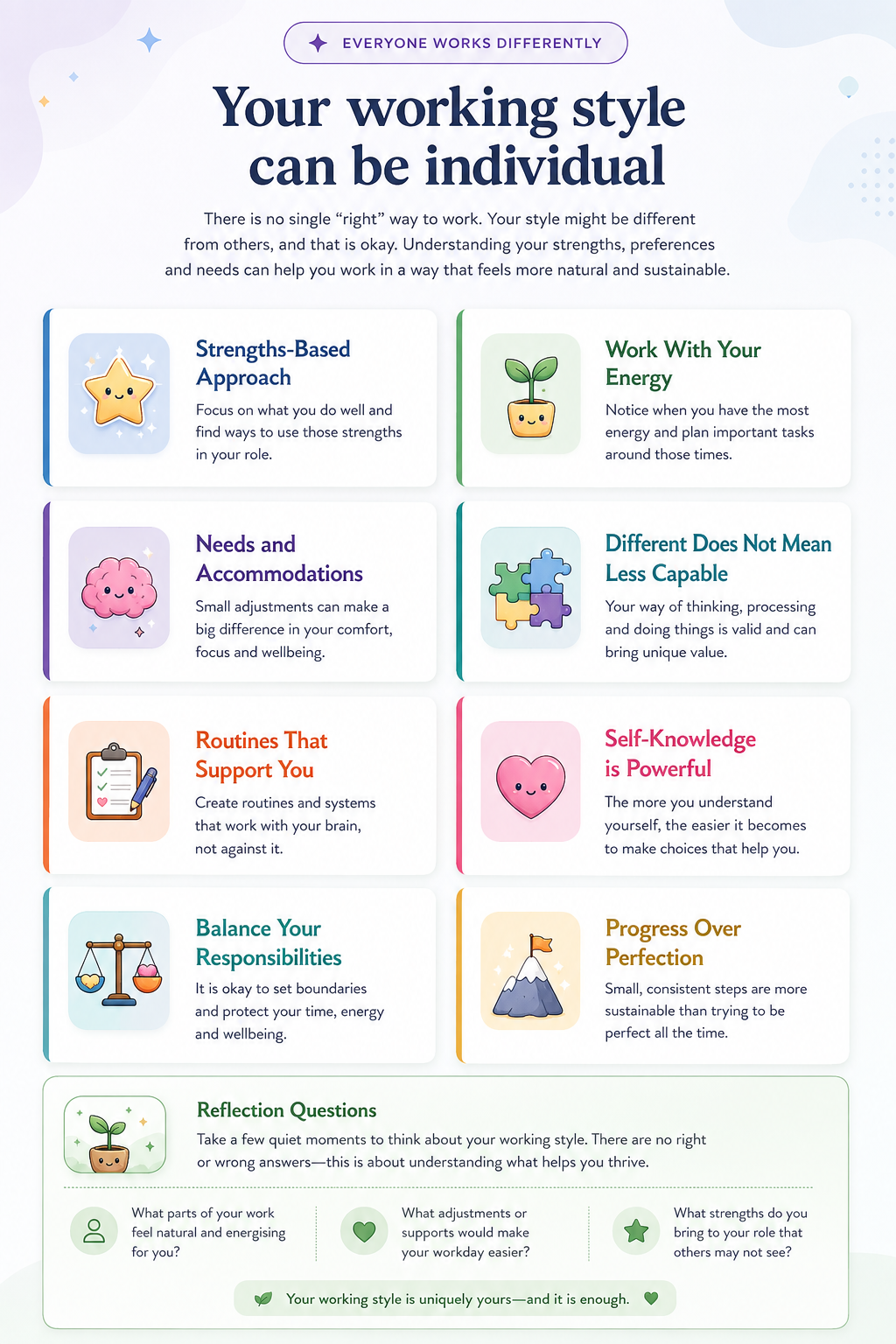
You might prefer written instructions, direct language, advance notice of meetings, time to prepare questions or clear expectations rather than relying on hints or assumptions.
Clear routines, visible priorities, consistent processes and knowing what will happen next can reduce uncertainty and make it easier to focus on the work itself.
Lighting, noise, smells, temperature, clothing, interruptions and busy shared spaces can all affect concentration, comfort and energy.
Some people work best with routine while others need variety. Advance notice, clear explanations and time to adjust can make unexpected changes easier to navigate.
Needing a little more time to understand instructions, respond to questions or move between tasks does not mean you are less capable.
Regular breaks, quieter lunch spaces, movement, hydration and a sustainable pace can help reduce overload and protect your energy.
Flexible start times, part-time hours, remote days, compressed hours or predictable shifts may make work more sustainable for some people.
Your strongest working style may include deep focus, attention to detail, creativity, reliability, specialist knowledge or thoughtful problem-solving.
There are no right answers. These questions can simply help you recognise patterns in the way you work best.
Workplace difficulties are not always about the job itself. Communication, sensory demands, unclear expectations, interruptions, heavy workloads and unexpected changes can all affect how manageable a working day feels.
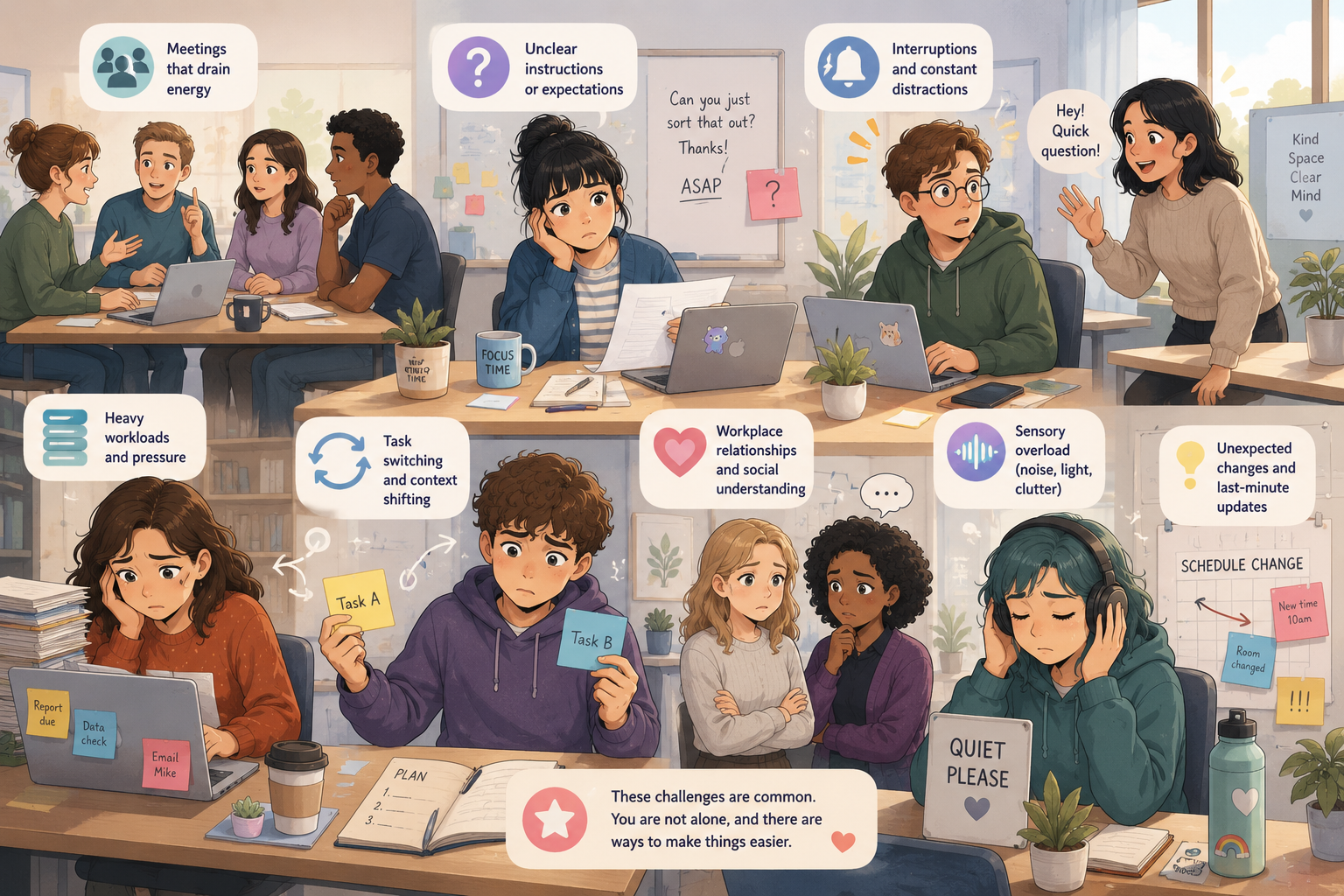
A person can understand their role and still find parts of everyday workplace life demanding. Different situations can use different amounts of mental, sensory, social and physical energy.
Fast conversations, several speakers, unexpected questions and unclear outcomes can make meetings tiring or difficult to follow.
Vague requests, implied expectations or changing directions can make it difficult to know exactly what needs to be done.
Phone calls, messages, people approaching your desk and frequent changes can make it harder to regain concentration.
Competing priorities, deadlines and large task lists can quickly feel overwhelming when everything seems equally urgent.
Moving quickly between different tasks, systems or types of thinking can require more time and mental energy than others realise.
Unspoken rules, office politics, feedback, humour and different communication styles can sometimes be difficult to interpret.
Noise, lighting, smells, movement, clothing and busy shared spaces can gradually increase stress and reduce concentration.
Sudden schedule changes, new priorities or unfamiliar situations can be difficult when there is little time to prepare.
Stress can build gradually. Learning to notice early signs can make it easier to pause, adjust something or ask for support before reaching complete exhaustion.
Different workplace challenges can call for different kinds of support. These Aspie Answers Companions bring together planning, executive-function support, routines, time awareness, flexible thinking and sustainable pacing.
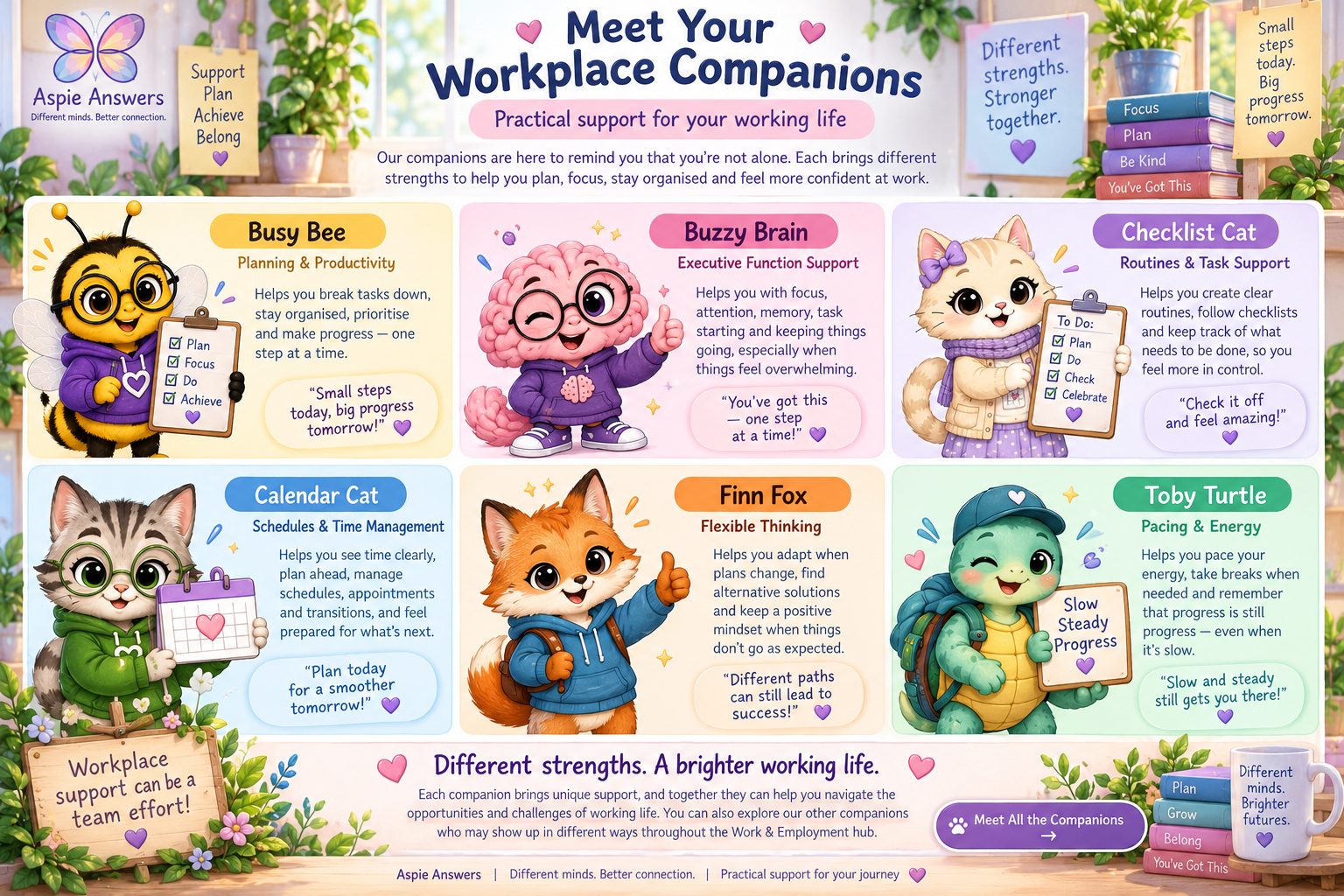
Each Companion has a different role, personality and area of support. As their individual guides and resources grow, Workplace Success can connect to the relevant Companion rather than trying to use every character everywhere.
Meet All the Companions →Clear communication can make working life easier, but it is not always simple to explain what you need — especially when you are under pressure, processing a lot of information or trying to work out what would actually help. You are allowed to prepare, ask questions and communicate in ways that work for you.

Asking for support does not have to mean giving a long explanation. Sometimes a clear question, written note, example or short conversation is enough to help another person understand what would make work more manageable.
Workplace communication can involve everyday questions, changing expectations, feedback, boundaries, adjustments and asking other people for practical support.
Ask for instructions, priorities or expectations to be explained again, written down or broken into clearer steps when needed.
Email, notes, agendas, checklists or follow-up messages can reduce the pressure of remembering everything from a spoken conversation.
You can focus on practical needs: what makes a task easier to understand, what environment helps you concentrate or what support improves your work.
When plans change, asking what has changed, what is now most important and what can wait can make the new situation easier to navigate.
Boundaries can include workload, communication methods, break needs, availability and being realistic about what you can manage.
Support might come from a manager, colleague, workplace contact, advocate or another trusted person depending on the situation.
You do not have to use these exact words. Adapt them to your situation, communication style and workplace.
Workplace success is not only about getting more done. Sustainable work can also mean noticing your limits, protecting recovery time, pacing yourself and finding working patterns that do not continually leave you running on empty.

Getting through the working day should not always require using every bit of energy you have. Small changes can help protect capacity for work and for the rest of your life.
Pay attention to which tasks, environments and interactions use the most energy and which ones feel easier to sustain.
Short, regular recovery periods may be more helpful than waiting until you are completely exhausted or overloaded.
Simplifying routines, reducing interruptions or asking for clearer priorities can protect energy for the work that matters.
Quiet time, familiar routines, reduced demands or a transition period after work may help your body and mind settle.
Working at maximum intensity every day is difficult to maintain. Sustainable productivity includes pacing and realistic expectations.
Asking for clarity, adjustments or support before things become unmanageable may stop smaller difficulties becoming much bigger ones.
Everyone experiences stress differently. These signs may simply be clues that something about workload, environment, expectations or recovery needs attention.
A healthy working pattern usually includes more than productivity. These areas can all matter when thinking about whether work is genuinely sustainable.
Tasks, goals and responsibilities.
Time and space to recharge.
People, adjustments and clear communication.
Relationships, interests and everyday living.
Workplace confidence can grow through experience, support, learning and recognising what you already do well. Career development can also happen in many different directions — not only through promotions, management or continually taking on more.

Career development does not have to follow a single ladder. Growth can mean gaining confidence, developing specialist skills, trying something new, changing direction or creating a working life that fits you better.
Confidence often comes after experience rather than before it. Small successes can slowly make unfamiliar tasks feel more manageable.
Reliability, specialist knowledge, creativity, problem-solving, attention to detail and persistence can all be valuable workplace strengths.
Growth may include formal training, learning from colleagues, practising new tasks or gradually taking on different responsibilities.
Specific, practical feedback can help you understand what is working and what might be adjusted without turning every mistake into a judgement.
Career progression might mean promotion, specialisation, changing roles, reducing hours, freelancing or becoming more comfortable and confident where you already are.
Learning a new system, speaking up in a meeting, handling a difficult situation or asking for support can all be meaningful achievements.
Workplace growth is often made up of small changes that only become obvious when you look back over time.
There is no single correct career ladder. Development can mean building depth, changing direction, learning something new or creating a role that fits your strengths and life better.
Use the resources that fit your needs. Some people prefer planners and visual systems, while others find communication templates, reflection sheets, checklists or simple tracking tools more useful.

A useful toolkit does not need to contain dozens of worksheets. A few familiar tools that solve real problems can be much more helpful.
Organise priorities, deadlines, meetings and everyday tasks without needing to keep everything in your head.
Explore Planning Resources →Use clear step-by-step checklists for repeated tasks, meetings, starting work, finishing work and keeping track of responsibilities.
Browse Checklists →Prepare useful phrases, meeting notes, clarification requests and written follow-ups for common workplace situations.
Explore Communication Tools →Find tools for breaking tasks down, prioritising, remembering information, starting work and switching activities.
Explore Task Support →Track energy, recognise stress patterns, plan breaks and notice when workplace demands may need adjusting.
Explore Wellbeing Resources →Recognise strengths, record achievements, reflect on workplace experiences and identify useful next steps.
Explore Reflection Tools →As we audit the existing Aspie Answers resource library, useful workplace resources can be brought together here without creating unnecessary duplicates.
Workplace Success resources will eventually sit within the wider Work & Employment library alongside tools for finding work, working from home, self-employment, rights, career pathways and volunteering.