🕐 Estimating Time
It may be difficult to predict whether a task will take ten minutes, one hour or much longer.

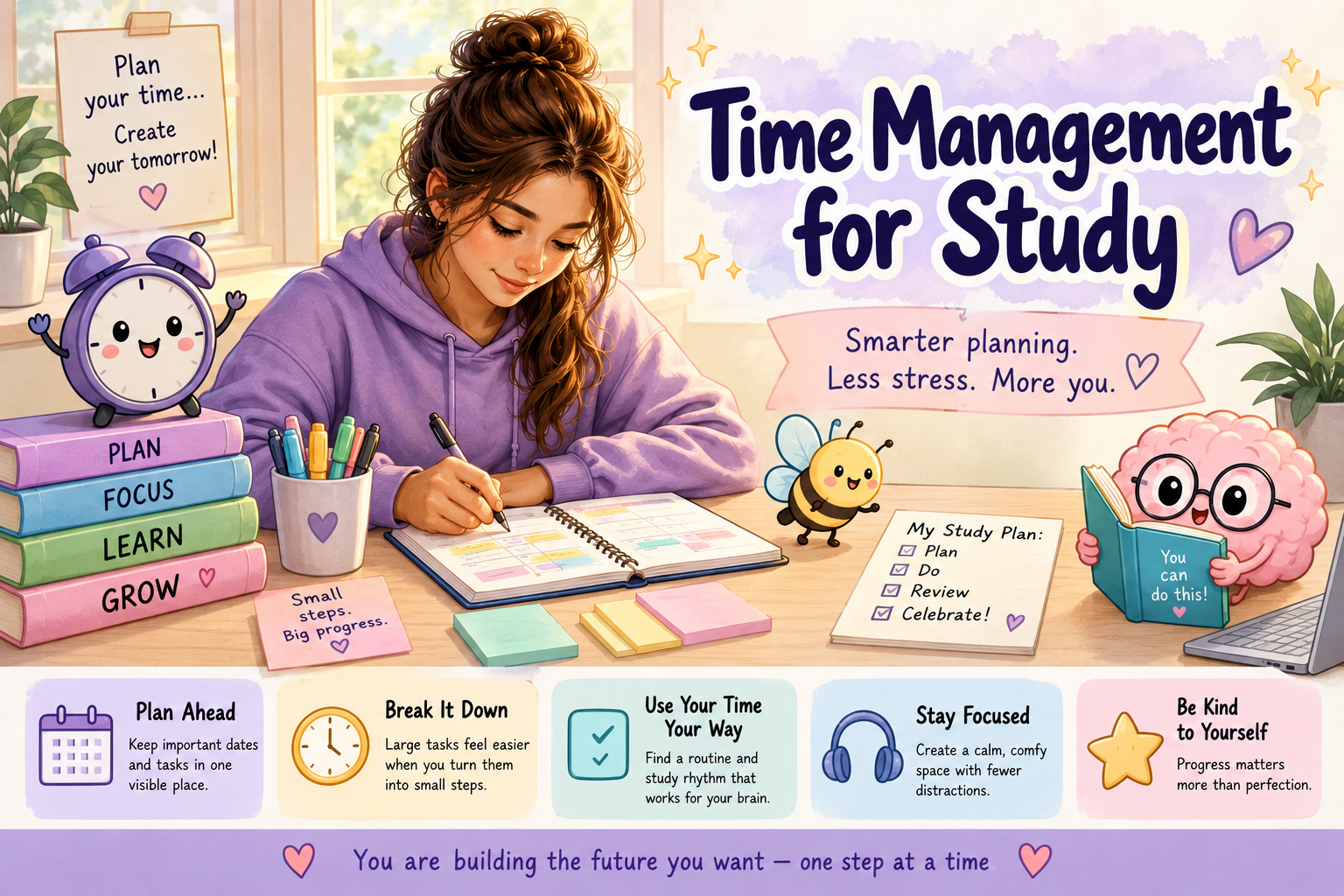
Managing study time can involve much more than making a timetable. You may need to notice deadlines, estimate how long tasks will take, choose priorities, start work and remember when to take a break.
This page shares practical, neurodivergent-friendly ideas for making study time clearer, more visible and easier to manage.
Looking for study, planning, executive function or everyday support? Search the Aspie Answers website.
Time management often relies on several executive function skills working together.
It may be difficult to predict whether a task will take ten minutes, one hour or much longer.
Knowing that you have time available does not always make it easy to begin the work.
Different assignments, readings and responsibilities can become difficult to hold in your head at once.
Moving from one subject or activity to another can take extra energy and adjustment.
You may become deeply focused on one activity and lose track of the time passing around you.
Energy, sleep, sensory load and emotional wellbeing can all affect study capacity.
Some people find time difficult to sense internally. Making time visible can reduce the pressure of trying to “feel” how much time has passed.
A countdown timer or visual timer can make the passing of time easier to notice.
Set a reminder before you need to stop so the change is not completely unexpected.
Notice how long common study tasks actually take. This can help with future planning.
Link study to visible events such as after breakfast, after class or before dinner.
A clock in your study space can help reduce the need to rely on an internal sense of time.
The same task may take different amounts of time on different days. That does not mean you have failed.
A deadline hidden in an email or learning platform can be easy to lose sight of.
Move the date into a calendar, planner or system that you regularly check.
Do not only record when the work is due. Decide when the first action should happen.
Create smaller dates for research, planning, drafting and reviewing.
Uploading, emailing or submitting the task is a separate action worth planning for.
You do not have to study for hours at a time for your effort to count.
Begin with ten minutes when a longer session feels impossible.
Choose one subject or task for the current study block.
Read one section, answer one question or organise one set of notes.
Decide when the break will happen instead of waiting until you are completely exhausted.
Ask yourself whether you have the energy to continue, switch tasks or stop for now.
Notice what was completed so your study session does not disappear into the feeling that you “did nothing.”
A useful study plan should support your brain rather than demand a perfect routine.
Are you more focused in the morning, afternoon or evening? Use that information where possible.
Identify what is urgent, important or most likely to create problems if left too long.
Leave breathing room for unexpected tasks, changing energy and extra recovery time.
Put smaller actions into your plan rather than writing “do assignment” as one enormous block.
Check what still matters and adjust your plan when circumstances change.
Rest, meals, movement and sensory recovery belong in your schedule too.
Consistency can help, but flexibility is also part of a sustainable study routine.
Use higher-energy periods for demanding tasks when this feels helpful.
Try reviewing notes, completing familiar tasks or organising materials.
Read instructions, open documents, make a short list or prepare for the next session.
A changed plan is still a plan. Adjust when energy, health or other needs change.
Recovery can be part of preventing overwhelm and burnout.
If your routine falls apart, start again with one small action rather than trying to rebuild everything at once.
Our growing Aspie Answers companion library can support different parts of study and executive function.
Busy Bee reminds us that a study plan can begin with one small, visible action. Choose what matters next, complete one manageable step and notice the progress you have made.
Buzzy Brain helps explain why time blindness, starting tasks, switching activities and holding multiple deadlines in mind may feel difficult. External tools can help take some of that work out of your head.
This resource family can grow alongside the Work & Study Life collections.
Plan study sessions, priorities and breaks in one visible place.
Turn a due date into smaller progress checkpoints.
Create a flexible overview of study, commitments and recovery time.
Choose the task, length of time, break and next step.
Make time more visible using reminders, anchors and external tools.
Notice how activity and breaks affect focus, energy and recovery.
Time management and study planning resources are planned to grow within the Aspie Answers Work & Study Life catalogue.
Future volumes can be grouped into clear collections and connected with the Aspie Answers website store, Payhip, Gumroad and other selected platforms as the catalogue develops.