
Official Aspie Answers Companion
Meet Toby Turtle
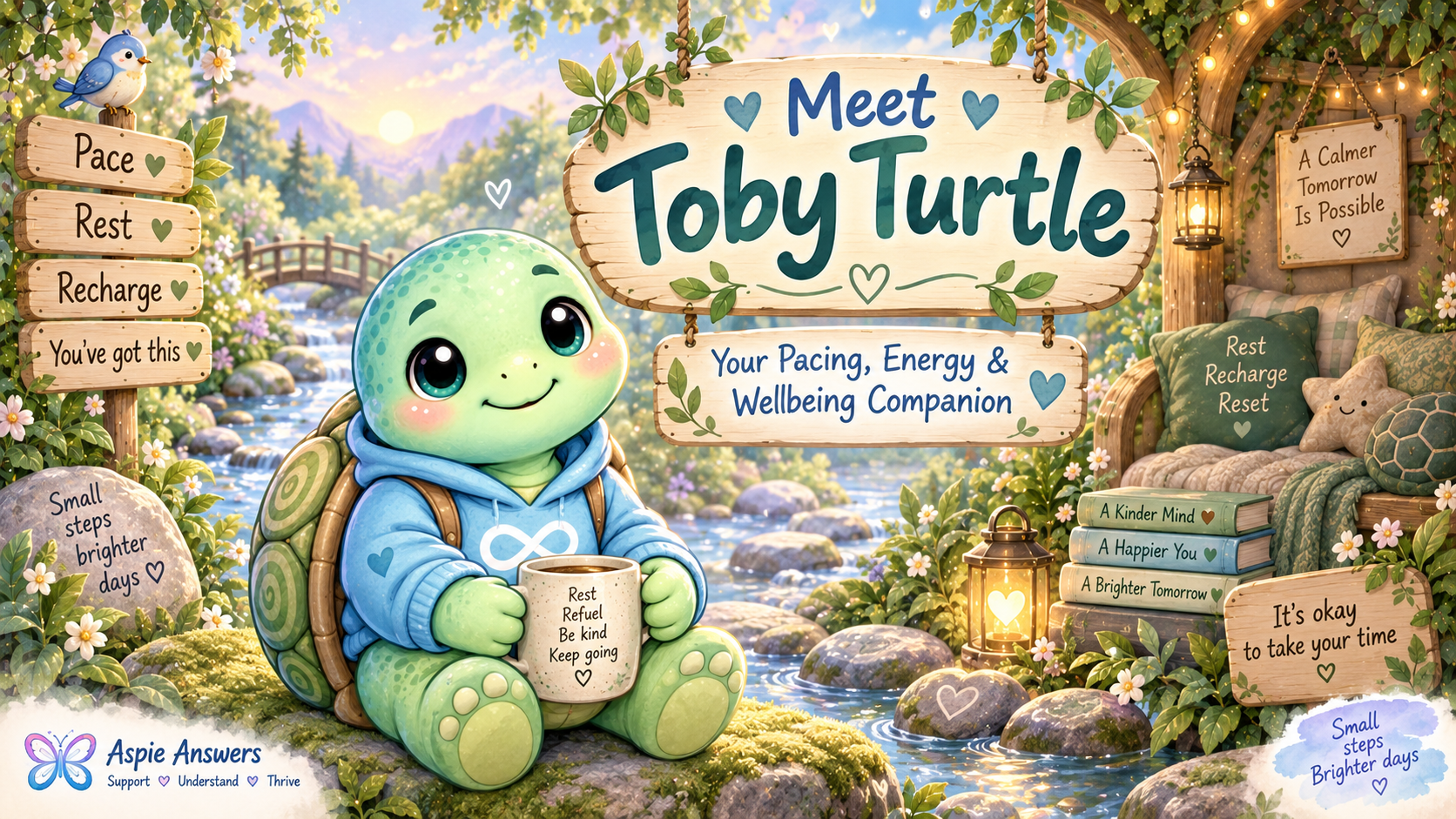
Toby Turtle is the Aspie Answers Companion for pacing, energy and burnout prevention. He helps you slow things down, notice what your energy is doing, protect what you have available and choose a rhythm that is more sustainable.
Toby’s approach is gentle and practical: check in, do what matters most, take breaks before you are completely empty, and remember that doing less can sometimes be the wisest choice.
Official profile
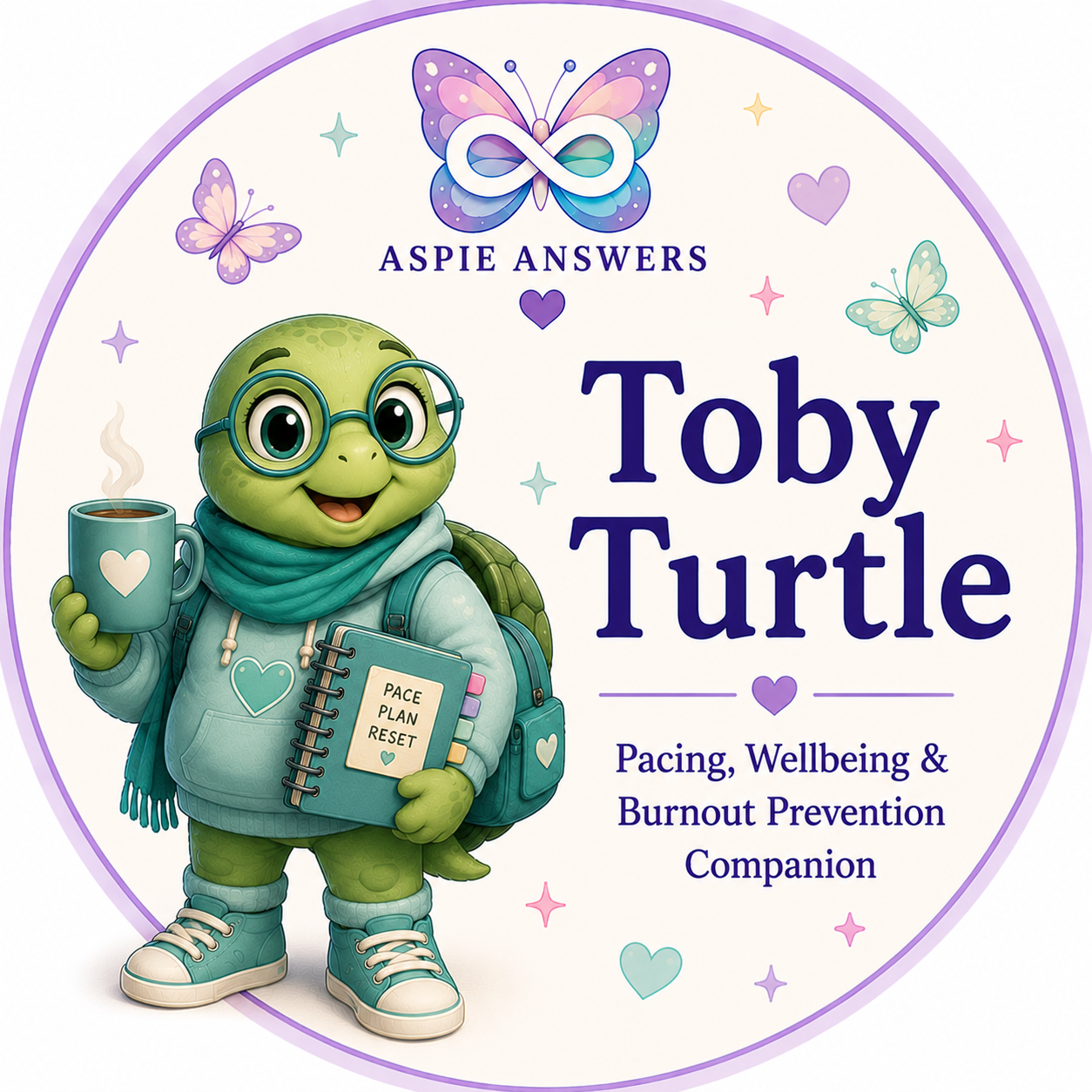
Toby Turtle at a glance
Toby is gentle, patient and reassuring. He helps make space for rest, slower days, smaller steps and realistic choices without treating reduced capacity as failure.

How Toby Turtle helps
A steadier rhythm can protect more than productivity
Toby helps you notice what your body and brain are telling you before the pressure becomes too much.
Check your energy
Notice whether today feels low, medium or more resourced before deciding what to take on.
Pace the task
Break activity into smaller pieces and spread effort out instead of using everything at once.
Take breaks earlier
Rest before complete depletion rather than waiting until you have nothing left.
Protect recovery
Build quieter, lower-demand time into the day when your system needs to settle.
Reduce burnout risk
Notice warning signs, reduce load and adjust expectations before ongoing overextension becomes the norm.
Respect your limits
Doing less, asking for help or postponing something can be a responsible choice.
Toby’s Energy Check Station
What kind of day is your energy having?
This is not a score. It is a quick check-in to help you match expectations to what is actually available.
Low energy
Keep the plan small. Prioritise essentials, reduce extras and protect rest.
Useful question: What can wait?Medium energy
Choose a few meaningful tasks and leave room for breaks and recovery.
Useful question: What matters most today?Plenty of energy
Use the extra capacity thoughtfully without assuming every good-energy day has to become a catch-up marathon.
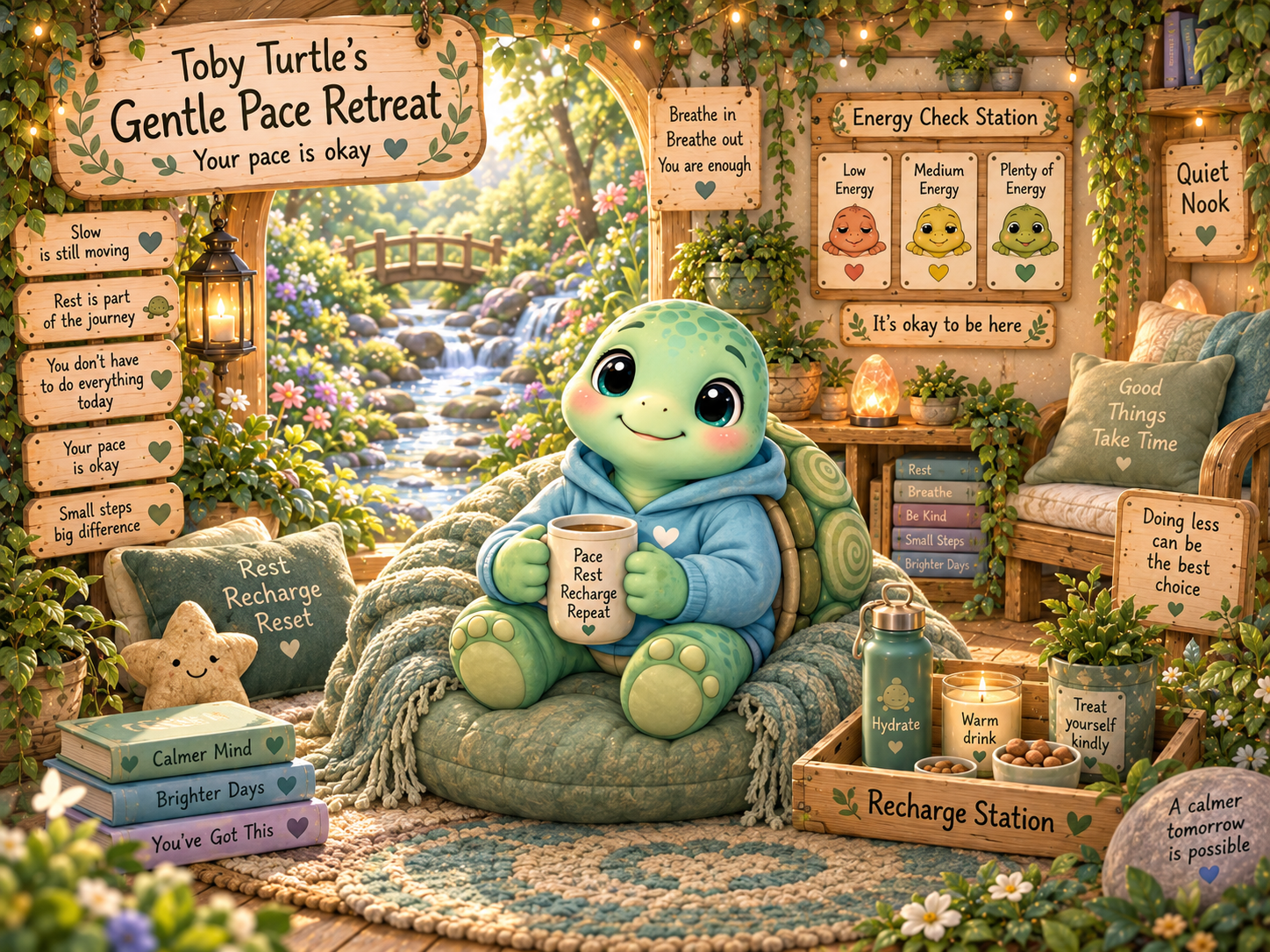
Useful question: What pace will still feel okay later?Inside the Gentle Pace Retreat
A calm place to slow down, rest and respect your pace
Toby’s retreat brings together energy awareness, recovery, quiet nature and gentle planning without turning rest into another task to complete.
Energy Check Station
Pause and notice what level of capacity you are working with before choosing the day’s demands.
Rest & Recharge Nook
A low-pressure place for breaks, recovery and doing less when your system needs it.
Gentle Pace Path
A reminder that one step at a time still moves you forward.
Low-Energy Zone
A space where reduced capacity is recognised rather than argued with.
Recharge Station
Hydration, food, warmth, medication or other practical supports can help replenish what the day has used.
Quiet Nature Space
Lower stimulation and fewer demands can help the nervous system recover.

My Pace Plan
A simple way to choose a sustainable next step
Toby’s plan is deliberately short. The goal is to reduce load, not create another complicated system.
- Check in.What is my energy like right now?
- Choose what matters.What genuinely needs attention today?
- Decide what can wait.Move non-essential tasks out of today’s load.
- Ask for help.What can be shared, simplified, supported or delegated?
- Plan a pause.Where can rest happen before the tank is empty?
- Reassess.After the next step, check your energy again rather than assuming it stayed the same.
Protecting against overload
Notice the warning signs before everything becomes urgent
Pacing is most useful when it starts before exhaustion, shutdown or burnout has already taken over.
Signs the load may be getting too high
- ordinary tasks suddenly taking much more effort
- needing longer to recover from social or sensory demands
- more irritability, shutdown, overwhelm or brain fog
- sleep becoming less restorative
- losing capacity for things that are usually manageable
- feeling like every task is urgent
Ways to lower the load
- reduce non-essential commitments
- break tasks into smaller stages
- protect quieter recovery time
- use supports instead of pushing through unsupported
- ask for adjustments or help earlier
- let “good enough” be enough when needed
Companion connections
Toby Turtle works alongside other Companions
Toby belongs to the Rest & Wellbeing Team. Luna Bunny brings complementary support for sleep, rest, bedtime and calm routines, while other Companions can help when pacing also involves planning, overload or emotional regulation.
Rest & Wellbeing teammate
Luna Bunny
Sleep, rest, bedtime and calm routines — helpful when recovery needs a gentler transition into rest.
Useful cross-team connections
Checklist Cat
Steps, routines and preparation can make a task easier to pace instead of holding everything in your head.
Ollie Octopus
Support for juggling demands, sensory overload, organisation and multitasking can help reduce competing load.
Scout
Emotional regulation and recognising feelings can help when stress is also using up energy.
Resources & pathways
Gentle support beyond this page
Toby connects naturally with practical tools for pacing, low-energy planning, energy awareness, recovery and reducing overload across Aspie Answers.
Energy check-ins
Simple check-ins can help match today’s plan to the capacity that is actually available.
Low-energy planning
Low Energy and Spoon Theory-style planning tools can help prioritise essentials and reduce unnecessary load.
Rest & recovery tools
Gentle routines, break planning and recovery supports can make rest easier to protect.
Companion activities
Worksheets, stories and future interactive experiences can build on Toby’s role when they are genuinely useful.
A note from Toby
Your pace is okay.
Slow is still moving. Rest is part of the journey. You do not have to spend all of today’s energy just because it is there.
Pace · Rest · Recharge · Repeat
Aspie Answers · Companion Universe