
🇬🇧 Work & Employment • United Kingdom Support
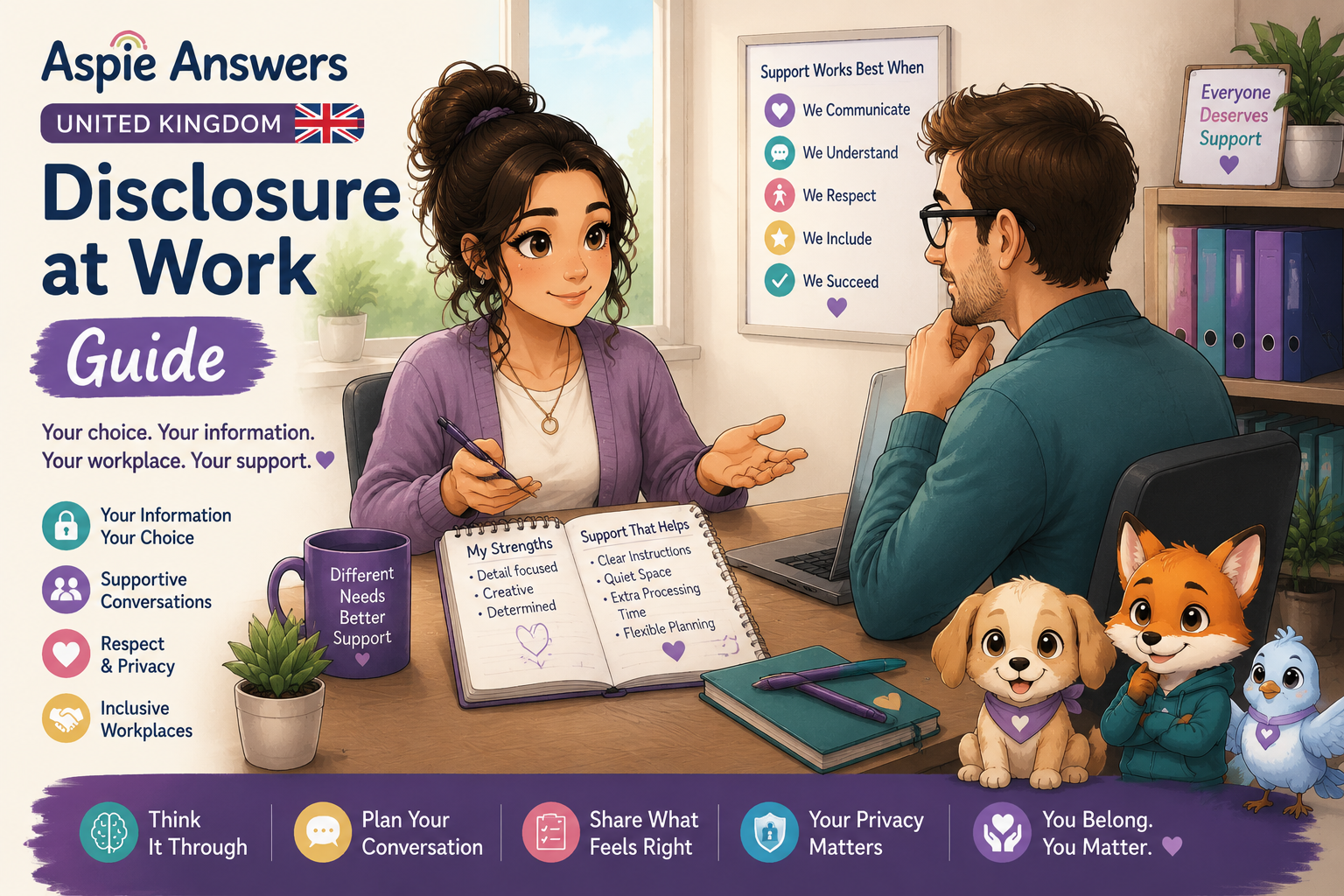
United Kingdom — Disclosure at Work Guide
Explore workplace disclosure, sharing support needs, preparing conversations, privacy considerations and making informed decisions about workplace support in the United Kingdom.
⚖️ Understanding Disclosure At Work
Disclosure is a personal decision about whether to share information about disability, neurodivergence, health conditions or support needs in the workplace.
Different people make different choices depending on their circumstances, workplace environment, support needs and personal comfort.
This page provides general educational information and is not individual legal advice.
🔎 Find Workplace Support
Search Aspie Answers for workplace rights, adjustments, employment guidance and neurodivergent workplace resources.
📌 On This Page
🗣️ What Does Disclosure At Work Mean?
Disclosure means choosing whether to share information about yourself with people at work who may be able to provide understanding, support or adjustments.
For some people, disclosure can help create access to support. For others, keeping personal information private may feel right for their circumstances.
There is no single correct choice. The most important thing is making a decision that feels appropriate for you.
🌱 Sharing Information
Some people choose to share information to help others understand their needs.
🔒 Privacy & Choice
Personal information belongs to you, and decisions around disclosure are individual.
🤝 Accessing Support
Disclosure may sometimes help someone explore workplace support options.
🌱 Reasons Someone May Choose To Disclose
People choose to disclose for many different reasons. For some, sharing information can help create understanding, access support and reduce workplace barriers.
🤝 Accessing Support
Disclosure may help someone discuss workplace adjustments, accessibility needs or other forms of support.
💬 Helping Others Understand
Sharing information may help managers or colleagues understand different communication styles, needs and strengths.
♿ Creating Accessibility
Disclosure may help identify practical solutions that make work more accessible.
🔒 Choosing Whether To Disclose
Disclosure is a personal decision. There is no requirement for everyone to make the same choice.
🌿 Personal Circumstances
Your decision may depend on your workplace, experiences, comfort level and support needs.
🏢 Workplace Environment
Some people consider whether their workplace feels supportive, understanding and inclusive.
💭 Taking Time To Decide
You may choose to think about your options and gather information before making a decision.
🌱 Remember
Choosing not to disclose does not mean someone does not need support. Everyone's situation is different.
🗣️ Preparing For A Disclosure Conversation
Preparing your thoughts before a workplace conversation can help you feel more confident and organised.
1️⃣ Understand Your Needs
Think about what support, understanding or changes may help you work successfully.
2️⃣ Decide What To Share
You can choose what information you feel comfortable sharing.
3️⃣ Explain Practical Support
Focusing on helpful solutions can make conversations clearer.
4️⃣ Record Agreements
Keeping notes about discussions and agreed support can help with future reference.
🧩 Neurodivergent Disclosure At Work
Autistic people, ADHDers and other neurodivergent people may have different reasons for considering disclosure.
🧩 Autism Support Needs
Some people may share information about sensory needs, communication preferences or routines that help them work effectively.
⚡ ADHD Support Needs
Some people may discuss focus, organisation, planning or task management support.
🧠 Executive Function Support
Clear expectations, written information and structured approaches may help some people.
🌟 Self-Advocacy At Work
Self-advocacy means understanding your needs, communicating your preferences and being involved in decisions that affect you.
💪 Know Your Strengths
Understanding what you do well can help you explain how you work best.
📝 Prepare Your Ideas
Writing down thoughts beforehand can make difficult conversations easier.
🤝 Ask For Support
Seeking advice from trusted people or services can help you explore options.
🌟 Your Disclosure Support Companion Team
Making decisions about disclosure can involve confidence, planning and emotional preparation. Your Aspie Answers companions can help you think through your options while keeping the decision personal to you.
🐶 Scout — Feelings & Confidence
Scout helps you recognise emotions, prepare for difficult conversations and build confidence when workplace situations feel overwhelming.
Supports:
• emotional preparation
• confidence
• self-understanding
🦊 Finn Fox — Choices & Problem Solving
Finn helps you explore options, think through situations and consider possible next steps.
Supports:
• decision making
• workplace problem solving
• exploring choices
🐝 Busy Bee — Planning Conversations
Busy Bee helps organise thoughts, prepare notes and break conversations into smaller steps.
Supports:
• preparation
• checklists
• planning
🕊️ Hope — Belonging & Encouragement
Hope reminds you that asking for support and understanding your needs are important parts of creating belonging.
Supports:
• encouragement
• self-advocacy
• reassurance
📚 Disclosure At Work Glossary
Understanding workplace language can make decisions feel less confusing. These terms provide a starting point for exploring disclosure and support.
🗣 Disclosure
Choosing whether to share information about disability, health, neurodivergence or support needs.
🔒 Confidentiality
Respecting personal information and understanding who information is shared with.
♿ Workplace Adjustment
A support or change that may help reduce barriers at work.
🌈 Accessibility
Creating workplaces, information and environments that allow people to participate.
💪 Self-Advocacy
Understanding your needs and communicating what support may help you.
🤝 Inclusive Workplace
A workplace culture where people are respected, supported and valued.
📥 Disclosure At Work Resources
Aspie Answers resources can help people reflect on their options, prepare conversations and understand their workplace support needs.
📝 Disclosure Decision Planner
A guided worksheet to explore thoughts, questions and possible options.
Coming Soon💬 Workplace Conversation Planner
Prepare what you would like to discuss before a workplace conversation.
Coming Soon🧩 My Support Needs Reflection Sheet
Explore strengths, challenges and workplace support preferences.
Coming Soon🌟 Self-Advocacy Planner
A practical tool for organising thoughts and preparing support requests.
Coming Soon🔗 Related UK Workplace Guidance
🇬🇧 UK Workplace Rights & Employment Guidance
Return to the main UK workplace pathway.
UK Workplace Guide♿ Workplace Adjustments Guide
Explore workplace support, accessibility and adjustment planning.
Workplace Adjustments📄 Employment Status & Contracts
Understand employment arrangements and workplace agreements.
Employment Rights🦺 Health & Safety At Work
Explore workplace safety and wellbeing support.
Health & Safety💬 Workplace Issues & Problems
Explore workplace concerns and possible next steps.
Workplace Issues🤝 Getting Help With A Workplace Problem
Find support pathways when workplace situations become difficult.
Get Help🌱 Your Choice. Your Voice. Your Support Pathway.
Disclosure decisions are personal. Understanding your options, preparing questions and finding the right support can help you move forward with greater confidence.
Aspie Answers provides accessible educational resources to help individuals, families, workplaces and support networks better understand neurodivergent and disability experiences.