Knowing what matters
You have a clearer sense of your main priorities and values.

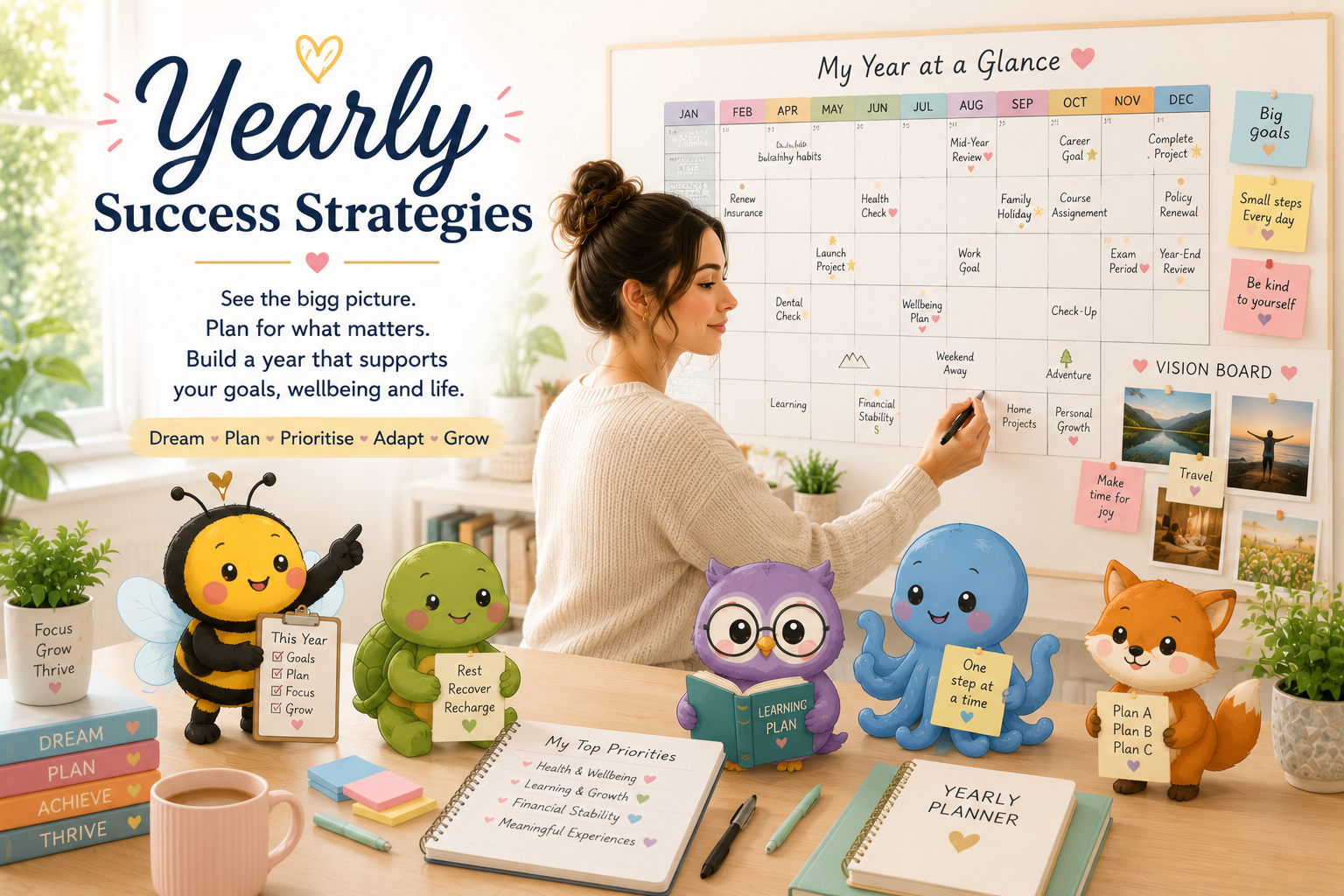
Yearly planning can help you step back, see the bigger picture and prepare for important goals, dates, responsibilities, expenses, changes and recovery needs across the year.
You do not need to plan every month in detail or decide everything in advance. A yearly plan can simply hold a few priorities, known dates and gentle reminders while leaving plenty of space for life to change.
Search the strategy cards or select the area you want support with.
Use this as a flexible overview rather than a rigid schedule.
Gather known appointments, renewals, birthdays, study dates, work milestones and seasonal commitments.
Select a small number of areas that matter most for this stage of your life.
Use quarters, seasons or months so long-term goals feel more manageable.
Adjust plans as your needs, health, energy, finances and circumstances change.
Success can include stability, care, learning and meaningful progress.
You have a clearer sense of your main priorities and values.
Renewals, appointments, deadlines and major events are easier to anticipate.
A goal moves forward through small and realistic steps.
Rest, recovery, health support and sensory needs are included in the plan.
Known costs are prepared for gradually rather than becoming a surprise.
Goals and plans are revised without treating change as failure.
Use the search and filters above to narrow these strategies.
Use a wall planner, digital calendar or yearly worksheet to hold major dates in one place.
Select what matters most instead of trying to improve every part of life at once.
Divide the year into four smaller planning periods with their own focus.
Include licences, insurance, subscriptions, memberships and important documents.
Add expected medical, dental, support and wellbeing appointments.
Identify annual bills, repairs, travel, education costs and seasonal spending.
Mark periods that may require more preparation, support or recovery.
Use quarterly check-ins instead of waiting until the end of the year.
Protect holidays, quieter weekends and recovery periods early.
Select a skill, subject or area of personal development to explore.
A goal may become less important as your circumstances evolve.
Include coping, healing, asking for help and protecting your wellbeing.
A priority is something that deserves attention, not pressure.
Consider your health, home, relationships, learning, work, finances and personal wellbeing.
Stability, routines and existing supports may be more important than starting something new.
Choose goals that reduce stress, improve access or strengthen daily support.
Some good ideas may belong in a future year rather than this one.
Quarterly planning can make the year feel less overwhelming.
Settle into the year, choose priorities and prepare foundations.
Review progress, adjust goals and prepare for mid-year needs.
Reassess energy, continue key projects and simplify where needed.
Complete priorities, prepare for year-end and recognise progress.
Add reminders before the final deadline wherever possible.
Licences, passports, permits, identification and certificates.
Vehicle, home, contents, health and other annual policies.
Medical, dental, vision, hearing and support-plan reviews.
Semesters, exams, leave periods, reviews and major deadlines.
Include preparation, travel, shopping and recovery time.
Review whether annual subscriptions are still useful before they renew.
Identify major milestones without planning every task at once.
Record enrolment periods, term dates, exams and breaks.
Choose one realistic area for growth, experience or development.
Break long projects into quarterly or monthly milestones.
Prepare notes, examples, questions and accommodation needs.
Plan annual leave before demanding periods become too full.
Choose training, study or practical skills that support your goals.
Include wellbeing needs alongside responsibilities and goals.
Plan expected medical, dental and support appointments.
Note reviews, repeat prescriptions and supply needs.
Prepare for busy environments, travel and unfamiliar events.
Keep useful contacts, tools and early warning signs accessible.
Protect quieter periods around demanding months.
Include hobbies, meaningful experiences and safe relationships.
Known annual costs can often be prepared for gradually.
Insurance, memberships, registrations and yearly subscriptions.
Vehicle servicing, home repairs and replacement items.
Appointments, medication, glasses, dental care and personal supports.
Courses, equipment, books, travel and professional expenses.
Birthdays, holidays, heating, clothing and travel.
Build a small backup amount where circumstances allow.
Different parts of the year may bring different needs and pressures.
Prepare clothing, heating, cooling and sensory-friendly options.
Plan transport, accommodation, budgets and recovery needs.
Consider enrolment, term changes, exams and holiday periods.
Prepare boundaries, quiet time and alternative ways to participate.
Spread seasonal household tasks across manageable periods.
Notice whether certain seasons affect sleep, mood or capacity.
Long-term planning should include recovery as well as activity.
Identify work, study, travel and social periods that may use more energy.
Avoid filling every gap with another commitment.
Add downtime after exams, events, travel or major projects.
Watch for exhaustion, irritability, shutdown, avoidance and reduced capacity.
Postpone lower-priority tasks before overload becomes severe.
Consider whether practical, emotional or professional support needs to change.
A plan can be updated whenever life changes direction.
Keep goals that remain relevant and release those that do not.
Reduce the size or pace of a goal instead of abandoning all progress.
A goal may need to wait until health, finances or support improve.
Support may make a goal more accessible or realistic.
The same outcome may be reached through a different approach.
During difficult years, staying safe and supported may be the priority.
Use this at the start of a year or whenever you need a fresh overview.
Review the year with compassion and curiosity.
Include achievements, coping, learning, boundaries and asking for help.
Notice helpful people, routines, tools, environments and services.
Identify barriers, overload, changes and missing support.
Choose useful lessons and priorities for the next year.
Each companion can support a different part of long-term planning.
Existing resources will be audited before missing items are created.
A broad overview for priorities, dates, milestones and wellbeing.
A focused tool for priorities, milestones and smaller actions.
Four flexible pages for reviewing and adjusting the year.
A place to record annual deadlines and preparation reminders.
A simple overview for known annual and seasonal costs.
A supportive page for progress, challenges and future priorities.
Final links will be added after the existing Classic, Kawaii and Companion resources have been audited and organised.
The resources can later be organised into complete visual editions.
Clean and practical yearly planning pages for everyday use.
Yearly planning resources featuring the Aspie Answers companions.
Friendly visual planning tools with warm and encouraging designs.
Volume 1 may include a yearly overview, priorities page, quarterly planners, important dates tracker, expenses planner and reflection page. Existing files should be checked before anything is recreated.
Common questions about yearly planning.
No. A yearly plan can simply include important dates, a few priorities and broad reminders.
A small number of meaningful priorities is often more manageable than a long list of goals.
Review the plan and update it. Changing priorities is a normal part of planning.
Yes. Recovery periods, holidays and quieter seasons can protect wellbeing and reduce burnout.
Yes. Existing resources will be reviewed first, followed by any missing Classic, Companion and Kawaii editions.
A yearly plan is a guide, not a test. Choose what matters, make space for wellbeing and allow the plan to change as you learn more about what you need.