
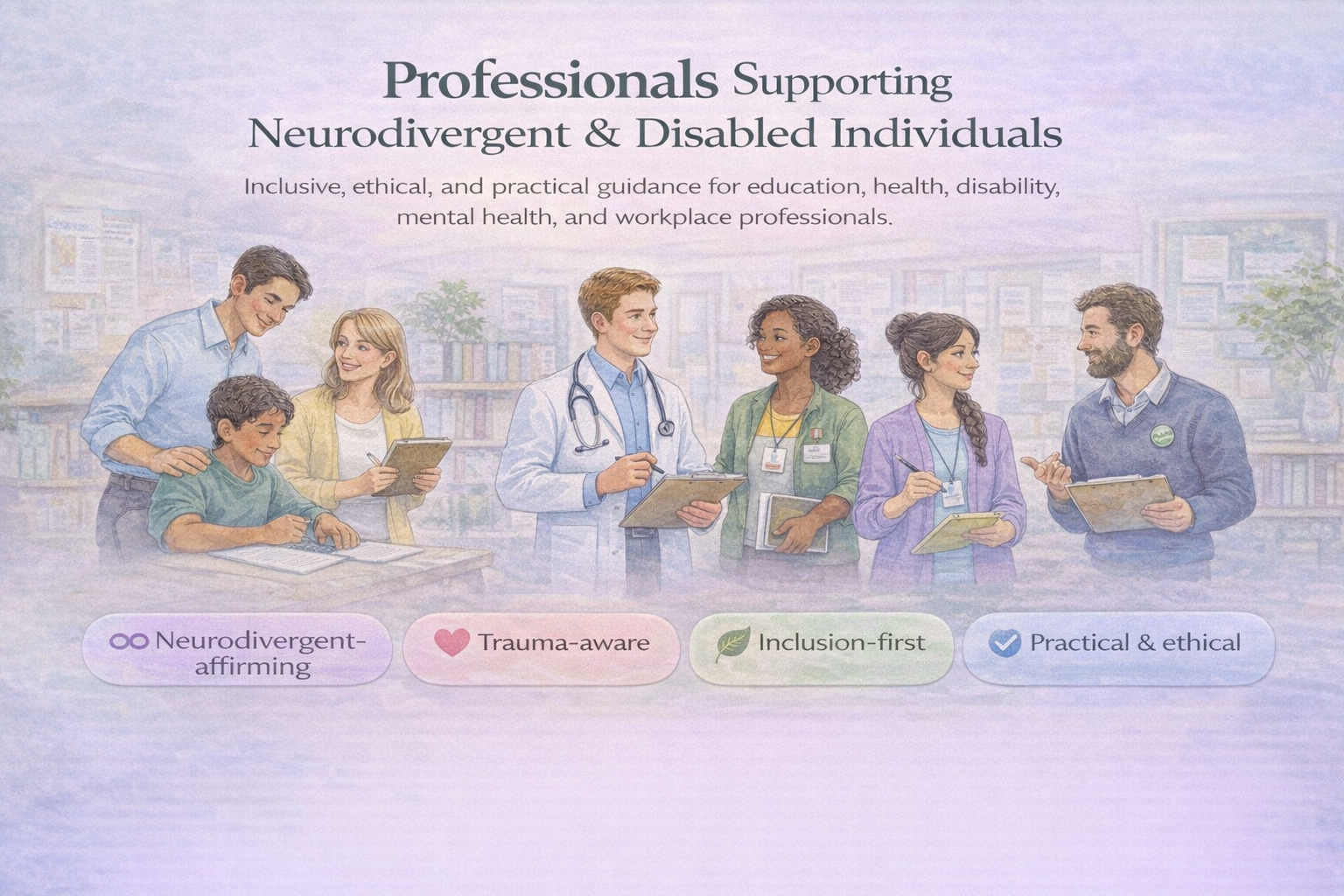
Aspie Answers · Professionals · Inclusive Practice · Practical Support
Professionals
A practical, neurodivergent-friendly doorway for professionals supporting autistic people, ADHDers, people with learning differences or learning disabilities, people with hidden disabilities, and people with other access or support needs across education, work, health, disability support, community services and everyday life.
Professional roles overlap. You may work across health, education, disability, employment, mental health, advocacy or community settings. Start with the pathway that best matches what you need today.

Who this is for
Use the role or setting that best fits your work. Many professionals will use more than one pathway.
Educators & learning support
Teachers, teacher aides, learning-support coordinators, tutors and other education staff.
- Accessible classrooms and learning environments
- Strength-based support and sensory awareness
- Clear communication with students and families
Health, allied health & disability services
Doctors, nurses, allied-health practitioners, disability professionals, service coordinators and related roles.
- Accessible communication and appointments
- Choice, consent and person-centred support
- Practical planning that reduces unnecessary barriers
Mental health professionals
Counsellors, psychologists, psychiatrists, therapists, peer-support and crisis-support roles.
- Neurodivergent wellbeing and communication needs
- Masking, overload, burnout and sensory demands
- Accessible and trauma-aware support
Workplace, HR & employment services
Managers, HR teams, employment coaches, vocational services and workplace-support professionals.
- Clear expectations and communication
- Workplace adjustments and accessible processes
- Sustainable routines, workload and sensory support
Community & social-service professionals
Community workers, social-service teams, navigators, coordinators and people connecting individuals with support.
- Accessible service navigation
- Practical planning and community participation
- Respectful advocacy and supported decision-making
Advocacy, legal & accessibility roles
Advocates, accessibility professionals, legal professionals and others working around rights and participation.
- Communication access and understandable information
- Reducing disability-related barriers
- Supporting people to be heard and included
How to use this page
Begin with the setting or role closest to your current task. From there, follow the relevant Aspie Answers hub for deeper information, resources and support pathways. You do not need to read everything at once.
A simple starting flow
- 1. Choose the professional pathway closest to your setting.
- 2. Identify one barrier, need or goal.
- 3. Choose one manageable support or adjustment to try.
- 4. Review the outcome with the person involved and adjust together.
Useful support principles
- Listen before assuming
- Reduce unnecessary barriers
- Offer meaningful choices
- Use clear, predictable communication
- Respect consent, dignity and autonomy

Professional pathways
These pathways connect professional roles to established Aspie Answers hubs while the deeper audience structure is being recovered and polished.

Quick tools for supportive practice
Small changes can make information, environments and support easier to access.
Ask what would help
Invite the person to identify a barrier, preference or support that could make the situation easier.
Reduce unnecessary load
Use clear steps, concise wording, visual information, processing time and predictable routines where useful.
Use consent and choice
Explain options, ask permission where appropriate and include the person in decisions that affect them.
Make access ordinary
Build flexible and accessible options into everyday practice rather than treating support as an unusual exception.
Frequently asked questions
What if I am not sure what support someone needs?
What language should I use?
Do non-visible disabilities still create access needs?
Professional information note
Aspie Answers provides educational information, practical tools and lived-experience-informed resources. It does not replace profession-specific clinical, legal, safeguarding, regulatory or organisational guidance.