
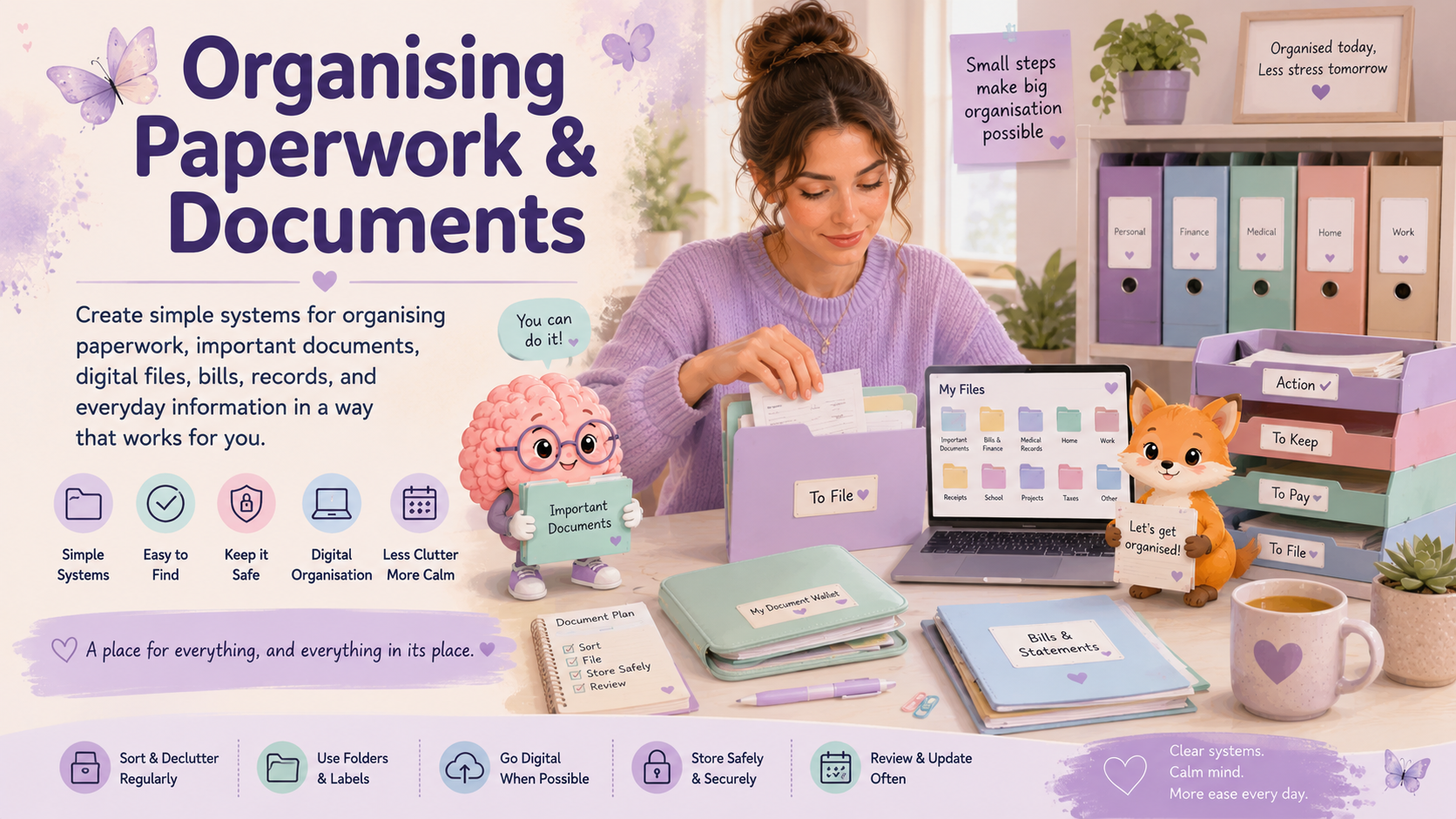
Welcome to Organising Paperwork & Documents
Paperwork and documents can build up quickly, especially when bills, appointments, school papers, work records, forms, receipts and digital files all compete for attention.
This page brings together practical ways to organise important documents, reduce clutter, create simple filing systems and make paperwork easier to find when you need it.
A Gentle Note
You do not need a perfect filing system to be organised. A simple, clear system that helps you find what matters is enough. Start small and build from there.
Who May Find This Helpful?
This page may be useful for anyone who finds paperwork stressful, confusing, easy to lose or difficult to keep up with.
🧠 ADHD & Executive Function
Helpful for reducing paperwork overwhelm, remembering forms, and creating visible systems.
🦋 Autism & Routine Support
Useful for predictable filing routines, clear categories, and reducing uncertainty around paperwork.
🏡 Everyday Life
Supports bills, receipts, appointments, housing papers, health records and household information.
💻 Digital Organisation
Helpful for naming files, scanning documents, organising folders and keeping backups.
Search Paperwork & Document Supports
Search or browse paperwork and document organisation topics below as this library continues to grow.
Paperwork & Document Organisation Areas
📂 Simple Filing Systems
Create easy categories for papers, forms, receipts, letters and everyday documents.
🔐 Important Documents
Organise IDs, certificates, medical papers, legal documents, school records and support paperwork safely.
💰 Bills & Statements
Keep payment dates, bills, bank statements, receipts and money-related paperwork easier to manage.
💻 Digital File Organisation
Support for folders, file names, backups, scans, screenshots, email attachments and cloud storage.
🧹 Paperwork Decluttering
Sort what to keep, what to scan, what to recycle, and what needs action.
🧠 ADHD-Friendly Systems
Use visible, simple, low-pressure systems that reduce forgotten papers and paperwork overwhelm.
✅ Action Trays
Create places for papers that need action, need paying, need filing, or need checking later.
📋 Records & Reference
Keep useful information, contacts, passwords, appointment notes and household records easy to find.
Types of Documents to Organise
🏥 Medical & Health Records
Appointment letters, medication lists, health notes, referrals, reports and follow-up information.
💰 Financial Documents
Bills, bank letters, receipts, invoices, benefit letters, tax documents and payment records.
🏠 Housing & Tenancy
Rental agreements, mortgage papers, insurance, repairs, utilities and property documents.
🎓 Education & Qualifications
Certificates, school letters, course information, reports, enrolment papers and study records.
💼 Employment Records
Contracts, payslips, job applications, references, workplace letters and training records.
🛡️ Insurance & Legal Papers
Insurance policies, legal letters, wills, power of attorney, claims and important agreements.
Simple Filing System Example
A basic filing system can be easier to maintain than a complicated one. You can start with a few clear categories and add more only if needed.
📥 To Do
Papers that need action, such as forms, letters, calls or follow-up tasks.
💳 To Pay
Bills, invoices, payment reminders or money-related tasks.
📂 To File
Papers that are finished but need to be stored in the right place.
⏳ Waiting For
Documents connected to something you are waiting to hear back about.
⭐ Important
Documents you may need quickly, such as ID, health, legal, housing or support papers.
📦 Archive
Older papers you need to keep but do not need to access often.
Helpful Paperwork Organisation Tips
Use Fewer Categories
Too many folders can become hard to maintain. Start with simple categories like To Do, To Pay, To File and Important.
Keep Action Papers Visible
Important papers that need action should not disappear into a pile. Use a tray, folder or notice board.
Review Regularly
A small weekly or monthly review can stop paperwork from becoming overwhelming again.
🦊 Fynn Fox’s Filing Tip
If you do not know where to file something, create a temporary “Needs Sorting” folder instead of letting papers pile up. You can organise it during your next paperwork session.
🧠 Executive Brain’s Organisation Tip
Reduce decisions by using the same place for the same type of document every time. Consistency makes it easier for your brain to remember where things belong.
Accessibility Tip
If paperwork feels overwhelming, start with one small area: one drawer, one folder, one pile or one document type. You do not need to organise everything in one sitting.
Start With One Paperwork Step
You do not need a full filing system straight away. Choose one small action to begin.
1. Choose One Pile
Pick one small pile, drawer, folder or inbox to sort first.
2. Make Three Groups
Try sorting into To Do, To File and Not Needed.
3. Label One Folder
Create one clear folder for an important category, such as Health, Bills or Housing.
Printable Resources
Looking for printable document checklists, filing labels, bill trackers, paperwork sorting sheets, emergency folder checklists and digital organisation guides? These resources will connect with the wider Downloads & Resources Hub as the library continues to grow.
Related Guides
Paperwork and document organisation connects with executive function planning, reminders, checklists, calendars and household planning.
Continue Your Journey
Available Across Aspie Answers
Paperwork and document organisation resources may also become available through the Aspie Answers website, WordPress Resource Library, Payhip, Gumroad, Ko-fi, Pinterest, Amazon and other platforms as new resources are created or added.