
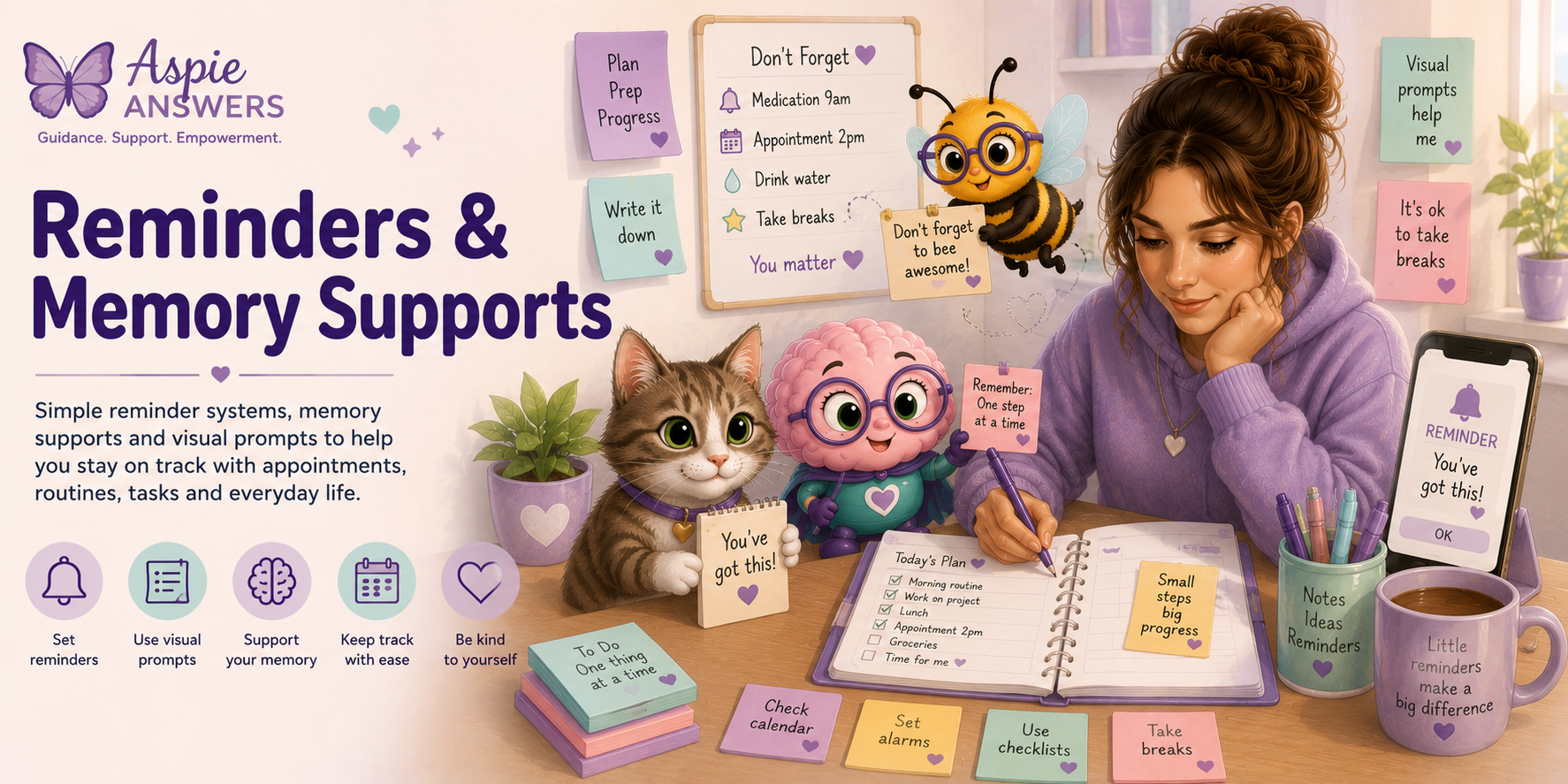
Welcome to Reminders & Memory Supports
Reminders and memory supports can help make appointments, routines, tasks, medication, study, work and everyday responsibilities easier to remember.
This page brings together simple reminder systems, visual prompts, checklists, memory tools and gentle strategies to support daily life without shame or pressure.
A Gentle Note
Needing reminders does not mean you are failing. Many people remember better when information lives outside their head through notes, alarms, calendars, checklists, prompts or supportive routines.
Who May Find This Helpful?
This page may be useful for anyone who forgets tasks, appointments, routines, steps or important information.
🧠 ADHD & Executive Function
Helpful for working memory, task follow-through, reminders, appointments and routines.
🦋 Autism & Routine Support
Useful for predictable prompts, visual supports, preparation and everyday structure.
🎓 Students & Learners
Supports assignments, study steps, deadlines, classes, materials and reminders.
🏡 Everyday Life
Helpful for medication, appointments, chores, bills, meals, self-care and household tasks.
Search Reminder & Memory Resources
Search or browse reminder and memory support topics below as this library continues to grow.
Reminder & Memory Support Resources
🔔 Reminders & Alarms
Use phone alerts, timers, calendar reminders or alarms to support follow-through.
🧠 Memory Supports
Externalise information using notes, lists, labels, planners and visual cues.
👀 Visual Prompts
Use visible reminders, sticky notes, charts, icons or cue cards around your space.
✅ Checklists
Break routines, tasks and responsibilities into steps you can tick off.
🔁 Routine Cues
Attach reminders to existing routines, such as meals, bedtime, leaving the house or appointments.
🧠 ADHD-Friendly Memory Tools
Use simple systems, repeated prompts, visible lists, body doubling and flexible reminders.
📅 Appointment Supports
Track appointments, travel time, preparation steps, forms and follow-up tasks.
💜 Self-Care Reminders
Support medication, hydration, meals, breaks, movement, rest and wellbeing routines.
Helpful Reminder & Memory Tips
Make It Visible
Put reminders where you will naturally see them, such as near doors, desks, mirrors or calendars.
Use More Than One Cue
Combine an alarm with a written note, checklist or visual prompt if one reminder is not enough.
Keep It Simple
A reminder system should be easy to use. If it feels too complicated, simplify it.
🧠 Executive Brain’s Memory Tip
Your memory does not have to do everything alone. Notes, alarms, calendars and checklists are supports that help your brain save energy.
🐝 Busy Bee’s Reminder Tip
Try choosing one reminder for one important task today. Small reminders can make a big difference when they are easy to see and easy to use.
Accessibility Tip
If reminders feel overwhelming, reduce them to the most important few. Too many alerts can become background noise, so choose reminders that are clear, useful and realistic.
Start With One Reminder
You do not need to create a full system straight away. Choose one small support to begin.
1. Choose One Task
Pick one thing you often forget, such as medication, keys, an appointment or a daily routine.
2. Add One Prompt
Create one reminder using an alarm, note, checklist, calendar or visual cue.
3. Put It Somewhere Useful
Place the reminder where you are most likely to notice it at the right time.
Printable Resources
Looking for printable reminder charts, memory supports, checklists, appointment trackers, visual prompts and routine cards? Reminder and memory resources will connect with the wider Downloads & Resources Hub as the library continues to grow.
Related Guides
Reminders and memory supports connect with executive function planning, calendars, time management, checklists, routines and paperwork organisation.
Continue Your Journey
Explore more pages in the Everyday Help Hub to keep building planning skills, routines and practical support systems.
Available Across Aspie Answers
Reminder and memory support resources may also become available through the Aspie Answers website, WordPress Resource Library, Payhip, Gumroad, Ko-fi, Pinterest, Amazon and other platforms as new resources are created or added.