
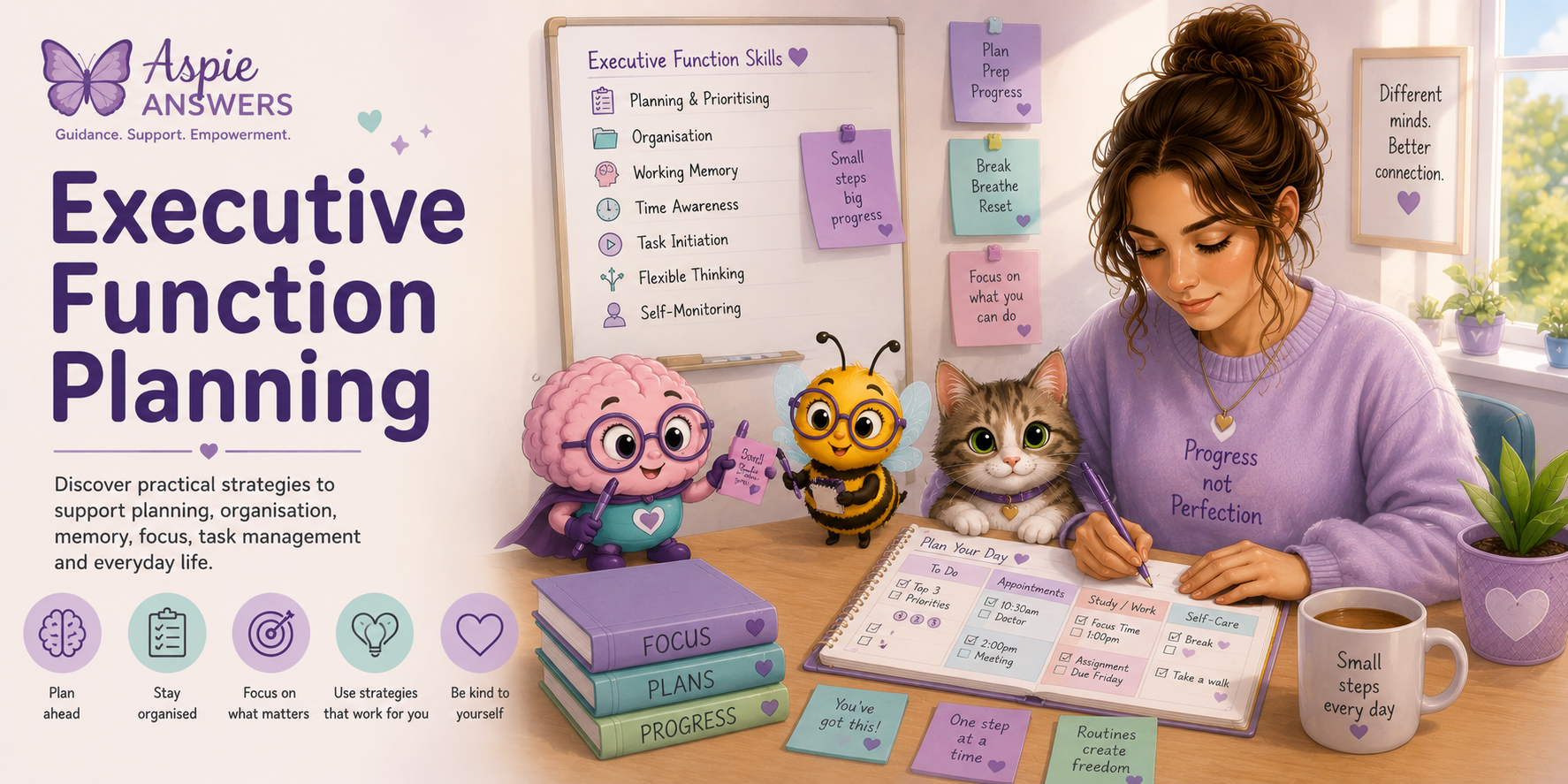
Welcome to Executive Function Planning
Executive function planning can support the thinking skills we use to organise, begin tasks, remember information, manage time, shift between activities and follow through with everyday responsibilities.
This page brings together practical strategies, gentle planning tools and supportive ideas to help make executive function challenges feel more manageable in daily life.
A Gentle Note
Executive function difficulties are not laziness or lack of care. Many people need extra structure, reminders, visuals, routines or support to help their brain move from intention to action.
Who May Find This Helpful?
This page may be useful for anyone who finds planning, starting, organising, remembering or following through difficult.
🧠 ADHD & Executive Function
Helpful for task initiation, working memory, time awareness, motivation and follow-through.
🦋 Autism & Routine Support
Useful for transitions, planning ahead, flexible thinking and reducing overwhelm.
🎓 Students & Learners
Supports study planning, assignments, deadlines, routines, organisation and focus.
🏡 Everyday Life
Helpful for home tasks, appointments, paperwork, meals, budgeting and daily routines.
Search Executive Function Resources
Search or browse executive function planning topics below as this library continues to grow.
Executive Function Planning Resources
📋 Planning & Prioritising
Break tasks into steps, choose what matters first and create realistic plans.
🗂️ Organisation Supports
Use systems, labels, folders, checklists and simple routines to reduce mental load.
🧠 Working Memory
Support memory with written notes, visual prompts, reminders and external tools.
⏰ Time Awareness
Use timers, calendars and visual time tools to help estimate and manage time.
🎯 Task Initiation
Support getting started with small steps, body doubling, timers and low-pressure beginnings.
🧠 ADHD-Friendly Planning
Use flexible systems, visual supports, short tasks and realistic expectations.
🔄 Flexible Thinking
Build in options, backup plans and gentle ways to respond when plans change.
🌱 Self-Monitoring
Notice what is working, what feels hard and what support may help next time.
Helpful Executive Function Planning Tips
Externalise the Plan
Write things down so your brain does not have to hold every step at once.
Start Smaller
If a task feels too big, make the first step tiny enough to begin.
Use Supports Without Shame
Reminders, timers, checklists and visual tools are valid supports, not failures.
🧠 Executive Brain’s Planning Tip
Your brain does not need to remember everything by itself. A good plan can live outside your head through notes, reminders, checklists and visual supports.
🐝 Busy Bee’s Small Step Tip
When starting feels hard, choose the smallest possible action. Opening the notebook, writing one word or setting one timer still counts as a beginning.
Accessibility Tip
If executive function strategies feel overwhelming, choose one support at a time. A simple checklist or reminder may be more useful than a complicated system.
Start With One Support
You do not need to change your whole routine at once. Choose one executive function support to try.
1. Write One Task Down
Move one task out of your head and onto paper, a note app or a planner.
2. Break It Into Steps
Split one task into two or three smaller actions.
3. Add One Reminder
Use an alarm, sticky note, calendar alert or visual prompt to support follow-through.
Printable Resources
Looking for printable executive function planners, checklists, task breakdown sheets, memory supports and routine tools? Executive function planning resources will connect with the wider Downloads & Resources Hub as the library continues to grow.
Related Guides
Executive function planning connects with time management, reminders, calendars, priorities, routines and paperwork organisation.
Continue Your Journey
Explore more pages in the Everyday Help Hub to keep building planning skills, routines and practical support systems.
Available Across Aspie Answers
Executive function planning resources may also become available through the Aspie Answers website, WordPress Resource Library, Payhip, Gumroad, Ko-fi, Pinterest, Amazon and other platforms as new resources are created or added.