
Work & Employment • Self-Employment & Small Business
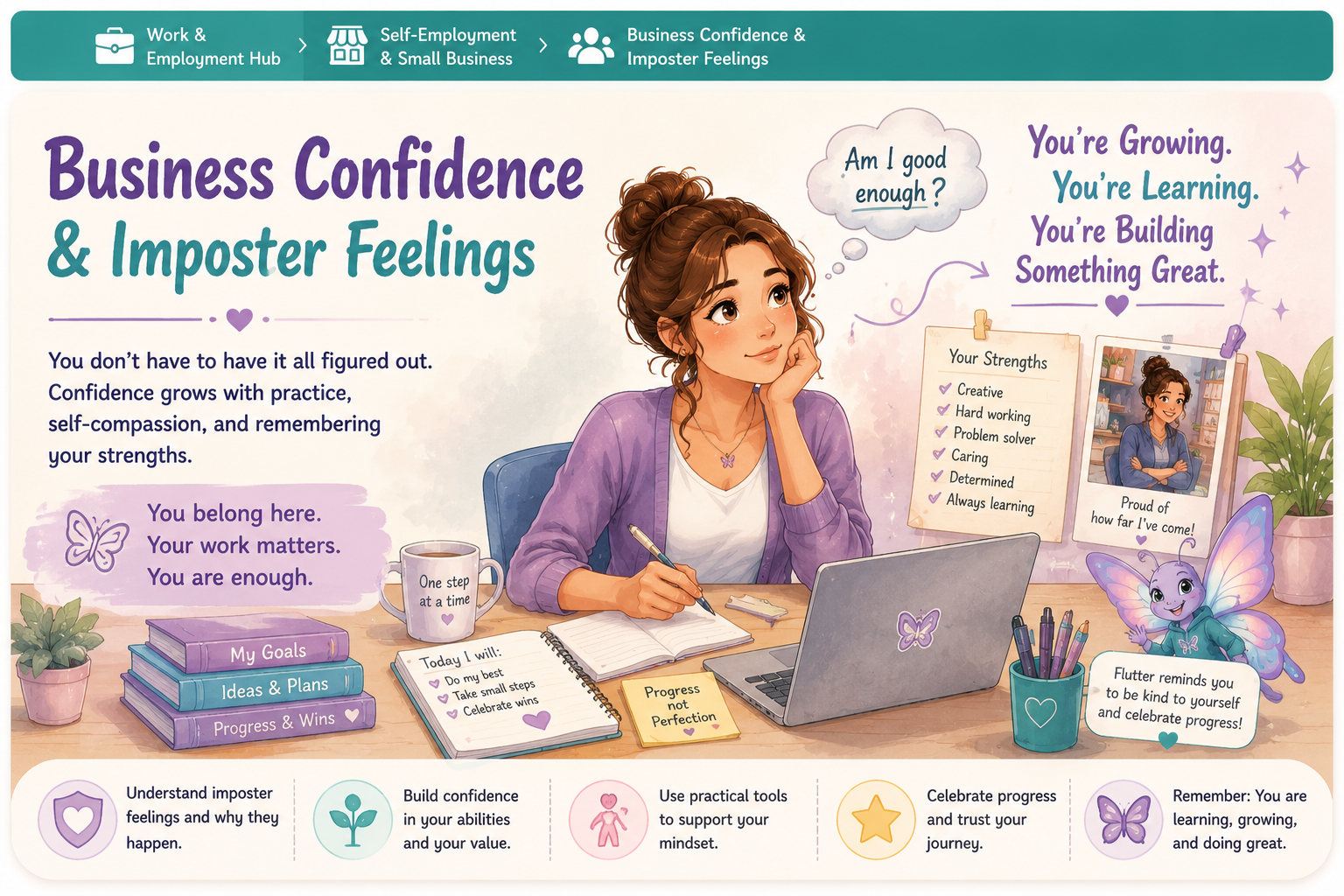
Business Confidence & Imposter Feelings
Confidence does not mean knowing everything, never making mistakes or feeling certain all the time. It can grow gradually as you learn, practise, notice your strengths and build a business in ways that work for you.
Business Confidence Can Grow Over Time
Starting or running a business can place you in situations where there is no single right answer. You may need to make decisions, share your work, price what you offer, speak with clients and learn new skills while you go.
Feeling unsure sometimes does not mean you are not capable. Confidence often develops through experience rather than appearing before you begin.
Flutter Butterfly — Change & Growth
Flutter's role is a natural fit here: confidence can change and strengthen as you practise, learn what works for you and recognise how far you have already come.
What Imposter Feelings Can Look Like
People sometimes use the phrase “imposter feelings” to describe the sense that they are not as capable as others think, that their success does not really count, or that they might eventually be “found out”.
Discounting Your Skills
“Anyone could do this.” “It was just luck.” “It wasn't difficult enough to count.”
Feeling You Must Know Everything
Believing that needing to research, ask questions or learn something new means you are not qualified enough.
Fear of Being Judged
Worrying that a client, peer or customer will discover that you are not as competent as they expected.
Over-Preparing
Spending far more time than necessary checking, researching or perfecting work because it never feels “good enough”.
Difficulty Accepting Praise
Explaining away positive feedback instead of allowing it to become evidence of something you did well.
Comparing Constantly
Measuring your early or middle stage against somebody else's polished, established business.
Why Confidence Can Wobble
Business confidence can change for many reasons. Some uncertainty is a normal part of doing something that matters to you.
New or Unfamiliar Tasks
Confidence can drop when you are doing something for the first time — such as quoting, presenting, marketing or negotiating.
Feedback or Rejection
One difficult client, declined proposal or negative comment can temporarily feel much bigger than all the things that have gone well.
Neurodivergent Experiences
Past misunderstanding, criticism, masking or repeatedly being told to work differently can affect how easily you trust your own judgement.
Uncertainty in Business
Income, demand and outcomes are not always predictable. Uncertainty can sometimes feel like evidence that you are doing something wrong when it is simply part of business.
Comparison and Self-Doubt
Other businesses can be useful sources of ideas, but comparison becomes less helpful when you compare somebody else's highlights with all the uncertainty happening behind your own scenes.
Try: “They are at a different stage. What can I learn without using their journey as a measure of my worth?”
Try: “What is one realistic improvement I would like to make next?”
Try: “This is a skill I am still learning.”
Try: “One mistake gives me information about what I can improve.”
Recognising What You Already Know and Do Well
Confidence becomes more grounded when it is connected to real evidence rather than pressure to “feel positive”.
Skills
What have you learned through work, study, hobbies, volunteering, lived experience or running your business?
Progress
What can you do now that was unfamiliar, difficult or intimidating six or twelve months ago?
Feedback
What positive comments, repeat customers, successful outcomes or thank-yous have you received?
Handling Mistakes and Setbacks Without Turning Them Into a Verdict
Every business will eventually encounter mistakes, misunderstandings, rejected ideas, quiet periods or plans that do not work as expected. The event can be real and still not define your overall ability.
What Happened?
Describe the situation as specifically as possible instead of turning it into “I am bad at business”.
What Can I Learn?
Is there a process, boundary, communication method, price, timeline or system that could change next time?
What Still Went Well?
One difficult part does not erase the things you handled effectively.
Asking for Help Is Not Evidence That You Shouldn't Be in Business
Business owners regularly use accountants, mentors, designers, advisers, contractors, support people, templates and specialist services. Knowing when another person's knowledge would help is a business skill in itself.
Questions I Can Ask
- What part of this do I genuinely need to do myself?
- Is this something I can learn gradually?
- Who already has expertise in this area?
- Would a template, checklist or example reduce uncertainty?
- Could a second opinion help me make this decision?
Support Can Build Confidence
Confidence is not always about becoming completely independent. Sometimes it grows because you know where to find reliable help, what questions to ask and which decisions are yours to make.
Building Confidence Gradually
Start Small
Choose a manageable challenge rather than forcing yourself into the biggest possible version immediately.
Practise Repeatedly
Tasks often become less uncertain after you have done them several times.
Prepare Helpful Systems
Scripts, checklists, templates and clear processes can reduce the amount you need to improvise under pressure.
Notice Wins
Do not wait for enormous milestones. A clear email, a finished quote or a boundary you maintained can all be progress.
Allow Learning
Being a business owner does not mean you have completed learning. Businesses and people both develop over time.
Use Self-Compassion
Speak to yourself as you would to somebody you respect who is learning a difficult skill.
My Business Confidence Reflection
Use the prompts that feel useful. You do not need to complete them all at once.
Resources & Downloads
As matching tools are completed in the Aspie Answers Resources & Downloads Library, this page can connect visitors directly to practical confidence and reflection resources.