
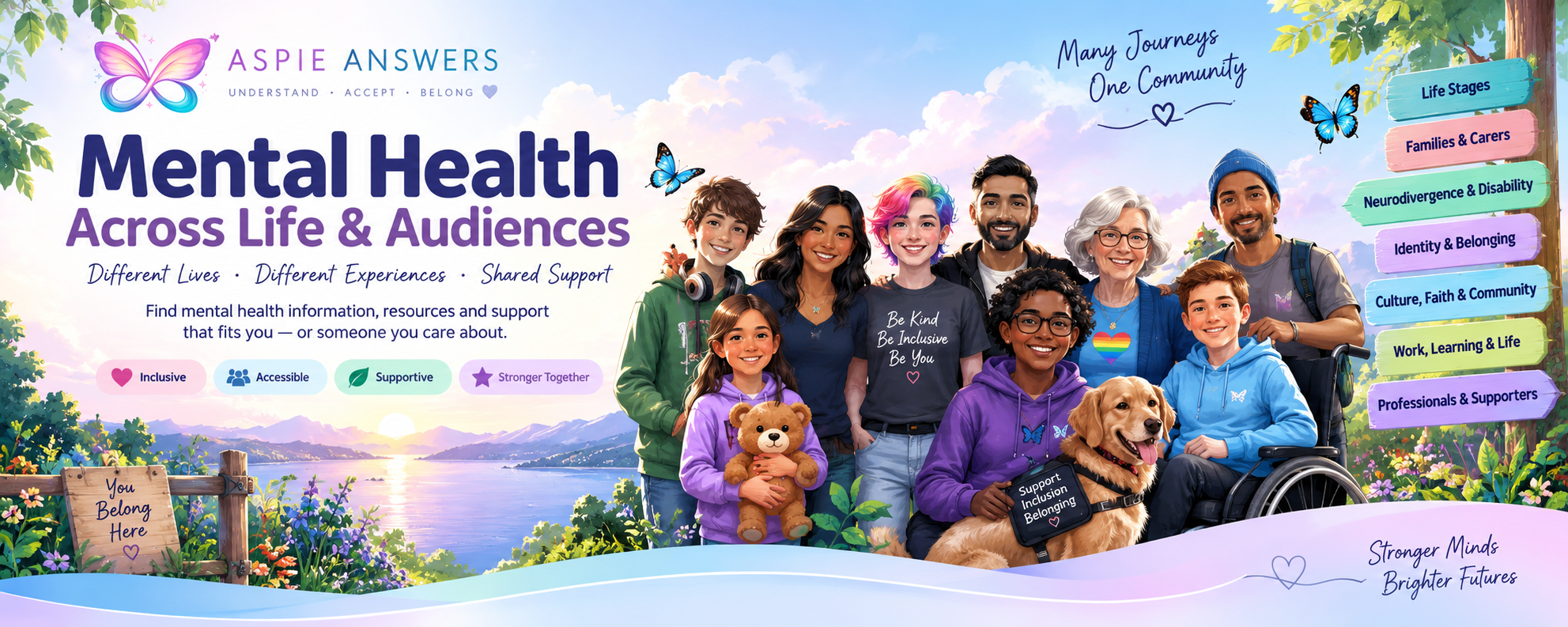
Mental Health Across Life & Audiences — Topics A–Z
An alphabetical finder for mental-health topics connected with life stage, neurodivergence, disability, identity, culture, community, relationships, roles, circumstances and lived experience.
Explore. Learn. Understand. Find support.
Need urgent or immediate support?
If you or someone else may be in immediate danger or needs urgent crisis support, use the Crisis Support Main Index.
Important Information
This A–Z provides general educational information and pathways. It does not diagnose conditions or replace personalised medical, psychological, cultural or other professional support.
Inside This Page You Will Find
How to Use This A–Z
This is a specialist finder, not a second copy of the master Mental Health Topics A–Z. Use it when age, audience, identity, disability, culture, role, access or lived experience matters to what you are looking for.
Browse by letter
Choose a letter below and jump directly to that part of the A–Z.
Search this page
Try words such as parent, Autism, belonging, culture, retirement, work or Rainbow.
Use more than one topic
People can belong to several audiences and communities at once. Follow whichever topics fit.
Use the master A–Z too
For broad conditions, symptoms or general Mental Health subjects, use the master Mental Health Topics A–Z.
Audience pathways are not diagnoses
An audience label does not determine how someone experiences mental health or what support they need.
Urgent support stays separate
Safety and crisis needs should use the Crisis Support family rather than this educational finder.
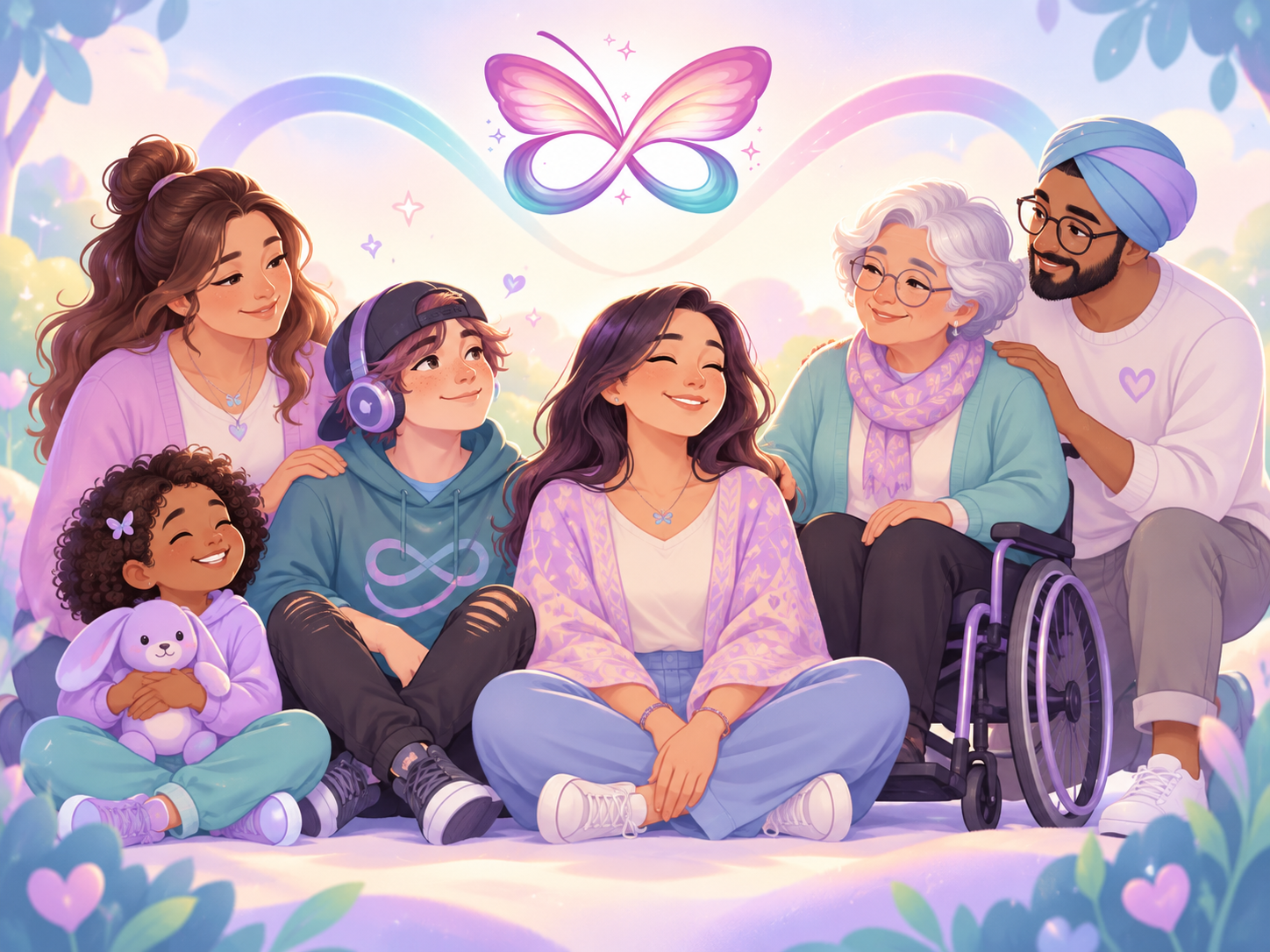
One person can appear under several letters
Someone might be a young adult, autistic, Rainbow, Māori, a parent, a student, living with a hidden disability or managing financial stress — all at the same time. Use several topics together when that better reflects the person or situation.
Browse Audience & Life-Experience Topics A–Z
Topics below are short orientation points. They help you recognise relevant pathways without duplicating every article, glossary definition or specialist page elsewhere on Aspie Answers. The finder is intentionally broad so future specialist pages can be linked into it without rebuilding the A–Z.
Search This A–Z
Showing all 173 topics.
A
AAC & communication access
AAC and alternative communication can affect how someone expresses distress, asks for help and participates in decisions.
Abuse, coercion & personal safety
Abuse, coercion and unsafe relationships can affect mental health, trust and support needs; safety-focused help may be needed.
Acceptance & affirmation
Feeling accepted and affirmed can support identity, belonging and wellbeing, especially where stigma or exclusion has been experienced.
Access barriers
Cost, transport, language, sensory environments, communication and service design can all affect whether support is realistically accessible.
Accessibility & mental health
Access needs can affect whether information, appointments, services and coping tools are usable. Consider communication, sensory, physical and cognitive access.
Accommodations & reasonable adjustments
Adjustments to communication, workload, sensory environments, routines or access can make education, work, healthcare and support more usable.
ADHD & mental health
Explore emotional regulation, executive-function demands, stress, overwhelm, shame and support needs that may intersect with ADHD.
Adoption, fostering & kinship care
Adoption, fostering and kinship care can involve identity, attachment, family relationships, change, belonging and support needs.
Adults
Mental health in adulthood may intersect with work, relationships, caring responsibilities, health, identity and major life changes.
Advocacy & self-advocacy
Advocacy can help people communicate needs, request accommodations, prepare for appointments and take part in decisions.
Ageing & later life
Later life can bring changes in health, independence, grief, connection, caring roles and support needs.
Anger & frustration
Anger and frustration can be shaped by stress, injustice, sensory overload, communication barriers, burnout and unmet needs.
Anxiety across audiences
Anxiety can look and feel different across ages, identities, neurotypes, cultures and circumstances.
AuDHD & mental health
Autistic and ADHD experiences can overlap, conflict or interact in ways that affect wellbeing and support needs.
Autism & mental health
Autistic mental health may be shaped by sensory needs, masking, burnout, communication, uncertainty, access and belonging.
B
Belonging
Feeling accepted, safe and connected can influence wellbeing across families, schools, workplaces, cultures and communities.
Body image & self-esteem
Body image and self-worth can be affected by age, identity, relationships, disability, culture, health and social expectations.
Bullying & harassment
Bullying, discrimination and harassment can affect safety, confidence, belonging and mental health.
Burnout
Burnout may relate to work, study, caring, chronic stress or neurodivergent demands and should not be treated as one identical experience.
Bereavement
Bereavement may affect people differently depending on relationship, culture, faith, age, disability, communication and available support.
Boundaries
Healthy boundaries can support safety, relationships, caring roles, work, study and recovery from stress.
Burnout recovery
Recovery from burnout may involve reduced demands, rest, accommodations, support, pacing and changes to environments or expectations.
C
Care-experienced children & young people
Children and young people in or leaving care may experience changes in relationships, stability, identity, belonging and access to consistent support.
Caregiver stress & burnout
Long-term caring responsibilities can affect energy, sleep, relationships, finances and wellbeing; carers may need support for themselves as well.
Caregiving & caring roles
Caring for someone can involve responsibility, advocacy, emotional labour, practical demands and the carer’s own wellbeing needs.
Carers & support people
Carers, support people and informal supporters may need guidance, boundaries, connection and support for themselves too.
Children & young people
Mental-health information for children and young people should be developmentally appropriate and involve safe, trusted adults where relevant.
Chronic illness & mental health
Long-term illness can affect energy, identity, independence, finances, relationships, access and emotional wellbeing.
Co-regulation
Some people regulate more effectively with safe, calm support from another person rather than being expected to manage alone.
Coming out & disclosure
Disclosure of identity can involve safety, privacy, belonging, relationships and access to affirming support.
Communication needs
Communication differences can shape how someone describes distress, understands support and participates in decisions.
Community & connection
Community can offer belonging, identity, practical help and shared understanding, while exclusion can affect wellbeing.
Confidence
Confidence can be affected by repeated criticism, exclusion, disability, learning experiences, work, relationships and identity.
Coping strategies
Coping tools are not one-size-fits-all; what helps may depend on sensory needs, culture, age, disability, trauma history and current circumstances.
Crisis planning
Planning ahead can help identify warning signs, safe people, coping steps and urgent support pathways before distress becomes overwhelming.
Cultural safety
Support is more useful when people feel respected, understood and safe in relation to culture, identity, language and community.
D
Depression & low mood
Low mood and depression may be experienced and expressed differently depending on age, context, culture, disability and support access.
Diagnosis & identity
A diagnosis may bring validation, questions, grief, relief, stigma or changes in self-understanding; experiences vary widely.
Digital wellbeing
Online spaces can offer support and community but may also involve comparison, harassment, misinformation, overload or disrupted sleep.
Disability & mental health
Disability can intersect with mental health through access barriers, stigma, fatigue, pain, isolation, communication needs and social conditions.
Disabled parents & caregivers
Disabled parents and caregivers may need accessible services, practical support and recognition of their own health, energy and communication needs.
Disclosure
Choosing whether to disclose disability, neurodivergence, identity or mental-health needs can involve privacy, safety, trust and practical consequences.
Discrimination & minority stress
Repeated prejudice, exclusion or pressure to hide part of oneself can contribute to stress and affect wellbeing.
Divorce, separation & relationship breakdown
Relationship breakdown can affect housing, finances, parenting, routines, identity, grief and emotional wellbeing.
E
Eating, food & wellbeing
Food, eating routines and body-related concerns can intersect with sensory needs, culture, stress, health, identity and mental wellbeing.
Educators & teachers
Teaching can involve workload, emotional labour, boundaries, student support responsibilities and burnout risk.
Emotional regulation
People may use different ways to notice, understand and regulate emotions depending on age, neurotype, communication and support needs.
Employment & workplace wellbeing
Workplace culture, accommodations, workload, job security, communication and inclusion can all affect mental health.
Energy management
Pacing energy can matter for people experiencing burnout, disability, chronic illness, caring demands, work pressure or sensory overload.
Estrangement & family disconnection
Family estrangement or disconnection can involve grief, relief, conflict, identity, boundaries and changes in support networks.
Exams & academic pressure
Study deadlines, exams and performance pressure can affect stress, sleep, confidence, routines and motivation.
Exclusion
Being excluded from family, community, school, work or social spaces can affect belonging, confidence and mental health.
F
Faith, spirituality & mental health
Faith and spirituality may provide meaning, identity, community and coping, while experiences vary greatly between individuals and communities.
Families & whānau
Family and whānau relationships can be sources of support, stress, advocacy, belonging and shared understanding.
Fatherhood & mental health
Parenting, identity, relationships, responsibility and social expectations can affect fathers’ wellbeing in different ways.
Financial stress
Money worries can affect safety, housing, relationships, sleep and mental health and may require practical as well as emotional support.
Friendships & peer relationships
Friendship, social connection, conflict, isolation and belonging can strongly affect wellbeing across life stages.
Family conflict
Conflict within families can affect safety, communication, stress, identity and the ability to access support.
Family transitions
Separation, blended families, caregiving changes, bereavement, moving or becoming a parent can all affect wellbeing.
Fatigue
Fatigue can be physical, cognitive or emotional and may intersect with disability, illness, burnout, sleep, stress and sensory demands.
Finding professional support
Finding a suitable professional may involve considering accessibility, communication style, cultural safety, experience and affordability.
G
Gender & mental health
Gender, identity, expectations, discrimination and access to affirming support can intersect with mental health in different ways.
Gender diversity
Gender-diverse people may experience affirmation, belonging, dysphoria, discrimination or barriers to appropriate support.
Grandparents & older carers
Grandparents and older carers may balance caring responsibilities with health, energy, finances, changing family roles and their own wellbeing.
Grief, loss & bereavement
Grief can follow many kinds of loss and may be shaped by relationships, culture, faith, age, disability and community.
Growing older with disability or neurodivergence
Ageing can change support needs, health, routines, caring relationships and access to services for disabled and neurodivergent people.
H
Hidden disabilities
Invisible or less-visible support needs can affect energy, understanding, access, disclosure and how distress is recognised by others.
Hormones, cycles & life transitions
Hormonal changes and reproductive life stages can affect wellbeing for some people and should be considered alongside the whole person.
Housing insecurity & homelessness
Unsafe, unstable or unaffordable housing can have major effects on stress, safety and mental health.
Help-seeking
People may delay seeking help because of stigma, cost, past experiences, communication barriers, fear, culture or uncertainty about where to start.
Home environment
Noise, conflict, crowding, instability, accessibility and privacy at home can all influence stress and wellbeing.
Hope & recovery
Hope can mean different things to different people and may involve connection, safety, meaning, practical support and realistic next steps.
I
Identity
Identity can involve culture, gender, sexuality, disability, neurodivergence, family roles, faith and many other parts of a person’s life.
Inclusion
Inclusive environments can reduce barriers and support participation, safety, connection and wellbeing.
Independence & interdependence
Wellbeing does not require doing everything alone; some people thrive through shared support, community and interdependence.
Internalised stigma
Repeated negative messages about disability, neurodivergence, identity or mental health can affect self-worth and help-seeking.
Intersectionality
Several parts of someone’s identity and circumstances can matter at the same time; support should not force people into one box.
Intersex wellbeing & mental health
Intersex people may have experiences involving identity, privacy, healthcare, stigma, belonging and access to respectful, person-centred support.
Isolation
Isolation may be physical, social, cultural or emotional and can affect people even when they are surrounded by others.
J
Job stress & workplace pressure
Workload, conflict, job insecurity, discrimination, sensory demands and lack of accommodations can affect mental health.
Justice, fairness & wellbeing
Experiences of unfairness, discrimination and exclusion can affect safety, trust, anger, stress and mental health.
K
Kindness & self-compassion
Self-compassion can support recovery, confidence and emotional wellbeing without pretending difficult circumstances are easy.
Knowledge & mental-health literacy
Understanding mental-health language, support options and warning signs can help people make informed choices.
L
Learning disabilities & differences
Learning and processing differences can affect confidence, communication, access and stress, especially when support is poorly matched.
Life transitions
Starting or leaving school, moving, work changes, relationships, parenting, illness and ageing can all affect wellbeing.
Loneliness & social isolation
Feeling alone or disconnected can affect mental health at any age and may be influenced by disability, location, identity or life circumstances.
LGBTQIA+ / Rainbow wellbeing
Rainbow mental health can intersect with identity, belonging, minority stress, relationships, disclosure, safety and affirming support.
Language access
Mental-health information and services are easier to use when language, literacy, interpretation and communication needs are respected.
Late diagnosis or identification
Later identification of neurodivergence, disability or mental-health needs can bring relief, grief, re-framing and new support questions.
Learning environments
Classroom design, sensory demands, teaching style, assessment and support can influence stress, confidence and participation.
M
Masking
Hiding or suppressing traits, needs or identity may help someone navigate unsafe environments but can also contribute to stress and exhaustion.
Medical trauma
Distressing healthcare experiences can affect trust, help-seeking, appointments and the support someone needs in future care.
Menopause & mental health
Menopause can involve hormonal, physical, sleep, identity and wellbeing changes for some people.
Men’s mental health
Mental-health experiences may intersect with masculinity, emotional expression, work, fatherhood, relationships, loneliness and help-seeking.
Migrants & refugees
Migration and refugee experiences can involve settlement, language, separation, trauma, belonging, identity and unfamiliar support systems.
Minority stress
Ongoing stigma, discrimination, exclusion or pressure to hide identity can contribute to stress and poorer wellbeing.
Motherhood & caregiving load
Parenting and caregiving can involve emotional labour, sleep disruption, identity changes, practical pressure and reduced time for self-care.
Mothers, parenting & mental health
Parenting can involve emotional load, identity changes, relationships, sleep, caring demands and the need for support.
Multicultural & bicultural identity
Living across more than one cultural context can shape belonging, language, family expectations, identity and experiences of support.
Māori mental health & wellbeing
Mental-health pathways should respect Māori perspectives, whānau, culture, identity and community and avoid assuming one experience fits everyone.
N
Neurodivergence & mental health
Neurodivergent mental health can be affected by sensory environments, executive-function demands, masking, misunderstanding, access and belonging.
Neurodivergent burnout
Long periods of overload, masking or unmet needs may contribute to profound exhaustion and reduced functioning for some neurodivergent people.
Neurodivergent parenting
Neurodivergent parents may balance sensory needs, executive functioning, routines, identity, caring demands and the need for accessible support.
New parents
Becoming a parent can involve major changes in sleep, identity, relationships, routines, responsibility and support needs.
Non-speaking & minimally speaking people
Mental-health support should not assume spoken language is the only valid way to communicate distress, preferences or consent.
O
Older adults
Mental health in later life may intersect with health changes, grief, social connection, caring responsibilities, independence and access.
Overwhelm
Overwhelm can be emotional, sensory, cognitive or situational and may require different support depending on the person and context.
Online communities
Online communities can provide connection, identity and peer support, while moderation, misinformation and safety still matter.
Overstimulation
High sensory, social or cognitive demand can contribute to stress, shutdown, irritability or the need to recover.
P
Parenting neurodivergent children & young people
Parents and whānau may need practical, affirming information that respects the young person’s neurotype, communication, sensory needs and autonomy.
Parents & carers
Supporting another person’s wellbeing can affect the supporter’s own stress, confidence, energy, relationships and support needs.
Pasifika mental health & wellbeing
Mental-health pathways should respect Pasifika cultures, family and community connections without treating Pasifika people as one uniform group.
Peer support
Peer support can offer shared understanding and connection but should complement, not replace, professional or crisis support when those are needed.
Perinatal mental health
Pregnancy, birth and the postnatal period can involve emotional, hormonal, physical and relationship changes that may require support.
Poverty & material hardship
Limited income or material resources can affect housing, food, transport, healthcare, social participation, stress and access to support.
Pregnancy, postpartum & perinatal wellbeing
Pregnancy and the period after birth can involve physical, emotional, hormonal, relationship and identity changes.
Privacy & confidentiality
Understanding privacy and confidentiality can help people decide what they feel safe sharing and with whom.
Professionals & support roles
Healthcare, disability, education and community professionals may need both role-specific guidance and support for their own wellbeing.
Puberty & mental health
Puberty can bring physical, emotional, social and identity changes that affect wellbeing differently for each young person.
Q
Questions to ask when seeking support
Helpful questions can cover accessibility, communication, cultural safety, experience with neurodivergence, confidentiality, costs and what support involves.
Queer / Rainbow belonging
Affirming community, representation and safety can influence wellbeing for LGBTQIA+ / Rainbow people.
Questioning identity
Questioning gender, sexuality, culture, faith, disability or neurodivergence can involve uncertainty, exploration and the need for safe support.
R
Racism & mental health
Racism and racial discrimination can affect safety, stress, belonging, trust and access to culturally safe support.
Rainbow / LGBTQIA+ mental health
Rainbow mental health can include belonging, identity, minority stress, discrimination, relationships, disclosure and access to affirming support.
Refugee mental health
Refugee experiences may involve trauma, displacement, family separation, language, settlement pressures and rebuilding safety and connection.
Rejection sensitivity
Strong responses to perceived or actual rejection can affect relationships, self-worth and emotional regulation for some people.
Relationships
Relationships can support wellbeing but may also involve conflict, pressure, boundaries, communication and safety concerns.
Religious or spiritual harm
Some people may experience exclusion, coercion or harm within faith settings, while others find faith to be a source of safety and support.
Rest & recovery
Rest, pacing and recovery can matter after stress, burnout, illness, overload or prolonged caring and work demands.
Retirement & mental health
Retirement can change routine, identity, income, relationships, purpose and social connection and may feel different from person to person.
Routines
Predictable routines can support sleep, energy, executive functioning and emotional regulation for some people.
S
School mental health
School experiences can involve learning, friendships, bullying, sensory demands, identity, pressure and access to support.
School refusal / school avoidance
Difficulty attending school may be linked to anxiety, bullying, sensory overload, burnout, learning needs, health or feeling unsafe.
Self-esteem & self-worth
Self-worth can be affected by relationships, comparison, discrimination, disability, identity, achievement pressure and belonging.
Sensory needs
Sensory environments can influence stress, regulation, concentration, fatigue and whether support settings are accessible.
Shutdown & withdrawal
Some people respond to overload or distress by becoming quiet, withdrawing, losing speech or needing reduced demands.
Siblings & family support roles
Siblings may be supporters, advocates or carers and can have their own questions, emotions, boundaries and wellbeing needs.
Sleep & mental health
Sleep can be affected by stress, anxiety, sensory needs, routines, medication, caring roles, work schedules and health.
Social anxiety
Social anxiety can affect participation, relationships, education and work and may overlap with disability, neurodivergence or past experiences.
Social connection
Feeling connected to safe people and communities can support wellbeing across life stages.
Stigma
Stigma around mental health, disability, neurodivergence, identity or help-seeking can affect self-worth and access to support.
Students
Student mental health can involve workload, exams, motivation, routines, sleep, finances, belonging and transition.
Substance use & coping
Some people use alcohol or other substances to cope with stress or distress; support should be non-judgemental and safety-focused.
Suicide bereavement
Losing someone to suicide can involve complex grief, shock, questions and support needs; specialist bereavement support may help.
Support workers
Support workers may need clear boundaries, person-centred communication, disability awareness and support for their own wellbeing.
T
Teachers
Teacher wellbeing can be affected by workload, emotional labour, student needs, boundaries, workplace culture and burnout.
Teens & young adults
Mental health in adolescence and early adulthood can intersect with identity, relationships, study, independence, online life and rapid change.
Trans & gender-diverse mental health
Trans and gender-diverse people may experience affirmation, belonging, minority stress, discrimination and barriers to appropriate care.
Transition to adulthood
Leaving school, entering work or study, managing finances, housing and greater independence can create both opportunities and stress.
Transitions
Changes in school, work, relationships, housing, health, identity or family roles can affect wellbeing.
Transport & access to support
Transport, distance, mobility and service location can affect whether support is practical to reach.
Trauma & safety
Trauma experiences and safety needs vary; support should be paced, consent-aware and appropriate to the individual.
Trauma-informed support
Trauma-informed support prioritises safety, choice, collaboration, trust and avoiding unnecessary re-traumatisation while respecting individual needs.
U
Understanding your needs
A useful starting point is identifying what feels hardest now, what helps, what makes things harder and what type of support is accessible.
Unemployment & mental health
Job loss or unemployment can affect finances, identity, routine, connection, confidence and stress.
Unmasking
Reducing masking may involve learning needs, identity, safety, accommodations and finding environments where authenticity is supported.
Unsafe relationships
Controlling, abusive or unsafe relationships can affect mental health and may require specialist safety support.
Urban, rural & remote access
Where someone lives can influence availability of services, transport, anonymity, community connection and crisis options.
V
Values, meaning & spirituality
Personal values, culture, spirituality and meaning can influence coping, identity, decision-making and connection.
Violence & trauma
Experiences of violence can affect safety, trust, relationships and mental health and may require specialist trauma-informed support.
Volunteering & purpose
Volunteering and meaningful contribution can support connection and purpose when the role is accessible and sustainable.
W
Wellbeing at home
Home routines, safety, accessibility, sensory comfort, relationships and privacy can all affect mental wellbeing.
Whānau wellbeing
Whānau support can involve shared understanding, communication, advocacy, culture, connection and looking after supporters too.
Women’s mental health
Mental health may intersect with relationships, parenting, work, trauma, hormones, body image, self-worth and life transitions.
Work stress & burnout
Long-term pressure, low control, conflict, overwork and unmet access needs can contribute to stress and burnout.
Workplace accommodations & adjustments
Flexible hours, communication changes, sensory adjustments, workload changes or other accommodations can help make work more accessible and sustainable.
Workplace mental health
Workplace wellbeing can be shaped by culture, workload, discrimination, accommodations, communication and job security.
X
Xenophobia & mental health
Hostility or discrimination toward people because of nationality, ethnicity or migrant background can affect safety, belonging and wellbeing.
Y
Young adults
Young adulthood can include study, work, relationships, housing, finances, identity, independence and major transitions.
Young carers
Young carers may balance caring responsibilities with school, friendships, rest, identity and their own need for age-appropriate support.
Youth mental health
Young people may need age-appropriate information, safe adults, accessible communication and support that respects identity and development.
Youth transitions
Moving between school stages, leaving home, starting tertiary study or work, and changing support systems can affect young people’s wellbeing.
Z
Zero-cost & low-cost support options
Cost can be a major access barrier; free and low-cost support, community resources and practical assistance may be important parts of a support plan.
You do not need to read the whole A–Z
Start with one word, one letter or one part of your experience. You do not need to choose a single label, and you do not need to use every pathway that could apply. Language, identities and communities can change over time, so use the wording that feels respectful and useful to you.