
🇬🇧 Work & Employment • United Kingdom Support
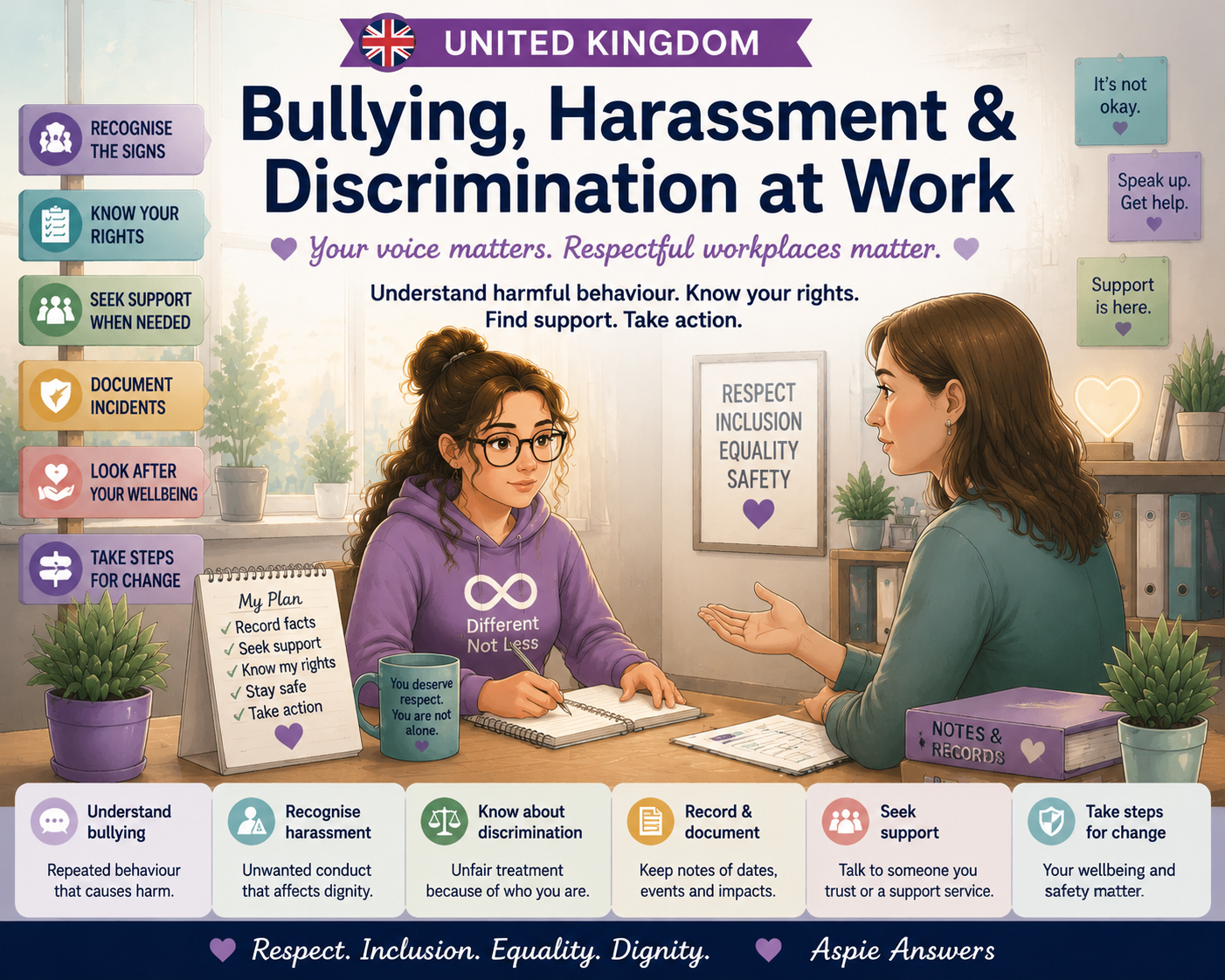
United Kingdom — Bullying, Harassment & Discrimination at Work
Understand harmful workplace behaviour, recognise concerns, document experiences and explore possible support pathways.
⚖️ UK Workplace Information Notice
Workplace situations involving bullying, harassment or discrimination can be complex and personal.
This page provides general educational information to support understanding and planning. It does not replace individual legal advice or professional support.
🔎 Find Workplace Support Resources
Search Aspie Answers for workplace guidance, adjustments, rights and support resources.
📌 On This Page
💬 Understanding Bullying, Harassment & Discrimination At Work
Everyone deserves to work in an environment where they are treated with respect, dignity and fairness.
Difficult workplace experiences can sometimes be hard to identify, explain or know how to respond to.
Understanding common terms and possible support pathways can help people make informed decisions about their next steps.
💬 Bullying
Bullying may involve repeated behaviour that causes someone to feel harmed, intimidated, undermined or unsafe.
🤝 Respect At Work
Healthy workplaces encourage communication, inclusion, dignity and respect between everyone.
📝 Keeping Records
Writing down important details can help someone remember events and prepare for conversations.
🤝 Understanding Harassment At Work
Harassment can involve unwanted behaviour that affects a person's dignity, comfort or ability to feel safe within a workplace environment.
💬 Unwanted Comments or Behaviour
This may include comments, actions or behaviour that make someone feel uncomfortable, excluded or disrespected.
😟 Impact On Wellbeing
Difficult experiences at work may affect confidence, emotional wellbeing, stress levels and sense of belonging.
🌱 Creating Respectful Workplaces
Supportive workplaces encourage kindness, inclusion, communication and respect between everyone.
⚖️ Understanding Discrimination At Work
Discrimination can occur when someone experiences unfair treatment because of a protected characteristic or because barriers prevent equal participation.
Understanding accessibility, inclusion and support needs can help workplaces create environments where more people can contribute.
♿ Disability & Accessibility
Disabled employees and people with hidden disabilities may experience barriers when workplaces are not accessible or supportive.
🧩 Neurodivergent Experiences
Autistic people, ADHDers and other neurodivergent employees may experience misunderstandings when differences in communication, processing or working styles are not understood.
🌍 Inclusion & Belonging
Inclusive workplaces recognise different backgrounds, experiences, strengths and ways of working.
🧠 Neurodivergent Workplace Experiences
Some workplace challenges may happen because environments and expectations do not always account for different ways of thinking, communicating and processing information.
🎭 Masking & Exhaustion
Some people may hide their needs or constantly adapt themselves at work, which can contribute to stress and exhaustion over time.
💬 Communication Differences
Different communication styles can sometimes be misunderstood without clear conversation and mutual understanding.
🎧 Sensory & Environmental Barriers
Noise, lighting, workplace layout and busy environments may affect comfort, focus and energy.
📋 Executive Function Needs
Some employees may benefit from clearer systems, planning tools, written information or structured support.
🔎 Recognising Patterns & Understanding Your Experience
Sometimes workplace concerns are difficult to explain, especially when issues build up gradually.
What Happened?
Think about:
• What occurred?
• When did it happen?
• Who was involved?
• Was it repeated?
How Did It Affect You?
Consider:
• wellbeing
• confidence
• ability to work
• sense of safety
What Support Might Help?
Possible needs may include:
• communication changes
• adjustments
• advocacy
• workplace discussions
📝 Considering Your Next Steps
If you experience bullying, harassment or discrimination, deciding what to do next can feel overwhelming.
Taking time to understand what happened, gather information and consider support options can help you choose a pathway that feels right for you.
📝 Practical Steps If You Experience Workplace Concerns
If you experience bullying, harassment or discrimination, deciding what to do next can feel difficult. Taking small organised steps may help you understand your options.
1️⃣ Write Down What Happened
Keep notes about:
• dates and times
• conversations
• messages or emails
• people involved
• how it affected you
2️⃣ Think About What Support You Need
Consider:
• what would improve the situation
• what communication would help
• whether adjustments may be useful
• who you trust to support you
3️⃣ Choose Your Next Step
Possible options may include:
• speaking with someone you trust
• discussing concerns at work
• seeking appropriate advice or support
🌱 Looking After Your Wellbeing
Experiencing unfair treatment or difficult workplace situations can affect confidence, stress levels and emotional wellbeing.
It is important to recognise your own needs and seek support when situations become difficult to manage.
💗 Recognise Your Feelings
Notice signs of stress, worry, exhaustion or feeling overwhelmed.
🌿 Take Recovery Time
Rest, pacing and supportive routines can help protect energy and wellbeing.
🤝 Connect With Support
Talking with trusted people or appropriate services can help you feel less alone.
📚 Bullying, Harassment & Discrimination Glossary
Bullying
Repeated behaviour that may cause harm, intimidation, distress or make someone feel unsafe.
Harassment
Unwanted behaviour that affects someone's dignity or creates an uncomfortable environment.
Discrimination
Unfair treatment or barriers that affect someone's ability to participate equally.
Accessibility
Creating environments and systems that allow people with different needs to participate.
Inclusion
Creating workplaces where people feel respected, valued and supported.
Advocacy
Support that helps someone communicate needs, understand options and have their voice heard.
📥 Future Workplace Respect Resources
Future Aspie Answers tools may support reflection, planning and communication when navigating difficult workplace experiences.
📝 Workplace Incident Record Sheet
A simple tool for recording important events, conversations and impacts.
Coming Soon💬 Difficult Workplace Conversation Planner
Prepare thoughts, questions and possible outcomes before a workplace discussion.
Coming Soon🌱 Workplace Wellbeing Reflection Tool
Reflect on what helps you feel safe, supported and able to work.
Coming Soon🔗 Related UK Workplace Guidance
🇬🇧 UK Workplace Rights & Employment Guidance
Return to the main UK employment pathway.
UK Workplace Rights⚠️ Workplace Issues & Problems
Explore workplace challenges, communication concerns and planning next steps.
Workplace Issues♿ Workplace Adjustments Guide
Explore accessibility and workplace support options.
Adjustments Guide🗣 Disclosure At Work Guide
Explore workplace disclosure decisions and communication planning.
Disclosure Guide🤝 Getting Help With A Workplace Problem
Next page in this UK workplace support pathway.
🚪 Leaving Employment
Explore workplace transitions and leaving a role.
🌱 Everyone Deserves A Respectful Workplace
Understanding workplace behaviour, recognising concerns and knowing where to seek support can help people take informed steps forward.
A workplace built on respect and inclusion benefits everyone.