
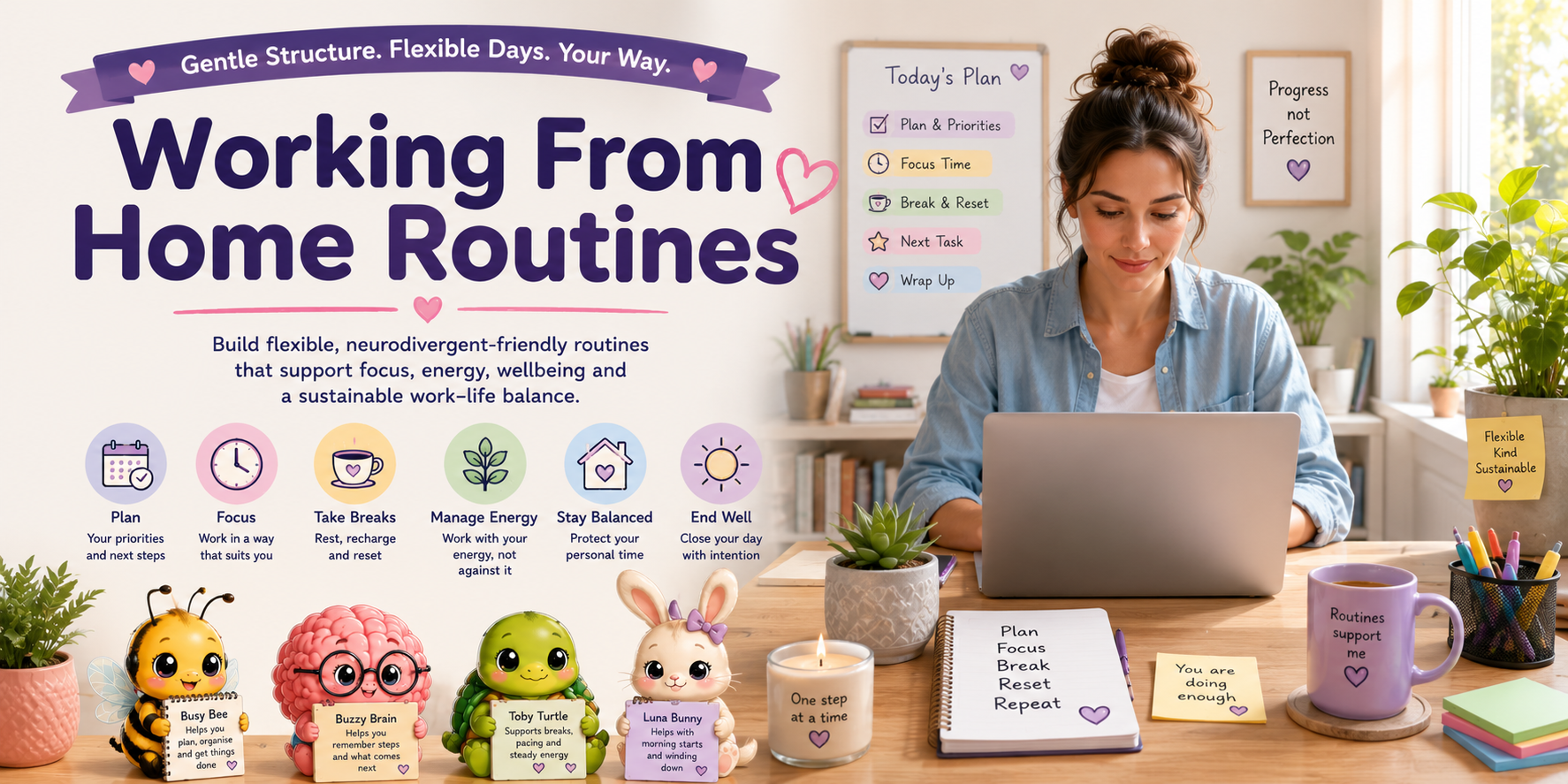
Working From Home Routines
A helpful working-from-home routine does not need to be strict, perfectly timed or identical every day.
Routines can reduce decision-making, help you remember what comes next and create clearer boundaries between work and home life. The best routine is one that works with your energy, responsibilities, environment and support needs.
A routine can use broad time periods, visual steps, task sequences or energy levels instead of exact times.
Why Routines Can Help
Working from home removes many external cues that normally signal when to begin, pause, change tasks and finish.
Easier Starting
A familiar start sequence can reduce the effort needed to begin work.
Less Decision-Making
Repeated steps reduce the number of choices your brain must make.
Smoother Transitions
Clear transition cues can make switching between tasks less abrupt.
Clearer Finishing
An end-of-day routine helps prevent work from continuing indefinitely.
Flexible Routines, Not Rigid Schedules
A routine should support you rather than become another source of pressure. Missing one step or changing the plan does not mean the entire day has failed.
Starting the Working Day
A small start routine can help your brain move from home mode into work mode.
Prepare your body
Have a drink, eat if needed, take medication and attend to basic comfort.
Prepare the space
Open the curtains, adjust lighting, set up equipment and reduce distractions.
Review the day
Check meetings, deadlines, energy levels and any personal commitments.
Choose the first action
Identify one small, specific task that signals work has begun.
- Turning on a particular lamp.
- Opening your planner or task list.
- Making a work drink.
- Playing the same short playlist.
- Putting your phone into focus mode.
- Writing down the first three steps.
Planning Priorities
A long task list can create overwhelm. A smaller daily plan is often easier to begin.
One Main Priority
Choose the task that matters most or has the greatest consequence.
Two Supporting Tasks
Add one or two smaller tasks if your time and capacity allow.
One Minimum Task
Identify the smallest useful action for a low-energy or disrupted day.
Creating Work Blocks
Work blocks provide a beginning and end point without requiring continuous focus.
Short Focus Block
Try 10–20 minutes for difficult starts, fatigue or low-capacity days.
Standard Work Block
Try 25–50 minutes followed by a deliberate break.
Task-Based Block
Work until one defined step is complete rather than watching the clock.
Energy-Based Block
Stop or change tasks when concentration or physical capacity begins to drop.
Building in Break Routines
Breaks are part of productive work, not a reward that must be earned.
Visual Break
Look away from screens, reduce visual input or spend time near natural light.
Movement Break
Stretch, stand, walk, change position or complete a short physical task.
Body-Care Break
Drink, eat, use the bathroom, take medication or adjust temperature.
Sensory Reset
Use quiet, music, pressure, fresh air or another regulating activity.
Transitioning Between Tasks
Switching tasks can require more effort than expected, especially during hyperfocus or when the next task is unclear.
- Give yourself a five- or ten-minute transition warning.
- Write down where you stopped before leaving a task.
- Close unnecessary tabs and documents.
- Take a short movement or sensory break.
- Prepare the first item needed for the next task.
- Use a visible “now” and “next” prompt.
- Allow extra transition time after meetings or emotionally demanding work.
Managing Interruptions
Home-working routines need to allow for household responsibilities, deliveries, phone calls, support needs and unexpected events.
Capture the Interruption
Write down the new request or thought instead of acting on it immediately.
Leave a Restart Note
Record what you were doing and the exact next step before leaving the task.
Use a Return Routine
Reopen your notes, review the last step and restart with one small action.
Adjusting Routines for Changing Energy
Capacity may change from day to day. A supportive routine includes different versions rather than assuming one ideal level of energy.
Full Routine
- Complete priority work.
- Attend meetings.
- Use longer focus blocks.
- Prepare future tasks.
Reduced Routine
- Choose one priority.
- Use shorter work blocks.
- Delay non-urgent tasks.
- Increase breaks.
Minimum Routine
- Complete only essential actions.
- Communicate delays.
- Use accessibility supports.
- Protect recovery time.
ADHD and Executive Function Supports
A routine is easier to follow when it is visible, specific and supported by external cues.
Use a visual checklist instead of remembering every step.
Keep the first work task prepared and visible.
Set alarms for transitions, breaks and finishing time.
Break vague tasks into small physical actions.
Use body doubling or accountability where helpful.
Reduce the number of planners, apps and reminder systems.
Example Routine Options
These examples are starting points rather than rules.
Simple Workday Flow
- Prepare drink and workspace.
- Review calendar and priorities.
- Complete one focus block.
- Take a movement break.
- Continue or switch tasks.
- Review and close the day.
Block-Based Routine
- Morning setup block.
- Priority work block.
- Break and food block.
- Meetings or admin block.
- Low-demand task block.
- Shutdown block.
Low-Capacity Routine
- Check urgent messages.
- Choose one essential task.
- Work for a short period.
- Communicate any delays.
- Prepare tomorrow’s first step.
- Finish and recover.
Ending the Working Day
Without travel or a change of location, work can easily continue into personal time.
A gentle shutdown routine
- Save and close current work.
- Write down unfinished tasks.
- Choose tomorrow’s first step.
- Check the next day’s calendar.
- Put work equipment away where possible.
- Use a transition activity to return to home mode.
A Gentle Routine Reset
Routines can be interrupted by illness, burnout, appointments, changes at home or difficult days. You do not need to wait until tomorrow or next week to restart.
- Pause and notice what you need.
- Clear or prepare only the immediate work area.
- Choose one small next action.
- Use a short work block.
- Review the plan after that block.
Small Changes to Try Today
You do not need to design a complete routine all at once.
Choose One Start Cue
Use the same simple action to signal the beginning of work.
Select One Priority
Make the most important task visible before opening other work.
Schedule One Break
Decide when your first meaningful break will happen.
Create One Finish Cue
Close the laptop, change rooms or play an end-of-day song.
Meet Your Routine Companions
Each companion offers a different kind of support for creating a sustainable home-working routine.
Busy Bee
Helps with planning, priorities and organising the steps of the day.
Buzzy Brain
Supports memory, task initiation, visual prompts and transitions.
Toby Turtle
Encourages breaks, pacing and routines that protect long-term energy.
Luna Bunny
Supports gentle morning starts, evening transitions and switching off.
Resources & Downloads
Use printable planners, routine prompts, energy check-ins and end-of-day tools to create a routine that suits you.
Working From Home Routine FAQs
Does a routine need exact times?
No. You can use a sequence of tasks, broad time blocks, visual prompts or energy levels instead of fixed times.
What if I cannot follow the same routine every day?
Create several versions, such as a full routine, reduced routine and minimum-day routine. Flexibility can make routines more sustainable.
How many priorities should I choose?
One main priority and one or two supporting tasks is often enough. The right number depends on task size, energy and interruptions.
What if I forget to take breaks?
Use alarms, calendar reminders, visual prompts or pair breaks with natural stopping points such as finishing a call or work block.
How can I restart after becoming distracted?
Review your last note, identify the smallest next action and use a short focus period rather than trying to recover the entire plan at once.
Is it okay to have a low-capacity routine?
Yes. A minimum routine protects essential responsibilities while recognising that health, burnout and energy can change.
How do I stop work from taking over the evening?
Use a clear finish time, shutdown checklist, equipment pack-away routine and a transition activity that signals personal time has begun.
Choose Your Next Step
Continue to Work–Life Boundaries or explore another Working From Home topic.