
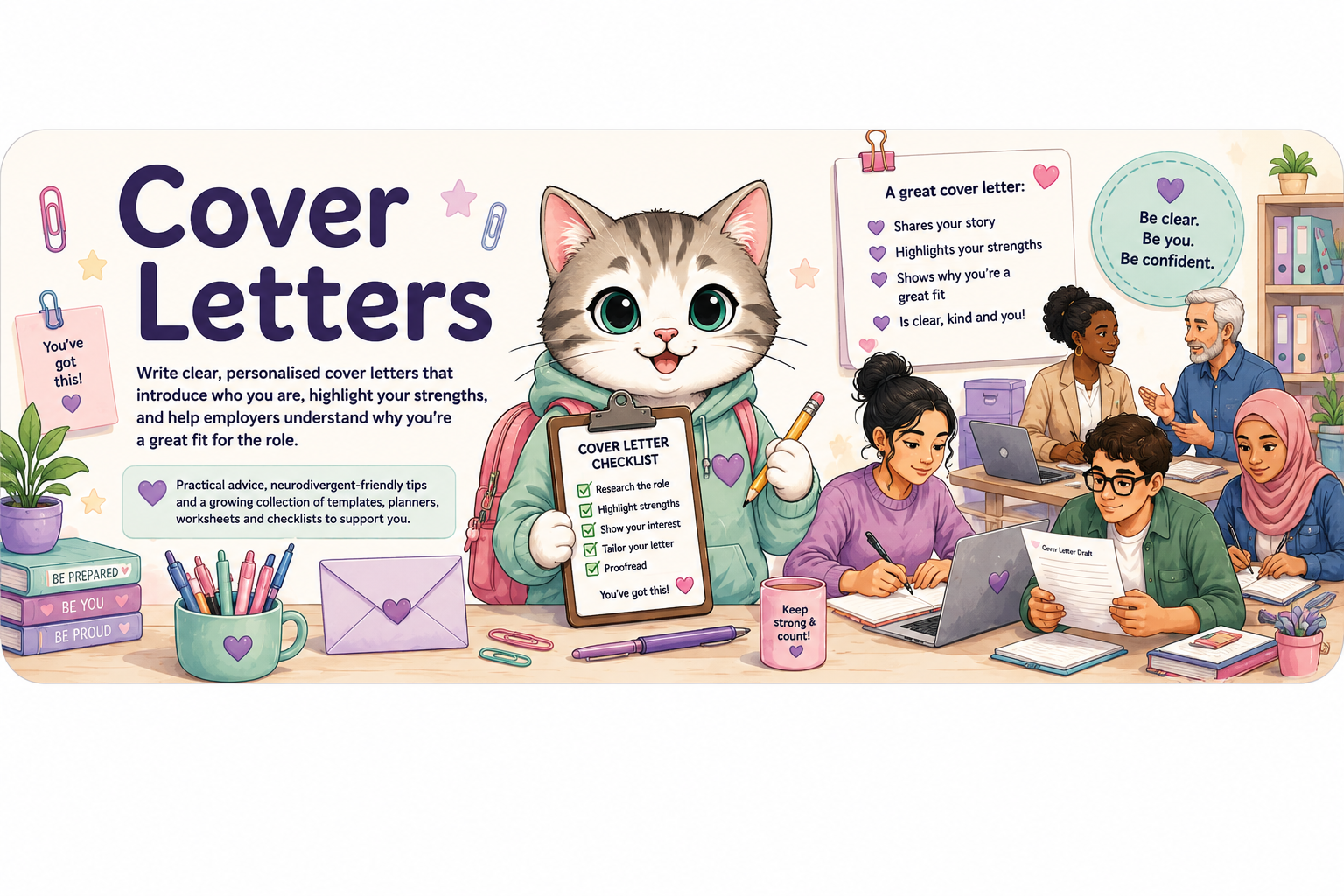
Cover Letters
A cover letter introduces you to an employer, explains why you are interested in a particular role and connects your experience with what the organisation is looking for. It should support your CV, not repeat it word for word.
Try words such as opening, examples, career change, first job, proofreading or template.
Showing all guide sections.
A cover letter is usually sent with your CV or résumé. It explains why you are applying and highlights the skills, experiences and personal qualities most relevant to that particular role.
Introduce Yourself
Give the employer a clearer picture of who you are and why the opportunity interests you.
Highlight Relevant Strengths
Draw attention to abilities and experiences that match the role.
Show Genuine Interest
Explain what interests you about the job, organisation or type of work.
Provide Helpful Context
Briefly explain a career change, employment gap, transferable skill or relevant experience when it helps the employer understand your application.

Read the Job Advertisement
Highlight important skills, responsibilities and repeated words or priorities.
Research the Organisation
Find enough information to explain why the role or organisation genuinely interests you.
Choose Two or Three Strengths
Focus on the strengths most relevant to this particular vacancy.
Prepare Examples
Choose one or two brief examples that show how you have used those strengths.
Keep Your CV Nearby
Use it as a reference so dates, roles and wording stay consistent.
Check the Instructions
Confirm whether the employer requested a particular format, document type or information.
Your Contact Details
Include your name, phone number, email address and the date where appropriate.
Greeting
Address the hiring manager by name when you know it. Otherwise, use a professional general greeting.
Opening Paragraph
State which position you are applying for and briefly explain why it interests you.
Your Relevant Strengths
Connect your skills, experience and strengths to the job requirements. Include a brief example when helpful.
Closing Paragraph
Reaffirm your interest, thank the employer for their time and indicate that you would welcome the opportunity to discuss your application.
Adapt example wording so it accurately reflects your own experience, voice and the role you are applying for.
Opening Example
I am applying for the Administration Assistant position because I enjoy organised, detail-focused work and would value the opportunity to contribute to a supportive team.
Strength + Evidence Example
In my previous volunteer role, I organised records and weekly schedules, which strengthened my attention to detail and helped the team keep information accurate and up to date.
Career Change Example
Although my recent experience has been in retail, the role developed strong customer service, organisation and problem-solving skills that I can bring to an office support position.
Closing Example
Thank you for considering my application. I would welcome the opportunity to discuss how my experience and strengths could contribute to the role.

Tailor It
Adjust the letter to the particular role rather than sending exactly the same version everywhere.
Use Clear Language
Plain, direct wording is often stronger than complicated business language.
Use Brief Examples
Show how you have used a skill instead of relying only on general claims.
Keep It Focused
Prioritise the most relevant information. Often one page is enough.
Be Accurate
Show enthusiasm without feeling pressure to exaggerate your experience or personality.
Save Your Version
Keep a copy of every cover letter so you know what was sent to each employer.
Details & Relevance
- Using the wrong organisation or job title
- Sending exactly the same letter for every role
- Repeating the entire CV
- Including information that is not relevant to the job
Clarity & Accuracy
- Writing very long paragraphs
- Making claims without examples
- Forgetting spelling or contact-detail checks
- Using wording that does not feel natural or authentic

Open-ended writing can be demanding, especially when you are unsure what an employer expects. A repeatable structure can reduce the amount of decision-making each application requires.
Break It Into Small Steps
Write one paragraph at a time instead of trying to complete the whole letter in one sitting.
Use a Template
Begin with a clear structure and personalise each section for the job.
Speak Before You Write
Record yourself explaining why you want the role, then turn those ideas into written sentences.
Ask for Feedback
A trusted person, careers adviser or employment support worker may help review clarity and tone.
Use Plain Language
Clear, honest wording is often stronger than complicated business language.
Take a Break Before Proofreading
Returning with fresh eyes can make mistakes easier to notice.
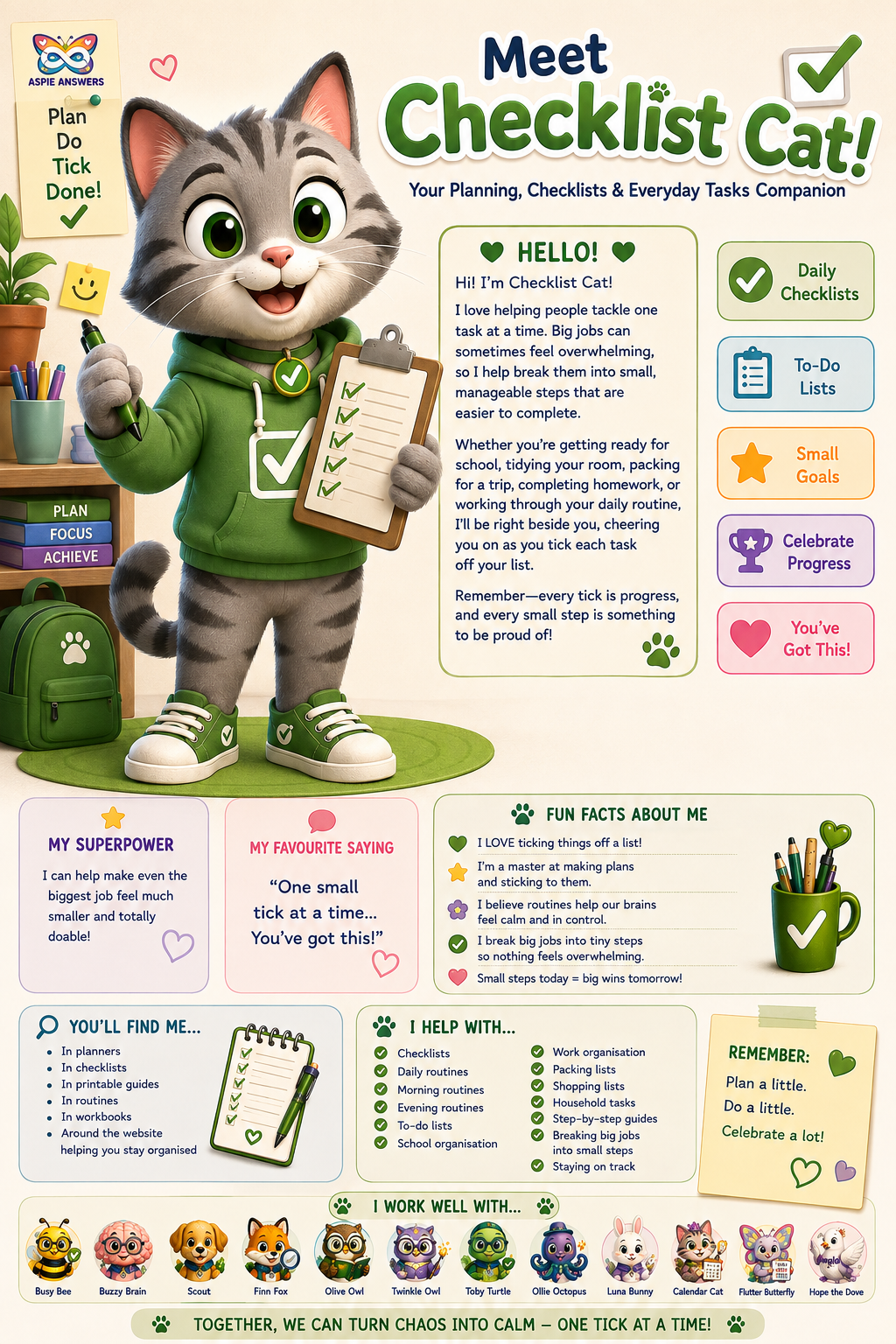
Checklist Cat
Checklist Cat fits this page naturally: prepare the information, work through one section at a time, then use a final checklist before submitting.
These tools fit the topic well and can live in the central Work & Employment resource system rather than being presented here as unfinished downloads.