
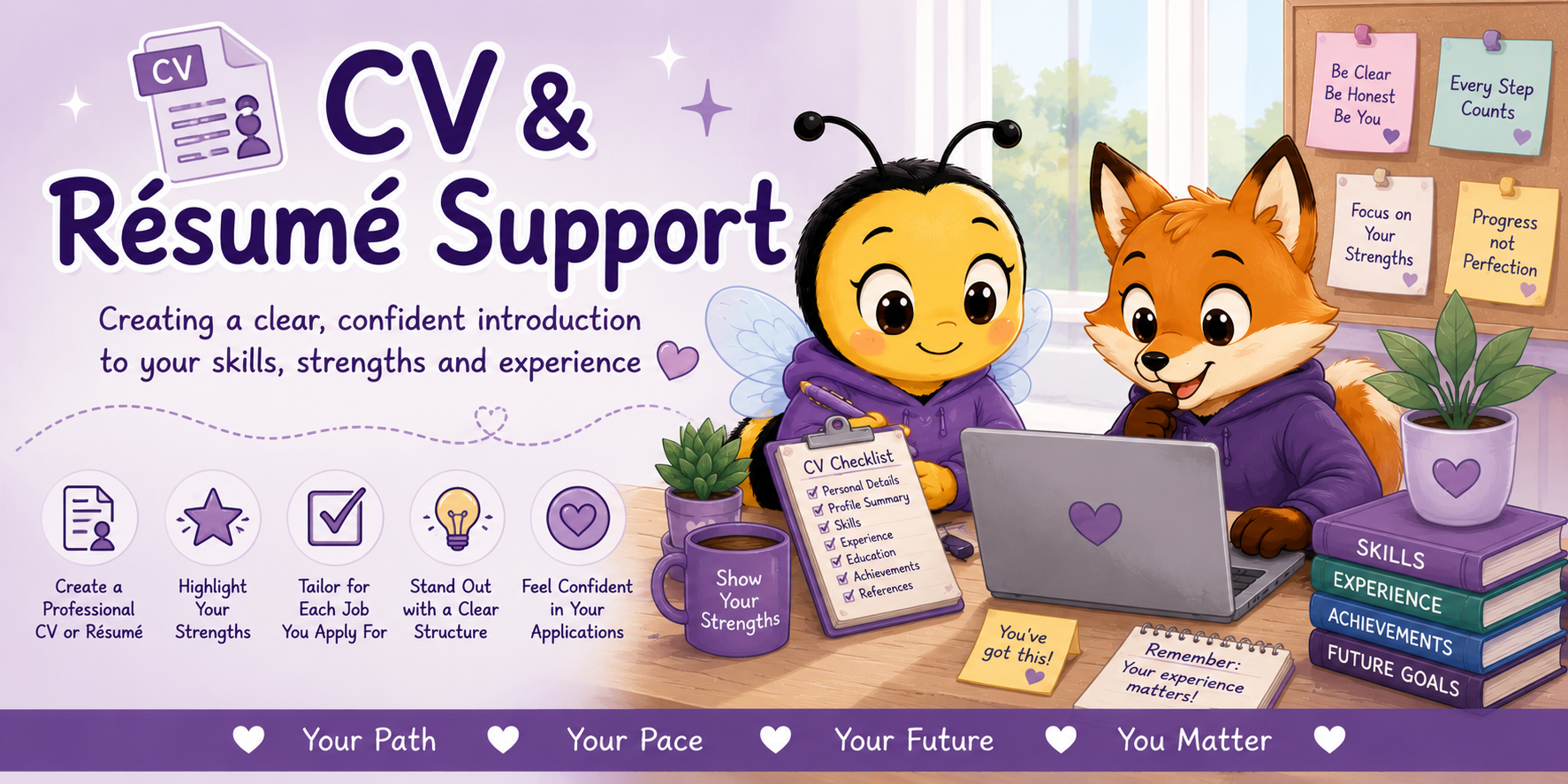
CV & Résumé Support
A CV or résumé introduces your skills, strengths, experience and qualifications to a possible employer. It does not need to tell your whole life story — its job is to show why you may suit a particular role and help the employer understand what you could bring.
Try words such as profile, gaps, skills, references, keywords, student or disclosure.
Showing all guide sections.
The terms can be used differently depending on country and industry. In many job-search settings they both describe a document summarising your relevant experience, skills and qualifications.
CV
CV stands for curriculum vitae. It usually provides a structured summary of employment, education, skills and qualifications.
Résumé
A résumé is usually a shorter document tailored closely to a particular job. The term is especially common in North America.
Creates an Introduction
Gives an employer an initial picture of who you are and what you may bring.
Highlights Relevant Strengths
Brings the skills and experience most useful for the role to the foreground.
Supports the Next Stage
The usual aim is to help you progress to an interview or another stage of selection.

There is no single format that suits everybody. Your experience, goals and employment history can help determine which style works best.
Chronological CV
Lists work experience in date order, usually beginning with the most recent position.
May suit: people with a steady or directly relevant work history.
Skills-Based CV
Places greater emphasis on abilities and transferable skills than on dates or job titles.
May suit: career changers, people returning to work or applicants with gaps.
Combination CV
Combines a strong skills section with a shorter chronological employment history.
May suit: applicants with varied experience or transferable strengths.
Student or First-Job CV
Focuses on education, projects, volunteering, extracurricular activities and developing skills.
May suit: students, school leavers and first-time job seekers.
Contact Information
Include your name, phone number, professional email address and general location. A full street address is usually unnecessary.
Personal Profile or Summary
Write a brief introduction that highlights your experience, strengths and the kind of role you are seeking.
Key Skills
Select skills relevant to the vacancy and support them with evidence where possible.
Employment Experience
List job titles, employers, dates and key responsibilities or achievements, usually beginning with the most recent role.
Education & Qualifications
Include relevant education, certificates, licences, training and professional development.
Other Relevant Experience
Add volunteering, projects, caring responsibilities, community involvement or self-directed learning when helpful.
References
Provide referees when requested, or state that references are available on request if appropriate.
A personal profile is usually a short paragraph near the beginning of your CV. Keep it clear, relevant and easy to understand.
Simple Structure
- Who you are professionally
- Your most relevant experience or strengths
- The type of opportunity you are seeking
- What you could contribute
Example
Reliable and detail-focused administration assistant with experience organising records, supporting customers and managing routine office tasks. Seeking a structured role where strong organisation and written communication skills can contribute to a supportive team.

Instead of listing a skill alone, briefly explain how or where you have used it.
Less Specific
Good organisational skills.
Stronger Example
Organised appointments, records and weekly schedules while meeting deadlines and keeping information accurate.
Choose words that remain accurate and natural rather than trying to make every sentence sound impressive.
Transferable skills can come from jobs, education, volunteering, projects, caring responsibilities and everyday life.
Organisation
Planning schedules, maintaining records, coordinating tasks or keeping track of deadlines.
Communication
Writing emails, explaining information, listening carefully or helping people understand a process.
Problem-Solving
Identifying an issue, comparing options and finding a practical way forward.
Reliability
Following routines, meeting commitments, completing tasks and maintaining consistent standards.
Digital Skills
Using email, documents, spreadsheets, websites, software or online communication tools.
Attention to Detail
Checking information, noticing errors, following instructions and maintaining accuracy.
Helpful Presentation Choices
- Use clear headings
- Choose a readable font
- Use consistent formatting
- Keep paragraphs short
- Use bullet points where helpful
- Leave enough white space
- Save the final document as a PDF when requested
Keep the Design Professional
Decorative layouts can look attractive, but they should never make the content difficult to find or read.
Simple formatting is often more accessible and may work better with online recruitment systems.

You do not need to rewrite everything every time. Keep a detailed master CV and adjust the parts that matter most for each application.
Read the Vacancy Again
Notice repeated skills, responsibilities and priorities in the advertisement.
Adjust Your Profile
Make the introduction reflect the particular role and organisation.
Reorder Relevant Skills
Place the most important and relevant skills where they are easy to notice.
Choose Suitable Examples
Highlight experiences that connect directly with the job’s responsibilities.
Use Accurate Keywords
Use relevant terminology from the advertisement where it truthfully describes your experience.
Save a Separate Copy
Name the file clearly so you know which version was sent to each employer.
Employment Gaps & Changes
Gaps can happen for many reasons, including health, disability, caring, study, travel, redundancy, burnout or difficulty finding suitable work.
You do not have to explain everything in detail. Depending on the situation, you may use years rather than months, mention useful activities completed during the gap, or address the matter briefly later in the application process.
Disability or Neurodivergence
Disclosure is not usually a standard CV section. A CV normally focuses on skills, qualifications and relevant experience.
Some people disclose during the application, interview, offer or employment stage when requesting adjustments. Individual employment or legal guidance can help when the decision is complex.
Keep a Master Document
Store employment dates, responsibilities, qualifications and achievements in one place.
Use a Section Checklist
Work through one CV section at a time instead of trying to complete the whole document at once.
Save Useful Wording
Keep accurate skill descriptions and examples that can be adapted for future applications.
Ask for a Second Review
A trusted person may notice unclear wording, missing information or spelling mistakes.
Set a Stopping Point
Decide how many checks are enough so perfectionism does not delay submission.
Use Templates Carefully
Templates can reduce decision-making, but the content should still reflect your own experience.
These Companions appear here because their established roles genuinely fit the process of organising information and working through a CV step by step.
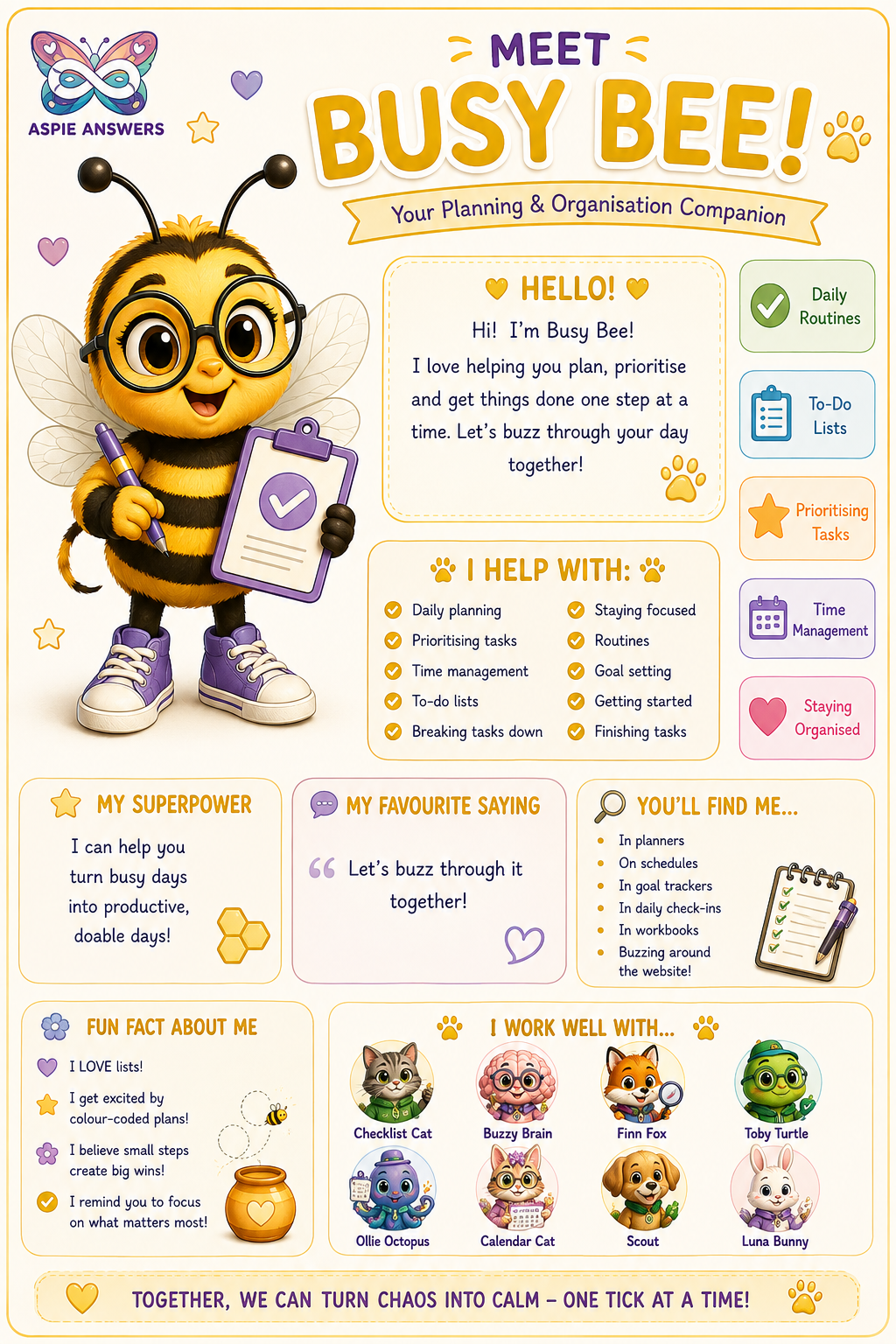
Busy Bee
Busy Bee helps organise employment information, manage versions and keep the CV process moving in manageable pieces.
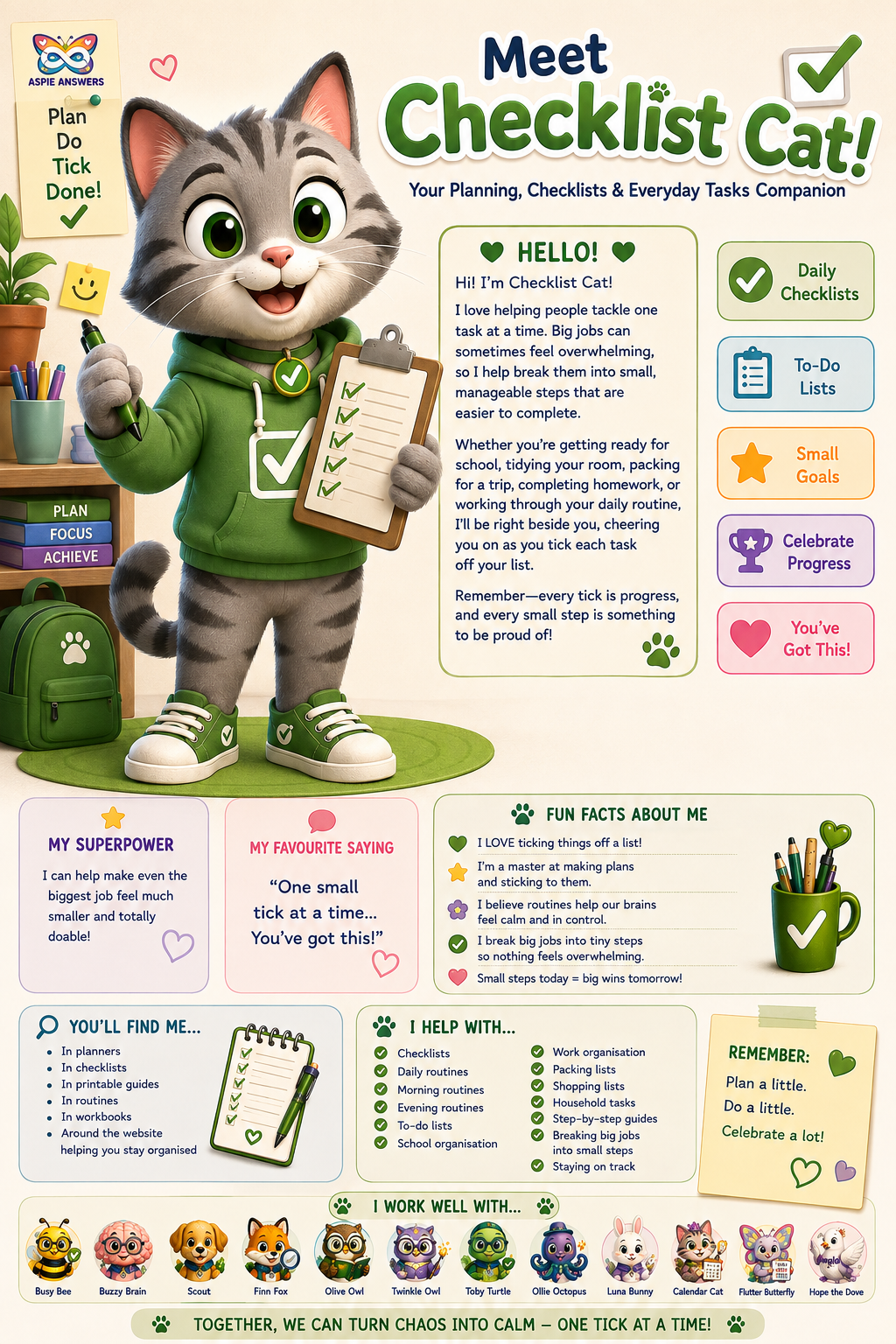
Checklist Cat
Checklist Cat fits the section-by-section build, final checks and preparation before a CV is submitted.
Check for These Before Sending
- Incorrect phone number or email address
- Spelling and grammar mistakes
- Very long paragraphs
- Outdated or irrelevant information
- Inconsistent dates or formatting
- A generic profile that does not match the role
- Unsupported claims or exaggerated experience
- Unprofessional file names
- Including sensitive personal details unnecessarily
Final CV Checklist
- My contact information is accurate.
- My personal profile suits the role.
- My most relevant strengths are easy to find.
- My employment and education dates are consistent.
- I have included useful volunteering or project experience.
- The layout is clear and readable.
- Spelling and grammar have been checked.
- The document has been tailored to the vacancy.
- The file name is professional.
- I have saved a copy of the version submitted.
These resource types fit this topic well and can live in the central Work & Employment resource system rather than being shown as unfinished downloads on this page.