
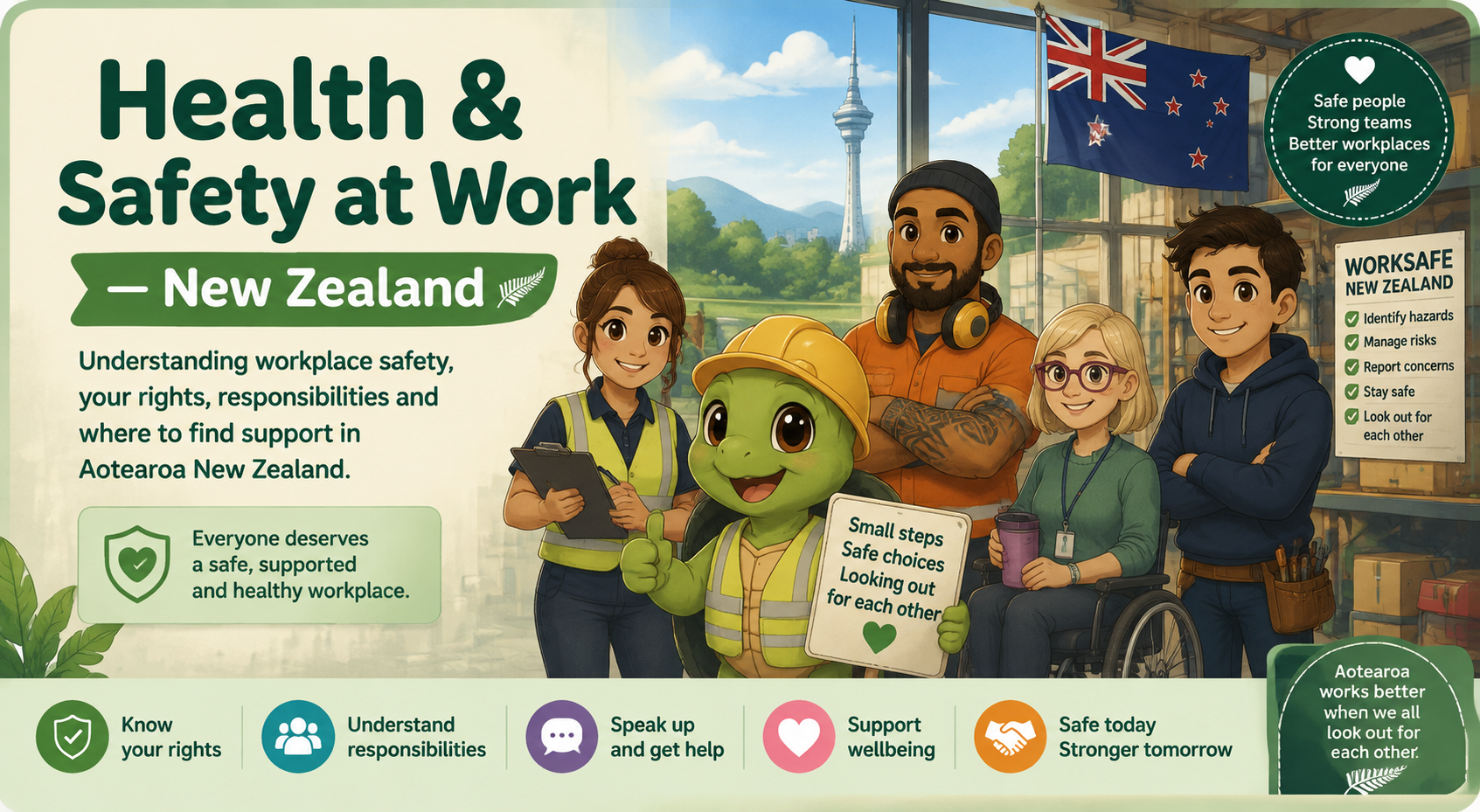
🛡 Health & Safety at Work — New Zealand 🇳🇿
Understanding workplace safety, worker rights, responsibilities and support pathways in Aotearoa New Zealand.
A safe workplace is about more than preventing accidents. It includes wellbeing, communication, accessibility, inclusion and creating environments where people can participate confidently.
This guide supports workers, employers, families, carers and support people to understand workplace safety and find practical next steps.
🌱 Explore Your Workplace Safety Journey
🔎 Find Workplace Support
Search Aspie Answers for workplace guidance, resources, adjustments and employment support.
📘 Understanding Workplace Safety
📌 On This Page
Choose the pathway that best matches what you need today.
👥 Who This Page Is For
Workplace safety affects everyone. This guide has been designed to support different people involved in employment.
🌈 Neurodivergent Workers
Explore accessibility, communication and workplace adjustments.
Accessibility →🤝 Families & Support People
Understand how to support someone navigating workplace safety.
Support Pathways →🇳🇿 Understanding Health & Safety at Work in New Zealand
In Aotearoa New Zealand, workplace health and safety focuses on identifying risks, preventing harm and supporting people to participate safely at work.
A safe workplace includes:
🛡 Physical Safety
Reducing hazards, preventing injuries and creating safer environments.
🧠 Psychological Safety
Creating workplaces where people feel respected, supported and able to speak up.
♿ Inclusive Safety
Removing barriers and supporting different ways of working.
⚖ Workplace Safety Responsibilities
🏢 Employer Responsibilities
- Identify and manage risks
- Create safe work systems
- Provide information and training
- Support worker wellbeing
- Consider accessibility needs
👩 Worker Responsibilities
- Follow safety processes
- Communicate hazards
- Ask questions
- Participate in safety conversations
- Look after yourself and others
🤝 Others in the Workplace
- Contractors
- Visitors
- Customers
- Anyone affected by workplace activities
⚠️ Understanding Risks & Creating Safer Workplaces
⚠️ Understanding Workplace Hazards & Risks
Workplace safety includes recognising situations that could cause harm and finding ways to reduce risks.
🛡 Physical Safety
Includes workplace environments, equipment, hazards, injuries and unsafe conditions.
Explore Physical Safety →🧠 Psychological Safety
Includes feeling respected, supported and able to communicate concerns.
Explore Wellbeing →♿ Accessibility Safety
Includes removing barriers and creating workplaces where people can participate safely.
Explore Accessibility →🔄 My Workplace Safety Journey
When something does not feel safe, taking small steps can help make the situation clearer.
1️⃣ Notice
What is happening? What feels unsafe or difficult?
2️⃣ Understand
What information or support might help?
3️⃣ Communicate
Who can I talk with?
4️⃣ Improve
What changes could create a safer outcome?
🌱 Starting a New Job Safely
A new workplace can bring excitement, uncertainty and many new expectations. Understanding safety information can help build confidence.
📘 Learn
Understand workplace rules, procedures and expectations.
💬 Ask Questions
It is okay to ask when something is unclear.
🤝 Find Support
Know who you can approach when you need help.
🏠 Remote, Hybrid & Flexible Work Safety
Workplaces can look different. Safety responsibilities still matter whether someone works onsite, remotely or online.
🏡 Working From Home
Creating a safe and suitable workspace.
💻 Online Work
Maintaining communication, boundaries and support.
🌏 Flexible Arrangements
Finding ways of working that support people effectively.
🧠 Workplace Mental Health & Wellbeing
Workplace safety also includes emotional wellbeing, energy levels and creating environments where people can ask for support.
🔥 Burnout
Recognising overload and protecting your energy.
🌿 Stress
Understanding workplace pressures and coping strategies.
⚖ Boundaries
Creating healthy limits between work and personal life.
🌈 Neurodiversity, Disability & Workplace Support
People may communicate, process information and experience workplaces in different ways. Inclusive workplaces recognise and support these differences.
💬 Communication
Clear expectations and accessible communication methods.
🎧 Sensory Needs
Considering environments, noise, lighting and sensory comfort.
🌱 Different Strengths
Recognising different ways people contribute and succeed.
🤝 Finding Support & Taking Next Steps
♿ Workplace Adjustments & Accessibility
Workplace safety can include making changes that help people communicate, participate and complete their work successfully.
💬 Communication Support
Clear instructions, preferred communication methods and predictable processes.
🎧 Sensory Support
Considering noise, lighting, environments and sensory needs.
🛠 Workplace Changes
Practical adjustments that support safer participation.
💬 Disclosure at Work
Deciding whether to share information about disability, neurodivergence or support needs is a personal choice.
🌱 Understanding Your Needs
Think about what support helps you work safely and confidently.
📝 Preparing Conversations
Consider what you would like to share and what outcome you hope for.
🤝 Getting Support
You can seek guidance before making decisions.
📝 Raising a Workplace Concern
If something does not feel safe, fair or supportive, preparing information can make conversations easier.
1️⃣ What Happened?
Record what happened, when it happened and what impact it had.
2️⃣ What Do I Need?
Think about what support or change may help.
3️⃣ Who Can Help?
Identify trusted people or support pathways.
🤝 You Do Not Have To Navigate This Alone
Some workplace conversations can feel difficult. Support can make the process clearer and less overwhelming.
👥 Trusted Person
Someone who knows you and supports your needs.
🧑💼 Advocate
Someone who can help you understand options.
📚 Information Support
Reliable information can help you make decisions.
📣 Worker Voice & Participation
Safe workplaces encourage people to ask questions, share ideas and be part of improving workplace safety.
💬 Speak Up
Share concerns and ideas.
❓ Ask Questions
Understanding safety information matters.
🌱 Participate
Everyone can contribute to safer workplaces.
🚨 Emergency & Safety Planning
Knowing what to do during emergencies can help people feel prepared.
- Understand workplace emergency procedures
- Know where to find help
- Ask questions if something is unclear
- Know important safety contacts
🐢 Toby Turtle's Safe Steps
Toby Turtle reminds us that slow, steady steps can help create safer and more sustainable work experiences.
His message: "Slow steps, steady progress."
1️⃣ Notice
Notice what is happening.
2️⃣ Understand
Understand your needs.
3️⃣ Ask
Ask for support.
4️⃣ Take One Step
Progress happens one step at a time.
📥 Tools, Resources & Continuing Your Journey
📥 Resources & Downloads
Practical tools designed to support workplace safety, confidence, preparation and self-advocacy.
📋 Workplace Safety Checklist
A practical checklist to think through workplace safety needs.
View Resource →📝 Hazard Identification Worksheet
A tool to help recognise workplace hazards and concerns.
View Resource →🐢 Toby Turtle Safe Steps Worksheet
A gentle reminder to notice, understand, ask and take one step.
View Resource →📚 Work & Employment Collections
Explore connected collections supporting different stages of employment.
🌱 Workplace Confidence Collection
Communication, confidence and self-advocacy tools.
View Collection →🌈 Neurodivergent Workplace Success Collection
Support for inclusive and accessible workplaces.
View Collection →🇳🇿 New Zealand Support Pathways
Official workplace safety and employment information sources.
🌍 International Workplace Safety Pathways
Workplace laws and support systems vary between countries. These pathways will provide country-specific guidance.
🔗 Continue Exploring Work & Employment
Workplace Rights & Employment Guidance
Understand workplace rights and support pathways.
Visit Page →