
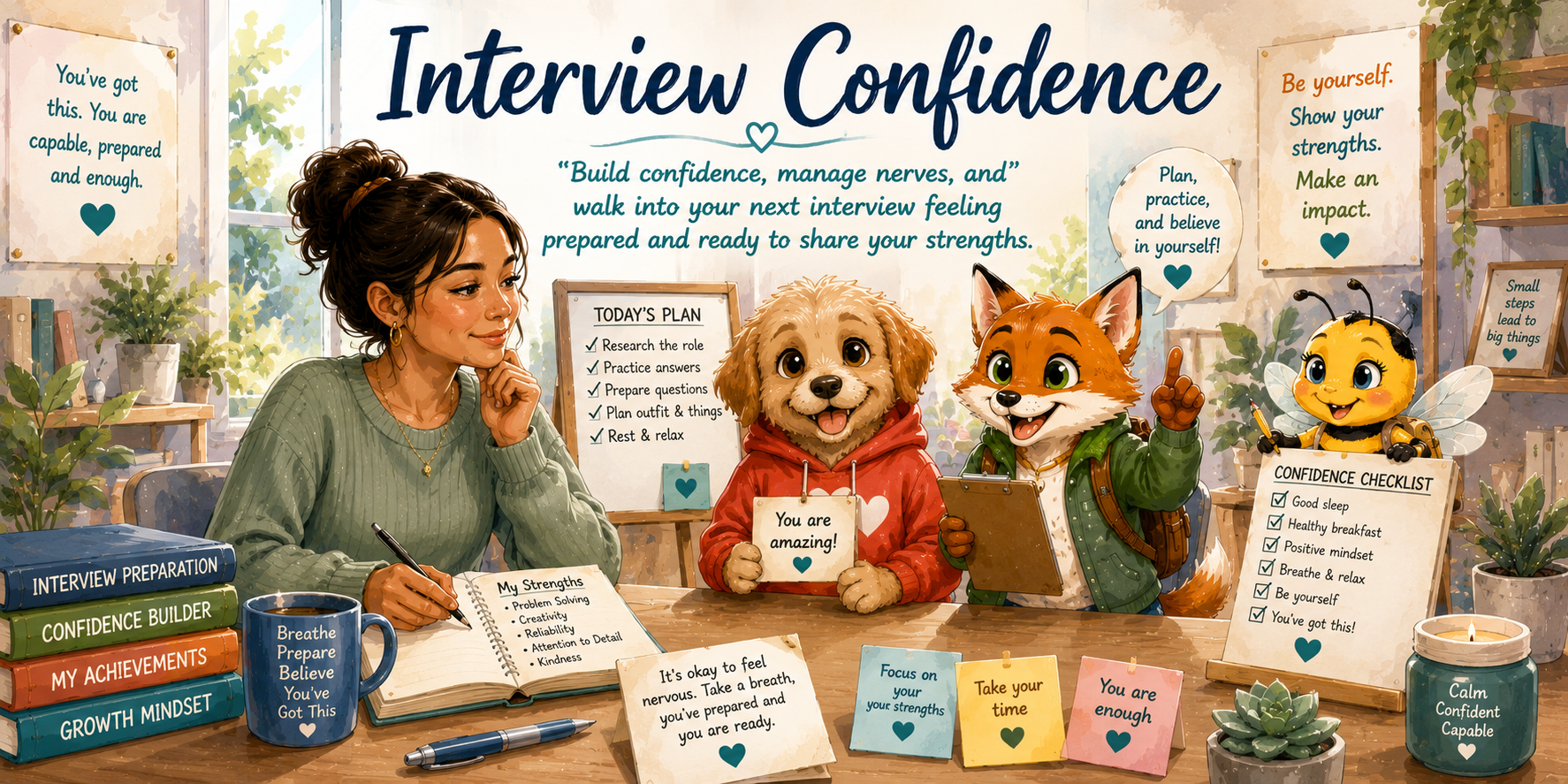
Interview Confidence
Confidence does not mean feeling completely calm or knowing every answer. It means trusting that you can prepare, pause, think, recover from imperfect moments and communicate the strengths and experience you bring.
Try words such as strengths, pause, blank, preparation, examples, confidence or feedback.
Showing all guide sections.
You Do Not Need Perfection
Interview confidence can mean answering as clearly as you can, not producing the perfect response every time.
You Can Pause & Think
A thoughtful pause can help you process the question and choose a stronger example.
Your Strengths Are Real
Your skills, experiences, persistence, knowledge and ways of thinking give you genuine evidence to talk about.

You do not need to memorise polished speeches. Aim to know the role, your main examples and the support you need to communicate well.
Learn About the Role
Review the job description and identify the responsibilities, skills and values the employer is most likely to ask about.
Choose Strong Examples
Prepare examples showing problem-solving, teamwork, reliability, learning, adapting or other strengths relevant to the role.
Practise Aloud
Speaking an answer can feel different from thinking it. Practise with someone supportive or record yourself privately.
Plan Practical Supports
Think about notes, travel, clothing, sensory needs, communication adjustments and recovery time.
Confidence often grows after action. Keep a small record of things that show what you can do so your brain has evidence to return to before an interview.
Challenges You Handled
Think of difficult situations you worked through and what helped you respond.
Skills You Learned
Include formal skills as well as practical things you taught yourself over time.
Positive Feedback
Save useful comments from employers, teachers, clients, colleagues, volunteers or people you supported.
Things You Are Proud Of
They do not have to be dramatic. Persistence, improvement and showing up can all matter.

0 of 8 preparation steps complete.
Listen to the Whole Question
Give yourself a moment to work out what is actually being asked before choosing an example.
Ask for Clarification
You can ask for a question to be repeated or rephrased if it is unclear.
Use Brief Notes
If the format allows it, notes can help with key examples, questions or reminders.
Communicate Naturally
Natural eye contact varies. Focus on listening, answering and showing engagement in manageable ways.
Pause First
Take one breath and give your brain a few seconds instead of forcing an instant answer.
Ask to Hear It Again
“Could you please repeat or rephrase that question?” can buy useful processing time.
Ask to Return Later
If appropriate, ask whether you can come back to the question after the next one.
Return to Your Example
Think: situation, what needed doing, what you did, and what happened next.
An awkward answer, a long pause or one question you wish you had handled differently does not erase your strengths. Interviews are imperfect conversations, and hiring decisions can depend on many factors outside your control.
When appropriate, you can ask for brief feedback. Use useful feedback as information about the process — not as a judgement of your worth.
Quick Reset
Drop your shoulders, unclench your jaw, place both feet down and take one slower breath.
Answer Structure
Situation → Task → Action → Result. Keep the focus on what you did and what happened.
Permission to Pause
“I would like a moment to think about that.”
Strength Reminder
Use the interactive reminder below when your confidence dips.


Checklist Cat
Confidence often feels steadier when the practical pieces are already prepared: route, time, examples, questions, documents and supports.

Finn Fox
When a question surprises you, there is more than one way forward: pause, ask for clarification, choose another example or return to it later.
What if my mind goes blank?
Pause, ask for the question to be repeated or rephrased, or ask whether you can return to it later. A blank moment does not mean the whole interview has gone badly.
Do I need to make eye contact to look confident?
No. Natural eye contact varies. Focus on listening, communicating clearly and showing engagement in ways that are manageable for you.
Can I ask for interview accommodations?
Depending on your circumstances and local rules, adjustments may include clearer written information, more processing time, a quieter environment or an accessible interview format. Use appropriate official guidance for your location if you need advice about rights or processes.
How can I sound more confident?
Slow down slightly, pause between ideas and use specific examples. You do not need to sound forceful, highly social or overly enthusiastic to communicate confidence.