

Kaupapa Māori Mental Health Professionals & Services — NZ
Explore culturally grounded mental health care, professional roles, referrals, whānau involvement, assessments and ways to seek support that respects your preferences.
What culturally grounded professional care can mean
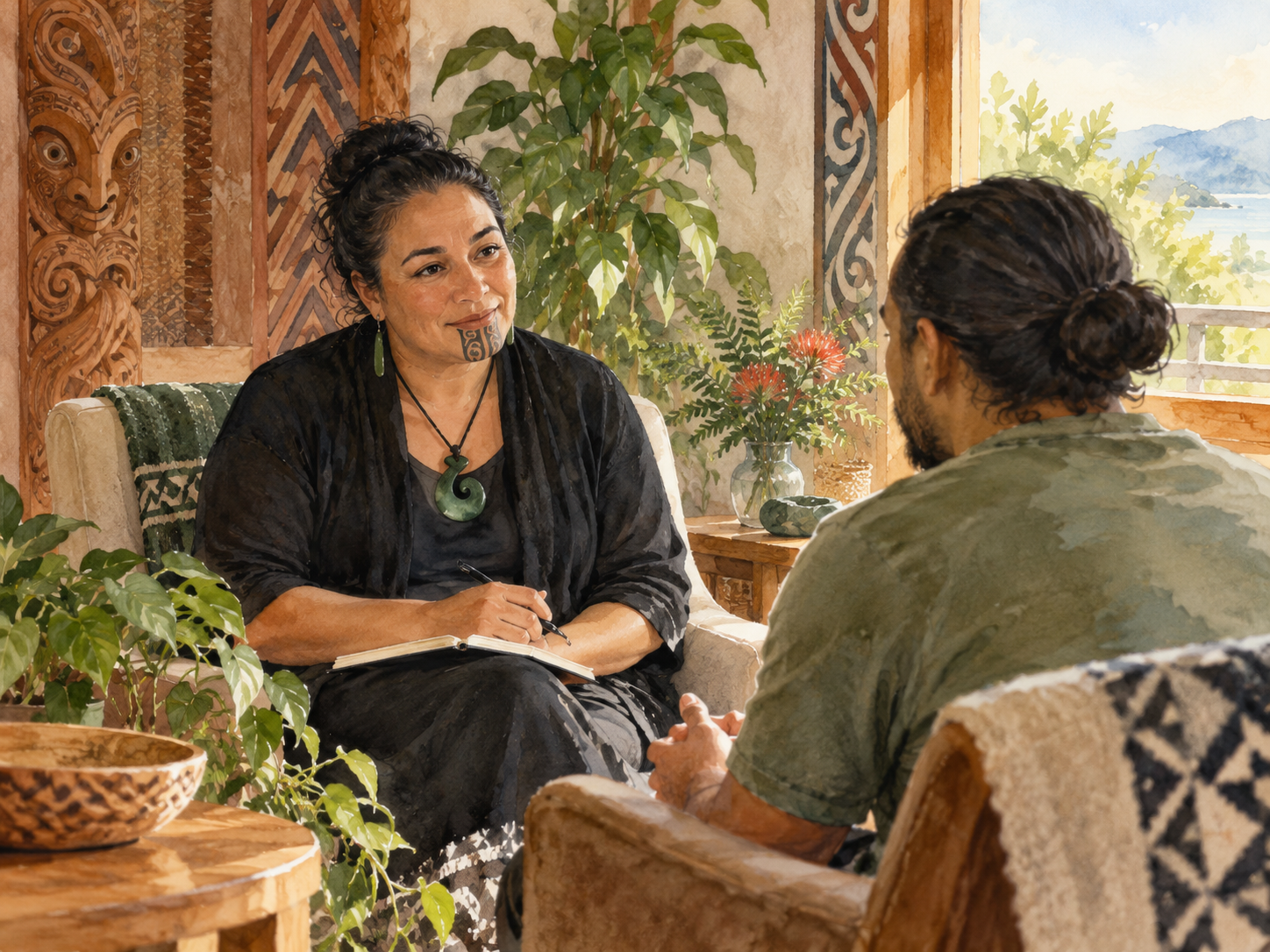
Kaupapa Māori approaches may honour whakapapa, whānau, whenua, tikanga, wairua and connection alongside clinical treatment. Te Whare Tapa Whā describes wellbeing through mental/emotional, physical, social/whānau and spiritual dimensions.
Ask how your preferences will guide the appointment. You can seek clarification about qualifications, confidentiality, referral routes, costs, follow-up and whether whānau can participate with your consent.

Find your support pathway
Search by topic, professional service or audience. These cards filter the guidance on this page; they do not search live provider availability.
Kaupapa Māori counselling & talking therapies
Understand how culturally grounded counselling can support wellbeing, and how to ask about Māori-led practice, fees and referrals.
Explore support options →Psychologists & psychological therapy
Explore psychological therapy, specialist assessments, practitioner registration and how Māori perspectives can be respected in care.
Find service information →Psychiatrists & specialist teams
Learn about psychiatric assessment, medication review, specialist public services and coordinated whānau care.
Understand referral pathways →GPs, primary care & wellbeing support
Your GP or primary care team may help with first steps, referrals and funded wellbeing support. Ask about kaupapa Māori options.
Find a starting point →Assessment, diagnosis & follow-up
Ask what an assessment involves, which professional is appropriate, what it may cost and how results will be explained.
Explore assessment services →Community mental health teams
Learn about community clinical teams, referrals and ongoing specialist care available in your region.
Explore local services →Tamariki & rangatahi
Find age-appropriate care, school-related support, youth mental health pathways and whānau-inclusive options.
Explore Māori wellbeing pathways →Whānau, parents & carers
Understand whānau participation, consent, carer support, shared planning and ways to ask for practical help.
Explore whānau wellbeing →Kaumātua & older adults
Explore older adult mental health services, age-related changes, access and whānau involvement.
Explore Māori wellbeing →Adults, workplaces & everyday life
Explore adult care, wellbeing alongside work or study, appointment preparation and ongoing support.
Return to Māori wellbeing →Teachers, educators & support workers
Find guidance on supporting learners or clients, coordinating with whānau and respecting privacy and cultural safety.
Explore support resources →Māori community & peer support
Consider community belonging, kaupapa Māori organisations, local groups and the distinction between peer support and clinical treatment.
Explore community navigation →Te reo, interpreters & communication
Ask about te reo Māori, NZSL, AAC, written summaries, sensory adjustments and accessible appointments.
Read patient rights →Neurodivergence, disability & inclusion
Ask for autism/ADHD-aware care, learning or hidden-disability adjustments, Rainbow affirmation and trauma-informed communication.
Understand accessibility rights →Regional, rural & online appointments
Ask about service coverage, North and South Island pathways, outreach, telehealth, transport and appointment accessibility.
Browse service information →Mental health topics & specialist needs
Explore anxiety, depression, trauma, grief, eating concerns, substance use and more; appropriate assessment and treatment vary.
Find mental health guidance →Urgent mental health & crisis support
Immediate danger: call 111. For an urgent mental health assessment, contact a crisis team or emergency department.
NZ Crisis Support Directory →No matching pathways. Try clearing the search or selecting another audience.

Whānau and life stages
Support may look different for tamariki, rangatahi, working-age adults, kaumātua, parents and whānau. Ask clinicians about age-appropriate care, shared decision-making, consent and how family members can participate.
Teachers, support workers and other professionals can help people find resources while respecting confidentiality and individual choices.

Rural, regional and online choices
Ask whether a provider works with your district, offers outreach, has an online or telephone option, and what happens if specialist services are only available in another region.
For online appointments, ask about a private space, digital access, communication preferences and how to obtain follow-up notes. Some specialist assessments still need an in-person visit.
Browse NZ mental health services ↗
Preparing to ask for help
Before an appointment
Write down concerns, medications, symptoms, strengths and questions. Ask about costs, interpreter options and who may attend with you.
During an appointment
You can ask for plain-language explanations, breaks, written summaries and the next steps. Discuss what feels culturally safe and accessible.
After an appointment
Ask about follow-up, review plans, community support, urgent alternatives and what to do if the service is not a good fit.
More Aspie Answers support
Māori wellbeing main page
Return to Māori wellbeing →NZ cultural & community pathways
Browse cultural pathways →Services & Support Hub
Explore support options →NZ crisis directory
Urgent and regional crisis navigation →Health and disability rights
Read your rights ↗Health NZ mental health help
Official guidance ↗Frequently asked questions
Do I need a referral to see a mental health professional?
It depends on the service. A GP can help with public specialist referrals; some private or community options accept direct contact. Check eligibility, fees and availability.
Can I ask for Māori-led care or a whānau member to attend?
Yes, you can ask what kaupapa Māori or culturally responsive options exist and how whānau involvement, consent and confidentiality are handled.
Are psychologists, psychiatrists and counsellors the same?
No. They have different training and roles. Psychiatrists are medical specialists who can prescribe medicines; psychologists offer psychological assessment and therapy; counselling approaches and registration arrangements vary.
Can I request disability or communication adjustments?
Yes, ask about accessible forms, NZSL, interpreters, AAC, sensory adjustments, written explanations or extra processing time. Availability depends on the provider.
Is this a directory of verified individual practitioners?
No. This page explains pathways and points to sources for finding care. Confirm any provider’s qualifications, service coverage and current availability directly.
Aspie Answers · Aotearoa New Zealand · General information, not medical advice. Verify provider eligibility, availability and contacts directly before relying on them.