
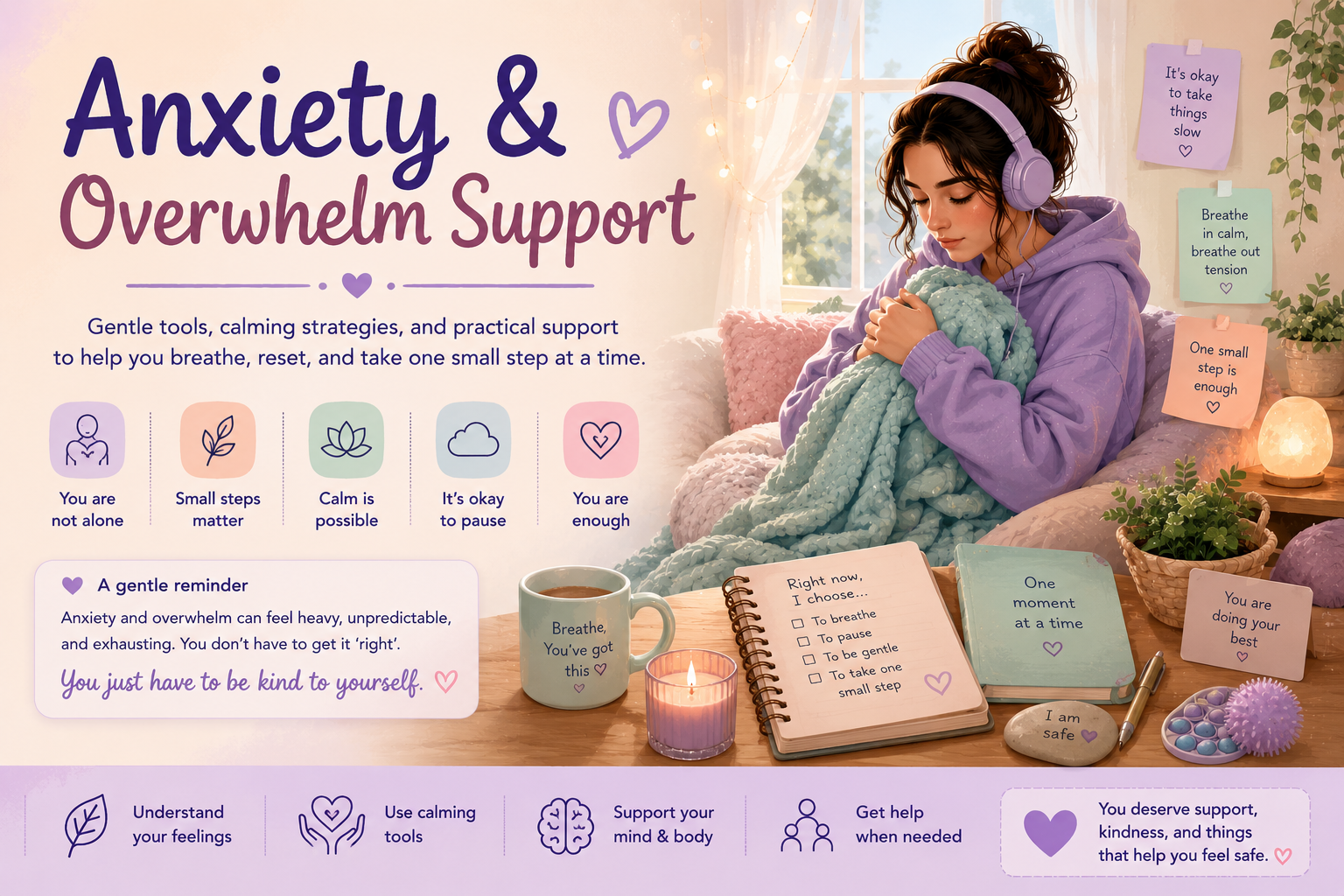
Anxiety & Overwhelm Support
Gentle tools, calming strategies, and practical support for anxiety, racing thoughts, sensory overwhelm, emotional spirals, and moments that feel too much.
What anxiety and overwhelm can feel like
Anxiety and overwhelm can feel heavy, unpredictable, tiring, or hard to explain. You do not have to solve everything at once. Start with one small calming step.
Too much at once
Overwhelm can happen when there are too many sounds, tasks, thoughts, expectations, changes, or emotions happening together.
Racing thoughts
Your mind may jump between worries, what-ifs, memories, plans, fears, or pressure to get everything right.
Nervous system stress
Anxiety is not weakness. It can be the body trying to protect you, even when the danger is not clear or immediate.
How anxiety can show up in the body
Body signs can be confusing, especially when feelings are hard to name. Noticing signs early can help you choose support sooner.
Fast heartbeat
Your heart may race, your chest may feel tight, or your breathing may feel shallow.
Tension or restlessness
You may feel shaky, tense, fidgety, frozen, dizzy, hot, cold, or unable to settle.
Tired after coping
Anxiety can use a lot of energy. After overwhelm, you may need rest, quiet, food, water, or fewer demands.
How anxiety can show up in thoughts
When the brain feels unsafe or overloaded, thoughts can become louder, faster, or harder to sort through.
| Thought pattern | What it may sound like | Gentle support |
|---|---|---|
| What-if spirals | “What if something goes wrong?” “What if I can’t cope?” | Write down one worry, then one next safe step. |
| Pressure thoughts | “I should be able to handle this.” | Replace with: “This is hard, and support is allowed.” |
| Over-planning | Trying to solve every possible outcome at once. | Choose the next 10-minute step, not the whole plan. |
| Self-blame | “I’m too much.” “I’m failing.” | Use a grounding phrase: “I am overwhelmed, not broken.” |
When the world feels too loud, bright, busy, or demanding
Sensory overwhelm can make anxiety stronger. Reducing input can sometimes help before trying to talk, explain, or problem-solve.
Lower noise
Use headphones, move to a quieter space, pause notifications, or reduce background sound.
Soften light
Dim lights, close curtains, use sunglasses, or move away from flickering or harsh lighting.
Add comfort
Use a blanket, hoodie, fidget, weighted item, soft texture, or safe object to help your body settle.
What to do when everything feels too much
During overwhelm, keep things simple. The goal is not to fix everything. The goal is to help your body and mind feel a little safer.
Pause and reduce pressure
- Stop adding new tasks if possible.
- Use fewer words and fewer choices.
- Move away from extra noise or people if safe.
- Focus only on the next small step.
Use a grounding anchor
- Name one thing you can see.
- Put both feet on the floor.
- Hold a warm drink or soft object.
- Say: “This is a hard moment. I can take it slowly.”
Small tools that may help
Different tools work for different people. Choose one that feels possible rather than trying to do every calming strategy at once.
Breathing out slowly
Try a longer out-breath. You do not need perfect breathing — just gently soften the exhale.
Brain dump
Write down the noisy thoughts without sorting them. Then circle one thing that needs attention first.
Reassurance phrase
Try: “One step is enough.” “I am safe right now.” “I can ask for support.”
Warm drink pause
Notice the warmth, smell, taste, and weight of the cup. Let it become a present-moment anchor.
Gentle movement
Stretch, walk slowly, shake out hands, roll shoulders, or change position if your body feels stuck.
One-step list
Instead of a long to-do list, write only the next safe step: drink water, sit down, message someone, or rest.
When to ask for help
Asking for help is not failing. It is a support strategy. If anxiety or overwhelm feels unsafe, unmanageable, or constant, extra support matters.
Reach out to someone safe
Try a short message: “I’m overwhelmed and need support. Can you check in with me?”
Use urgent support if needed
If you feel unsafe, at risk, or unable to cope, contact local emergency services, a crisis line, or a trusted person immediately.
Printable supports to connect later
This section can grow with anxiety worksheets, grounding cards, sensory overwhelm plans, check-ins, and calm support tools.
Anxiety Check-In Sheet
A gentle worksheet for noticing worries, body signs, needs, and one next step.
Coming SoonGrounding Cards
Simple cards for breathing, sensory grounding, reassurance phrases, and calm reminders.
Coming SoonSensory Overwhelm Plan
A practical plan for reducing noise, light, pressure, and overload triggers.
Coming SoonOne small step is enough
Anxiety and overwhelm can feel intense, but you do not have to get it perfect. Start with one breath, one pause, one support tool, or one safe person.