Learn
Use this page to reach mental-health education and understanding pathways.

Mental Health Library • Learning • Reference • Resources • Discovery
A central library bringing together mental-health learning pages, reference pathways, practical tools, guides, downloadable resources, audience mini libraries and connected support information across Aspie Answers.
This library is designed to help you explore mental-health information in a calm, accessible and organised way.
You do not need to open everything at once. You can start with one pathway, one topic or one resource and come back later.
This page brings together learning, reference and resource pathways. It is intended to help visitors discover what already exists across the Mental Health family without duplicating content unnecessarily.
Some linked pages and future resources may cover difficult topics such as trauma, grief, self-harm, abuse, burnout, diagnosis, distress and crisis support.
Please move through the library gently and take breaks when needed.
This page is the master discovery doorway for the broader Mental Health family.
Core learning pages that explain mental-health concepts more clearly.
Including Topics A–Z, glossary and definitions routes as they are recovered and polished.
Useful practical resources, printables and future collections.
A place to connect specialist topics such as anxiety, trauma, grief, burnout and more.
Collections for different life stages, identities, roles and support perspectives.
Links into neurodivergence, coping, support, recovery and broader mental-health exploration.
Use this page to reach mental-health education and understanding pathways.
Explore topics, reference pages, downloads, mini libraries and future collections.
Connect to worksheets, guides, toolkits and practical wellbeing resources.
This page will continue growing as older pages are recovered and polished.
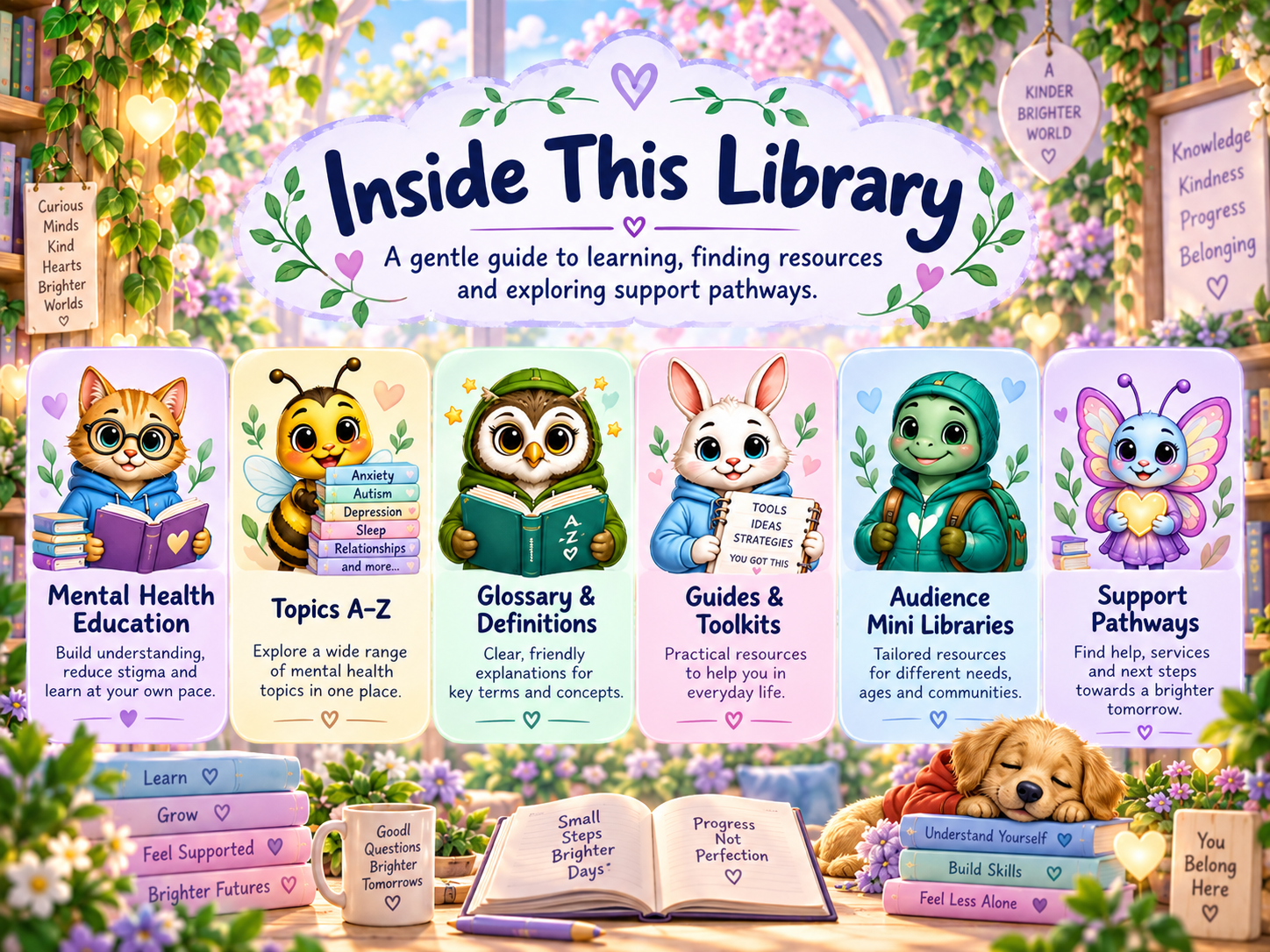
This page is best used as a calm starting point when you are not quite sure where to go next.
Use the Mental Health Education section if you want clear explanations and structured learning.
Move into Topics A–Z, glossary and definitions pathways when you want to look something specific up.
Visit the guides, worksheets, toolkit and audience mini-library areas when you want actionable resources.
The Companion Universe helps make information feel warmer, clearer and more approachable. This library page is intended to support learning, exploration, practical help and connected discovery.
These pages form the main Mental Health Education family and can be explored directly from this library.
The main learning doorway for the Mental Health Education branch.
Explore mental-health subjects by theme rather than alphabetically.
A gentler guide to patterns, differences, assessment and next steps.
Explore the interaction between neurodivergence, environments, wellbeing and support.
Move from understanding into practical emotional and coping supports.
Understand information, services, support systems and help-seeking more clearly.
This library also connects to the broader reference side of the Mental Health family.
Browse mental-health subjects alphabetically when you want to find a specific topic more quickly.
Existing glossary/terms pages are being recovered and will be linked into this library once their URLs and final roles are confirmed.
Older definition, reference and support-information pages will be reviewed, classified and connected here rather than duplicated.
This section is the practical side of the library and will connect to mental-health resources, worksheets, guides, checklists, printable tools and future toolkits.
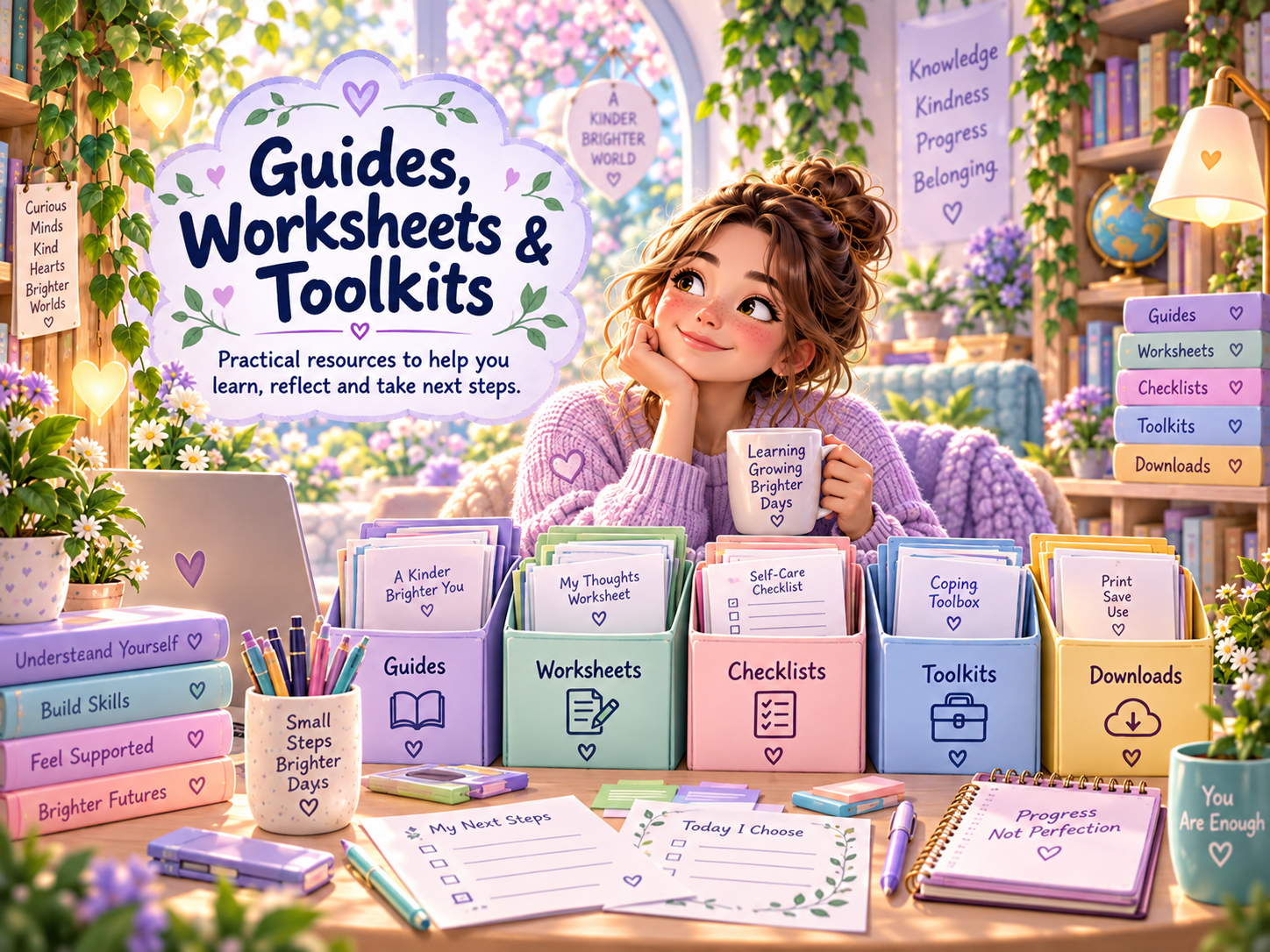
Existing guides, worksheets and toolkits pages will be recovered and wired here as we confirm the live URLs and decide which page becomes the best practical resources doorway.
Some of these topic pages may already exist and some may need recovery or future main-page builds. This library will help gather them together.
Support information, understanding, coping and resource pathways.
Understanding, wellbeing support, practical tools and related resources.
Gentle education, support pathways, grounding and recovery-related resources.
Information, coping, family support and recovery-sensitive materials.
Especially relevant across neurodivergence, pacing, coping and functioning.
Including eating disorders, psychosis, addiction, abuse, self-harm and more as recovered.
Audience mini libraries help connect people to more relevant mental-health information, resources and support collections.
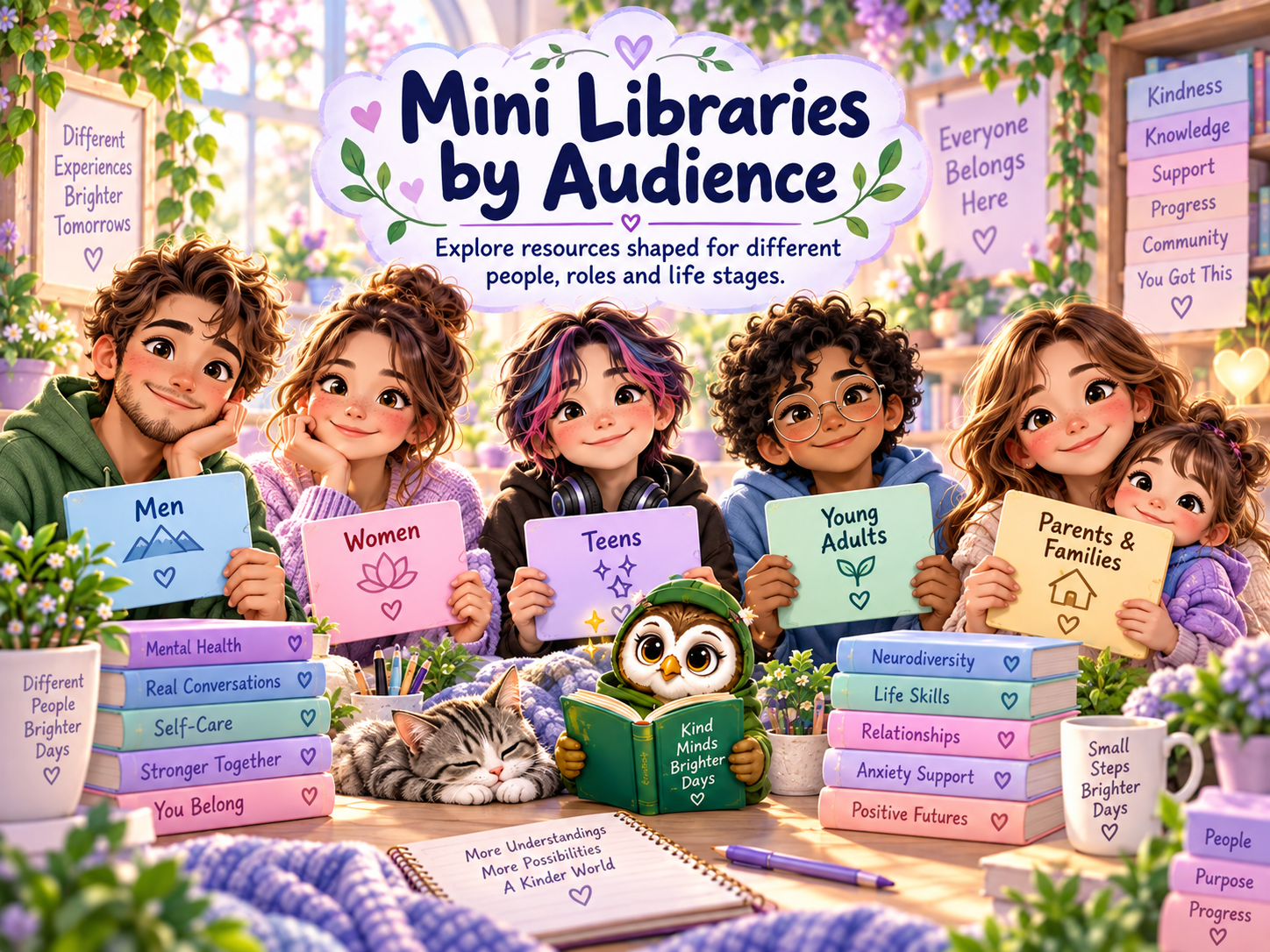
Age-relevant learning, wellbeing, coping and support resources.
Older audience-based branches and mini libraries will be recovered and organised here.
Support information, family guidance and practical resource collections.
This library also connects to the important overlap between autism, ADHD, hidden disabilities, executive functioning, sensory experiences, environments, burnout and mental wellbeing.
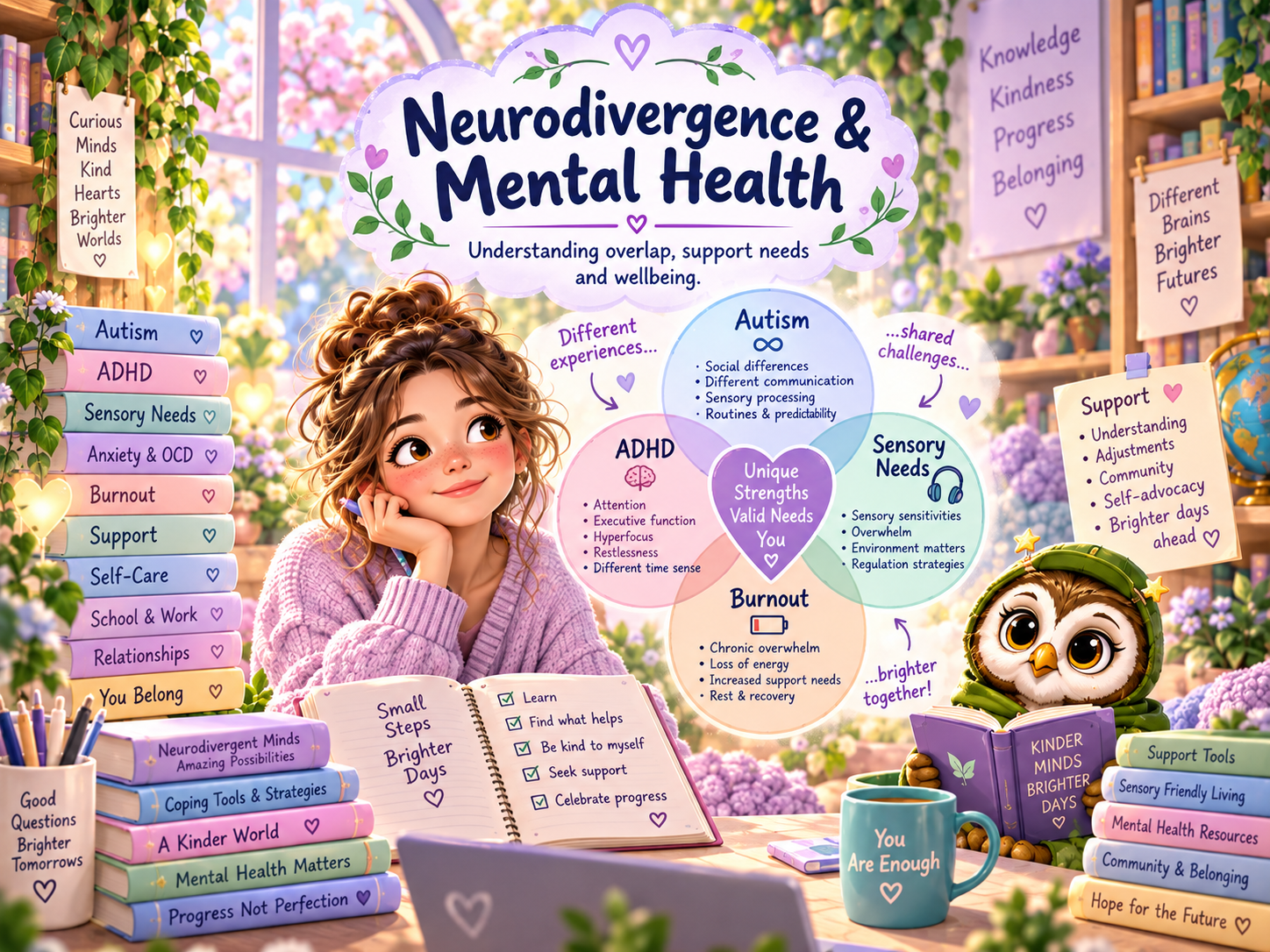
Neurodivergence & Mental Health Wellbeing, Coping & Emotional Skills Symptoms, Diagnosis & Overlap
A strong library should not only give access to information — it should also help people feel more confident in understanding and checking what they read.
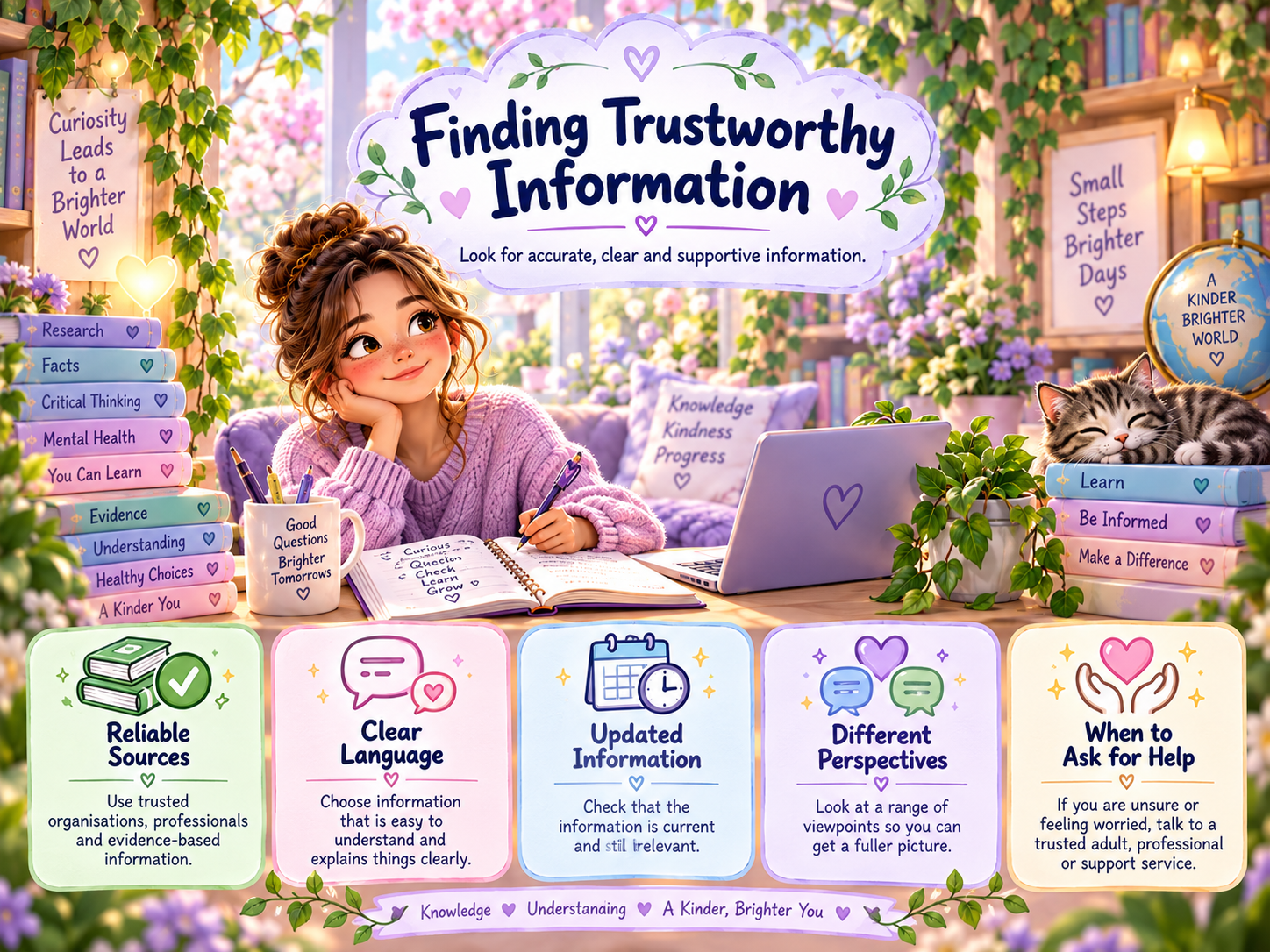
For a fuller guide to understanding evidence, services, support systems and help-seeking, continue into Mental Health Literacy.
Visit Mental Health LiteracyThe library is not only for reading — it should also help people find practical support, coping ideas and more useful next steps.
Go directly to practical emotional-wellbeing and coping education.
Understand services, systems, support choices and help-seeking more clearly.
Broader support and crisis pages will be reviewed and connected here as part of the wider Mental Health family tidy-up.
Glossary, definitions and other older mental-health reference pages will be reviewed and wired in.
Important specialist pages such as trauma, grief, eating disorders, addictions and burnout will be recovered or built where needed.
Main audience pages and their mini libraries can grow beneath this page without becoming isolated islands.
Mental Health Education Hub Mental Health Topics A–Z Topics & Conditions