
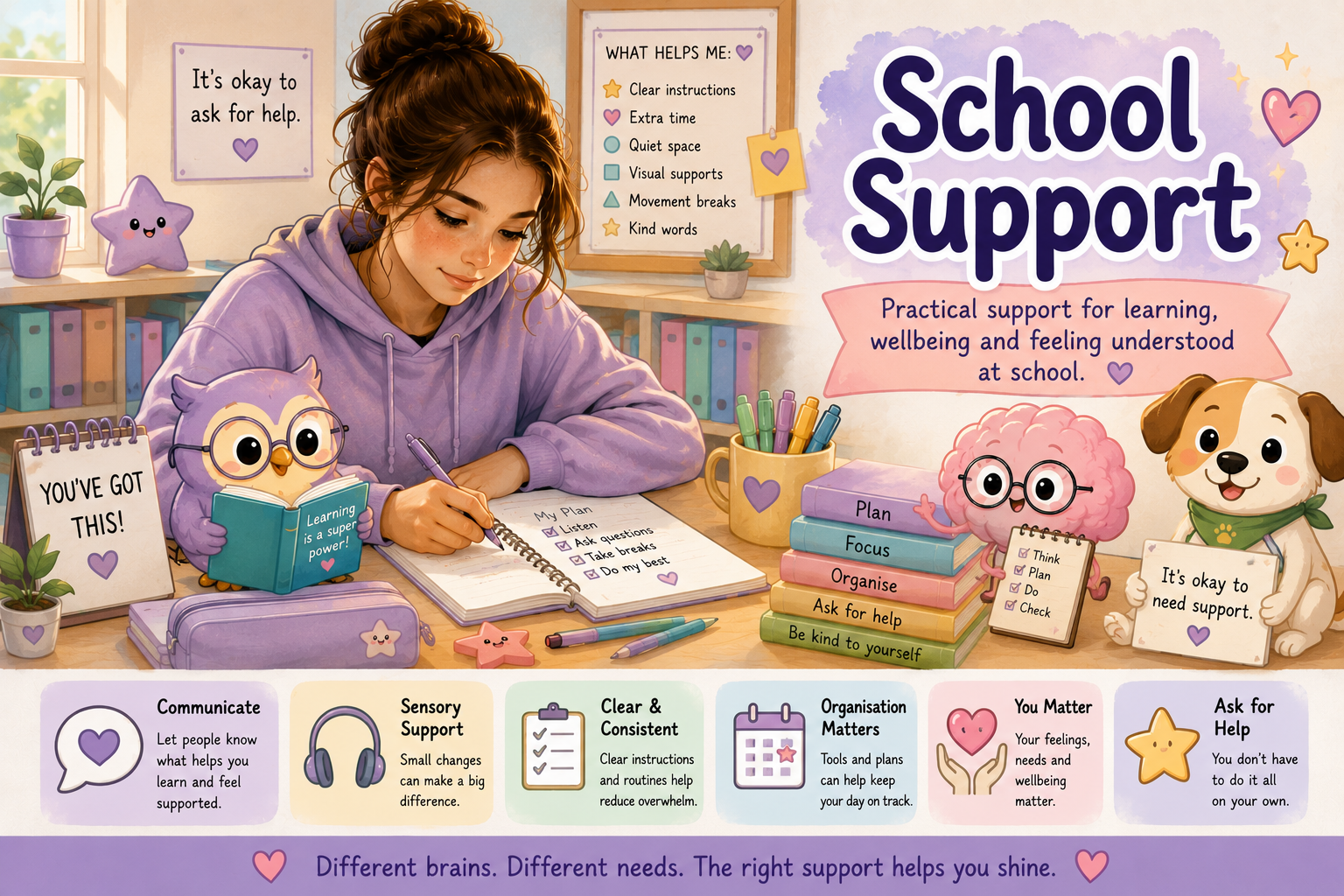
School Support
School can involve learning, communication, organisation, sensory demands, social expectations and constant changes throughout the day.
The right support can help make learning environments feel clearer, more accessible and more manageable.
🔎 Search Aspie Answers
Looking for learning, sensory, communication or everyday support? Search the Aspie Answers website.
🏫 Why School Can Feel Difficult
School involves many demands happening at the same time.
📚 Learning Demands
Different subjects, instructions and teaching styles may require constant adjustment.
🔊 Sensory Load
Noise, bells, lighting, crowded spaces and movement can become exhausting.
🧠 Executive Function
Remembering materials, changing classes, tracking homework and starting tasks can involve many hidden steps.
💬 Communication
Asking for help, understanding indirect language or explaining needs may feel difficult.
👥 Social Expectations
Group work, friendships, breaks and unspoken rules can add extra pressure.
💜 Emotional Overload
A full school day can use a lot of physical, mental and emotional energy.
🌱 Understanding Your Support Needs
Support works best when it focuses on what helps you access learning and participate more comfortably.
⭐ What Helps Me Learn?
Think about whether clear instructions, examples, visuals, extra time or smaller steps make learning easier.
🎧 What Helps Me Regulate?
Notice whether quiet spaces, movement, headphones or sensory tools support your comfort.
📝 How Do I Understand Information?
You may prefer written instructions, spoken explanations, demonstrations or a combination.
⏰ When Is School Hardest?
Transitions, mornings, lunch breaks, certain subjects or the end of the day may need extra support.
💬 How Do I Ask for Help?
A card, email, signal or trusted adult may make communication easier.
💜 What Helps Me Recover?
Rest, quiet time, familiar routines or reduced demands may help after a difficult school day.
📚 Learning & Classroom Support
Small changes can sometimes make a significant difference to access and understanding.
📋 Clear Instructions
Written, specific and step-by-step instructions can reduce uncertainty.
🧩 Break Tasks Down
Smaller sections can make complex work easier to understand and begin.
👀 Use Visual Supports
Timetables, checklists, examples and diagrams can make expectations more visible.
⏳ Extra Processing Time
Some students may need additional time to understand information and organise a response.
📝 Alternative Ways to Respond
Written, typed, visual or supported responses may sometimes make learning more accessible.
🔁 Check Understanding
A calm check-in can help identify confusion before it becomes overwhelm.
💬 Communication & Asking for Help
Asking for support may be easier when there is a clear communication plan.
Choose a Trusted Person
Identify a teacher, support person, dean, learning support staff member or other safe adult.
Choose How to Communicate
Talking may work, but email, written notes, cards or visual signals can also be useful.
Name the Barrier
Try to identify whether you are confused, overwhelmed, unable to start, needing a break or struggling with the environment.
Ask for a Specific Support
Clear requests such as “Can you write that down?” or “Can I have five minutes somewhere quieter?” may be easier to respond to.
🎧 Sensory Support at School
Sensory needs can affect concentration, communication, energy and wellbeing.
🔇 Sound Support
Headphones, quieter spaces or reducing unnecessary background noise may help.
💡 Lighting
Seating away from harsh lights or access to a calmer room may improve comfort.
🧸 Regulation Tools
Fidgets, sensory items or familiar comfort tools may support regulation.
🚶 Movement Breaks
Short movement opportunities may help with focus and regulation.
🌿 Calm Spaces
Knowing where to go when overloaded can reduce uncertainty.
🕊 Recovery Time
Returning to learning may be easier after enough time to regulate.
📅 Organisation & Executive Function
School organisation often depends on remembering many small tasks.
🎒 Use a Packing Checklist
Keep a visible list of regular school materials and equipment.
📆 Keep Dates Together
Move deadlines, events and reminders into one calendar or planner.
📂 Create Clear Subject Systems
Colours, folders or digital labels can make subject materials easier to identify.
🔔 Use Reminders
Alarms and visual prompts can support transitions and important tasks.
✅ Use Checklists
External lists reduce the pressure of holding everything in memory.
🌱 Reset Regularly
A weekly bag, folder or digital reset can prevent small problems from becoming overwhelming.
💜 Emotional Wellbeing & School Overwhelm
School wellbeing matters just as much as academic progress.
🚦 Notice Early Signs
Headaches, irritability, shutting down or finding communication harder may be signs that demands are building.
⏸ Take Breaks Earlier
A short break before crisis point may make returning easier.
❤️ Feelings Matter
Stress, worry, frustration and exhaustion deserve support.
🤝 Reach Out
You do not have to wait until everything becomes unmanageable before asking for help.
🏠 Plan After-School Recovery
Quiet time, food, movement, familiar activities or reduced demands may support recovery.
🌱 Be Kind to Yourself
A difficult day at school does not define your ability or your future.
🤝 Working Together for Better Support
Helpful school support often involves communication between the student and the people around them.
👩🏫 Teachers
Clear expectations, consistent communication and understanding individual needs can reduce barriers.
🏫 Learning Support
Learning support teams may help identify adjustments, tools and practical strategies.
👨👩👧 Family & Whānau
Sharing patterns and support ideas may help create consistency between school and home.
🤝 Support People
Trusted support people can help with communication, planning and understanding difficult situations.
🌱 The Student
Your experience, preferences and goals should remain an important part of support planning.
🔄 Review Support
Needs can change. Helpful support may need to change too.
🦉🧠❤️ Companion Support at School
Different companions can support different parts of the school experience.
🦉 Olive Owl — Learning & Understanding
Olive encourages asking questions, finding learning strategies and understanding what helps you learn best.
🧠 Buzzy Brain — Executive Function Support
Buzzy Brain helps explain why starting, remembering, switching and organising school tasks may sometimes feel difficult.
❤️ Scout — Feelings & Asking for Support
Scout reminds you that feelings matter and that reaching out for support is a valid part of caring for yourself.
📄 Helpful School Support Resources
These resource families can grow within the Work & Study Life catalogue.
My School Support Profile
Record learning preferences, strengths, support needs and helpful strategies.
What Helps Me Learn
Identify the instructions, environments and tools that support learning.
Classroom Support Checklist
Explore possible classroom adjustments and practical supports.
Sensory Needs at School
Notice sensory triggers, comfort needs and regulation supports.
Asking for Help Communication Card
A simple support tool for communicating when speaking feels difficult.
School Overwhelm & Reset Plan
Identify early signs, helpful supports and recovery strategies.
🌈 School Support Collections
School support resources are planned to grow within the Aspie Answers Work & Study Life catalogue.
Future volumes can be grouped into clear collections and connected with the Aspie Answers website store and selected external platforms as the catalogue develops.