

Mental Health Support & Community — Worldwide
Find peer support, support groups, lived-experience communities, family and carer spaces, online communities and other ways to connect with people who understand.
Connection can look different. Belonging still matters.
Need urgent or immediate support?
Community spaces are not emergency services. If you or someone else may be in immediate danger or needs urgent crisis help, use the Crisis Support Main Index .
Gentle & accessible browsing
You do not need to read everything. Use the Community Finder, interactive map, filters or section links to start with the part that feels most useful. Low-Stim View is available above.
Important information
Peer support and community connection can be valuable, but they are not the same as professional mental-health care. Groups vary in facilitation, safety, privacy, moderation and local regulation. Check how a community works before sharing personal information.
Inside This Page You Will Find
Search This Page
Search the community cards, safety guidance, resources and related pathways on this page.
Tip: clearing the search restores the full page. Your Community Finder and map selections stay in place.

Where Do I Start?
Start with the kind of connection you are looking for. You can use any of these cards to pre-fill the Community Finder below.
I want people who understand from lived experience
Peer support can offer understanding, shared experience and practical encouragement.
I want a regular support group
Look for peer-led, community-led or professionally facilitated groups that match your needs.
I would rather connect online
Online communities can help when local options, transport, energy or privacy are barriers.
I want something local or face-to-face
Search for in-person or hybrid groups through community organisations, charities and local services.
I want a community that understands my identity or access needs
Look for affirming spaces around neurodivergence, disability, Rainbow identities, culture, language or life stage.
I am supporting someone else
Family, whānau, carers, partners and supporters can also find communities for information and mutual support.
Find a Community Pathway
Choose what kind of community you want, how you prefer to connect, and any needs that matter. The finder creates a practical starting checklist rather than recommending a specific group.
1. Where are you looking?
Choose one region. This will also synchronize with the map below.
2. What kind of community are you looking for?
Choose as many as you need.
3. How would you prefer to connect?
4. What should the community understand or accommodate?
Optional — select anything that would help you feel safer or more included.
Your starting pathway
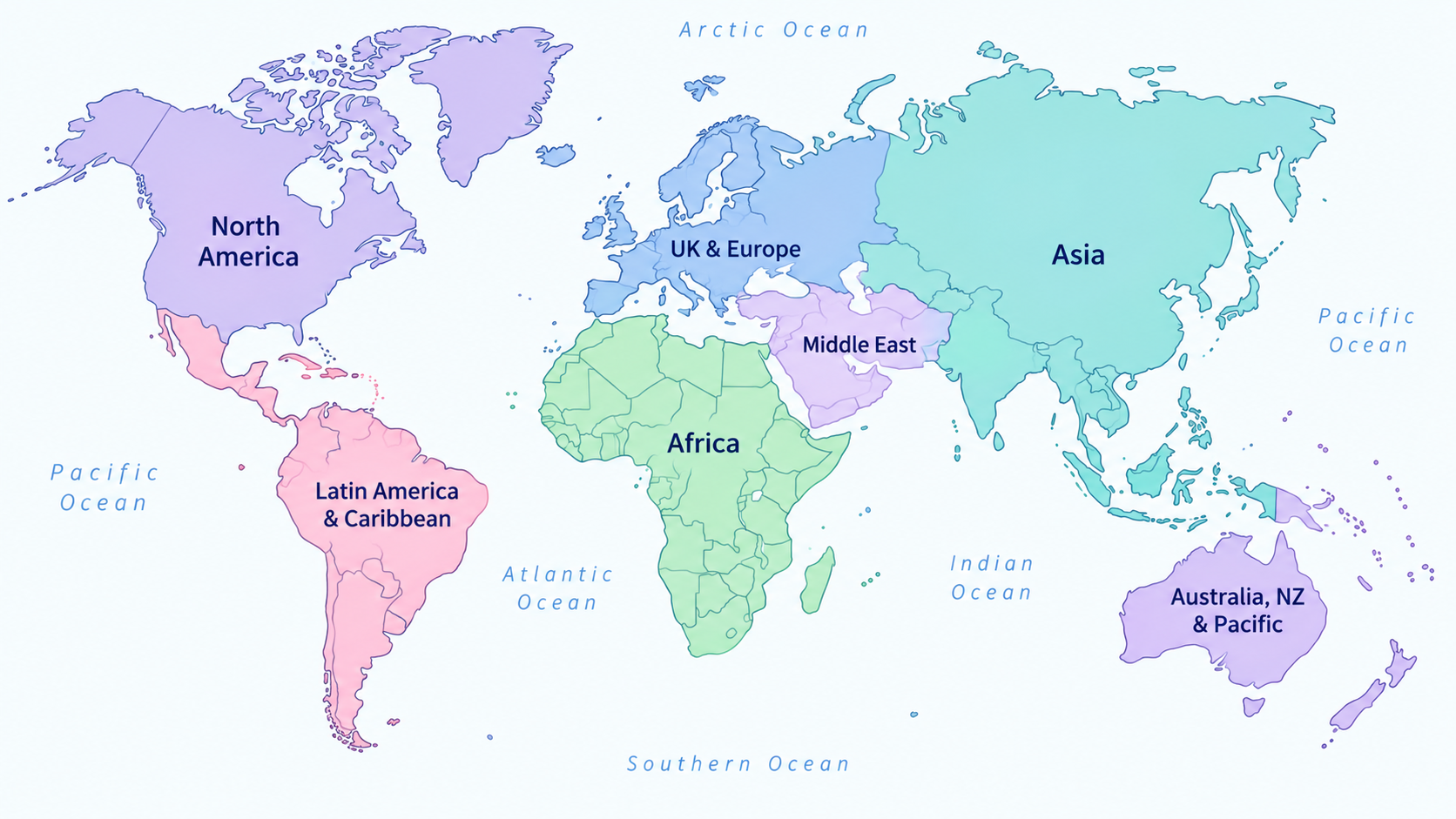
Explore Community Support Around the World
Tap or click a region marker directly on the illustrated map, or use the matching text buttons. The map, buttons and Community Finder stay synchronized.
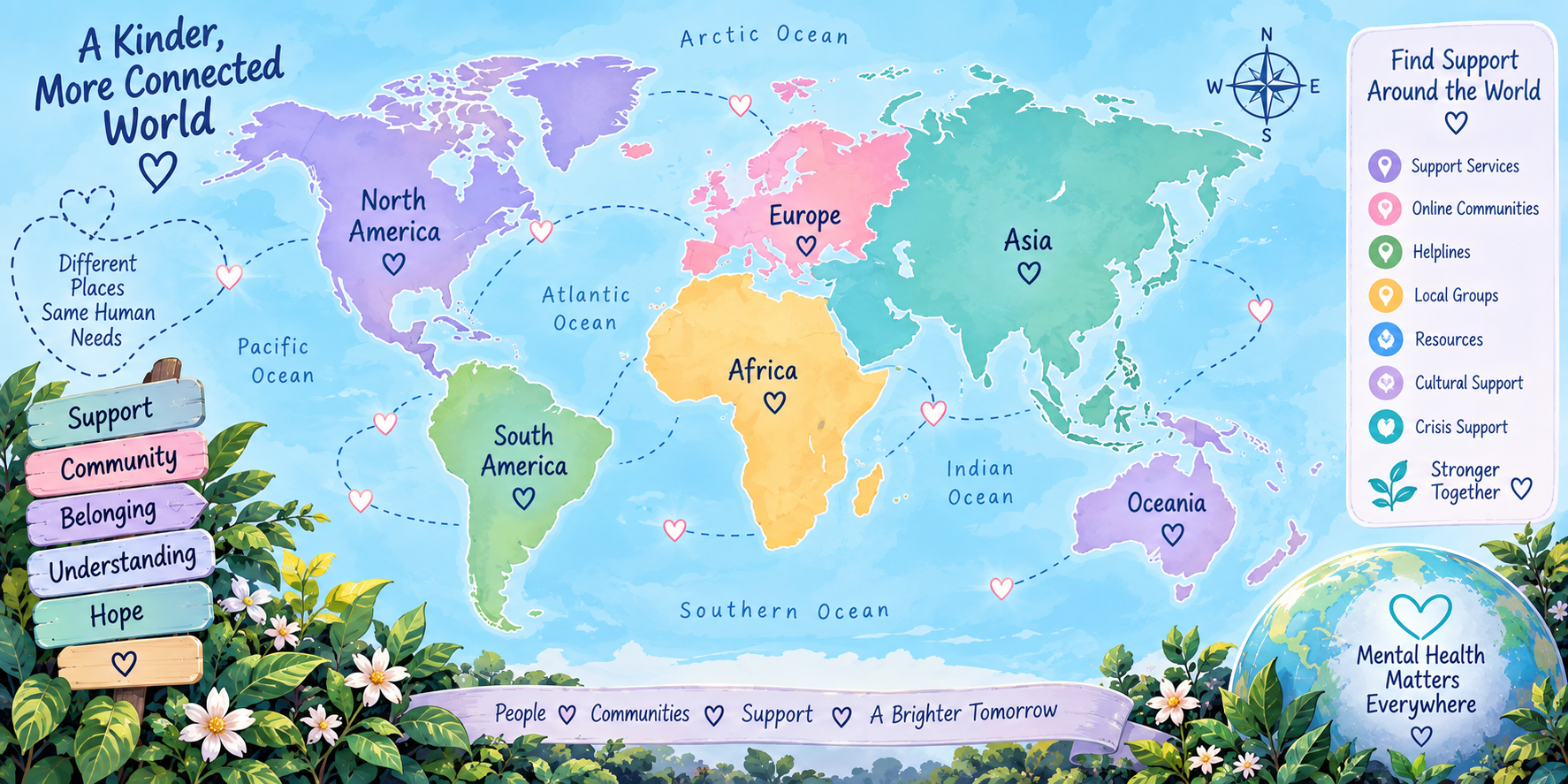
Interactive illustrated map: region markers are broad selectors, not exact group locations or service boundaries. Check current local organisations and community directories before relying on a group.
Choose the same region by text
Worldwide starting point
Select a marker or region button to see what to check when looking for a community there.
Different Kinds of Community Support
Community support can be peer-led, community-led, facilitated, social or educational. It is useful to know what kind of space you are joining and what it is designed to offer.
Peer Support
People with relevant lived experience supporting one another through listening, shared understanding and practical encouragement.
Support Groups
Regular groups built around shared needs, experiences or life circumstances. They may be peer-led, charity-led or professionally facilitated.
Lived-Experience Communities
Spaces where people connect around shared experiences, identities or mental-health journeys.
Professionally Facilitated Groups
Groups led by a trained professional. Facilitation does not automatically make a group therapy; ask what the group actually provides.
Social & Belonging Groups
Not every useful community has to focus on mental health. Shared-interest, friendship and belonging spaces can also support wellbeing.
Family, Whānau & Carer Communities
Spaces for people supporting someone else, sharing practical knowledge, encouragement and mutual understanding.
Support group ≠ group therapy
A support group may be peer-led or community-led and centred on mutual support. Group therapy is a clinical therapeutic service led by a qualified professional. Both can be useful, but they serve different purposes.
Online Communities & Digital Peer Support
Online communities can reduce distance and access barriers, but privacy, moderation, misinformation and boundaries still matter.

Before joining an online community
- Read the rules, privacy information and moderation approach.
- Check whether harmful, discriminatory or unsafe content is actively moderated.
- Think carefully before sharing identifying details, location or private health information.
- Notice whether the culture encourages support without pressuring people to disclose.
- Be cautious with medical claims, diagnoses or treatment advice from unqualified members.
- Leave or mute a space if it consistently makes you feel less safe or more overwhelmed.
In-Person & Hybrid Community Support
Local groups can offer face-to-face connection, while hybrid groups may combine local belonging with flexible online access.
Where to look locally
- Community organisations and charities
- Health and wellbeing organisations
- Libraries and community centres
- Disability and neurodivergent organisations
- Rainbow/LGBTQIA+ organisations
- Cultural, faith and community networks
- Schools, campuses and workplaces where appropriate
What to check before attending
- Who facilitates the group?
- Is registration required?
- Is the venue accessible?
- What does attendance cost?
- Can a support person come?
- What are the privacy expectations?
- Can you leave early or take breaks?
Find Community That Understands More of Your Experience
Use the filters below to explore some of the things that can matter when deciding whether a community feels accessible and affirming.
Neurodivergent communities
Look for spaces that respect communication differences, sensory needs, self-identification, varied support needs and different ways of participating.
Disability-accessible communities
Check physical access, captions, communication support, meeting format, breaks and whether participation can be adapted.
Rainbow / LGBTQIA+ communities
Affirming spaces may reduce isolation and provide connection around identity, belonging, minority stress and shared experience.
Culturally responsive communities
Culture, language, whānau/family, migration, faith, collective wellbeing and community identity may all matter.
Youth & young-adult communities
Check age limits, safeguarding, privacy, parental involvement where relevant and how the space is moderated.
Older-adult communities
Look for accessible formats that understand loneliness, grief, caring roles, life transitions, health changes and digital access needs.
Family, whānau & carer communities
Supporters may benefit from connection with others while still respecting the privacy and autonomy of the person they support.
Topic-Specific Communities
Some people prefer support centred on a particular experience or life event. Availability varies by location and online platform.
Grief & Loss
Bereavement, complicated grief, life changes and remembering someone who has died.
Trauma
Trauma-survivor communities where safety, boundaries and trauma-aware moderation matter.
Addiction & Recovery
Peer and community support around substance use, recovery and harm reduction where available.
Eating Disorders
Recovery-focused communities should have strong safety rules around triggering or harmful content.
Anxiety & Panic
Peer understanding around anxiety, avoidance, panic and everyday coping.
Depression & Low Mood
Connection and mutual support around isolation, low motivation and mood difficulties.
Parenting & Caring
Communities for parents, whānau and carers supporting someone with mental-health needs.
Work, Study & Life Changes
Support around burnout, study pressure, employment changes, transitions and belonging.
How to Choose a Safer Community
A supportive community should make room for boundaries, consent, dignity and different experiences. No group is perfect, but some signs can help you assess how a space is run.
Helpful signs
- Clear rules and moderation
- Respect for privacy and consent
- No pressure to disclose personal details
- Inclusive language and anti-harassment rules
- Boundaries around medical advice and diagnosis
- Clear ways to report unsafe behaviour
- People can disagree without humiliation or threats
Warning signs
- Pressure to stop professional treatment or medication
- Members claiming one approach cures everyone
- Bullying, harassment or discrimination being ignored
- Pressure to share money, private information or contact details
- Graphic or triggering content without warnings or boundaries
- Leaders discouraging outside relationships or support
- People being shamed for leaving, disagreeing or setting boundaries
You are allowed to leave a community
Belonging should not require giving up your boundaries. Muting, leaving, blocking or trying a different group can be reasonable choices if a community no longer feels safe, helpful or manageable.
Family, Whānau, Carers & Support People
Supporting someone else can be meaningful and demanding. Community support can help supporters share information, reduce isolation and learn from others without taking over the person’s own choices.
Support for supporters
Look for groups that understand caring roles, boundaries, communication, burnout, advocacy and the emotional impact of supporting someone else.
Respect privacy and autonomy
When discussing someone else’s experiences, protect identifying information and centre their dignity, preferences and right to make decisions about their own life.
Downloads, Resources & Community-Planning Tools
These lightweight tools can help you compare communities and think through what would make a group feel safer or easier to use.
Community Safety Checklist
Questions to check before joining or sharing personal information.
Open checklist
- Who runs or moderates the community?
- Are rules easy to find and understand?
- How are harassment and unsafe behaviour handled?
- What privacy should I expect?
- Are there clear boundaries around medical advice?
- Can I participate quietly or leave easily?
Compare Community Options
Use the same questions for several groups so it is easier to compare them.
Open comparison prompts
- Online, in-person or hybrid?
- Peer-led or professionally facilitated?
- Cost or membership requirements?
- Accessibility and communication options?
- Privacy and moderation?
- Audience or identity focus?
My Community Preferences
Identify what helps you feel comfortable, included and able to participate.
Open preference prompts
- Group size
- Online / in-person / hybrid
- Structured or informal
- Talking, chat or listening options
- Sensory and accessibility needs
- Identity or lived-experience fit
- How often I want to participate
Online Privacy Check
A quick reminder before joining an online community or forum.
Open privacy prompts
- What name or profile details are visible?
- Can posts be seen outside the group?
- Are screenshots prohibited or discouraged?
- Who can message me privately?
- How do I block or report someone?
- What personal information do I want to keep private?
Crisis Support Is a Separate Pathway
Peer communities and support groups are not substitutes for emergency or crisis services. If immediate safety is a concern, use the Crisis Support pathway.
Need urgent help?
Crisis services, emergency numbers, helplines and text/chat options differ by country. Use the dedicated Aspie Answers Crisis Support system rather than waiting for a community response.
Community Support — FAQs
Is peer support the same as therapy?
No. Peer support is based on mutual understanding and lived experience. Therapy is a professional clinical service.
Do I have to talk in a support group?
Not always. Some groups allow people to listen, use chat, pass on a turn or participate gradually. Check the group rules before attending.
Can online communities be helpful?
Yes, especially when local options are limited or online participation is more accessible, but moderation, privacy and misinformation still need attention.
What if a group does not feel right for me?
You can leave, mute, try a different group or choose another type of support. One community not fitting you does not mean community support cannot help.
Can I use peer support and professional support together?
Yes. Community connection and professional support can serve different roles and may complement each other.