
Aspie Answers · Inclusion Across Everyday Life
Inclusion, Belonging & Participation
Inclusion is more than being invited into a space. It is about being able to take part, communicate, learn, work, connect, contribute, access support and belong without having to hide the parts of yourself that matter. This doorway brings together inclusion across disability, neurodiversity, mental health, identity, education, employment, community life, accessibility and support.
A gentle note about belonging
Topics on this page can touch discrimination, exclusion, identity, disability, mental health, inaccessible environments and experiences of not being believed or understood. Use the sections that feel useful and leave the rest for another time. You do not need to explain or disclose everything about yourself in order for your access needs and boundaries to matter.
Participation can look different
Taking part does not have one correct form. Some people participate by speaking; others type, use AAC, observe quietly, join online, contribute behind the scenes, attend for a short time, volunteer, work, study or connect one-to-one. Inclusion should make room for different ways of being involved.
Choose the pathway that fits
Inclusion becomes real through access, belonging and participation
Access
Can the person physically, digitally, sensory-wise, financially and communicatively reach and use the space, service, information or opportunity?
Belonging
Can the person be present without being treated as a problem, exception or burden? Do they feel respected, safe and welcome as themselves?
Participation
Can the person contribute, make choices, communicate preferences, influence decisions and take part in ways that work for them?
Find an inclusion pathway
Search by a word such as accessibility, LGBTQIA+, workplace, learning, hidden disability, neurodiversity, community or support. The cards below lead into existing Aspie Answers hubs and specialist areas.
Connect & Community
Explore events, participation, family and community pathways, ways to connect and different forms of involvement.
Explore community →Accessibility & Rights
Explore barriers, reasonable adjustments, advocacy, digital access, discrimination, rights and inclusive participation.
Open Accessibility & Rights →Hidden Disabilities & Invisible Needs
Find support around unseen needs, chronic illness, fatigue, masking, burnout, accessibility and being believed.
Explore hidden disabilities →LGBTQIA+ Inclusion & Belonging
Explore identity, acceptance, mental wellbeing, relationships, safety, belonging and affirming support pathways.
Open LGBTQIA+ Support →Neurodiversity & Neurodivergence
Explore autism, ADHD, AuDHD, sensory experiences, communication, learning, executive function and wider neurodivergent pathways.
Explore neurodivergence →Workplace Inclusion
Find workplace support around adjustments, communication, sensory needs, employment pathways, wellbeing and participation.
Open Work & Employment →Education & Learning Inclusion
Explore learning, education support, autism, ADHD, learning differences and practical ways to make learning more accessible.
Explore learning pathways →Support & Directories
Find mental-health, family, disability, identity, community and other support pathways when you need help beyond information alone.
Find support →Mental Health & Wellbeing Support
Explore emotional wellbeing, mental-health support, coping, crisis pathways and accessible routes to further help.
Explore mental-health support →
Belonging is part of inclusion
A person can technically be allowed into a space and still feel excluded. Community inclusion asks whether people can connect, contribute, communicate and take part without being made to feel like an inconvenience.
Friendship & connection
Inclusive spaces make room for different communication styles, social energy, interests and ways of connecting.
Events & community spaces
Access information, quiet options, predictable details and flexible participation can make events easier to approach.
Volunteering & contribution
Participation can include volunteering, sharing skills, helping behind the scenes, creating resources or contributing in small ways.
Family & whānau inclusion
Families and support networks can create belonging by listening, adapting communication and respecting autonomy and boundaries.
Identity & acceptance
People should not need to hide disability, neurodivergence, sexuality, gender, culture or mental-health needs in order to be treated with respect.
Choice about participation
Being included also means being allowed to say no, leave early, participate differently or choose another way to connect.
Accessibility is one of the foundations of inclusion
Inclusion cannot depend on goodwill alone. Practical access, reasonable adjustments, communication options, accessible information and rights protections help turn the idea of inclusion into something people can actually use.
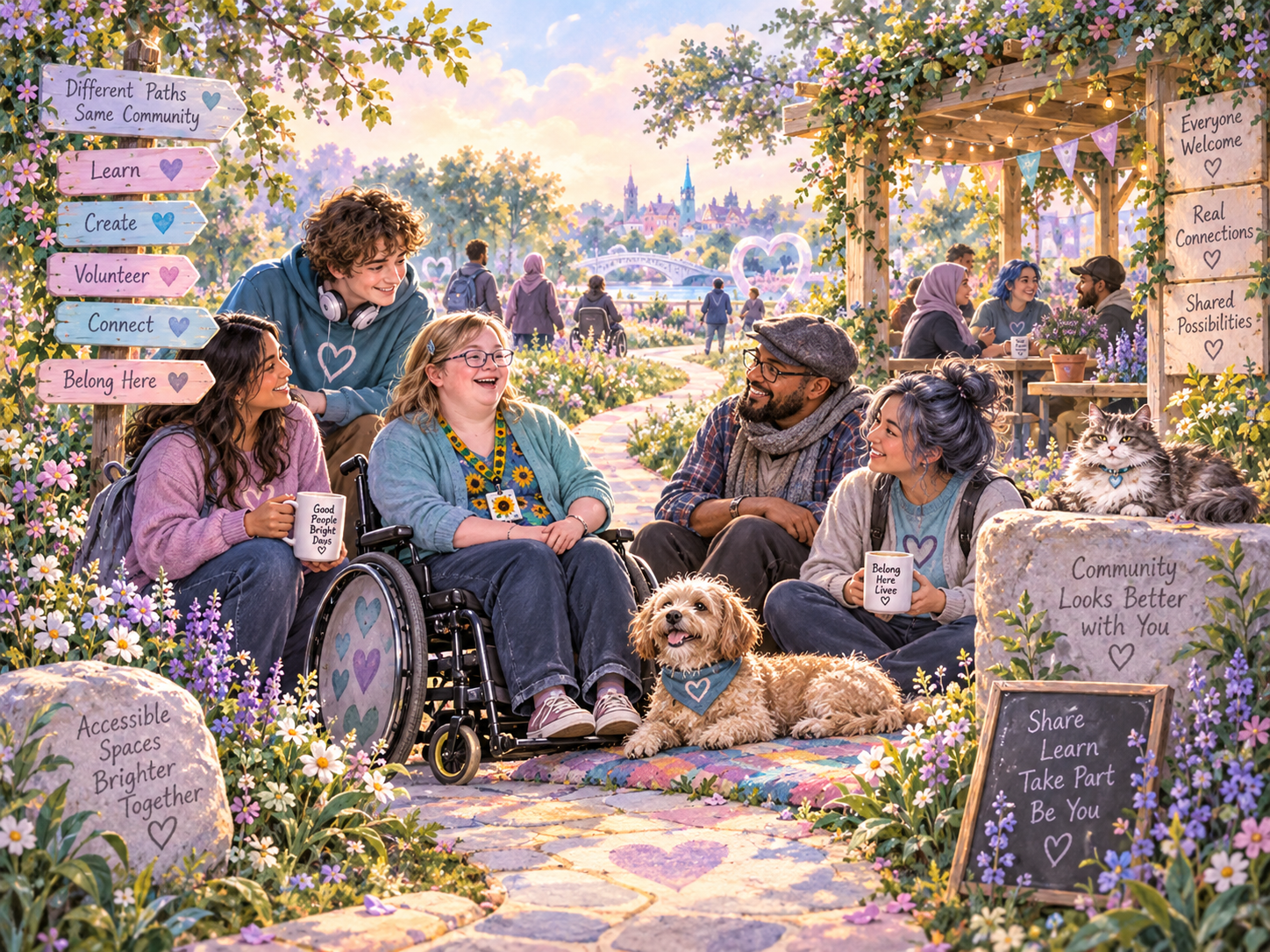
Physical & sensory access
Mobility, seating, lighting, sound, crowds, rest areas and sensory load can determine whether a space is genuinely usable.
Communication access
Plain language, written choices, captions, AAC, sign language, processing time and more than one way to respond can reduce barriers.
Digital access
Keyboard navigation, readable contrast, captions, clear structure and accessible documents matter in online participation too.
Reasonable adjustments
Changes to timing, environment, communication, tasks or processes can help remove barriers in work, learning and services.
Rights & advocacy
Self-advocacy, support people, complaints pathways and rights information can help when access needs are ignored or treated unfairly.
Nothing about us without us
People affected by decisions should have meaningful opportunities to influence the decisions, policies and resources that shape their lives.
Rights information can vary
Legal duties, discrimination protections and adjustment requirements differ between countries and settings. Aspie Answers can provide general educational information and planning support, but personalised legal advice may be needed for a specific rights problem.
Different minds need more than one way to belong
Neurodivergent inclusion is not asking everyone to behave more neurotypically. It means designing communication, environments, expectations and opportunities so autistic, ADHD, AuDHD and other neurodivergent people can participate without unnecessary masking or overload.
Sensory inclusion
Lighting, noise, smell, touch, crowding and movement can affect whether a space is tolerable, safe or exhausting.
Communication differences
Direct language, written information, AAC, processing time and fewer assumptions can make communication more accessible.
Executive-function access
Clear steps, reminders, predictable systems, visual supports and realistic deadlines can reduce avoidable barriers.
Acceptance rather than performance
Belonging grows when people do not have to constantly mask traits or imitate expected behaviour to be seen as acceptable.
Strengths and support can coexist
Recognising strengths does not erase support needs, and acknowledging support needs does not diminish someone’s value or capability.
Lived experience matters
Good neurodiversity inclusion listens to neurodivergent people and avoids assuming one diagnosis or one person speaks for everyone.

Inclusion should continue into work, education and everyday participation
Belonging should not stop at the community door. Inclusive systems help people learn, work, volunteer, use services, build independence and contribute in ways that recognise different strengths, needs, circumstances and energy levels.
Inclusive education
Accessible teaching, clear expectations, flexible formats, learning support and sensory-aware classrooms can help more students participate.
Inclusive employment
Recruitment, workplace communication, adjustments, predictable systems and wellbeing support all influence whether work is sustainable.
Volunteering & community roles
Contribution does not need to be paid employment. Volunteering, creative work, lived-experience input and informal roles can all matter.
Support without taking over
Good support increases choice, confidence and access rather than making every decision on someone else’s behalf.
Flexible participation
Part-time, remote, supported, gradual or alternative pathways can be meaningful forms of participation rather than lesser versions of one standard path.
Progress at your pace
Participation can change across different seasons of life. Energy, health, caring responsibilities and support needs may all affect what is manageable.
Continue into the part of Aspie Answers that fits your next step
Inclusion crosses many parts of the site. These links take you into established areas for deeper learning, practical tools, support and related topics.
Belonging should be practical, not just promised
Inclusion is not about making everyone the same. It is about creating enough access, flexibility, understanding and shared responsibility that different people can genuinely take part. Different paths can still lead to connection, contribution and belonging.