
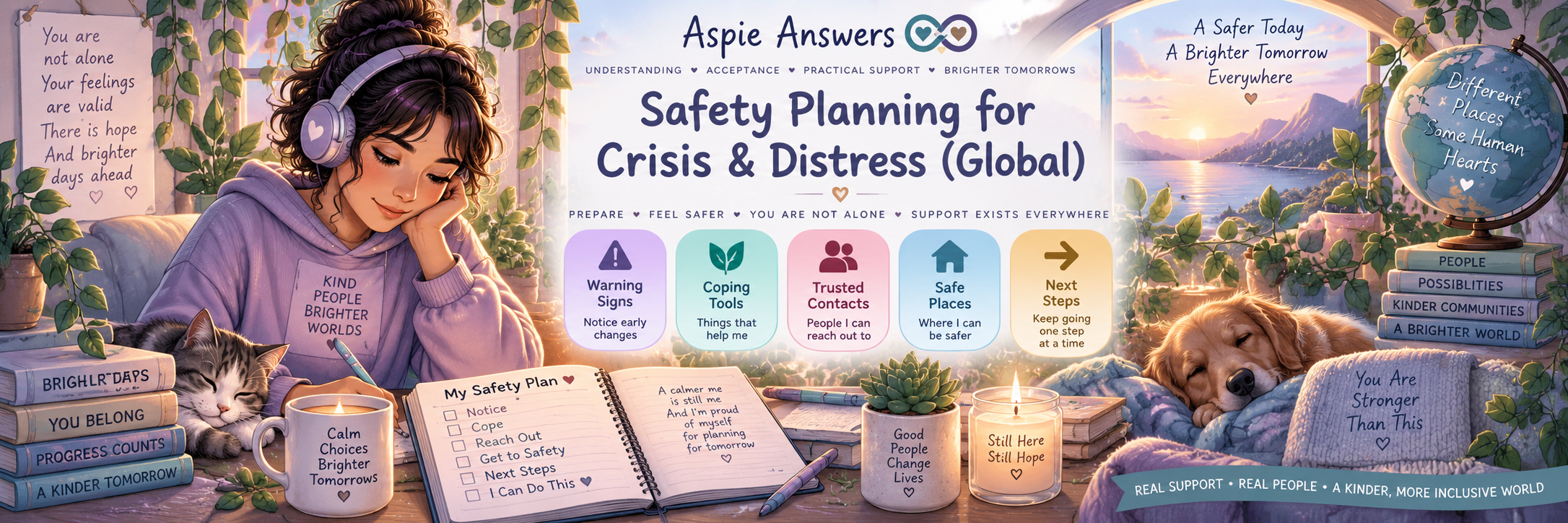
A safety plan is a simple, personal guide for recognising when things are becoming harder, remembering what may help, identifying safer people and places, and knowing what to do if you need more support. You can make one when you feel relatively steady, or work through it slowly with someone you trust.
A safety plan can support you before or during difficult moments, but it does not replace emergency or crisis care. If you or someone with you is in immediate danger, use the emergency service for the country you are in or go to the nearest emergency department if you can do so safely.
If speaking is difficult, use text, chat, written communication, AAC or another accessible communication method where available.
Move from coping and planning to outside help. Contact a trusted person, crisis service, healthcare professional or emergency service depending on the level of danger.
You do not need to complete every section at once. Short answers, symbols, printed notes, AAC, help from a trusted person or a partly completed plan can still be useful. Stop and seek outside help if working on the plan is making distress or danger stronger.
This page provides general educational and practical support information. A personal safety plan does not replace emergency services, medical care, mental-health treatment, safeguarding procedures or professional crisis assessment.
If there is immediate danger, serious medical risk, violence, or someone cannot stay safe, use the emergency service for the country you are in or seek urgent local help.
When distress is high, remembering options can be harder. A safety plan puts useful information in one place so you do not have to recreate it during a difficult moment.
It can be short or detailed, typed or handwritten, visual or text-based. You can include communication preferences, sensory needs, accessibility needs and cultural or family support that matters to you.
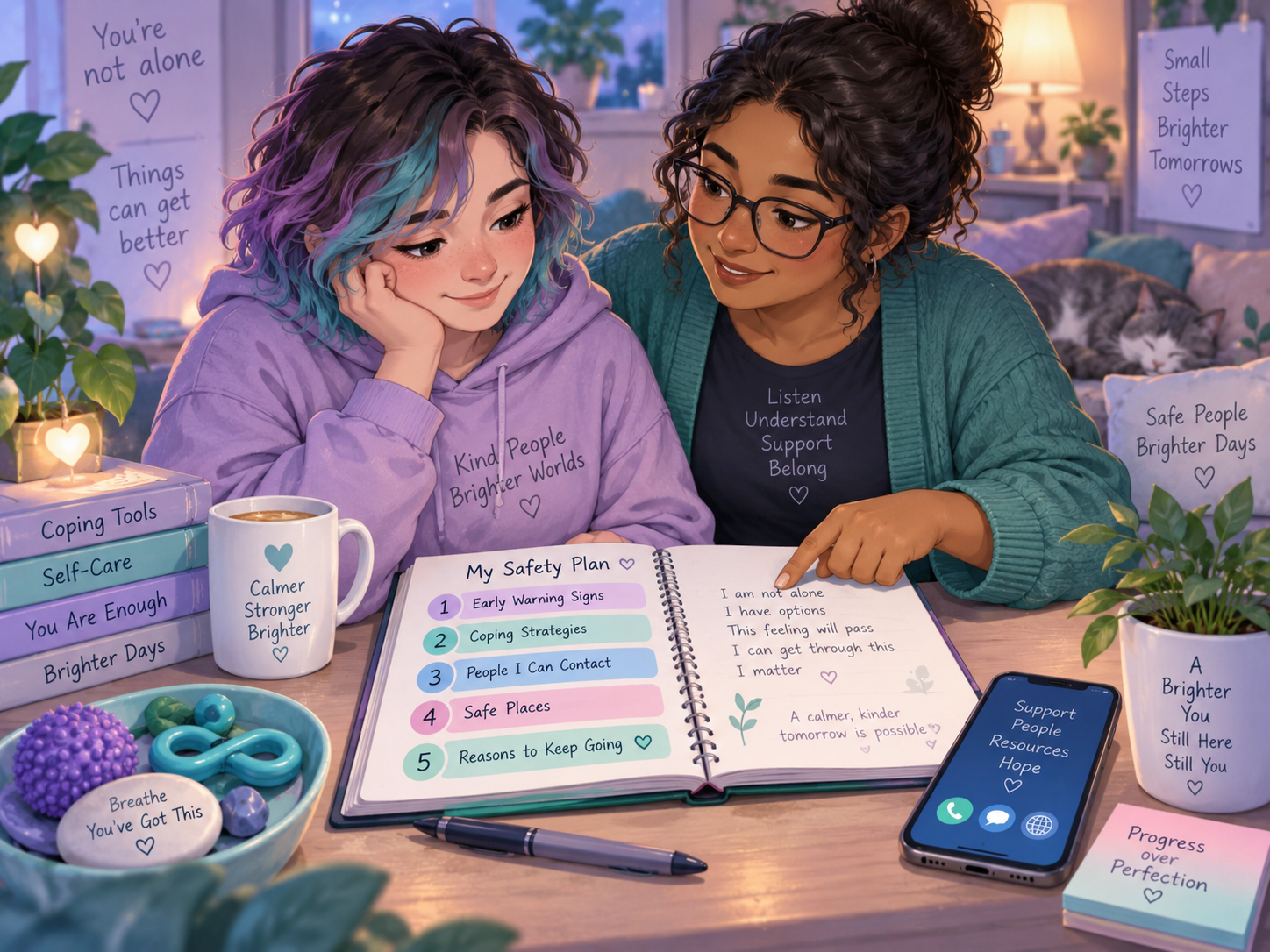
Some people prefer to create a plan with a trusted friend, whānau or family member, support worker, counsellor, clinician, teacher, advocate or another safe person.
Someone who knows you well may also help identify early warning signs, communication needs or practical supports that are easy to forget when you are overwhelmed.
Work through as much or as little as feels useful. Short answers are completely fine. You can leave sections blank and return to them later.
What changes tell me I may be moving toward crisis, shutdown, overwhelm or feeling less safe?
What can make the next few minutes or hours more manageable?
Who can I contact before things become more urgent?
Where can I go, or what can I change around me, to reduce pressure and increase safety?
What should people know about how to support me when I am distressed?
Record the services or people you would want contacted if you need more help.
What practical steps can reduce immediate risk or make the environment easier to manage?
What helps remind me that this moment can change or gives me a reason to stay connected to support?
What do I want myself or someone supporting me to do next?
Tip: You can also copy your answers into a notes app, printed worksheet or document that is easy to find when you need it.
A safety plan can include practical changes that reduce risk and lower the amount of pressure you are carrying. Choose steps that fit your situation and involve another safe person where that would help.
A safety plan may be more useful when it is reviewed with a qualified professional or trusted support person who understands your circumstances, especially if there is an ongoing risk of harm or the plan is no longer meeting your needs.