
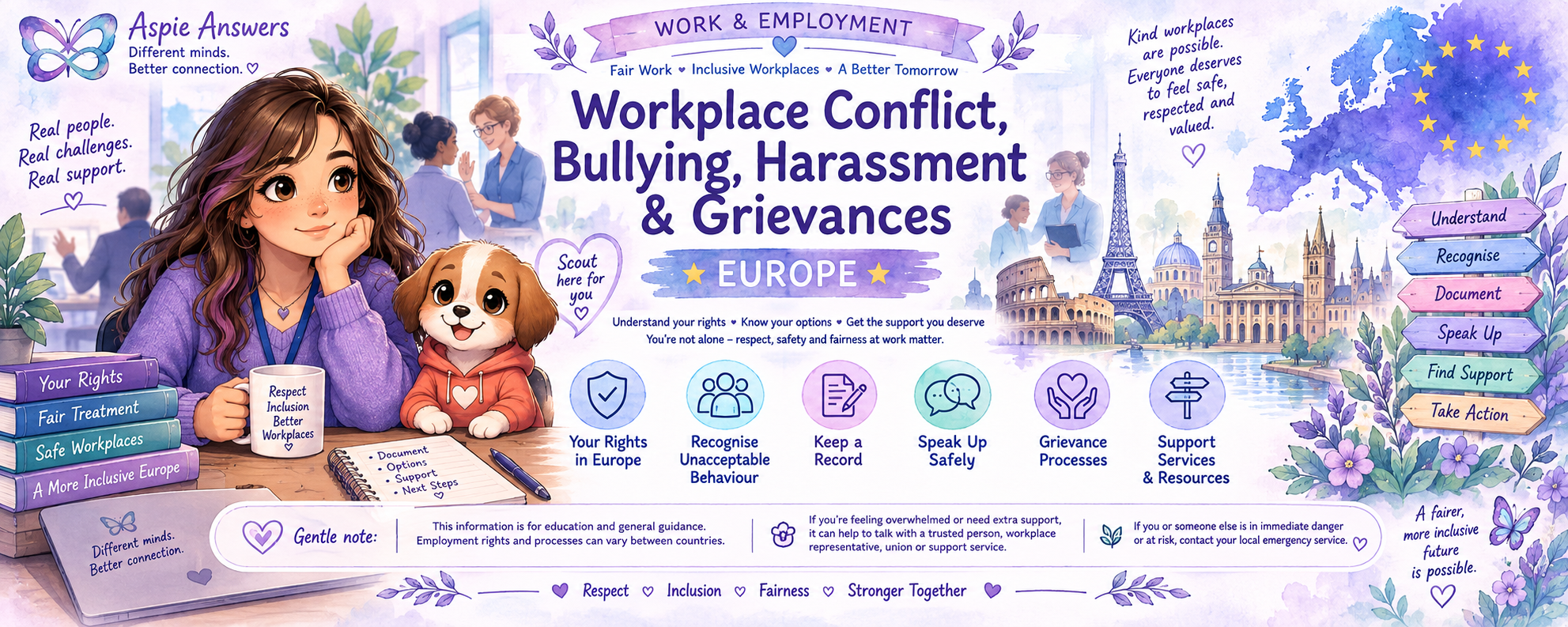
Understanding Difficult Workplace Situations
Workplace disagreements can happen in any organisation. Sometimes they are ordinary misunderstandings that can be resolved through communication. At other times, behaviour may become repeated, intimidating, discriminatory, humiliating or unsafe.
This guide can help you recognise concerning behaviour, document what is happening, explore your options and find appropriate support.
⚖️ Conflict, Bullying or Harassment?
It can be difficult to know how to describe what is happening. Understanding the broad difference between conflict and repeated harmful behaviour can help you decide what support to seek.
Workplace Conflict
Disagreements about work, decisions, expectations or communication can happen without either person intending to harm the other.
Bullying
Bullying may involve repeated behaviour that intimidates, humiliates, undermines, excludes or harms another worker.
Harassment
Harassment can involve unwanted behaviour that violates someone's dignity or creates an intimidating, hostile or offensive environment.
🚩 Behaviours Worth Paying Attention To
- Repeated insults, ridicule or humiliation.
- Threatening or intimidating behaviour.
- Deliberately withholding information needed to do your job.
- Repeatedly undermining someone's work or reputation.
- Unwanted sexual comments or conduct.
- Discriminatory comments or treatment.
- Persistent exclusion or isolation.
- Online bullying through workplace systems.
- Repeatedly setting someone up to fail.
♾️ Neurodivergence & Workplace Misunderstandings
Neurodivergent communication differences can sometimes contribute to misunderstandings at work. Direct communication, different eye contact, processing time, literal interpretation, sensory needs or differences in social communication should not automatically be treated as misconduct.
📝 Keeping Useful Records
Clear notes can make it easier to explain what has been happening.
Record the basics
- Date and time
- Where it happened
- What was said or done
- Who was present
- What happened afterwards
Keep relevant information
- Appropriate emails
- Relevant messages
- Meeting notes
- Formal correspondence
- Copies of concerns you raised
💬 Speaking Up
There is no single correct way to respond. Your next step depends on the situation, the workplace, your country and how safe you feel.
Clarification, changed behaviour, mediation, adjustments, support or formal action may all be possibilities.
This might be a manager, HR representative, union representative, workplace advocate or another trusted contact.
Written notes can help if speaking under pressure is difficult.
Note what was discussed, who is doing what and when the situation will be reviewed.
📋 Formal Grievances
Employers may have formal procedures for raising workplace concerns. A grievance may include:
- What happened.
- Important dates.
- People involved.
- Supporting information.
- Steps already taken.
- The effect on your work or wellbeing.
- The outcome you are seeking.
🛡️ If You Are Worried About Retaliation
Some people worry that raising a concern will make the situation worse. If you are concerned about retaliation, victimisation or further unfair treatment, keep records and seek advice from an appropriate employment, equality, union or legal service in your country.
You can also continue into the wider Workplace Rights & Employment Guidance section for broader rights information.
🤝 Finding Support
Workplace Support
A manager, HR team, occupational health service or workplace wellbeing service may be able to help.
Union or Representative
A union or workplace representative may help explain processes, prepare for meetings or attend with you where appropriate.
⚖️ Workplace Rights Guidance
Explore broader workplace rights, employment guidance, disability, adjustments and getting help.
🌍 Workplace Rights Across Europe
Europe includes many different employment systems. Definitions of bullying and harassment, grievance procedures, time limits and available remedies can differ considerably between countries.
European-level equality and employment protections can also interact with national laws. Always check current official guidance for the country where you work.
If the issue involves a formal complaint, discrimination, disciplinary action, dismissal or an urgent legal deadline, consider seeking appropriate country-specific professional advice.