
Mental Health Education • Wellbeing • Coping • Emotional Skills
Wellbeing, Coping & Emotional Skills
A gentle, practical guide to understanding emotions, developing coping tools, building emotional regulation skills, protecting your wellbeing and finding support that works for you.
🌱 Gentle Information Notice
You do not have to learn every coping skill or fix every difficult feeling at once.
Take what is useful, leave what is not, and come back when you have the energy. Small steps still count.
💗 Sensitive Topics Note
This page discusses overwhelm, distress, anxiety, low mood, emotional regulation, burnout, difficult feelings and times when coping strategies may not feel like enough.
Go gently and take breaks whenever you need them.
📘 Learning Practical Skills
Aspie Answers provides educational information and practical wellbeing tools. Different people need different strategies, environments and kinds of support.
🩺 Support, Not a Replacement for Professional Care
Coping tools can be helpful, but they are not a substitute for professional assessment, treatment or urgent support when those are needed.
If you feel unsafe, unable to cope or at immediate risk, seek appropriate local professional, emergency or crisis support.
✨ Inside This Page You Will Learn
This page brings together practical emotional-wellbeing skills so you can understand what may help in everyday life and during difficult moments.
Including body signals, patterns and what feelings may be trying to tell you.
Not by erasing emotions, but by finding ways to move through them safely.
Including grounding, sensory tools, movement, creativity, routine and connection.
Especially when stress, overload or burnout begin to build.
Being kinder to yourself can make coping more sustainable.
Bringing together people, tools, boundaries and supports that work for you.
👀 At a Glance
Feelings are information
Emotions can give clues about needs, safety, stress, relationships and wellbeing.
Coping is personal
A strategy that helps one person may not work for another.
Regulation is not suppression
Emotional regulation is about finding safer ways to move through feelings, not pretending they are not there.
Support matters
People, environments and practical adjustments can be just as important as individual coping tools.
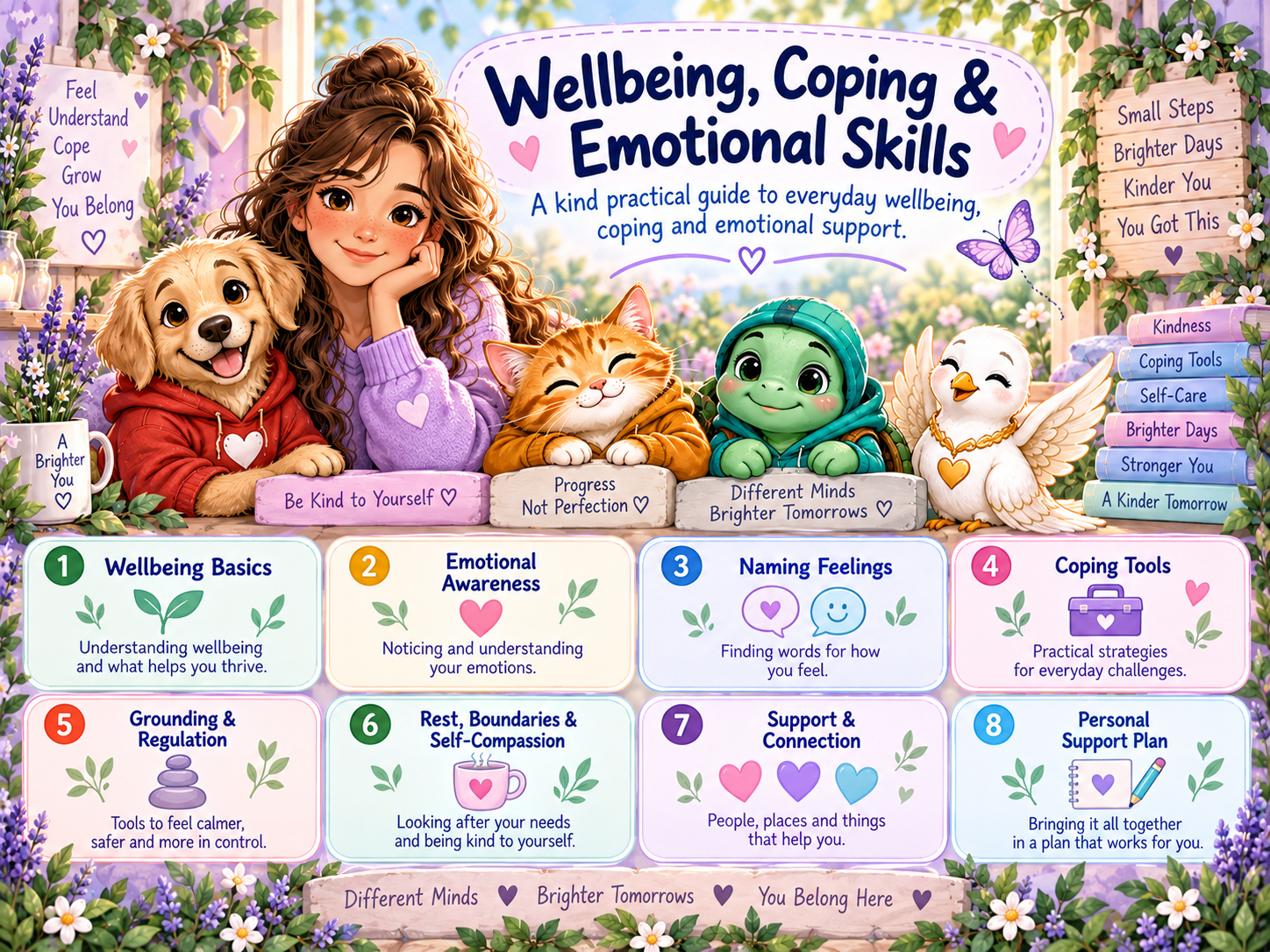

🌿 What Does Wellbeing Mean?
Wellbeing does not mean feeling happy all the time. It can include feeling safe, supported, understood and able to recover after difficult moments.
It also includes having enough rest, connection, emotional space, practical support and opportunities to be yourself.
What is happening?
Begin with curiosity about your emotions, energy, body and environment.
What might help?
Think about sensory needs, rest, movement, communication, routines or connection.
What do I need?
A kinder question is often more useful than asking why you are not coping better.
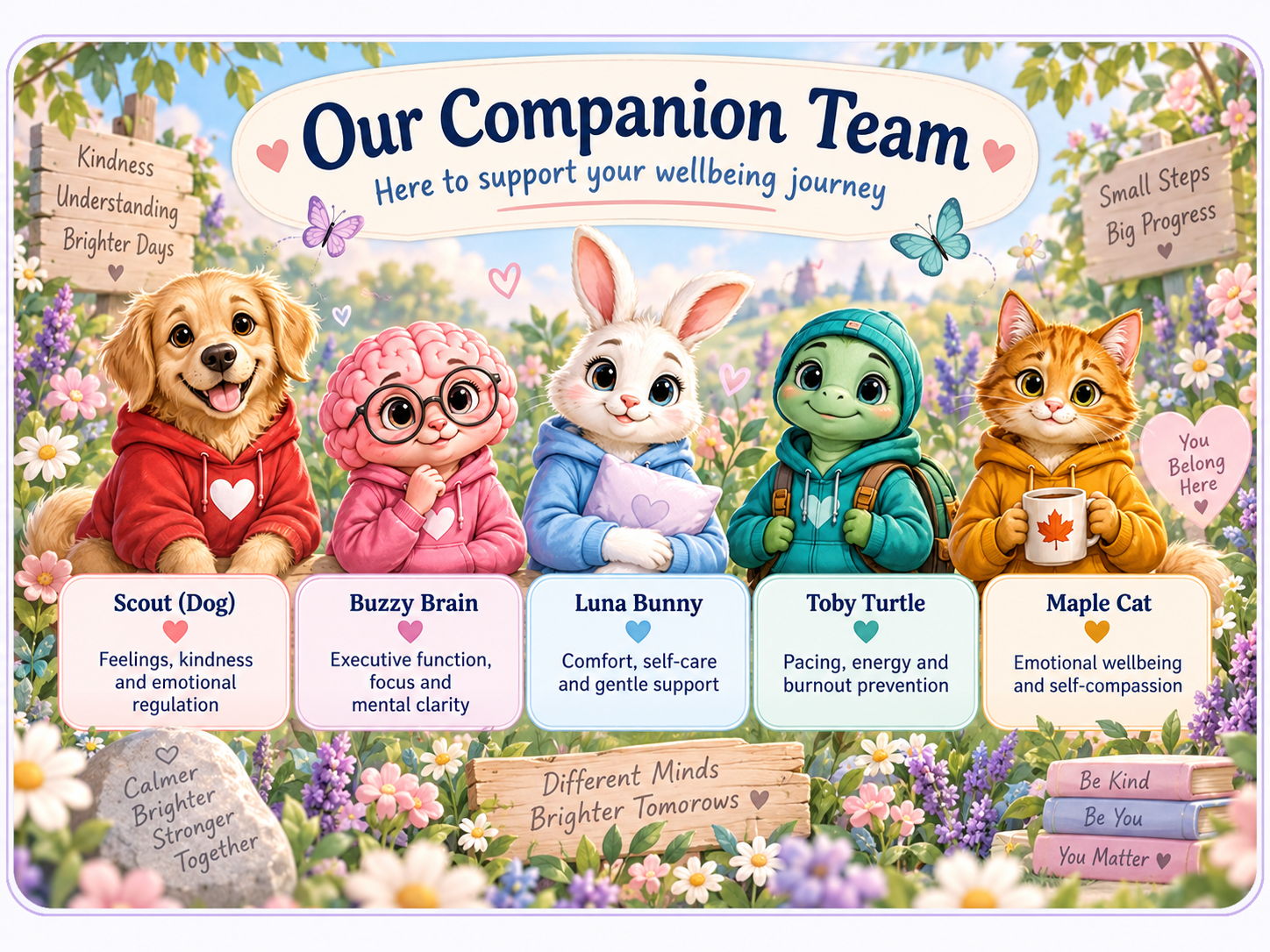
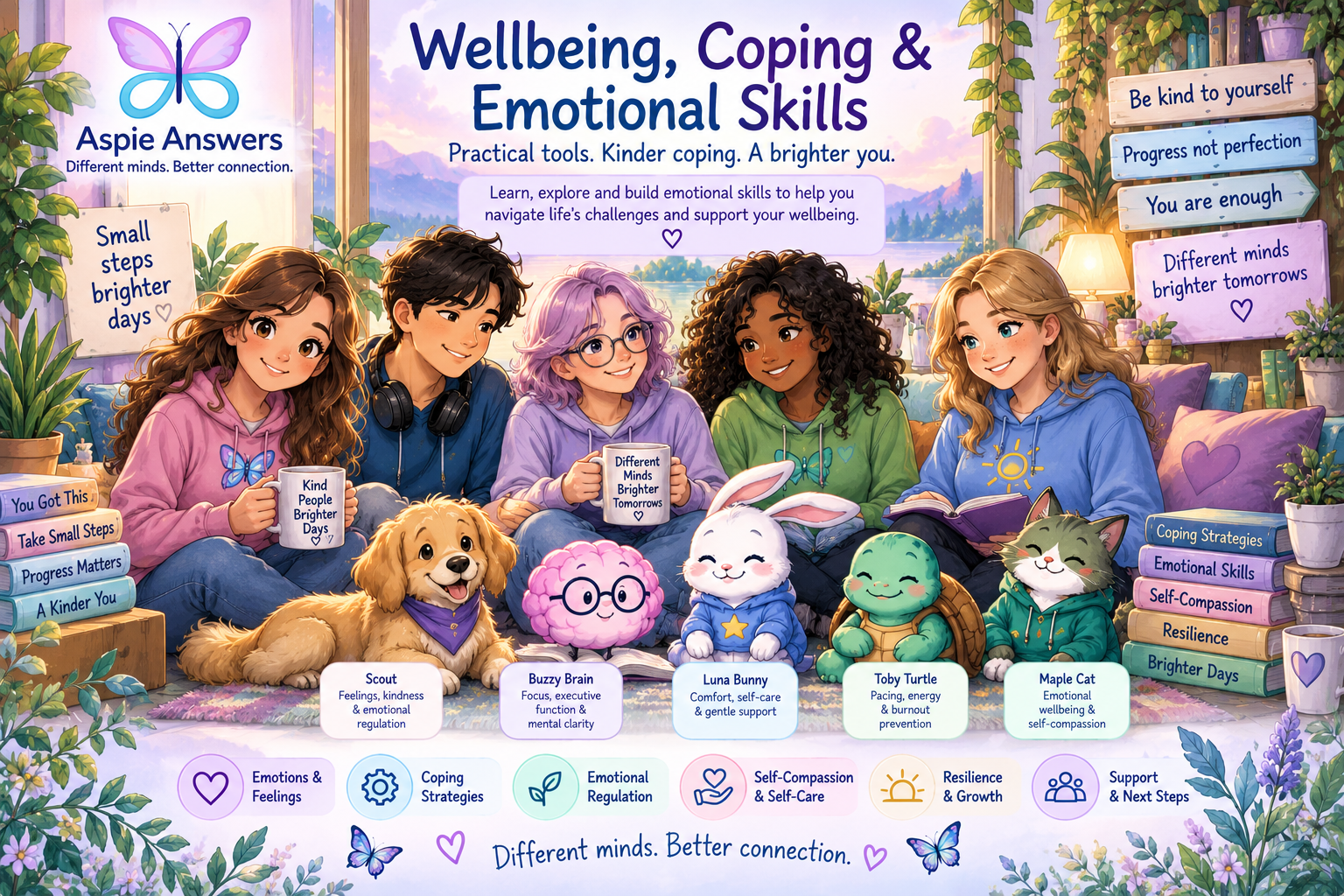
💜 Our Wellbeing Companion Team
Different Companions can support different parts of this learning journey — including emotional understanding, self-compassion, pacing, regulation and connection.
There Is No Single Right Way to Cope
Some people need movement. Others need quiet. Some need structure, company, sensory tools, creativity or time alone.
The goal is not to force one coping style onto everyone. The goal is to build a toolkit that fits the person.
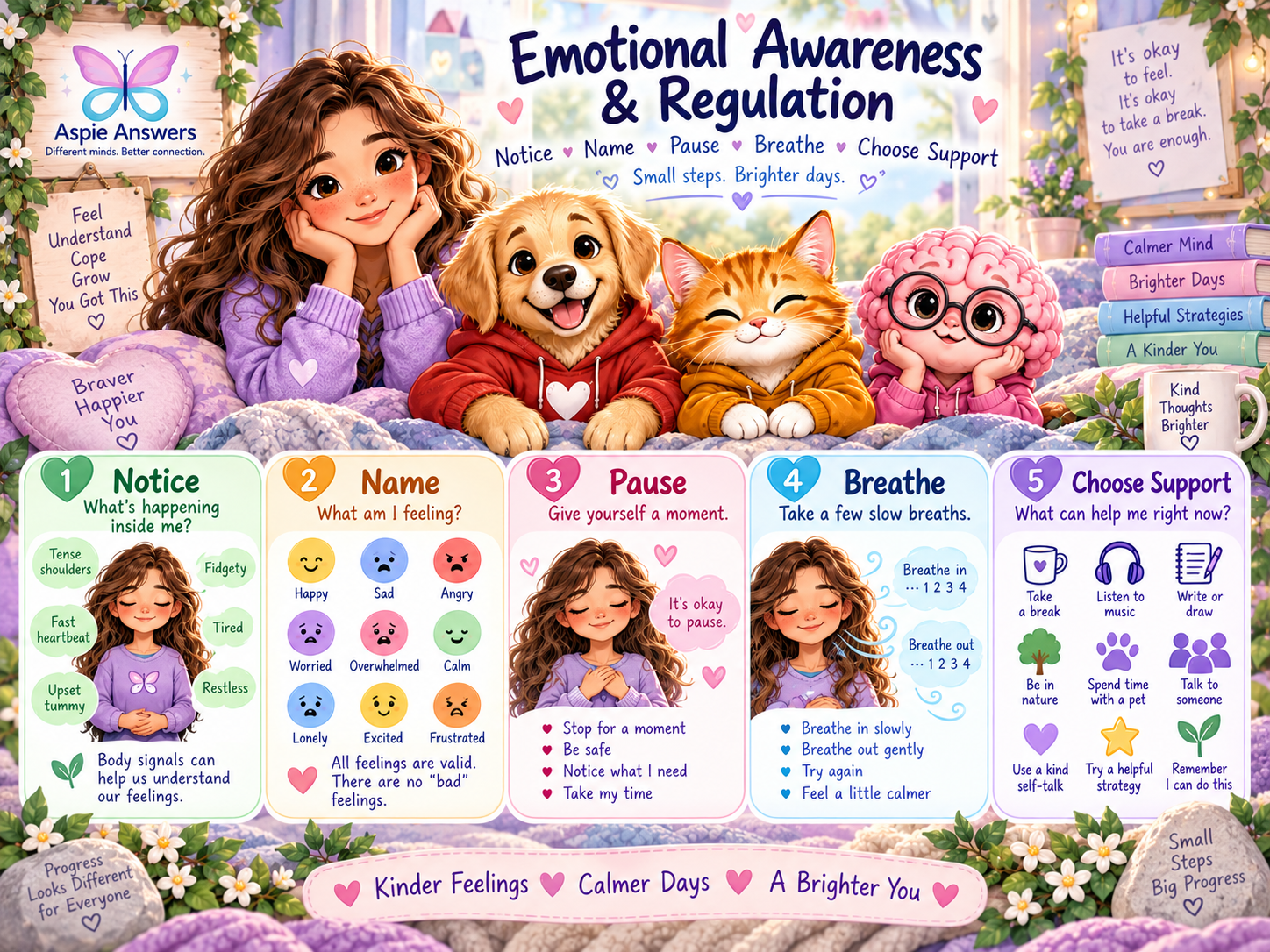
Understanding Emotional Awareness
Emotional awareness begins with noticing what is happening inside and around you. This may include body sensations, thoughts, urges, energy changes and emotional reactions.
Some people can name emotions quickly. Others may first notice tension, tiredness, stomach discomfort, restlessness, shutdown or overload.
Notice
What is happening in your body, thoughts and environment?
Name
If possible, find a word, description or visual that fits what you are experiencing.
Needs
Ask what might help: space, reassurance, food, rest, movement, support or sensory relief.
Emotional Awareness & Regulation
Emotional regulation does not mean stopping yourself from having emotions. It means developing ways to recognise, understand and respond to feelings more safely.
Coping Strategies for Everyday Life
Coping strategies are tools that can help you manage stress, difficult emotions, overload or demanding situations.
Different tools may work at different times, so it can help to have several options rather than relying on one strategy.
Grounding
Notice your surroundings, slow your breathing or focus on physical sensations that help you feel present.
Sensory support
Reduce overwhelming input or use sensory tools that help your nervous system settle.
Connection
Talk, message or spend time with someone who feels safe and supportive.
Routine
Predictability, visual plans and smaller steps can reduce uncertainty and cognitive load.
Movement
Stretching, walking, rocking, dancing or other movement may help release tension.
Creativity
Drawing, writing, music, crafts or other creative activities can provide expression and recovery.
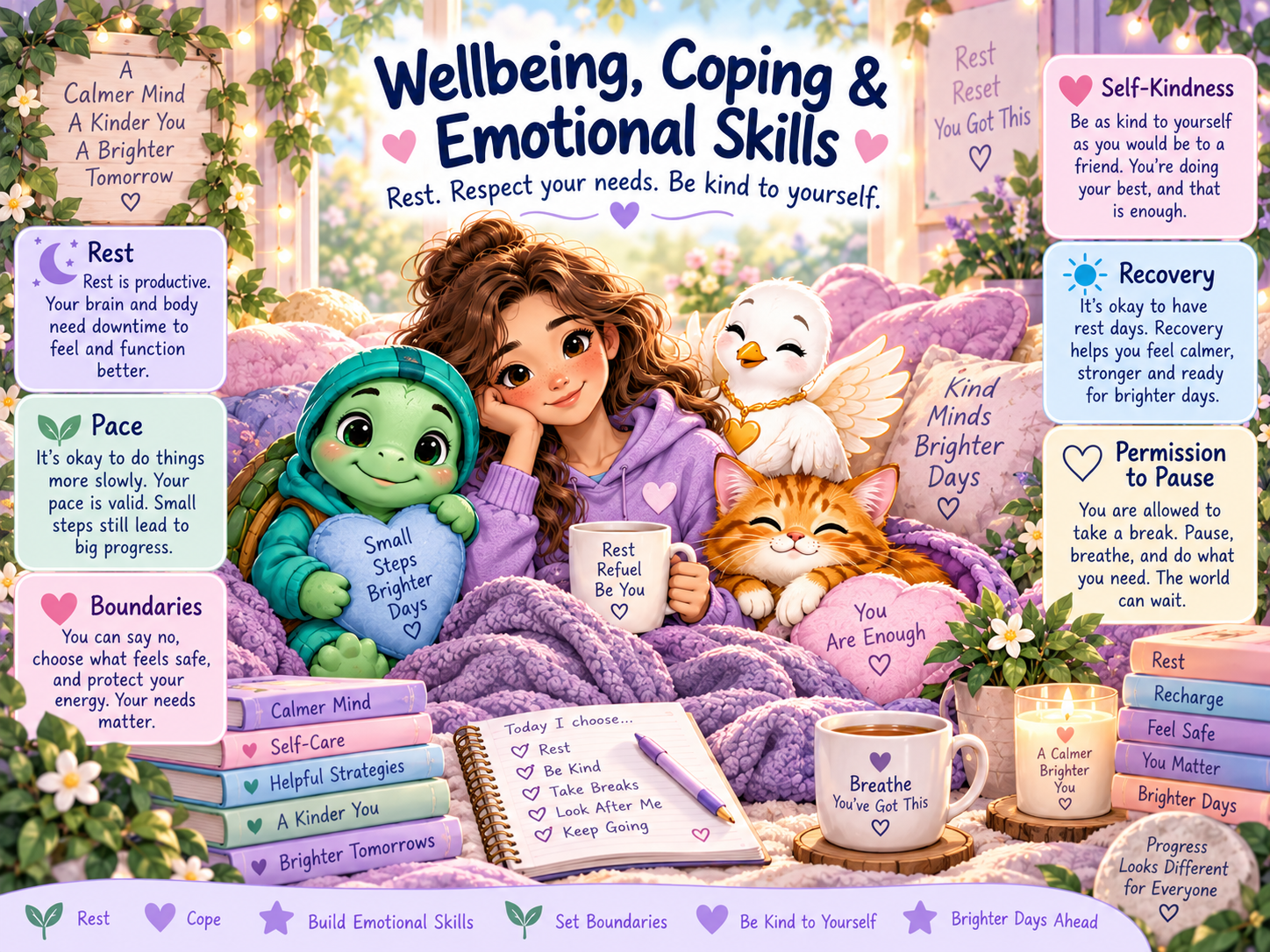
Rest, Boundaries & Being Kinder to Yourself
Rest is part of wellbeing, not a reward that must always be earned. Bodies and brains need recovery time.
Boundaries can also protect emotional energy. Saying no, asking for space, changing expectations or reducing demands can sometimes be exactly what wellbeing requires.
Rest
Give yourself space to recover physically, mentally and emotionally.
Boundaries
Protect your energy, time, sensory needs and emotional safety.
Self-compassion
Speak to yourself with the same patience you would offer someone you care about.
Support Is Part of Coping Too
Coping does not have to mean managing everything by yourself. Supportive people, accessible environments and understanding communities can reduce pressure and help people feel safer.
People who help
Friends, family, peers, teachers, support workers, counsellors or other trusted people may form part of your support network.
Environments that help
Quiet spaces, clearer communication, flexibility, sensory adjustments and predictable routines can all support wellbeing.
Resilience Does Not Mean Enduring Everything
Resilience is often described as “bouncing back,” but real resilience can also mean asking for help, changing environments, resting, setting boundaries or deciding that something is no longer sustainable.
Learn what helps
Notice patterns and identify what supports recovery.
Build supports
Strength is easier to build when people have resources and supportive relationships.
Make room for setbacks
Progress is rarely perfectly straight. Difficult days do not erase previous growth.
Creating a Personal Support Plan
A simple support plan can help gather useful information in one place so you do not have to remember everything during a difficult moment.
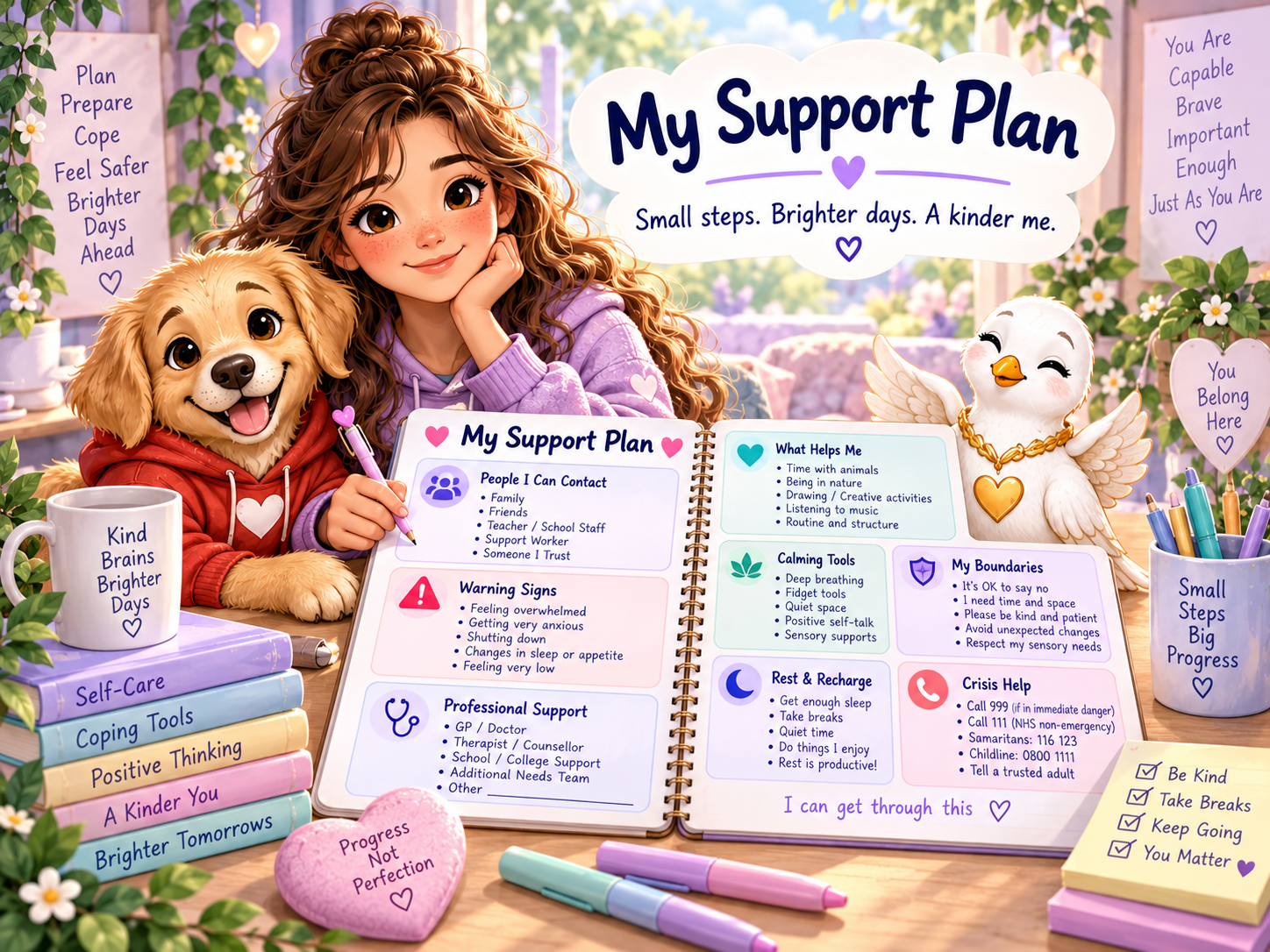
Your plan might include
- early signs that you are becoming overwhelmed
- strategies that usually help
- things that make situations harder
- people you trust
- sensory or communication needs
- ways to rest and recharge
Plans can change
Your needs may shift over time. A support plan can grow with you and does not need to be perfect to be useful.
When Usual Coping Tools Are Not Enough
Sometimes distress becomes too intense, lasts too long or affects daily life in ways that need more support.
Talk to someone
A trusted person can help you think through what is happening and what support may be available.
Professional support
A doctor, counsellor, therapist or other qualified professional may help when symptoms are persistent or difficult to manage.
Urgent support
If you feel unsafe or at immediate risk, seek appropriate local emergency or crisis support rather than relying only on self-help strategies.
Continue Exploring Mental Health Education
Neurodivergence & Mental Health
Revisit how neurodivergence, sensory needs, masking, burnout and mental wellbeing can interact.
Revisit Previous PageMental Health Education Hub
Return to the wider learning pathway and explore connected educational pages.
Visit the HubMental Health Topics & Conditions
Explore the broader topic family if you want to learn about specific mental-health experiences.
Explore TopicsMental Health Literacy
Next, we move from practical wellbeing skills into understanding mental-health information, language, support systems and how to make sense of the information you encounter.
Continue to Mental Health Literacy →💜 Progress Can Look Different for Everyone
Coping is not about being calm all the time or handling everything perfectly.
Sometimes coping means resting. Sometimes it means asking for help. Sometimes it means trying again tomorrow.
Understanding what helps you can be an important part of building a life with more safety, connection and wellbeing.
Different minds. Better connection.