
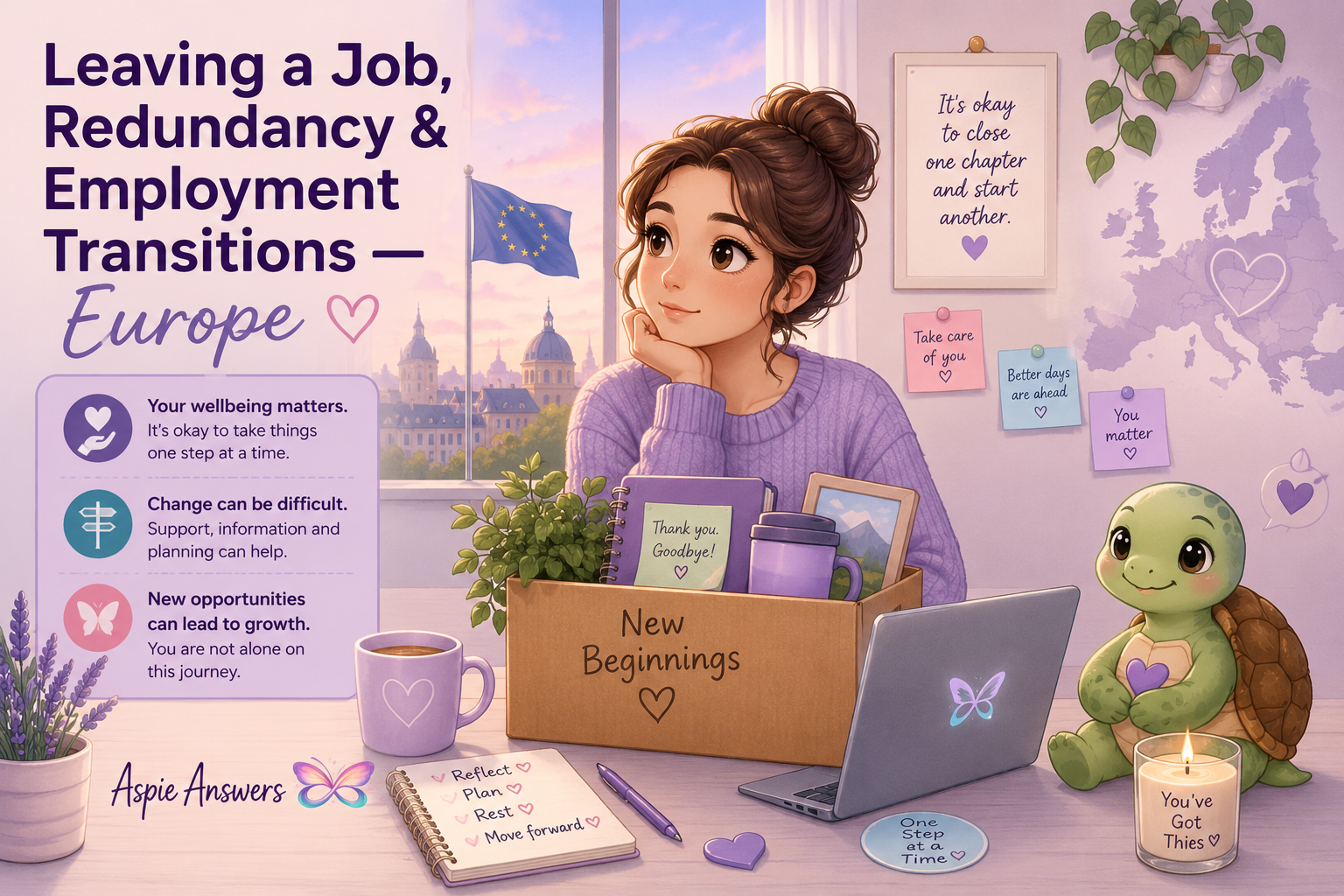
Leaving Work Is More Than a Final Day
Employment can end for many reasons. You may be resigning, facing redundancy, finishing a fixed-term role, changing careers, retiring, relocating or leaving because the workplace is no longer right for you.
This page helps break the transition into manageable steps — understanding what is happening, checking important information, preparing to leave, supporting yourself through change and planning what comes next.
🚪 Different Ways Employment Can End
Knowing what kind of transition you are dealing with can make it easier to identify the information and support that may apply.
Resignation
You decide to leave your role. Your employment agreement and local employment rules may explain notice requirements and the resignation process.
Redundancy or Restructuring
Your role may be affected because an organisation changes structure, staffing levels, operations or business needs.
Fixed-Term Role Ending
A temporary or fixed-term employment arrangement may reach its planned end.
Career Change
You may move into another occupation, study pathway, self-employment or a different way of working.
Health or Wellbeing
Some people consider leaving because work is affecting their health, energy or overall wellbeing.
Retirement or Life Change
Employment may end as part of retirement, caring responsibilities, relocation or another significant life transition.
🏢 Redundancy & Restructuring
Being told that your role may change or disappear can be difficult to process, especially when the information arrives unexpectedly.
Questions You May Want to Ask
- What change is being proposed?
- Why is my role affected?
- What happens next?
- Are there consultation or response dates?
- Are alternative roles being considered?
- Who can answer further questions?
Information Worth Keeping
- Formal letters or notices
- Relevant emails
- Your employment agreement
- Meeting notes
- Questions you asked
- Information about alternative roles
📝 If You Are Thinking About Resigning
When circumstances allow, giving yourself time to check the practical consequences before resigning can reduce uncertainty later.
Look for information about notice, resignation procedures and responsibilities when employment ends.
Employment requirements differ between European countries.
Consider income, leave, references, future employment and the timing of the transition.
A short, clear written resignation can reduce uncertainty. Keep an appropriate copy for your records.
Write down handover tasks, important dates, equipment to return and questions that still need answers.
📦 Before Your Final Day
A simple leaving checklist can reduce the number of things you need to remember at once.
📑 Documents
Check which employment, payroll, tax, benefits, pension or other records you should receive or retain.
💶 Final Payments
Ask what your final payment will include and when it is expected.
📝 References
If appropriate, ask what reference information may be available and who future employers should contact.
💻 Equipment & Access
Clarify what needs to be returned and when workplace systems or building access will finish.
🔄 Handover
Break handover tasks into manageable pieces and clarify priorities if everything cannot reasonably be completed.
📅 Important Dates
Record your final working day, meetings, payments and any dates by which further action may be required.
♾️ Neurodivergent-Friendly Employment Transitions
Leaving a job does not only change employment. It can also change routines, relationships, sensory environments, identity, energy demands and the structure of everyday life.
💬 Communication
Written information, clear expectations and time to process workplace discussions may make transitions easier.
🔋 Energy, Stress & Burnout
Leaving a demanding role may be followed by a period of decompression or recovery rather than immediate productivity.
♿ Adjustments & Support
If you are still employed during a transition period, workplace adjustments or additional support may still be relevant.
Toby Turtle — Pacing, Energy & Burnout Recovery
Toby's role is pacing, energy management and burnout recovery, which makes him a natural fit for employment transitions.
His reminder here is: “Slow and steady, you've got this!”
Instead of trying to solve the entire next chapter today, ask: What is the one thing that genuinely needs my attention next?
🌱 After Employment Ends
Your next step does not have to look like anybody else's. Different people need different kinds of transition time.
🌿 Recover
Give yourself space to decompress if the previous role or leaving process has been exhausting.
🧭 Reflect
Consider what worked, what was difficult and what you would like to be different next time.
💼 Prepare for Another Job
When you are ready, continue into recruitment, applications and interview guidance.
🎓 Learn or Retrain
A transition may create an opportunity to explore education, training or another career direction.
💡 Explore Different Work
Flexible work, remote work, part-time work or self-employment may be possibilities depending on your circumstances.
🤝 Use Support
Employment services, disability support, community organisations, unions and professional advisers may help with different parts of the transition.
🤝 When to Get More Support
⚖️ Employment Rights
Explore broader guidance about employment rights, workplace issues and finding appropriate information.
🛡️ Workplace Conflict & Grievances
If workplace problems are part of why employment is ending, explore conflict, bullying, harassment and grievance guidance.
💜 Wellbeing Support
Explore workplace stress, burnout, pacing and recovery guidance.
🌍 Employment Endings Across Europe
Europe contains many different employment systems. Rules covering notice, redundancy, consultation, severance or compensation, fixed-term work, dismissal, final payments and challenge procedures may differ between countries.
European-level employment and equality protections may also interact with national laws.
For a specific employment-ending situation, use current information from the appropriate government, labour, employment or equality authority in the country where you work.
If the matter involves a formal dispute, discrimination, dismissal, redundancy challenge or legal deadline, consider obtaining appropriate country-specific professional advice.
An Ending Can Also Be a Transition
Leaving a workplace can bring uncertainty, relief, grief, excitement or several of these feelings together.
You do not need to know the entire next chapter today. Gather the information you need, protect your wellbeing, use support where it helps and choose the next manageable step.