

Māori Mental Health Community & Peer Support — NZ
Find culturally grounded ways to connect with Māori-led groups, shared-experience networks, whānau and community support across Aotearoa New Zealand.

Kaupapa Māori community connection
Whanaungatanga, manaakitanga, whakapapa, tikanga and connection to whenua can be meaningful parts of wellbeing. Different people and whānau have different preferences: no single approach fits everyone.
Look for group choices that respect te reo Māori, tikanga, informed consent, privacy, disability access and the right to participate at your own pace.
This page helps you navigate options; it does not claim that a specific group is currently taking new members.
Find a support pathway
Search these 16 guidance pathways. The filters work on this page; they do not search live provider listings.
Kaupapa Māori community wellbeing
Explore tikanga, whakapapa, whakawhanaungatanga, marae and iwi connections, while respecting each person’s preferences.
Peer-to-peer support groups
Find shared-experience support, informal kōrero, safe group boundaries and mutual encouragement.
Marae, iwi and local organisations
Ask local iwi, Māori health providers and community organisations about local groups and meeting opportunities.
Tamariki and rangatahi
Youth groups, school or kura connections and opportunities for culturally safe social support.
Māori adults and working life
Connection during job changes, burnout, relationship pressures and life transitions.
Parents, whānau and carers
Shared-support groups for caregivers, partners and whānau supporting someone else.
Kaumātua and elders
Community gatherings, intergenerational relationships and support for loneliness or bereavement.
Autism, ADHD and neurodivergence
Look for sensory-aware and neurodivergent-affirming groups, with clear expectations and flexible participation.
Hidden and learning disabilities
Accessible meeting spaces, plain language, communication support and reasonable adjustments.
Takatāpui and Rainbow Māori
Affirming connection for Māori LGBTQIA+ and takatāpui people and whānau.
Grief, anxiety, trauma and recovery
Topic-specific peer connection may help people feel less isolated, but is not a substitute for clinical care.
Housing, money, work and advocacy
Explore community-led navigation for practical pressures affecting wellbeing.
Regional, rural and outreach options
Ask whether a group meets locally, travels to your area, or can connect you with a regional provider.
Online groups and digital connection
Consider privacy, moderated meetings, captioning, connection costs and safe participation online.
Counselling and clinical referrals
Understand when a GP, Māori mental health professional or clinical assessment is a better next step.
Urgent Māori and NZ crisis support
For immediate danger in NZ, call 111. For emotional support call or text 1737; urgent clinical care needs your local crisis team.
No matching pathway. Try Reset or a different word.
Whānau and intergenerational groups
Ask whether tamariki, rangatahi, adults, kaumātua, parents and carers are welcome, and whether attendance can include trusted whānau or supporters.
For some groups, shared experience and cultural connection are the main focus. Other organisations also provide practical navigation or referrals.

Regional, rural and online participation
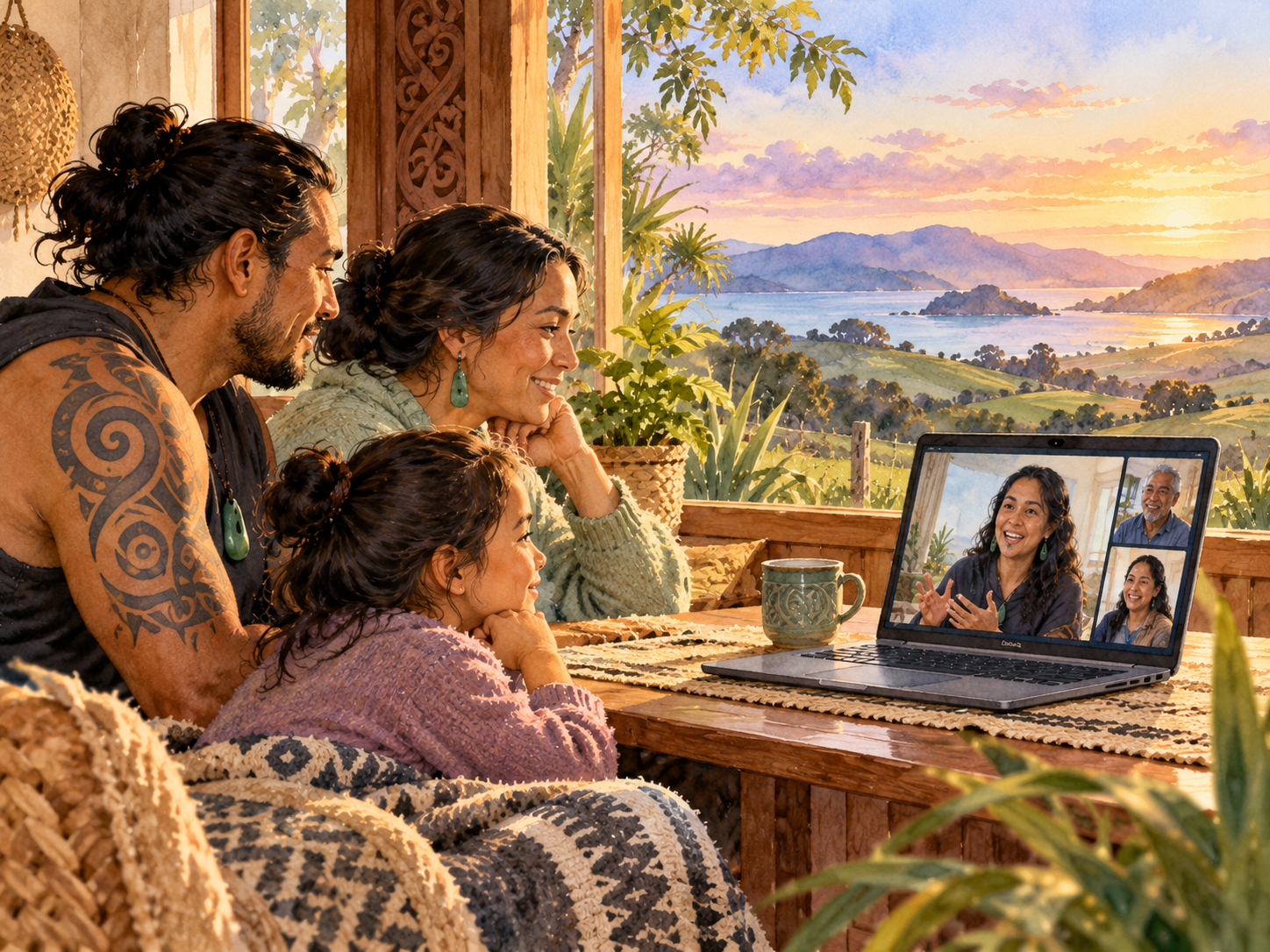
Check transport, local meeting locations, outreach, internet/data needs, availability of phone meetings, captions, NZSL interpreting and sensory adjustments. Ask who moderates online groups and how participant privacy is protected.
Māori wellbeing collection — all sibling pathways
These destinations follow our agreed WordPress slugs. Some pages may still be drafts; please confirm every destination works before publishing this connected collection.
Māori / Kaupapa Māori main wellbeing
Explore this pathway →Kaupapa Māori professionals & services
Explore this pathway →Tamariki & rangatahi
Explore this pathway →Whānau, parents & carers
Explore this pathway →Kaumātua & older people
Explore this pathway →Māori adults
Explore this pathway →Community & peer support
Explore this pathway →Rural, regional & online Māori support
Explore this pathway →Māori mental health topics & assessments
Explore this pathway →Related NZ support and directories
Move between community support, clinical care, accessibility and urgent pathways without confusing their roles.
Finding trustworthy groups
Before attending
Ask about the facilitator, whether the group is moderated, safeguarding, confidentiality, costs and who to contact with concerns.
Accessibility and choice
Ask about wheelchair access, a quiet space, hearing or visual access, language, plain-language materials, breaks and online alternatives.
Professional or urgent care?
If you need diagnosis, medicine, urgent assessment or specialist treatment, consider GP or mental health services rather than relying on a peer group alone.
Frequently asked questions
Do peer groups provide therapy?
Not necessarily. Peer support and community groups often provide connection and shared experience. Clinical care should be sought from appropriately qualified providers when needed.
Can whānau attend with me?
Ask the group about age requirements, support persons, family attendance, privacy and consent.
Are online groups available throughout NZ?
Some may be, but membership rules, accessibility, technology and eligibility vary. Check directly with organisers.
What if I need urgent help?
In an emergency call 111. Contact your local crisis assessment team for urgent mental health assessment, or call/text 1737 for emotional support.
Aspie Answers · General information for Aotearoa New Zealand. Services, eligibility and contact details can change.