
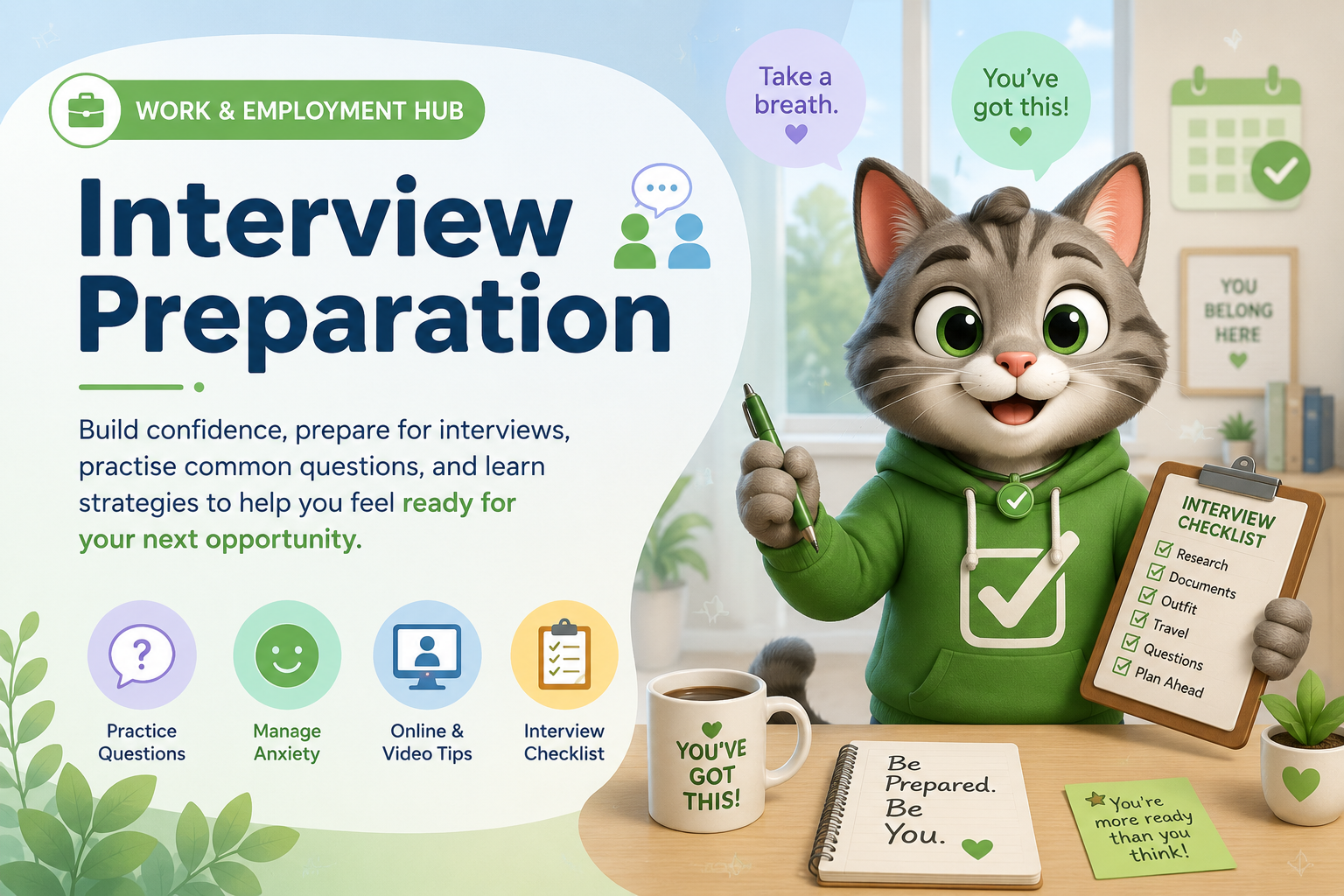
Interview Preparation
Interviews can feel exciting, uncertain or overwhelming. Preparation is not about memorising perfect answers. It is about understanding what to expect, practising useful ideas and making a plan that supports you before, during and after the conversation.
Try words such as questions, travel, processing, adjustments, online, anxiety, notes or recovery.
Showing all guide sections.
Know What to Expect
Learning about the role, organisation and interview format can reduce surprises and help you focus on the conversation.
Remember Your Strengths
Preparing examples beforehand can make it easier to explain what you can do when you are nervous or need more processing time.
Plan for Your Needs
Think about sensory needs, communication preferences, travel, technology, breaks and possible reasonable adjustments.
Support Your Recovery
Interviews can use a lot of energy. A lower-demand period before or afterwards may help with regulation and recovery.

Interview preparation can include several distinct needs. These are useful areas to explore as the deeper interview pages are audited and connected.
Interview Questions & Practice
Common questions, STAR-style examples and gentle practice activities.
Interview Anxiety & Confidence
Strategies for nerves, uncertainty, confidence, regulation and recovery.
Online & Video Interviews
Technology checks, environment setup, communication and backup planning.
Interview Checklist
Practical reminders for before, during and after the interview.
Specialist checklist supportRead the Job Description
Highlight responsibilities, skills and values, then note where your experience connects with them.
Research the Organisation
Look at its website, services and publicly stated values so the role has clearer context.
Prepare Real Examples
Choose examples that show skills such as problem-solving, teamwork, reliability, learning or adapting.
Practise Without Over-Rehearsing
Use key words or prompt cards. Aim for familiar ideas rather than memorising every sentence.
Confirm Practical Details
Check the time, location, travel, parking, clothing, documents, technology and contact details.
Ask About Adjustments if Needed
Where appropriate, ask what support may help you participate fairly and communicate effectively.

Listen to the Whole Question
Take a moment before answering. It is okay to ask for a question to be repeated or rephrased.
Use Prepared Examples
Connect your answer to a real situation, what you did and what happened as a result.
Be Honest About What You Know
You do not need to know everything. You can explain how you would learn, find information or ask for support.
Use Notes When Appropriate
A short list of examples or questions can reduce memory pressure. Ask beforehand if you are unsure whether notes are acceptable.
Ask Your Own Questions
Questions about training, expectations, communication and work culture can help you judge whether the role suits you.
Remember It Is Two-Way
The employer is learning about you, and you are also gathering information about the workplace.
Decompress First
Rest, eat, hydrate, move, regulate or spend time in a lower-demand environment if that helps.
Write Brief Notes
Record questions, names, next steps and anything useful while the information is still fresh.
Choose One Learning Point
Notice what went well and, if useful, choose one thing to adjust next time rather than analysing every moment.

Depending on the situation, possible interview adjustments may include extra processing time, a quieter setting, clearer written information, breaks, accessible technology or another interview format. What is available depends on the employer, the role and local requirements.

Checklist Cat
Checklist Cat fits this preparation page naturally: organise the practical details, write down the steps, prepare examples and use a checklist so less has to stay in working memory.
How long should I spend preparing?
There is no perfect amount. Focus on understanding the role, preparing a few useful examples and checking the practical details. Short sessions may be easier than one long session.
Can I take notes into an interview?
Expectations vary. Ask beforehand if you are unsure, and keep notes brief enough that they support rather than replace the conversation.
What if my mind goes blank?
Pause and ask for a moment to think. You can request that the question be repeated or rephrased, or ask whether you can return to it later.
Do I have to disclose that I am neurodivergent?
Disclosure is a personal decision and can depend on your circumstances, the support you need and local employment requirements. Individual employment or legal guidance can help when the decision is complex.
What can I ask the employer?
You might ask about daily responsibilities, training, communication, supervision, workplace culture, flexibility, success in the role and the next stage of recruitment.
These resource types fit this topic well and can live in the central Work & Employment resource system instead of appearing here as unfinished downloads.