
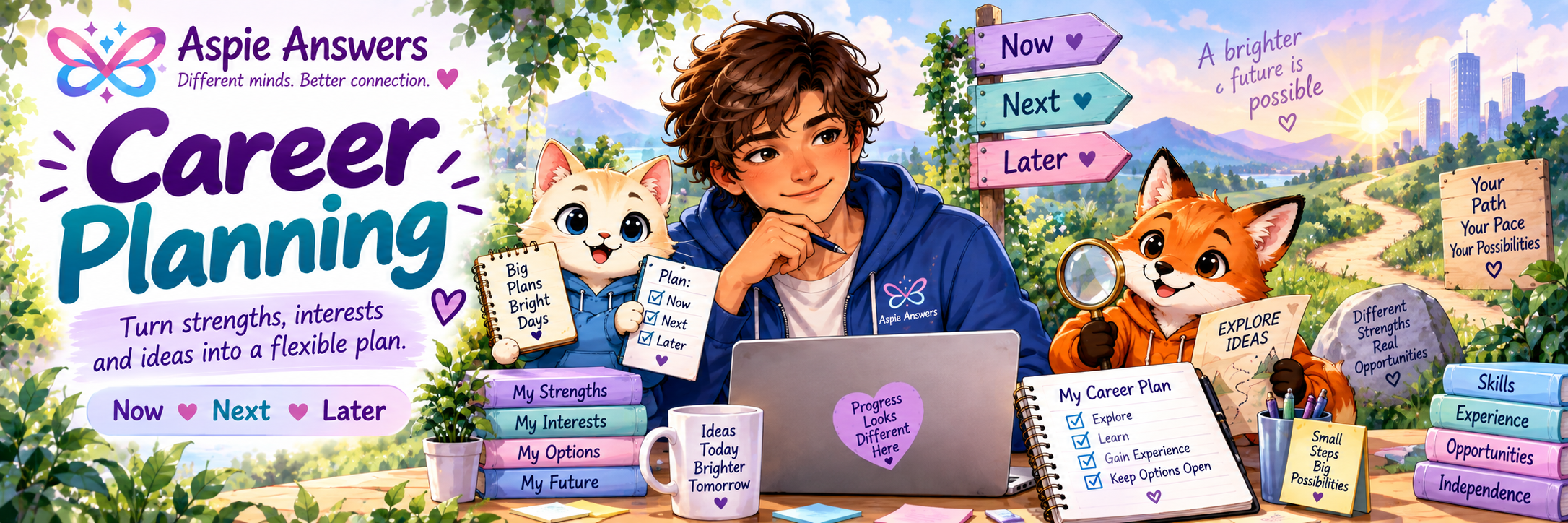
Career Planning
Career planning is not about choosing one perfect job and committing to it forever. It is a way of bringing together what you know about yourself, exploring realistic possibilities, identifying what you may need next, and creating a flexible plan that can change as you learn.
Try strengths, training, change, goals, options, experience, support, direction or next step.
Showing all career-planning sections.
First Steps Into Work
You may be moving from school, study, volunteering or limited work experience into paid employment.
Exploring a Direction
You may have several interests but need more information before deciding what to pursue.
Changing Direction
You may want work that better fits your interests, energy, values, support needs or life circumstances.
Planning What Comes Next
You may already be working and want to build skills, change roles, train, progress or create a more sustainable future.

Strengths & Skills
What do you do well? What skills have you built through work, study, hobbies, caring, volunteering, projects or everyday life?
Interests & Values
Which topics, tasks, problems, environments or causes hold your attention or feel worthwhile?
Work Preferences & Support
Think about structure, communication, sensory demands, flexibility, hours, location, energy and the support that helps you work well.
After exploring, choose a small number of possibilities worth understanding more deeply. They can be specific jobs, broader fields or different ways of working.
Role or Job Direction
For example: administration, animal care, IT support, trades, design, healthcare support, research or customer service.
Industry Direction
You may be more interested in a sector or environment first, then explore several roles within it.
Learning or Training Direction
A course, qualification, apprenticeship, certification or short skill-building step may come before a job move.
Different Ways of Working
Part-time work, supported employment, remote work, self-employment, volunteering or combined pathways may also belong in a career plan.


You can use questions like these to compare two or three possibilities. A good option does not need to score perfectly in every area.
| Area to Compare | Questions to Ask |
|---|---|
| Interest & Meaning | Would I find enough of the work interesting, useful or meaningful to sustain motivation? |
| Current Strengths | Which of my existing skills and experiences transfer well into this direction? |
| Learning Needed | Would I need a qualification, licence, short course, portfolio, experience or on-the-job training? |
| Work Environment | What are the likely sensory, social, communication, pace and routine demands? |
| Energy & Sustainability | Are the hours, travel, recovery needs and workload realistic for me over time? |
| Support & Accessibility | What support, adjustments, flexibility or communication approaches may help? |
| Practical Reality | What opportunities exist where I live or remotely, and what would I need to access them? |
Skills or Knowledge
A short course, workplace training, practice, independent learning or a new qualification may strengthen your options.
Experience or Evidence
Volunteering, work experience, projects, a portfolio, community involvement or a smaller responsibility may help build evidence.
Practical Access
Transport, technology, equipment, childcare, scheduling, finances, a licence or another practical requirement may need planning.
People & Support
A mentor, employment service, training provider, recruiter, support worker, professional contact or trusted person may help with one part of the route.
Job-Search Tools
You may need to update your CV, gather examples, prepare references or organise an application system.
More Information
Sometimes the next step is simply learning what a role really involves before investing more time or money.


What Can I Do First?
Choose one action you can realistically begin soon.
- Research one role.
- Update part of your CV.
- Ask one person a question.
- Compare one training option.
What Comes After That?
Identify the step that becomes useful once the first piece is clearer.
- Gain experience.
- Build a missing skill.
- Apply for suitable opportunities.
- Speak with a provider or employer.
What Is the Longer Direction?
Keep the bigger possibility visible without turning it into today's workload.
- Complete a qualification.
- Move into a new field.
- Progress into greater responsibility.
- Build a more sustainable working life.
What Have I Learned?
New information from work, study, applications, volunteering or conversations may change how an option looks.
What Is Working?
Notice which actions are creating useful information, experience, confidence or opportunities.
What Is Getting in the Way?
A barrier may need a different route, extra support, more time or a smaller step rather than abandoning the whole goal.
Has My Situation Changed?
Energy, health, family, finances, interests, accessibility needs and opportunities can all affect what is sustainable now.
0 of 8 planning areas considered.


Finn Fox
Finn supports comparing possibilities, solving barriers and remembering that another route can still move you towards what matters.

Calendar Cat
Calendar Cat helps turn a future direction into review points, realistic timeframes and smaller milestones you can see.